
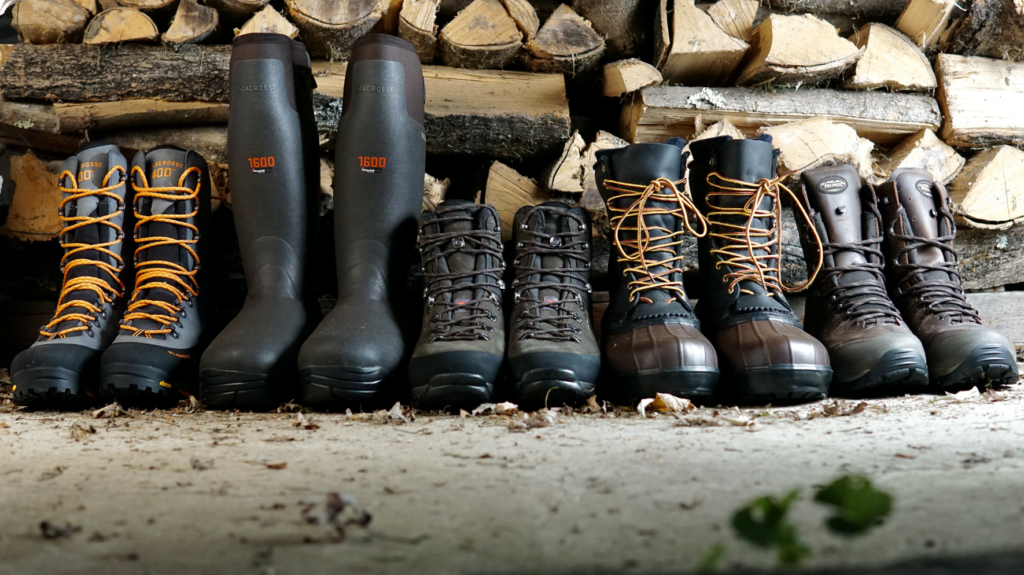
Getting cold feet isn’t just a figure of speech for a hunter. It’s annoying at best and seriously dangerous at worst. Even on the back-40, it’s easy for a sub-par boot to force you to call it early on late-season hunts. But your days of waterlogged ice-cold boots can all be over if you choose one of the best cold weather hunting boots we recently tested below.
One hunting boot can’t serve the different kinds of terrain, conditions, or hunting styles each hunter has. That’s why we tested several options, in the field and under formal testing conditions, to name different picks for different pursuits. Whether your running down late-season pheasants or cooling off in a deer blind, there’s something here for you.
best for extreme cold

Hoffman Double Insulated Mountaineer Boots
Pros
- Completely serviceable
- A lot of boot for the money
- Made in the USA to order
Specs
- Sizes: 6 – 15
- Insulation: Removable 9mm wool felt and 200g Thinsulate
- Height: 14 in.
- Weight: 7+ lbs
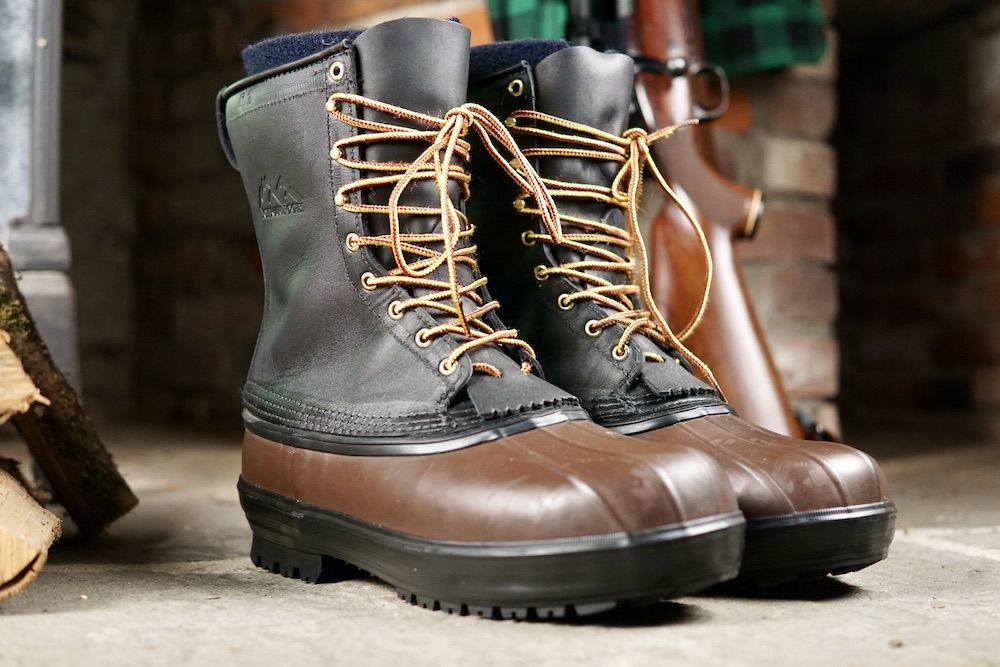
These are bar none the warmest boots I’ve ever put on my feet. In the ice bath, they lasted the longest out of any boot in this test. Insulated with 9mm of wool and polypropolene, the Mountaineers can put up with some of the harshest winter conditions. They have an air-grip lug sole for trudging through the snow and climbing steep terrain. My test pair felt a little bulky on my feet, but Jim Hoffman, owner of Hoffman Boots, says that he doesn’t hesitate to put some miles on these boots during late-season Western hunts.
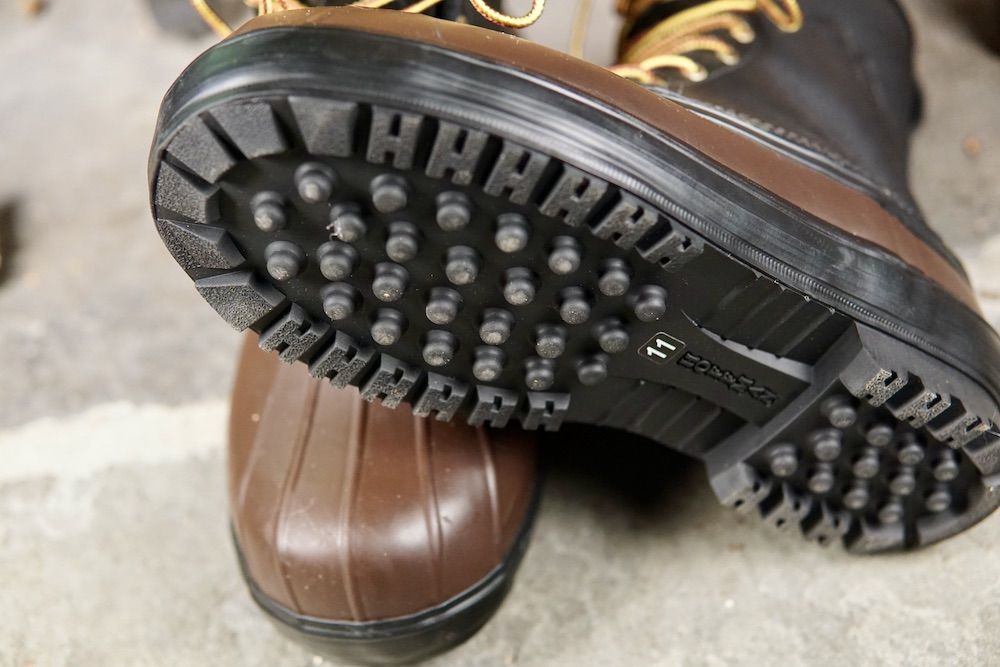
Hoffman makes their boots in the USA and can have a pair made for you in as little as 48 hours with a rush order. And while most associate pac boots with hunting out West, the Mountaineers would make a killer late-season whitetail boot. Throw in a foot warmer and you could outlast even the most stubborn winter bucks.
best lightweight

Meindl EuroLight Hunter 300
Pros
- Extremely lightweight for the size
- Broken-in feel out of the box
- Quality materials
Specs
- Sizes: 7 – 12
- Insulation: Gore Air-Fibre 300
- Height: 9 in.
- Weight: 3.3 lbs
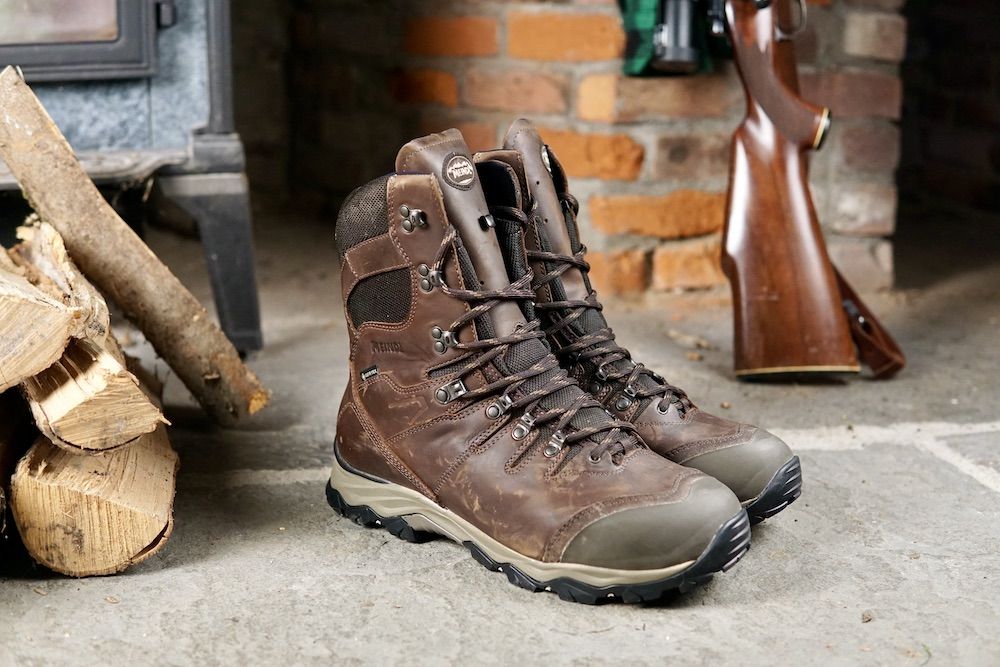
I first tested a pair of uninsulated EuroLight Hunters during last year’s deer season. The boots held up well through wet, soggy terrain and in the mountains where I hunt. I tend to like a stiffer boot because my feet and ankles are complete garbage, and the EuroLight Hunter is not that kind of boot. It does have a comfortable broken-in feel right out of the box, though, and still gives plenty of support for carrying weight like a backpack full of meat.
The insulated version of the EuroLight is just as good as the uninsulated version. The boots were easy to walk in throughout my testing and gave me no blisters or hotspots. The insulation is nice, too, giving you a little more protection on cold days when you might find yourself glassing for hours.
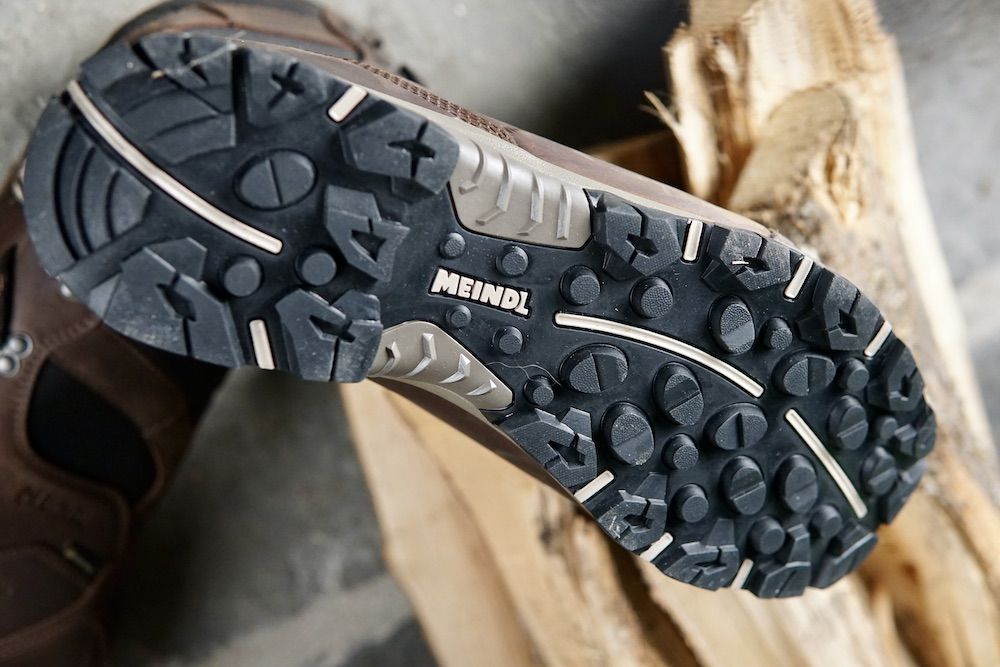
The EuroLight Hunter really shines on the trail—there aren’t a lot of full-size boots like this on the market that are so lightweight. What you also get with Meindl is durability. The company has been making sturdy hiking and hunting boots for a long time, and this highly rated pair is no exception.
best for tree stands

LaCrosse Alphaburly Pro
Pros
- Quick-drying comfort liner
- Natural rubber over insulated neoprene
- Incredibly durable
- Very lightweight
Specs
- Sizes: 6 – 15
- Insulation: 1600g Thinsulate
- Height: 18 in.
- Weight: 5.5 lbs
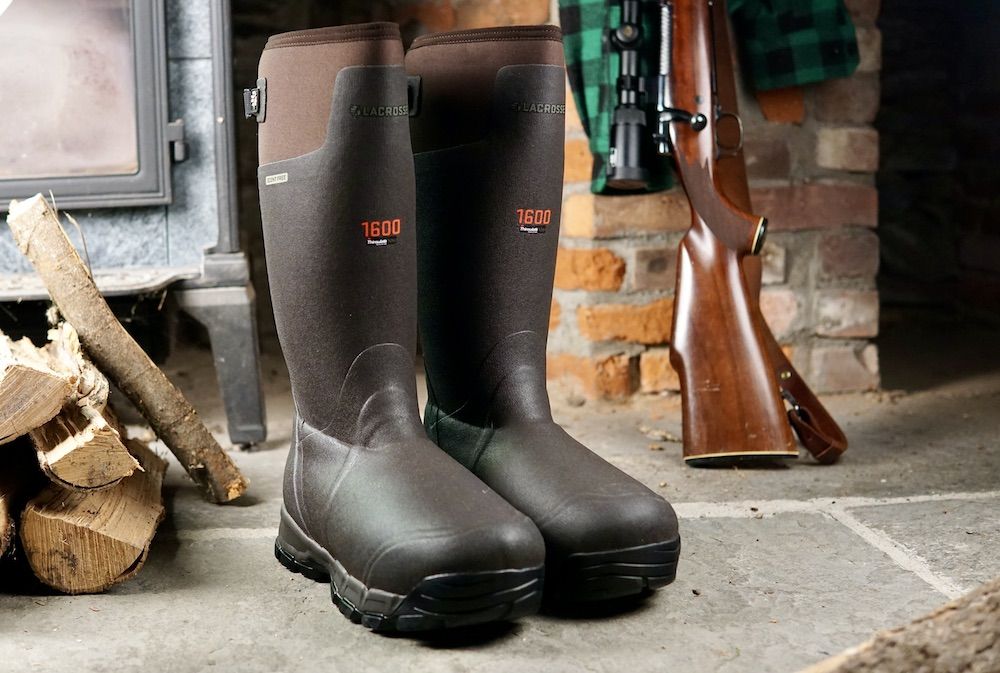
I probably don’t need to tell you that the LaCrosse Alphaburly Pro is the best cold weather hunting boot for tree stand hunters. Just look at the thousands of deer hunters who wear them every season. The Alphaburlys are tough as nails, won’t weigh you down, and are easy to climb in. They also help keep your scent down as you walk on the trail to your stand.
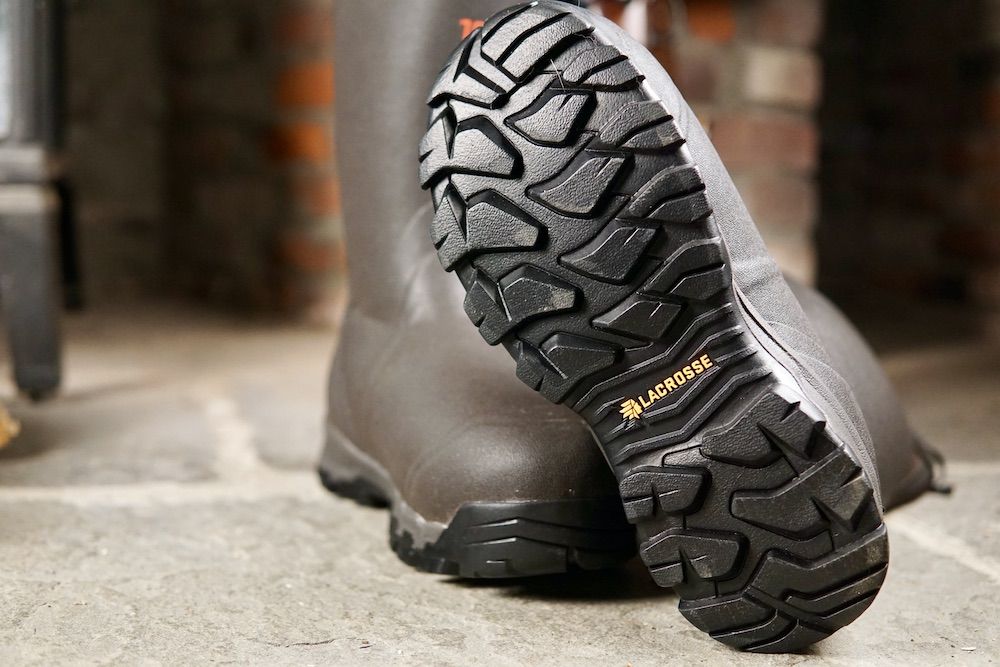
LaCrosse makes the insulated version of these boots with 1600 grams of Thinsulate. Personally, I’d wear them pretty late into the season. During my test, the Alphaburlys put up with a long stint in the ice trough. And on the trail, they were very comfortable. You can get into trouble with some rubber hunting boots because the quality just isn’t there. In my experience, LaCrosse makes some of the best, and I’ve seen them hold up under constant use for years without leaking. With full rubber over neoprene almost up the full length of the calf, I don’t doubt that the Alphaburly Pros can do the same.
best for upland hunting
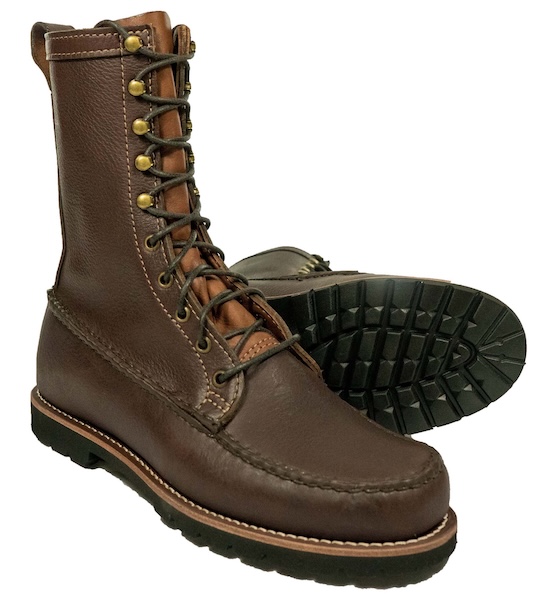
Gokey Supreme
Pros
- Heirloom quality
- Extremely comfortable
- Solid construction
Cons
- Expensive (but you get what you pay for)
Specs
- Sizes: 8 – 13
- Insulation: None
- Height: 10 in.
- Weight: 3.45 lbs
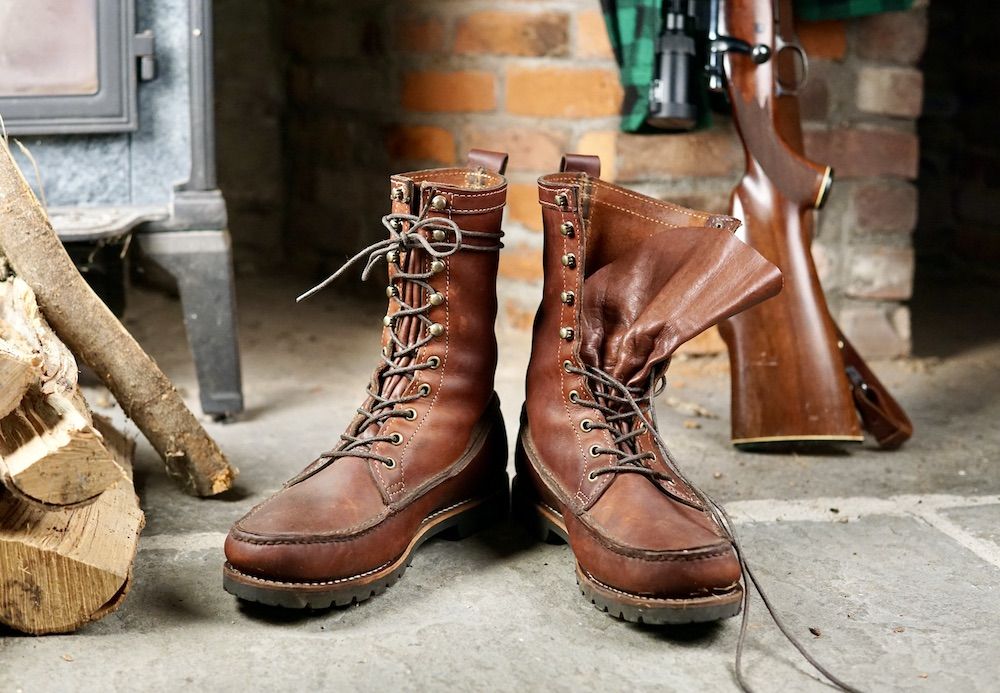
With no insulation whatsoever, the Gokey Supreme might seem like an odd pick for the best upland boot, but hear me out. On most upland hunts, no matter the temperature, you’re usually walking. An insulated boot can actually bog you down a bit, and I’ve found that pairing a good wool sock with a leather boot is a better choice.
The Supremes give enough room to add a wool sock and still stay comfortable. They may be pricey, but they are the last pair of upland boots you’ll probably buy. They’re built with an heirloom level of quality with a full leather midsole that you just don’t see on many boots today. Gokey makes their boots to order with 7- to 8-ounce oil-tanned bullhide leather. They’ll put up with brambles, thorns, and just about anything else the uplands might throw at you.
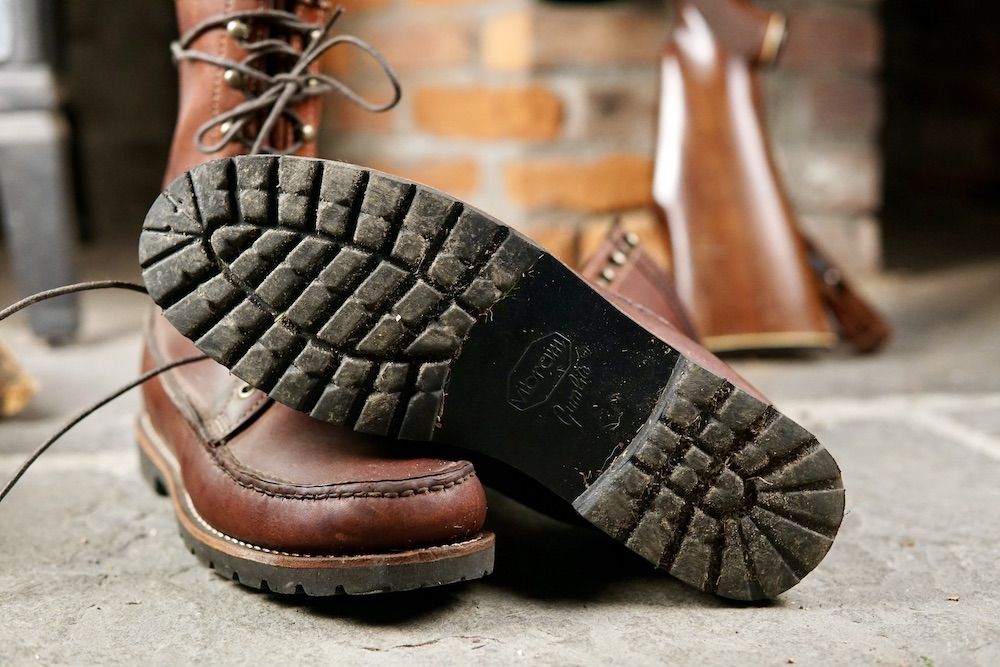
On your feet, the Supremes feel like wearing a pair of moccasins, and with time, they feel like the kind of boots that will almost mold to your feet. It’s the kind of quality you have to pay for, but Gokey really delivers. Best of all, they’re handsome enough for a night out on the town once you scrape the mud off of them.
best for elk hunting

LaCrosse Ursa LS GTX
Pros
- Lightweight construction
- Very warm
- 100 percent waterproof
Specs
- Sizes: 7 – 14
- Insulation: None
- Height: 10 in.
- Weight: 3.8 lbs
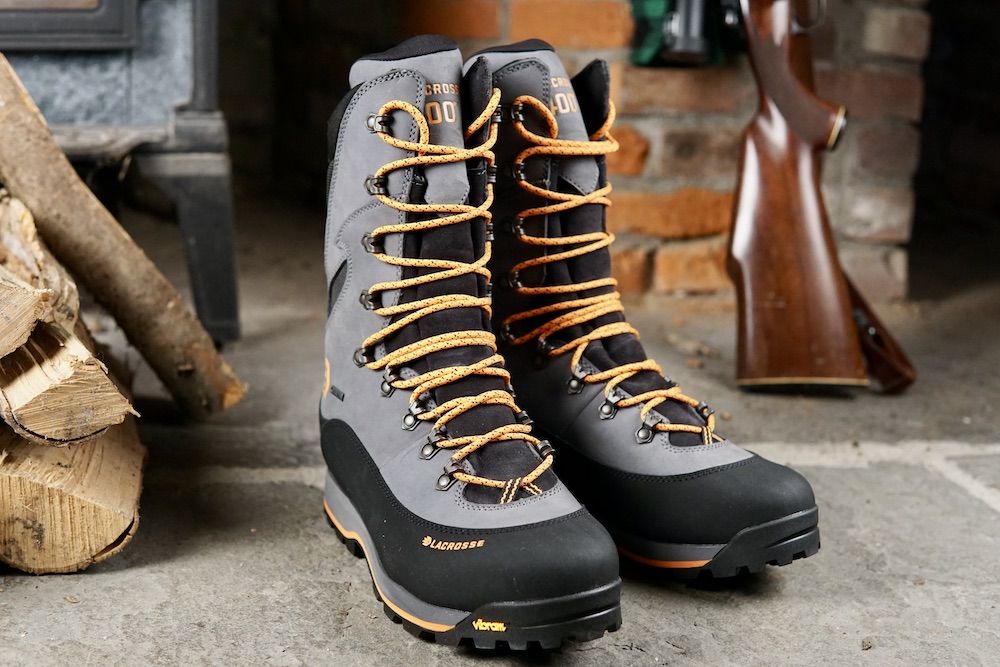
The LaCrosse Ursa LS GTX is a newcomer to the world of mountain hunting boots. They’re lightweight for their size, stiff, and sit a little taller than most. These are all good things for a late-season elk hunt, where you might need to glass for hours on a cold hillside and pack meat for miles.
If the snow isn’t too deep, the Ursas are tall enough to wear without a pair of gaiters. They also have 400 grams of PrimaLoft insulation, giving them a bit of an edge over some similar mountain boots. The Ursas are made from a mix of suede and nylon to keep weight down, and I’d like to give them a few seasons of testing in the mountains to see how they’d hold up. But I know that LaCrosse tested their new mountain boots for years before releasing them to the public.
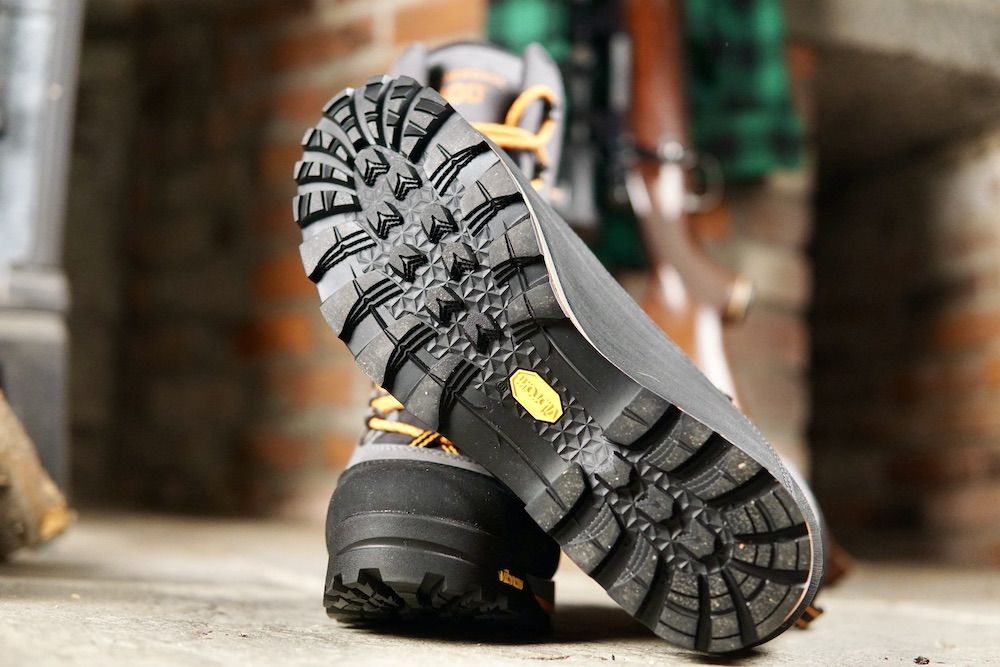
Wearing the Ursa feels a bit like wearing a hockey skate, and this can take some getting used to if you haven’t hunted in mountaineering boots before. With a load on your back, though, you’ll definitely appreciate the stiffness. LaCrosse combined the shank, lasting board, and midsole in the Ursa to reduce weight. And at just 3.8 pounds, they feel much lighter than other mountain boots of a similar size and strength.
How We Tested Cold Weather Hunting Boots
The boot picks we have here either come from years of experience in the field, or a recommendation from someone who has used them before. I formally tested most of the boots during the early fall—which wasn’t a great time to see how a cold weather boot performs, but I had a solution. I wore each boot in a trough full of ice until my feet got cold, timing each for a score.
I then compared how long I could last in the ice with the type of boot I was testing. Boots designed for extreme cold or for waiting out a deer needed to last a long time. Boots for Western hunting, where you might be on the move, then stop to glass for a while, didn’t. I also hiked in each of the boots to see how comfortable they are and how easy they were to break in. Finally, I evaluated the boots on materials and quality of construction, because you don’t want to buy a pair of boots only to need to replace them after one season.
What to Look for When Choosing Cold Weather Hunting Boots
Not all cold weather hunting boots are created equal and various outside factors will determine your selection. You have to consider things like hunting style, conditions, expected temperature, and insulation to find the perfect boot for you. Remember these considerations before you purchase your next pair of cold weather hunting boots.
Pursuit
Spend time thinking about what you hunt most during cold weather months. For instance, the boot I prefer for sitting in a tree stand waiting on a winter whitetail is not the same boot I want when trekking the Rockies looking to fill my late-season elk tag.
You don’t walk much if you’re a sit-and-wait deer hunter or when setting decoys in a field or river for ducks and geese. You sit idle more than you walk. When you sit idle in cold temperatures, blood flow slows to your extremities, which makes it hard to keep your feet warm. For this reason, deer and waterfowl hunters tend to focus on a guaranteed waterproof boot loaded with insulation. Most opt for calf-high rubber boots with no less than 1,200-grams of Thinsulate insulation. More insulation often means more weight and a bulky build, which means less comfort when walking, but the lack of comfort and weight gets forgotten about quickly when temps are in the negative digits and your toes are toasty warm.
Spot-and-stalk hunters, and those that chase upland birds, are on the move. Some spend time on horseback, and others navigate miles of craggy terrain in hopes of finding big-game glory. When you’re on the move, blood is pumping to your extremities, which, as long as your feet remain dry, helps boost warmth. Most on-the-go cold weather hunters prefer boots with 600 to 1,000 grams of Thinsulate insulation. These hunters put a premium on a sole that promotes excellent traction and an upper build that hugs the ankles and doesn’t rub them raw. A waterproof body and a liner that wicks moisture are essential. Walking leads to sweating, and if the feet get wet or the waterproof build is sub-par, frostbite can quickly set in.
Fit
As you’re doing your research and narrowing your choices, try on the boots you want to purchase. You can order them online, but testing them in person is always better. Boot selection is highly personal, and many times over the years, I’ve put my feet in a pair of boots, walked a lap or three around the store, and decided they weren’t for me.
Insulation
As mentioned above, insulation is going to impact the warmth, weight, fit, and feel of your boots. The level of insulation should be based on the condition and temperatures you plan to hunt in. The colder it is, the more insulation you will want. This is where species, style of hunting, and application will all converge to determine the best level of insulation so you stay warm as well as comfortable while hunting.
FAQs
This is a tough question, but the bottom line is that you get what you pay for. The best hunting boot—cold weather, warm weather, whatever—are usually right at or just under $500. However, rubber boots, typically used for whitetail and some waterfowl pursuits, will usually be less than $300.
I’ve yet to find a boot warmer than LaCrosse’s Alphaburly Pro if you’re looking for sheer warmth. The boots are a tad clunky and don’t promote a great foot-to-ground feel, but during one particular goose hunt, temperatures, with the wind chill, dipped to -24 degrees Fahrenheit, and my feet were toasty. The boots have great width, which allows you to use a liner sick and heavyweight over-the-calf sock.
Don’t be deceived, and don’t talk yourself into a boot with less than 600-grams of Thinsulate insulation if you want a cold weather hunting boot. Yes, even if you are an active walking hunter that spends very little time sitting and waiting on the game. Cold weather is too much for 400-gram Thinsulate boots to handle, and if you stop walking for just a few minutes, you’ll quickly realize it.
The short answer is: Yes. If you’re doing your boot research and the answer seems to be no, find another cold weather hunting boot. Snow and cold weather hunting often go hand in hand, and you’ll need a good waterproof boot. I also prefer a boot that’s at least 8 inches tall when hunting in the snow, and I still add gaiters to ensure snow and ice don’t get into the upper part of my boots. Often, especially with full-leather boots, you’ll need to treat the boots once a year with a waterproofing boot wax.
Of course, having great cold weather boots is a prerequisite to warm feet, but there are other things you can do to keep your feet warm. I like to wear a thin sock liner and then put a pair of Smartwool Hunt Extra Cushion socks over the liner. Another tip, but only one I would recommend for sit-and-wait hunters, is to take some Hot Hands Body Warmers—the Foot Warmers are terrible—and toss them in the bottom of your boots.
As with any product category, longevity depends significantly on the product’s construction. For example, I’ve been wearing my Kenetrek Mountain Extreme 1000s for half a decade. The soles need replacing, and before this season starts, I’ll send them off and have the company put new bottoms on the boots. Side of that, the rubber rand has protected the boot, and the leather build seems bulletproof. However, I am a bit OCD about boot care, and I’m sure my yearly waxing, leather cleaner, and the like have kept the life in these boots.
My wife’s go-to boots, Danner Women’s Wayfinders, have proved to be less durable and haven’t lasted quite as long. Why? Again, it’s the build. Though these boots are solid, they are a mixture of nylon and leather.
You can’t beat Gore-Tex with Thinsulate Ultra insulation in my book. The insulation is warm and holds up well in the boots over the years.
Final Thoughts
When it comes to finding the best cold weather hunting boots, the most important thing to consider is how you hunt. Match your boot to your hunting style, and you’ll have a great in-the-field partner that will keep your feet warm, dry, and comfortable. Also, don’t be afraid to be picky. Try on multiple pairs of boots, walk around the store, and ask lots of questions. You’ll be dropping some greenbacks, and nothing will help you make a more informed decision than doing some in-the-store testing.
Why Trust Us
For more than 125 years, Field & Stream has been providing readers with honest and authentic coverage of outdoor gear. Our writers and editors eat, sleep, and breathe the outdoors, and that passion comes through in our product reviews. You can count on F&S to keep you up to date on the best new gear. And when we write about a product—whether it’s a bass lure or a backpack—we cover the good and the bad, so you know exactly what to expect before you decide to make a purchase.
content_hunting-apparel-accessories
EXCITING NEWS
Membership Now Includes

Recommended Products
Read the full article here