
Most people bring a dog home for companionship, and that reason is completely valid on its own. But somewhere between the puppy chewing on shoes and the long walks around the neighborhood, a lot of owners start to wonder what their dog could actually do if things ever got difficult.
Could the dog warn them if someone approached the house at night?
Could it help track a lost family member through the woods?
Could it stay calm and obedient if the household suddenly had to bug out with limited supplies?
The truth is that most dogs are capable of far more than fetching a ball or guarding a couch cushion, and turning a pet into a genuine survival asset does not require a military-grade training program or a kennel full of expensive equipment.
There is also the other, less “pleasant” truth that folks do not like to hear, that their dog is in most cases a liability during a crisis. And that happens not because it’s a bad dog or they are bad owners, but because their training simply didn’t include the steps that are required to be mastered during an emergency preparedness scenario.
There is no need to send your dog off to a specialized facility for months or hire a trainer who charges a fortune to get meaningful results. With consistency, patience, and an understanding of what your particular breed and temperament are suited for, almost any healthy dog can be shaped into a companion that adds real value during emergencies, not just affection on the couch.

As a dog owner and person who has spent all his life surrounded by dogs I will walk you through the obedience foundation every working dog needs, how to build alert and guard instincts responsibly, how to introduce basic trailing skills, and what gear and care routines matter when the unexpected happens.
I have to warn you that none of this turns your dog into a machine and it simply gives the animal a job, and believe me when I tell you that most dogs, especially working and herding breeds, are happier when they have one.
Start With Obedience That Actually Holds Under Pressure
Every skill that matters in a survival context sits on top of basic obedience, and that obedience has to be reliable in chaotic conditions, not just in a quiet living room. A dog that sits perfectly during a training session but ignores commands when there is gunfire, sirens, or a stranger running toward the family is not obedient in any meaningful sense. The goal is to build commands that survive distraction, fear, and fatigue.
The Core Five Commands
Sit, stay, come, heel, and leave it form the backbone of a working relationship between handler and dog. These commands need daily practice in short sessions, gradually layered with distractions such as noise, other animals, food on the ground, and unfamiliar people. A dog that comes immediately when called, even with squirrels darting past or a neighbor’s dog barking, is already more useful than one with perfect manners indoors but no focus outside.
Training in varied locations matters more than most owners realize. A command learned only in the backyard often falls apart at a campsite or a trailhead. Rotate training spots weekly and increase the difficulty of the environment gradually.
Impulse Control and Calm Under Stress
Beyond the basic commands, a survival-ready dog needs impulse control. This means waiting for food without lunging, staying still while a stranger walks past, and tolerating sudden loud sounds without bolting. Desensitization exercises, where you play recordings of thunderstorms or fireworks at low volume and gradually increase it while rewarding calm behavior, build a foundation that pays off enormously during an actual emergency. A dog that panics at the first clap of thunder is a liability when a family is trying to move quickly and quietly.
Building Reliable Alerting Without Creating a Nervous Wreck
Alerting is one of the most valuable instincts a household dog can offer, but it needs shaping. Left untrained, a dog might bark at every passing car, which is exhausting and useless. Trained properly, the same dog learns to distinguish background noise from genuine cause for concern, then signals that difference clearly.
Teaching the Alert Bark
Start by rewarding the dog for barking once or twice when someone knocks or approaches the door, then teach a release command such as quiet so the barking does not spiral into nonstop noise.
Over time, attach the same alert behavior to specific triggers, like an unfamiliar vehicle in the driveway or a person approaching the property line at night. The key is reinforcing the alert itself while also reinforcing the stop. A dog that knows how to turn the alarm off is far more useful than one that simply will not stop barking once it starts.
Reading Body Language Changes
Many dogs alert through body posture before they ever bark, and learning to read those cues makes the dog more useful even when silence matters, such as during a nighttime watch. Ears pinning forward, a stiff tail, a sudden stop in movement, or a fixed stare toward a specific direction often precede vocal alerts by several seconds.
Spend time observing your dog in different settings so you start to recognize its individual tells. This kind of familiarity cannot be taught through a course. It only comes from real hours spent with the animal in different environments.
Guarding Skills That Protect Without Creating Liability
Guard work is where a lot of well-meaning owners get nervous, and rightfully so. An aggressive dog with no off switch is dangerous to the family, to visitors, and potentially to the dog itself if it ever bites the wrong person. The goal is not to create an attack animal. The aim is a dog that positions itself protectively, holds ground when needed, and responds to a clear command to stand down.
Positioning and Presence
Many breeds naturally position themselves between their family and a perceived threat without any formal training at all. Reinforce this by rewarding the behavior when it happens appropriately, such as the dog standing slightly in front of a child when a stranger approaches at the park. This builds confidence in the dog’s role without requiring it to show teeth or act aggressively. Presence alone deters a surprising number of would-be problems.
Controlled Bite Inhibition
If you intend to go further with protection-level training, this is the point where a professional trainer becomes worth the investment. Bite work, done poorly, creates dogs that are unpredictable and unsafe. Done correctly, it teaches the dog to engage only on specific commands and release immediately on a second command.
Owners considering this level of training should be honest about their own experience and seek a certified protection trainer rather than attempting it alone from online videos.
Most households genuinely have no need for a dog trained to bite on command. The deterrent value of a confident, alert, physically capable dog standing its ground is usually enough. Save the advanced protection work for situations where it is truly warranted, such as rural properties with a documented history of break-ins or specific safety concerns.
Trail and Tracking Skills for Search, Travel, and Navigation
A dog’s nose is one of the most underused survival tools in an average household. Dogs can track a scent trail, locate a missing family member, find a dropped item, or travel confidently on unfamiliar terrain without panicking. These skills take longer to build than basic obedience, but they pay off enormously if a family ever needs to evacuate on foot or search for someone in the woods.
Introducing Scent Work
Start small and hide a treat or a favorite toy in a room and let the dog search using its nose rather than its eyes. Gradually move the game outdoors, hiding items in tall grass or behind trees, then expand to having a family member walk a short distance away and hide while the dog follows the scent trail to find them. Reward generously every time the dog succeeds, and keep sessions short so it stays enthusiastic rather than bored.
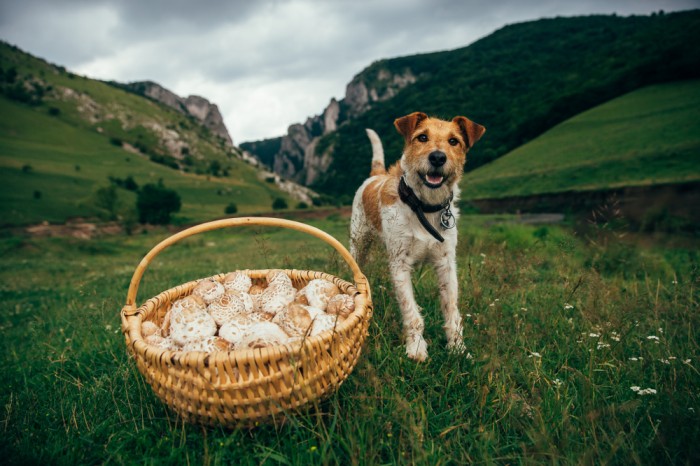
Over weeks and months, extend the distance, add time delays between the hide and the search, and introduce more complex terrain. Many owners are surprised at how quickly dogs pick up scent discrimination once the game becomes a regular part of walks and yard time. I bring my dog with me during my wilderness outings every time and I’ve did scent work “play” in various environments. An outdoors scenery not only helps improve the search capability of the animal but it also helps train him to, ignore, other “distracting” scents.
Building Trail Stamina and Confidence
A dog that has never walked more than a mile around the block will struggle on a five mile hike with a loaded pack on its back. Build up trail stamina gradually the same way you would for a person, increasing distance and difficulty over months. Take the dog on varied terrain, including rocky paths, shallow water crossings, and inclines, so it learns to navigate obstacles without hesitation or injury. What I can highly recommend here is to always bring a dog first-aid kit with you since the dog will often injure his paws on rough terrain.
Off-leash reliability matters too. A dog that strays too far or refuses to return when called becomes a hazard on the trail rather than a help. Practice recall constantly in low-distraction settings before trusting the dog off leash somewhere remote.
Basic Gear Every Survival-Ready Dog Should Have
Training matters most, but the right gear keeps a capable dog functional when conditions get rough. None of this needs to be expensive or elaborate.
A sturdy harness with a front clip, which gives better control than a collar alone during sudden movement or pulling
A long lead, around fifteen to thirty feet, for tracking and recall practice in open areas
A basic dog first aid kit including gauze, vet wrap, tweezers, antiseptic, and a muzzle for emergencies. I recommend the first aid kits from Adventure Medical Kits because these never let me down.
Boots for the paws if you live somewhere with extreme heat, ice, or rough terrain. Spend time with your dog until it gets used to the boots and don’t assume you will break them in on the trail.
A lightweight pack the dog can wear to carry its own food and water on longer trips
A collapsible water bowl and a few days of backup food stored where you keep other emergency supplies
There is no need to buy tactical gear marketed toward survivalists. Standard outdoor and hiking equipment for dogs works just as well and costs far less.
Care Considerations During an Actual Emergency
All the training in the world will not help if the dog gets sick, dehydrated, or injured during an emergency and the family has no way to respond. A few practical habits make a real difference.
Hydration and Nutrition Under Stress
Stress and exertion increase a dog’s water needs significantly. Offer water often during evacuation or extended travel rather than waiting for signs of thirst, since dogs frequently do not pace themselves well under stress. Keep familiar food on hand too. A sudden diet change during an already stressful event can cause digestive upset at the worst possible time.
Recognizing Exhaustion and Injury Early
Dogs often push through pain or fatigue because they want to stay with their people, so owners need to watch for subtle signs rather than waiting for obvious limping or collapse. Heavy panting that does not slow, lagging behind on the trail, or reluctance to jump or climb can all signal a problem developing beneath the surface. Build in regular rest stops and paw checks during any extended trip, checking for cuts, embedded debris, or cracked pads.
Vaccinations and Records
Keep vaccination records and basic medical history somewhere accessible, whether that is a waterproof folder in a bug-out bag or a saved file on a phone. If the dog needs emergency veterinary care during a disaster, proof of rabies vaccination and other key shots can save valuable time and prevent the dog from being turned away or quarantined.

My personal experiences
After spending all my life around working dogs and family pets alike, I have come to believe the line between the two is much thinner than most people assume. I’ve taken my dogs with me in the wilderness during different seasons, countless time and I honestly believe that a dog does not need a special pedigree or an intense training program to become genuinely useful.
What it needs is a consistent owner who treats training as an ongoing relationship rather than a weekend project, and who gives the dog real chances to practice in conditions that resemble actual life rather than a sterile training room.
I would rather have a mid-sized mutt with solid obedience, a reliable alert bark, and some trail miles under its paws than a purebred guard dog that has never left the backyard. Capability comes from exposure and repetition, not bloodlines. Start with the basics, stay patient through the slow stretches, and let the dog’s natural instincts guide which skills come easiest. Most importantly, keep the bond between you and the dog at the center of all of it.
A dog that trusts its owner completely will work harder, calm down faster, and stay focused longer than one that is simply following rote commands. That trust, built over months and years, is the real foundation of any survival partnership worth having.






Read the full article here