
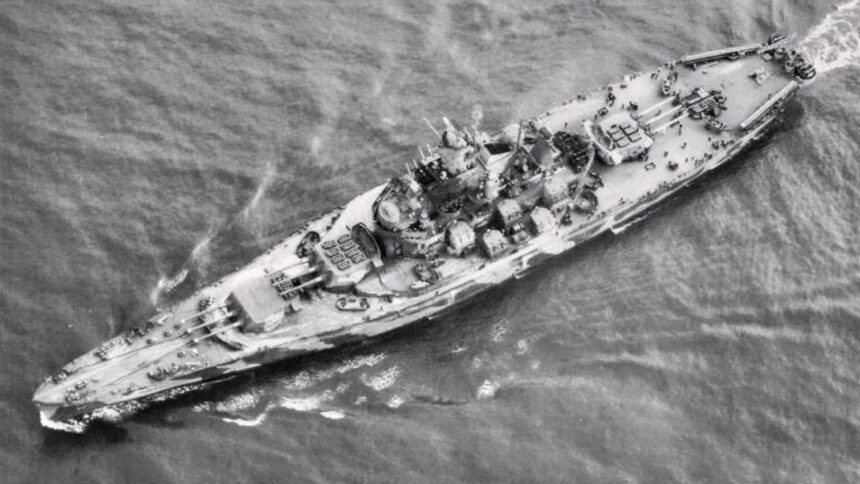
Summary and Key Points: The USS Alabama measures 108 feet 2 inches across the beam. The locks of the Panama Canal are 110 feet wide. When the state of Alabama got its battleship back in 1964 and towed her home from Washington State, she went through with eleven inches to spare on each side — a 45,000-ton armored warship threaded through a concrete box with less than a foot of daylight either way. That hull was laid down at Norfolk Navy Yard on February 1, 1940, and more than 3,000 workers running around the clock finished her in thirty months, nine months ahead of schedule.
USS Alabama Was One Powerhouse WWII Battleship
The United States Navy once deployed a 90 million-pound (45,000-ton) warship during the Second World War. No, this great ship was not an aircraft carrier.
It was a battleship.
It carried 129 guns.
The USS Alabama (BB-60) was an $80 million warship that began construction at the Norfolk Navy Yard on February 1, 1940.
More than 3,000 workers, operating around the clock, completed the warship in 30 months — nine months ahead of schedule.
She was launched on February 16, 1942, and commissioned on August 16 of that same year.
The Alabama stretched a whopping 680 feet from bow to stern and measured 108 feet, 2 inches across the beam.
USS Alabama in Mobile Alabama. Creative Commons Image.
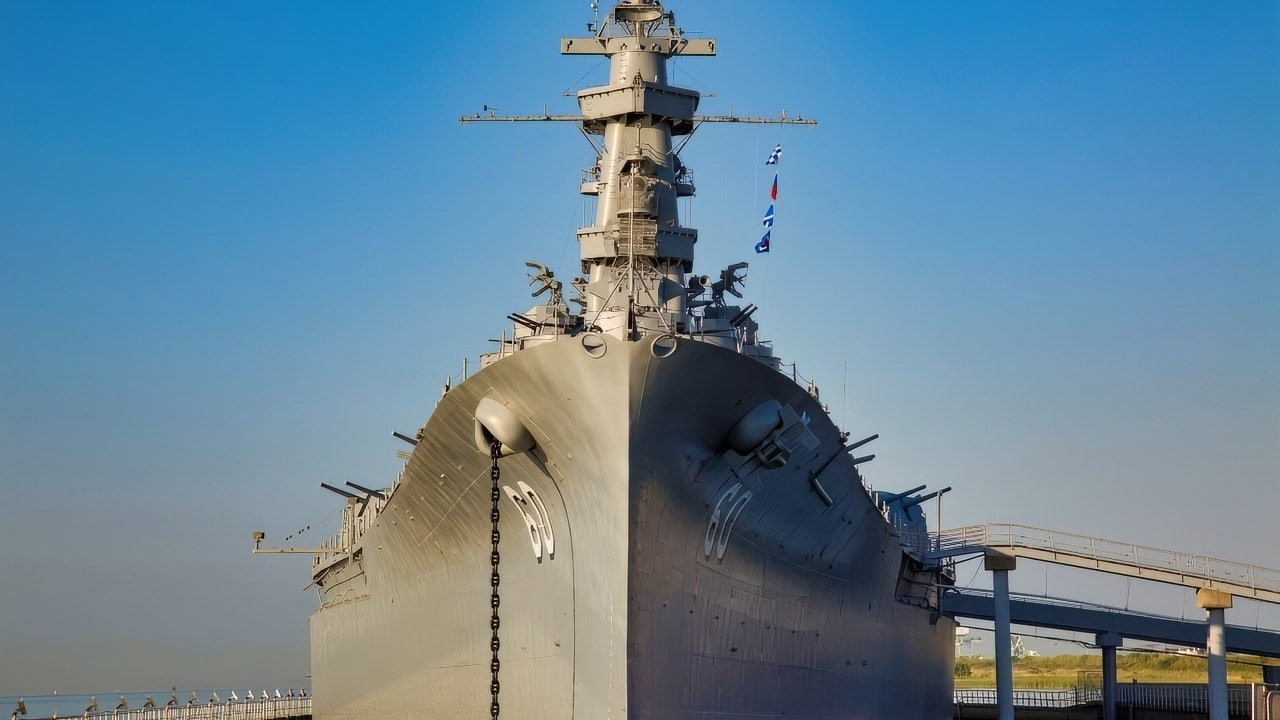
The USS Alabama Battleship Memorial Park in Mobile, Alabama. Creative Commons Image.
Two thousand five hundred officers and sailors crewed the battleship. Even though she was an armored behemoth bristling with heavy weapons, this ship could clock in at 27.5 knots (around 32 miles per hour).
And what about her great guns?
Mighty A (A is For Arsenal)
Alabama delivered in spades when it came to her armaments. Nine 16-inch/45-caliber Mark 6 guns were arranged in three triple turrets.
Each could fire an armor-piercing shell weighing a heavy 2,700 pounds that could fly a distance of more than 20 miles when fired.
Her secondary battery consisted of 20.5-inch/39-caliber guns in ten twin mounts.
Her wartime anti-aircraft armament included batteries of 40mm Bofors and 20mm Oerlikon cannons.
In all, her guns numbered nearly 130.
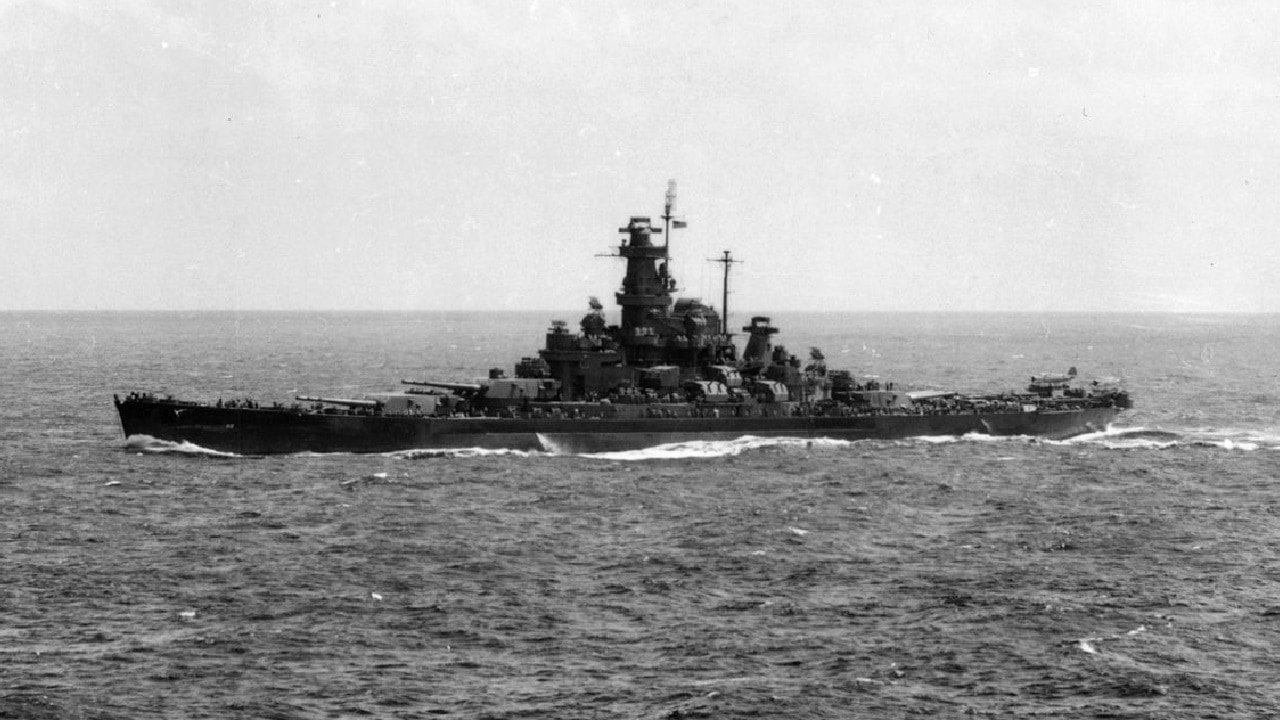
South Dakota-Class USS Alabama Battleship.
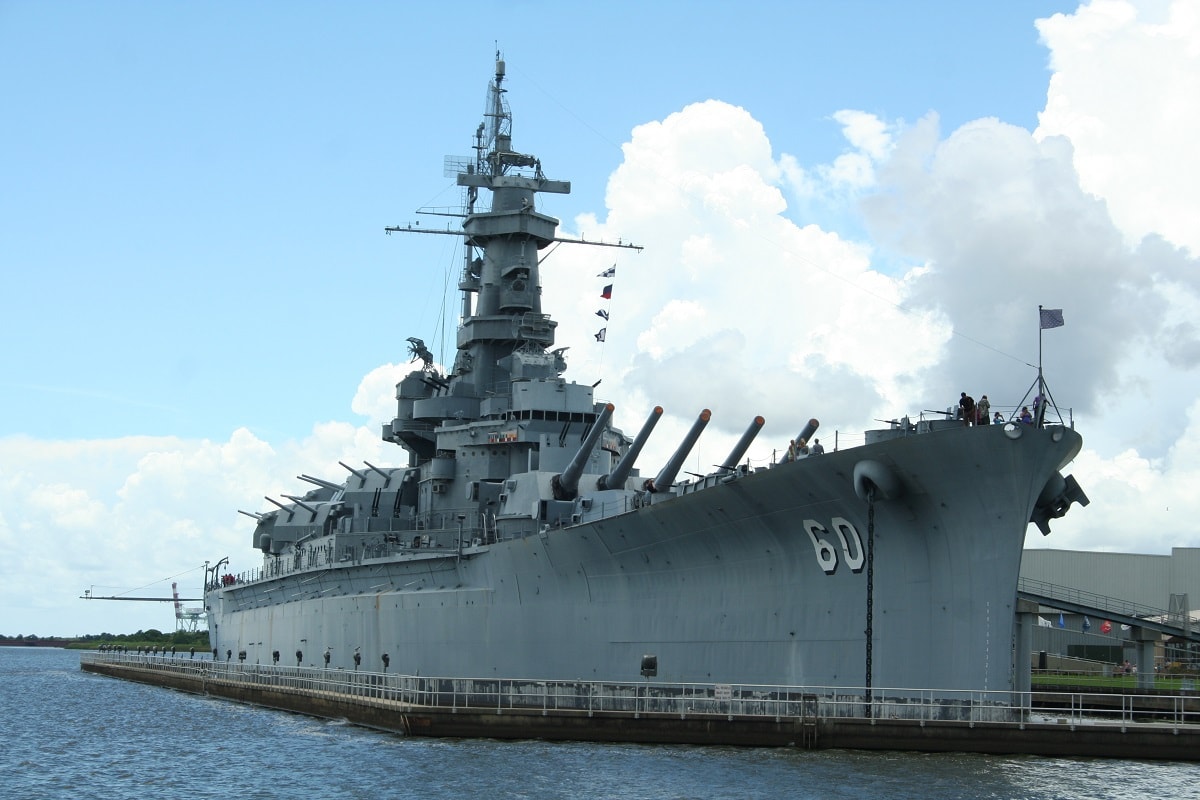
USS Alabama Battleship
Hence, the great ship’s legendary nickname of the “Mighty A.” She was truly a force to be reckoned with.
Alabama was the fourth (and final) unit of the iconic South Dakota-class battleship.
Her standard displacement was officially 35,000 tons, reflecting the treaty restrictions under which the design originated.
Loaded for combat, however, the battleship approached 45,000 tons.
Meanwhile, her armor and firepower were crammed into a relatively compact hull.
Armor approximately 18 inches thick protected those main battery turrets. Eight boilers supplied steam to four turbine sets driving four propeller shafts, producing roughly 130,000 shaft horsepower.
Originally Meant to Kill German Battleships
Alabama entered the war not against Japan, but against the possibility of a German battleship breaking into the Atlantic.
Indeed, in 1943, the Alabama and her sister ship, the USS South Dakota, were temporarily assigned to Britain’s Home Fleet.
Their mission involved protecting Arctic convoy routes and guarding against German heavy surface warships, particularly the legendary German battleship Tirpitz.
Too bad for the battleship aficionados of today that no such showdown between the Mighty A and the Tirpitz ever occurred.
Going to Fight Japan
Mighty A’s time in the British Home Fleet was truly short-lived, as she was redeployed to the Pacific that same year. In the Pacific Theater of World War II, the Alabama gained notoriety.
She became part of the fast carrier force, using her extensive anti-aircraft batteries to defend US carriers while employing 16-inch guns against Japanese positions ashore.
During the Gilbert Islands campaign, for example, Alabama supported operations around Tarawa and Makin Islands.
The Mighty A even fired 535 rounds into Japanese positions dug into Nauru.
By the war’s end, Alabama participated in operations around the Marshalls, Truk, the Marianas, Palau, Yap, Ulithi, Guam, the Philippines, and Japan itself.
In June 1944, the Mighty A stood out during the Battle of the Philippine Sea.
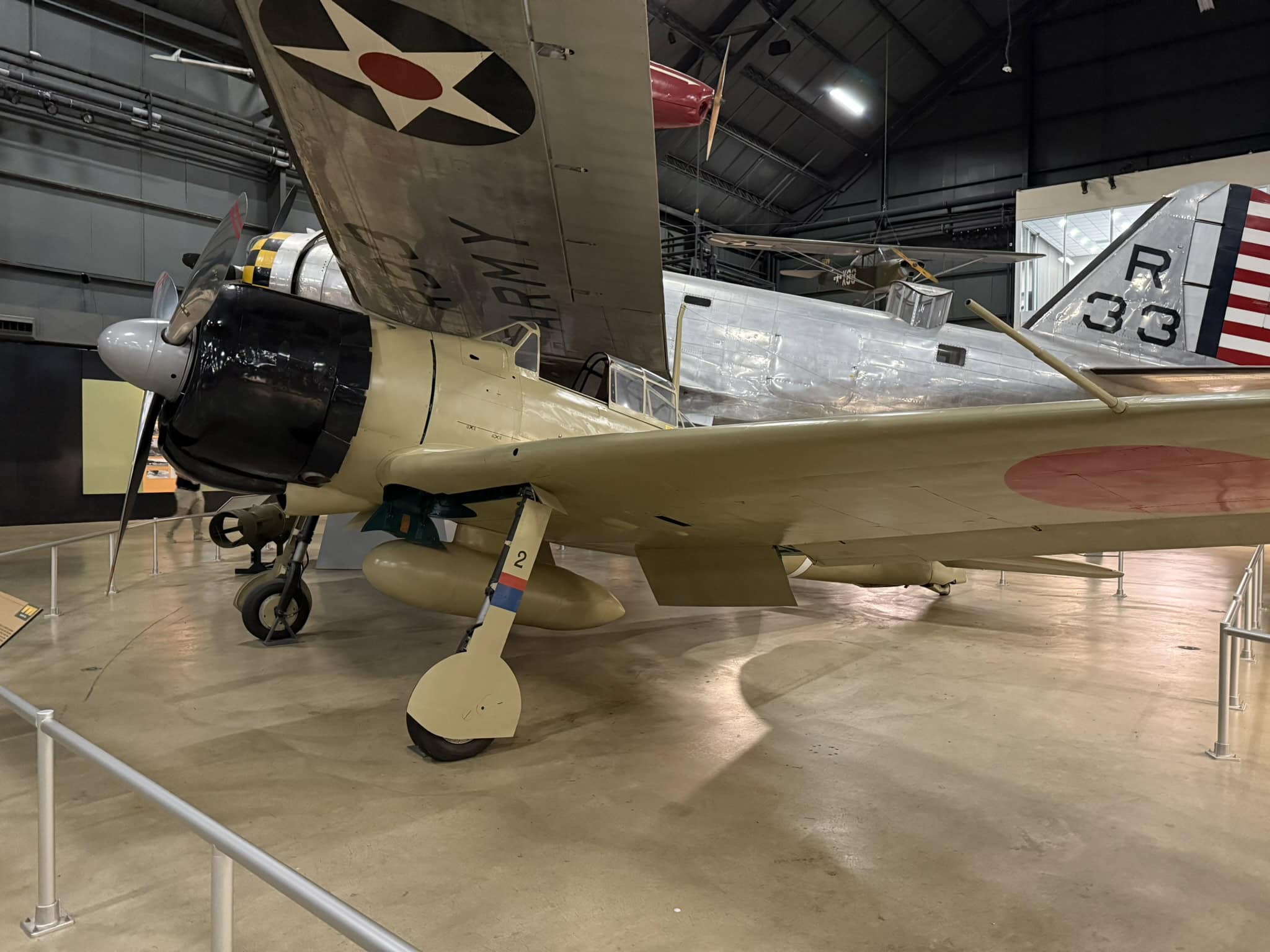
Japan Zero Fighter. Image Credit: 19FortyFive.com Taken at the National Museum of the U.S. Air Force.
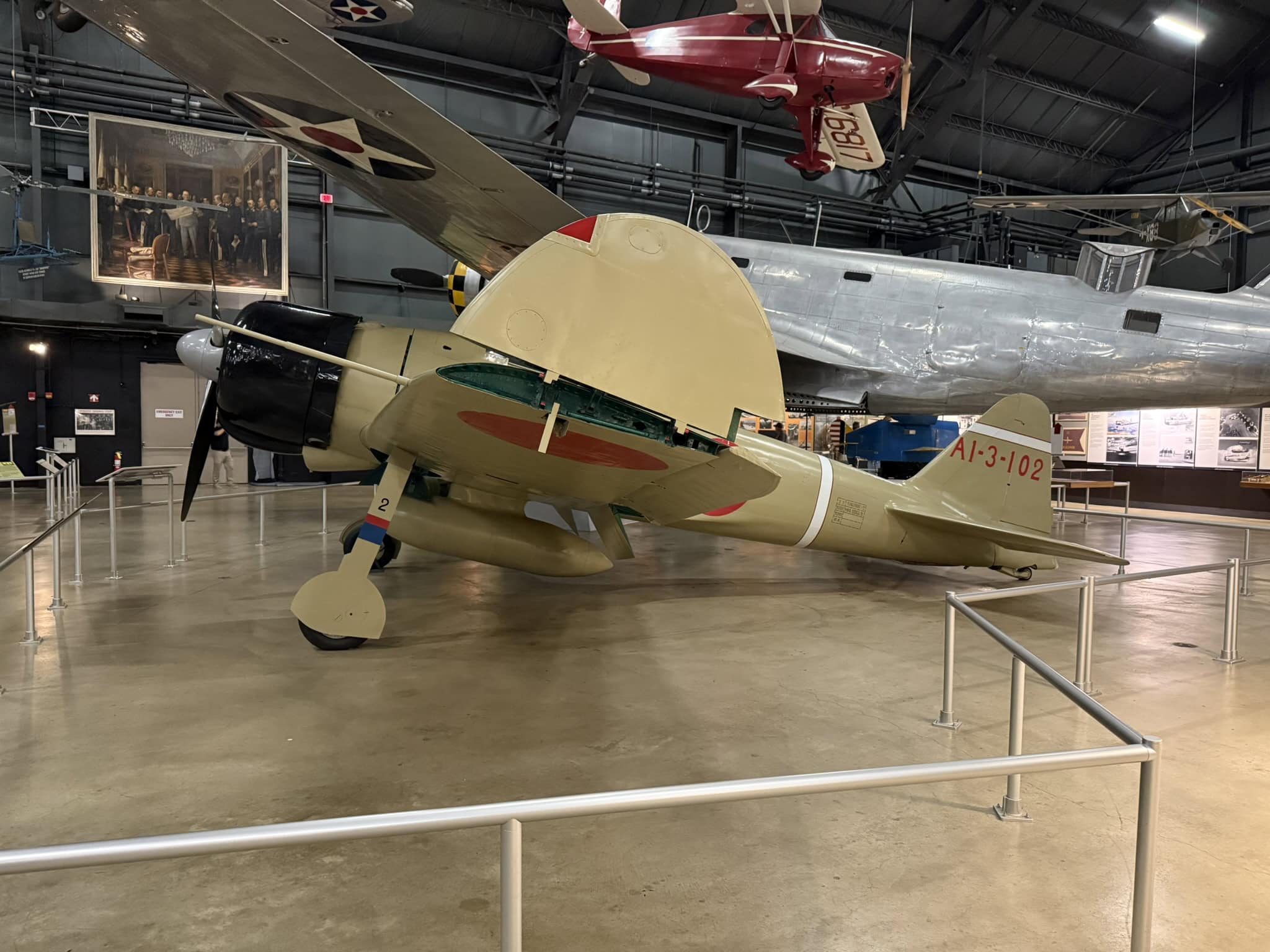
Japan Zero Fighter. Image Credit: 19FortyFive.com Taken at the National Museum of the U.S. Air Force.
During the Great Marianas Turkey Shoot, her SK-2 radar detected approaching Japanese aircraft at roughly 190 miles and confirmed the threat at about 140 miles, giving the American fleet a critical warning.
From there, the Mighty A participated in the Battle of Leyte Gulf and even survived the infamous December 1944 typhoon that sank three American destroyers.
That storm, however, caused the Alabama to roll more than 30 degrees.
The Mighty A ultimately underwent a massive overhaul and returned to combat by 1945.
She supported major combat operations around Okinawa and eventually brought her 16-inch guns directly against the Japanese home islands.
By August of that year, following the dropping of two atomic bombs on Hiroshima and Nagasaki, as well as the introduction of the Red Army against the Imperial Japanese Army in Manchuria, Tokyo surrendered to the United States, thereby ending WWII.
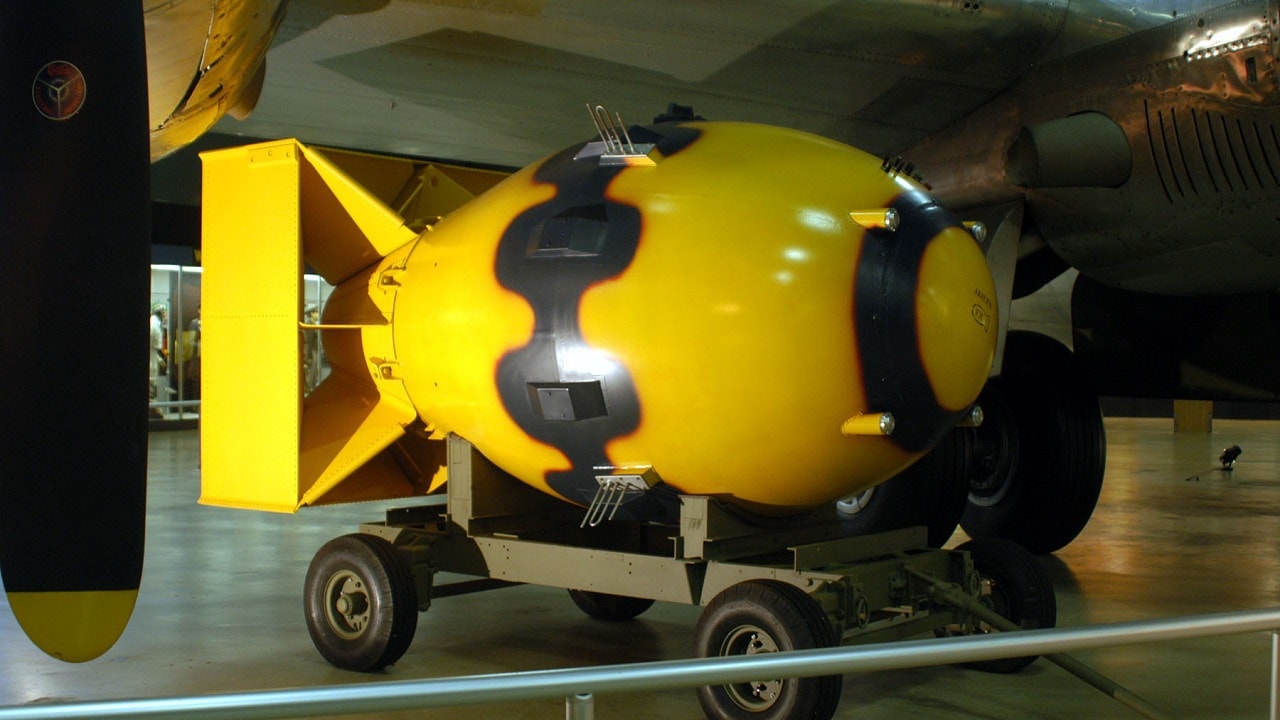
DAYTON, Ohio — “Fat Man” atomic bomb at the National Museum of the United States Air Force. (U.S. Air Force photo)
Decommissioning & Museum Ship
Alabama was decommissioned on January 9, 1947, after less than five years in service. She remained in the Pacific Reserve Fleet until being struck from the Naval Vessel Register on June 1, 1962.
The Navy wanted to scrap her.
However, Alabama residents organized a campaign to save the great ship named after their beloved state. In 1964, the state received the battleship, after which the 35,000-ton vessel was towed from Washington State via the Panama Canal.
Alabama’s beam exceeded 108 feet, meaning she only cleared the Panama Canal with 11 inches on each side of the armored beast.
By the end of her time in service to the country, the USS Alabama had traveled around 218,000 miles; she had been credited with shooting down 22 enemy aircraft and earned an impressive nine battle stars.
In a surprising turn, despite her frontline service during the heaviest fighting of the Pacific Theater’s sea battles, Alabama suffered no combat fatalities from enemy action.
Today, the USS Alabama remains preserved at Battleship Memorial Park in Mobile, Ala. She is a testament to a bygone era.
A time in which the country was in the throes of a great power war; when America’s industrial strength was so great the country’s shipyards could churn out a capital ship months ahead of schedule, and then that ship was so well built she suffered no combat losses during her time in extreme combat, eventually seeing this massive, celebrated battleship decommissioned just a few short years after she entered service.
Compare that experience to today, and it is truly stunning to see how badly America’s industrial base has collapsed in 80 years since WWII.
As the United States flirts with another global great-power conflict, in which industrial strength and output will be the major determinants of victory, America finds itself on the wrong side of these developments.
About the author: Brandon J. Weichert
Brandon J. Weichert is the Senior National Security Editor at 19FortyFive.com. He also manages The Weichert Brief on Substack. Weichert also hosts “National Security Talk” on Rumble. He is the author of four bestselling national security books, the most recent of which is A Disaster of Our Own Making: How the West Lost Ukraine (Encounter Books). Follow him via Twitter/X @WeTheBrandon.