


Estimated reading time: 8 minutes
Everyone knows the importance of water in a survival situation. You can only survive without it for three days, but you’ll feel severely dehydrated after just one.
This is why water needs to be one of your biggest priorities. You should stock up on two gallons per day per person, but you should also know how to find and collect water.
Why? Because disasters happen when you least expect, and you could be away from home when the next one strikes. Or worse, your home—along with your water supply—could be destroyed.
In case either of these things happens, you need to know how to collect water. Here, then, are 13 ways to collect water during a disaster.
Want to save this post for later? Click Here to Pin It On Pinterest!
Natural Water Sources
The first way of finding water is obvious. Simply walk downhill (or toward clusters of bushes and/or trees) until you find a natural source of water in a lake, stream, river, or pond. If you can’t find one, try digging a hole about a foot deep. If the soil is moist enough, the hole should fill with a bit of groundwater. Shouldn’t be too hard, right?
Unfortunately, there’s also no guarantee you’ll find water this way, which is why you should know about some other methods…
Rainwater
Stretch out a tarp and tie it between four trees. If you can’t find four trees near each other, dig a wide and shallow hole in the ground, then lay the tarp over it and hold it in place with a heavy object over each corner.
When the rain falls, it will collect in the middle of the tarp. Pour the water from a tarp to a bucket when it starts to get heavy, then set the tarp back up to collect more rainwater. Repeat this process until it stops raining or you have plenty of water.
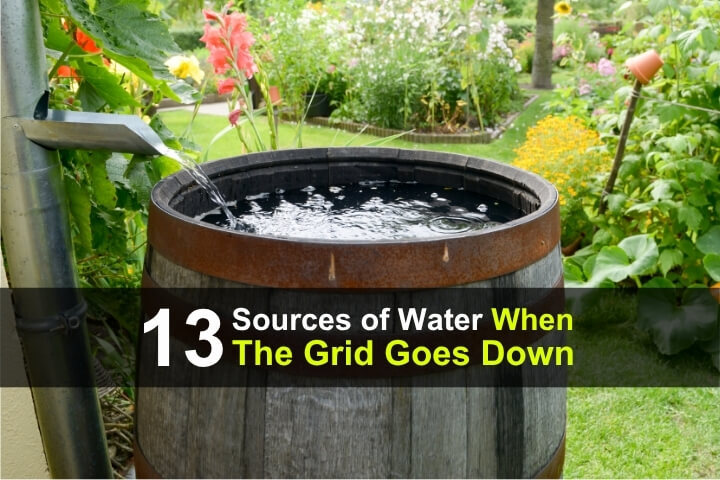
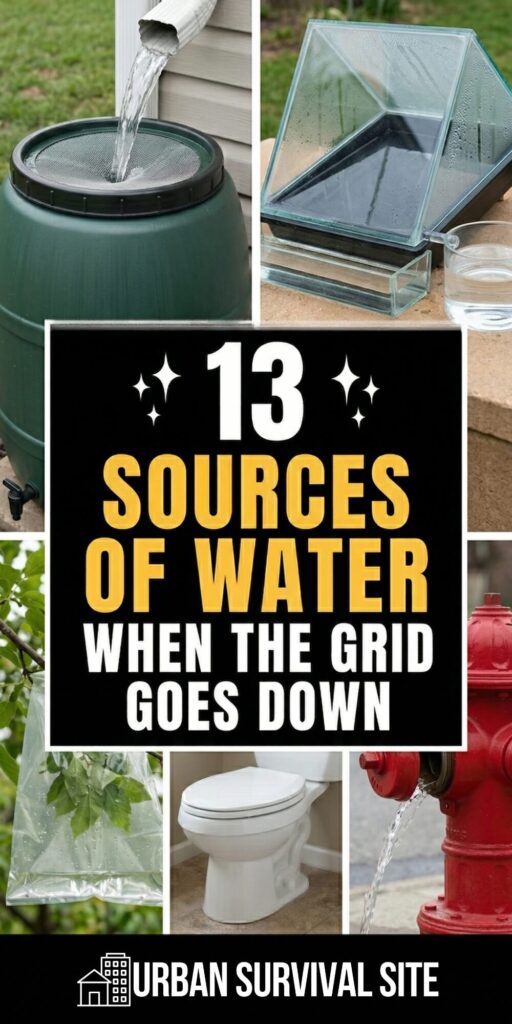
Better yet, modify your house’s gutters to direct rainwater into barrels with a rain catchment system.
City Parks
Most city parks have fountains, ponds, or streams. Collect as much water as you can but don’t drink it yet. Most park water has chemicals and pesticides in it, meaning it’s not safe to drink yet. To remove chemicals from water, it’s not enough to simply boil it or use a standard water filter. You’ll need a high-quality water purification system.
Check out this article for a few suggestions.
Water Heaters
Water heaters are capable of storing anywhere from thirty to a hundred gallons. Unlike water from city parks, the water in heaters is safe to drink because it has already been treated. The first step you will want to do is plug all the sinks and bathtubs and then run the water until they fill up or until the water quits running. Then you can get into the pipes in the walls and collect the water in there.
It’s going to require a lot of work to break through the walls and access the pipes, but if you’re really thirsty it will be worth the effort. This article explains how to drain a water heater.
Toilets
Yes, if worst comes to worst, you can always access the water in a toilet, at least in the tank. Unless your dog is with you, you probably won’t want the water in the bowl of the toilet for obvious reasons.
Most toilets hold anywhere from one and a half up to six gallons of water, so that’s too much water to pass up. You should absolutely boil and filter any water you collect from a toilet before you even think of drinking it.
Most of the water in the tank should be safe to drink (at least according to the CDC), unless someone recently pushed contaminated water back into the tank with a plunger. No one’s saying that it isn’t gross to think about, but if you want to stay alive and have no other water, it might be necessary.
Grocery Stores and Restaurants
Grocery stores and restaurants are goldmines for water. Check walk-in coolers and freezers for ice, which you can melt down and drink. Ice machines in restaurants and hotels are another great source. You’ll also find water in unexpected places like the steam trays on buffet lines, the coffee and tea urns behind the counter, and even the pipes running to commercial ice makers.
Don’t overlook canned goods either. Canned fruits, vegetables, and soups all contain liquid that can help keep you hydrated in a pinch. It’s not a long-term solution, but it could buy you enough time to find a better source.
Office Buildings
Scavenge office buildings and businesses for water dispensers, vending machines, and refrigerators. If you’re lucky, you’ll also find soda, coffee, tea, chips, pretzels, crackers, and so on.
But don’t stop there. Office buildings are full of overlooked water sources if you know where to look. Break rooms almost always have a coffee maker, and there’s usually water left in the reservoir. Same goes for any hot water dispensers used for tea. Check the employee refrigerators for water bottles, sports drinks, or anything else people left behind when they evacuated.
Larger office buildings often have their own water storage systems, including rooftop tanks that gravity-feed water down through the building. If the municipal supply has been cut, these tanks may still be holding thousands of gallons. Head to the top floor and work your way up to the roof to check.
Don’t forget the HVAC system either. Commercial air conditioning units produce condensate water as a byproduct of cooling the air. In a large office building, this can add up to several gallons a day. Look for the drip pans beneath air handler units, usually found in mechanical rooms or ceiling access panels. The water won’t be pretty, but it’s usable after filtering and boiling.
Fire Stations and Fire Hydrants
Fire stations are often overlooked as a water source, but they can be one of the best. Most fire stations have large water storage tanks on site, and the building itself will have the same water heaters and pipes as any other structure. If the station has been abandoned, use the same methods described earlier to drain the pipes and water heater.
As for fire hydrants, opening one without the right wrench is difficult, but not impossible. A hydrant wrench (also called a pentagonal wrench or hydrant key) is all you need, and they’re cheap enough to keep in your bug-out bag. Even after the municipal water supply fails, hydrants connected to elevated storage tanks or pressurized loops may still have residual water in them.
Solar Stills
The solar still is a classic survival method for collecting water. You’ll need a bucket, some rocks, green leaves, and a plastic sheet such as a tarp or a shower curtain.
Dig a hole about two feet wide and one foot deep, then set your bucket in the middle of the hole and surround it with the green leaves. Spread the tarp over the bucket and secure it with rocks on all four corners. Set a smaller rock in the middle of the tarp so that it weighs down over the bucket.
Over the course of the day, water will drip down into the bucket, and you should have around 150ml of water by the end of a twelve hour time period. Watch the video below for more details.
Transpiration Bags
Another classic water collection method is the transpiration bag. Although this method yields less water than a solar still, it’s also less work. All you need is a clear plastic bag and some cordage. Tie the bag around a branch that has lots of green leaves.
Throughout the day, moisture and water will collect in the bag. You can also set a small rock in the bag so that the water collects in one place. NOTE: Make sure the tree you use is not poisonous. The video below describes the method in more detail.
Gathering Dew
In the morning when it’s still moist outside, tie a clean rag around one or both of your feet and walk through an area of green grass where the dew has yet to evaporate. Each rag will become soaked with water which you can then squeeze into a bowl.
Repeat this process until the dew evaporates or you have plenty of water.
Fog Collection
This one sounds unusual, but it works, and in the right conditions it can produce a surprising amount of water. Fog collection is the process of stringing up a mesh screen or net between two posts and letting fog droplets collect on the surface, then drip down into a container below.
Almost any mesh material will work in a pinch, from window screen to shade cloth to even a clean piece of cheesecloth. The finer the mesh, the more water you’ll collect. Set it up perpendicular to the wind direction for best results. This method won’t do you much good in dry desert air, but if you’re in a coastal area, a mountainous region, or anywhere that sees heavy morning fog, it can yield a little bit of clean water.
Like this post? Don’t Forget to Pin It On Pinterest!
You May Also Like:

Read the full article here