

Over the past few days, much media attention has focused on the trip to Moscow and Kyiv by Steve Witkoff and Jared Kushner. The two Trump administration envoys held a three-hour session with Vladimir Putin in Moscow, followed by several hours of talks with Volodymyr Zelenskyy in Kyiv. Predictably, no breakthrough was achieved, although they reportedly arrived with several fresh proposals intended to prompt the two sides to agree to a cessation of hostilities. Considering the failed previous visits to Moscow and the Putin-Trump summit in Alaska, the fact that these visits took place was surprising in itself, as though Washington believed they might somehow produce a breakthrough.
Donbas Is Not a Territorial Dispute
The failure of the latest round of US efforts to secure a ceasefire in Ukraine is yet another testament to Washington’s continued misreading of the stakes in this conflict. Although the remaining parts of Donbas that Russia has not captured and continues to attack may seem like a territorial dispute — according to the Russian narrative, any Russian-speaking population is, in effect, part of the larger Russian nation — it is, in reality, a key strategic battleground for both combatants.
For Ukraine, holding its defensive perimeter in Donbas is a matter of the state’s very survival. For Russia, seizing it is key to completing its imperial reconquest of Eastern Europe and ultimately nullifying the post-Cold War settlement. If Ukraine were to surrender the defensive position in Donbas that it took years to build, it would, in effect, throw itself at Moscow’s mercy, with the steppe beyond offering Russia a direct path to Kyiv and, ultimately, paving the way for the conquest of the entire country. If Russia were to accept the status quo, the consequence for Putin would likely be the collapse of his regime, as the price in blood and treasure Russia has already paid for his ill-timed imperial adventure would inevitably lead to domestic turmoil that could bring about his downfall.
Putin Believes He Is Winning
More importantly, Putin seems to be convinced that he is on a path to victory, and that as he doubles down on attacking Ukraine’s energy infrastructure, the country will not be able to survive another winter – a concern echoed by Zelensky when he spoke of the urgent need for Western assistance to help Ukrainians survive the coming cold.
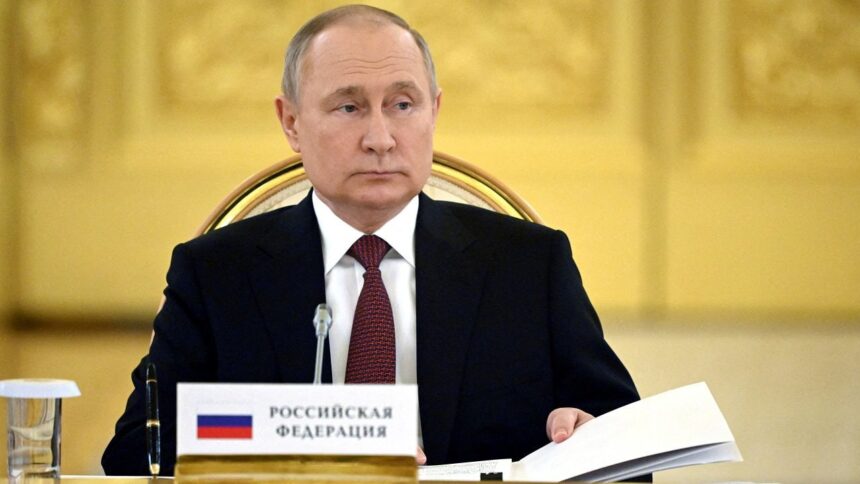
Russian President Putin. Image Credit: Creative Commons.
In short, if the Kushner-Witkoff visit yielded anything, it is a clear message that, for now, the war is likely to continue for another year, possibly longer. True, Putin is planning another major mobilization – with its own attendant risks for the regime in Moscow – but the results of this new Russian effort will not be seen on the battlefield for several months.
A Diplomacy Without a Strategic Concept
The overarching challenge facing the Trump administration’s efforts over the past two years to end the carnage in Ukraine has been the lack of a larger strategic concept for what a sustainable security architecture in Eastern Europe should look like.
Washington’s initial calculation that Russia, as a much larger nuclear power, was positioned to impose its terms on Ukraine, evident in the early months of the Trump administration, has given way to the realization that without Ukraine’s buy-in, raw power asymmetry alone may be insufficient to produce a durable settlement.
In part, the fact that Kushner and Witkoff’s September 6 visit to Kyiv marked their first official visit to Ukraine’s capital despite multiple prior trips to Moscow was an explicit recognition that the administration’s initial assumptions were being revised.
The Missing Architecture: A Balancing Coalition
Strategic meandering about the future of Central and Eastern Europe is not limited to the current US administration. Both the Biden administration and key European governments have shown a lack of strategic foresight beyond the repeated assertions of “for as long as it takes” and “Russia can’t win, Ukraine can’t lose.” The reality is that there are no one-country solutions to the region’s security dilemmas, and that any future stable system requires a power distribution that doesn’t invite constant re-litigation by Moscow.
Ending the war in Ukraine without putting in place an interlocking balancing coalition, backed up by American power, will at best only delay another cycle of aggression.
The United States should work with NATO’s flank countries, especially in the Nordic/Baltic Northeast Corridor, to create a sub-regional security architecture under NATO’s umbrella, powerful enough to deter Russia from threatening a horizontal expansion of the Ukraine conflict, thereby foreclosing its ability to leverage a larger threat against the Alliance and force concessions on Ukraine.
Most of all, it is time for Washington to stop viewing the Russia-Ukraine war as a conflict over territory and start framing a solution in a way that limits Moscow’s room to maneuver.
The Bottom Line
Putin will stop attacking only if he realizes the overall regional balance of power is shifting against Russia, and Ukraine will accept a resolution only if it doesn’t compromise its ability to maintain its sovereignty and independence.
About the Author: Dr. Andrew Michta
Andrew A. Michta is Professor of Strategic Studies at the Hamilton School at the University of Florida, a Nonresident Senior Fellow at the Atlantic Council in Washington, D.C., and a Visiting Fellow at the Hoover Institution at Stanford University. The views expressed here are his own.