

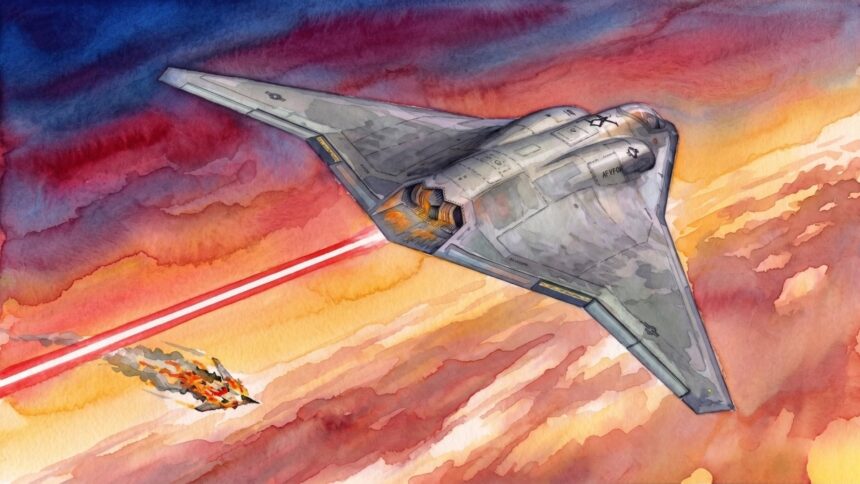
With the Air Force selecting Boeing to build its sixth-generation warplane, the F-47, the United States Navy is now racing to field its own sixth-generation system.The Navy is designating this project the F/A-XX. Right now, the race is on between Northrop Grumman and Boeing. Some debate remains over which defense contractor will win. It seems the Pentagon prefers to go with one main defense contractor for these projects these days. During the race for the fifth-generation warplane, the Department of Defense chose Lockheed Martin to develop both the F-22 Raptor and the F-35 Lightning II.
So the Navy has a big decision to make — or does it?
The Future of the F/A-XX
F/A-XX Boeing Image.
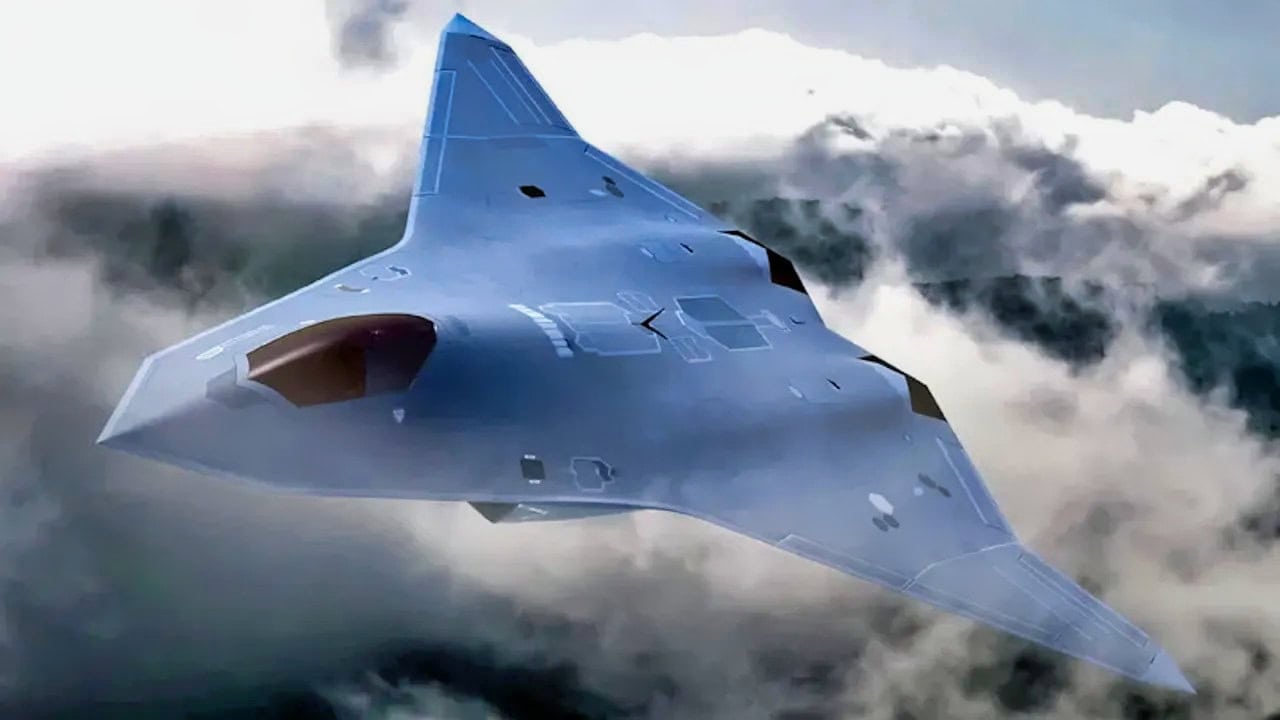
F/A-XX. Image Credit: Creative Commons.
Perhaps it will play out that way, too: with Boeing already awarded the F-47 contract, the firm might get the other major sixth-generation warplane project.
Whatever happens, though, multiple requirements make the F/A-XX fundamentally different from the fifth-generation warplane that came before.
That’s because the United States Navy, being the tip of the spear in a war with China, requires a new warplane that can reliably project power across the vast distances of the Pacific — and overcome the multiple layers of air defenses that the Chinese have created within the First Island Chain (the region extending from Kamchatka down through Taiwan and the Philippines).
Range has always been a pernicious dilemma that the Navy has had to overcome.
In the Cold War, when the Navy needed an advanced air interceptor to defend its aircraft carriers from Soviet bombers and anti-ship ballistic missiles, range complicated things.
The F-14 Tomcat was designed specifically to defend the fleet against Soviet bombers and ASBMs.
To achieve that herculean task, the F-14s were designed to extend their combat radii to 570 nautical miles from their carrier group.
Today, the Navy’s F/A-18E/F Super Hornets must achieve similar mission profiles.
China Can Negate America’s Carrier Advantages
However, the Super Hornets have less range than even the F-14s did. But that won’t cut it.
In fact, not even the extended range of the old F-14s would suffice, given the level and complexity of the Chinese A2/AD threat.
If China’s DF-21D and DF-26 ASBMs (often nicknamed “Carrier Killers” because they were specifically designed to threaten America’s gargantuan aircraft carriers if the carriers ever got close to the First Island Chain) really can achieve ranges of more than 2,000 kilometers, then that means any aircraft carrier would need to deploy planes beyond that target radius.
In other words, the planes deployed from the carrier would need to operate well beyond that range without midair refueling.
If neither Boeing nor Northrop Grumman can create a sixth-generation warplane that can deploy from those distant horizons and operate without refueling at farther distances, then the Navy would need to risk its vaunted carriers.
America has only 11 aircraft carriers in its fleet. At no time are all 11 carriers ready for deployment.
The Navy can maybe achieve a readiness rate of four aircraft carriers (and that’s a stretch). The newest Ford-class aircraft carrier, the USS Gerald R. Ford, cost a whopping $13 billion to build.
The older Nimitz-class carriers cost billions of dollars and require long periods out of service for maintenance.
China understands this reality.
The recent Iran War reaffirmed the notion that there is a real vulnerability in the carrier fleet to ASBMs or drone swarms.
So, China has specifically designed its regional defenses to make it untenable for American naval war planners to reliably move carriers within range of Chinese forces operating within the First Island Chain.
China has also enhanced its ability to counter US airpower by developing fifth-generation warplanes, such as the Chengdu J-20 “Mighty Dragon” air superiority fighter, which is designed to hunt down American midair refuelers and further deny US warplanes the ability to remain in any fight far from their aircraft carriers.
Operating From Well Beyond Visual Range
With this in mind, the F/A-XX must operate with greater range than any warplane designed for the Navy, as its home carriers will be forced to remain at the edge of China’s missile ranges.
The F/A-XX is projected to have a combat range nearly double that of the F-14 Tomcat from the Cold War era.
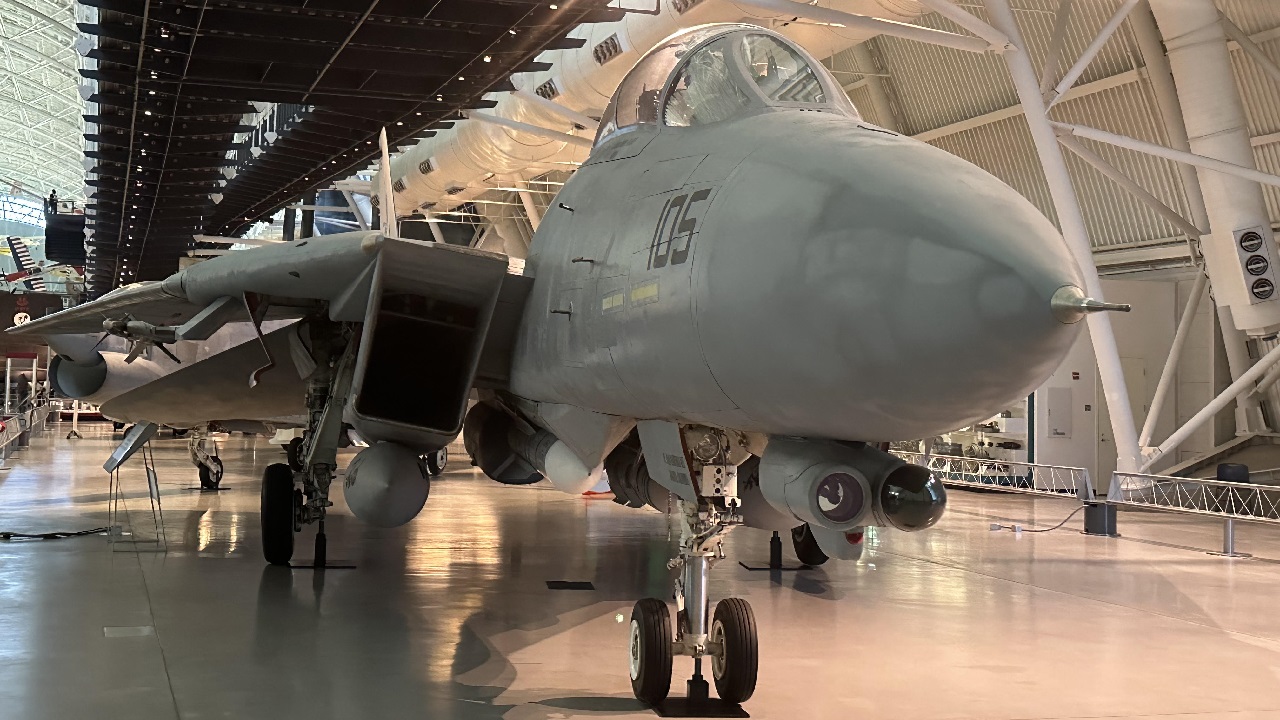
F-14 Tomcat. Image taken at National Air and Space Museum on October 1, 2022. Image by 19FortyFive.
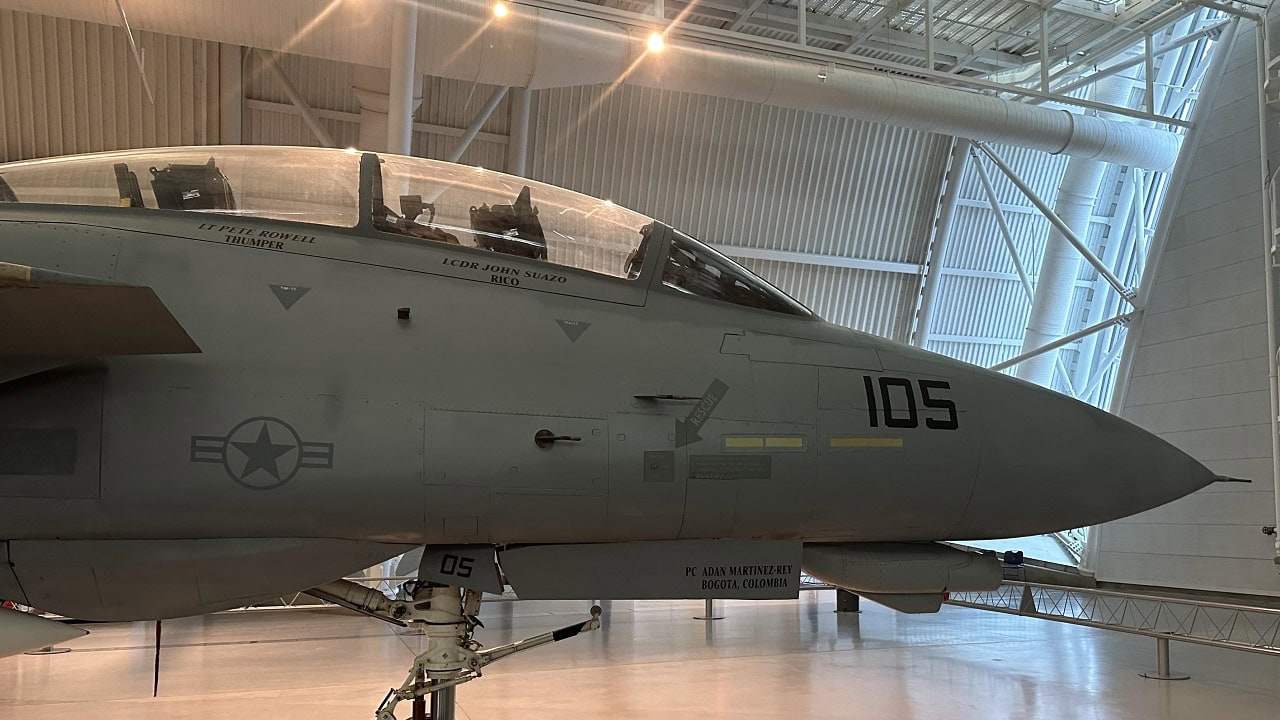
F-14 Tomcat. Image taken at National Air and Space Museum on October 1, 2022. Image by 19FortyFive.
They will need to achieve this without relying too much on external fuel tanks (since those compromise the plane’s stealth).
Whether Boeing or Northrop ultimately wins the F/A-XX competition, the plane they build will need adaptive-cycle engines.
These are the newest propulsion systems that can oscillate between high-thrust modes for combat and high-efficiency modes for long-range cruising, the kind they’ll use when entering combat from over the horizon against Chinese forces.
To accommodate the need for greater fuel capacity, the plane will be either a flying-wing or tailless design meant to maximize internal fuel volume.
Such a design would also maximize stealth and reduce aerodynamic drag.
Then there’s the added Manned-Unmanned Teaming (MUM-T), or the “Loyal Wingman” concept, that both the Air Force and Navy are developing to augment their manned warplanes.
Drones would operate in tandem with the F/A-XX.
These drones would carry extra sensors, weapons, and even fuel, ensuring the F/A-XX had all it needed to survive an engagement with China’s advanced defenses while still making it to and from the distant aircraft carrier.
Is This Plane Necessary?
Of course, the additional resources required to make just one manned F/A-XX combat-effective should show how badly prepared the expensive United States military is for twenty-first-century warfare.
These planes are more advanced than anything that has come before. They’re far more expensive, too.
On top of that, they must now operate much farther over the horizon than previous planes did. Because of their cost, the F/A-XX will likely be finite in number.
Not only that, the F/A-XX will need additional systems to protect it and refuel it quickly to keep it going in combat.
All these factors lead one to believe that the new F/A-XX will be an expensive platform that cannot live up to its promise simply because the tyranny of distance is so great — and China’s defenses are so advanced.
It almost makes one wonder whether this system is even worth it, or whether the Pentagon should take a good, long look in the mirror and figure out what modern warfare really means.
Something tells me that if the Pentagon did that, they’d realize another manned warplane for the Navy isn’t the best path forward.
About the author: Brandon J. Weichert
Brandon J. Weichert is the Senior National Security Editor at 19FortyFive.com. He also manages The Weichert Brief on Substack. Weichert also hosts “National Security Talk” on Rumble. He is the author of four bestselling national security books, most recently A Disaster of Our Own Making: How the West Lost Ukraine (Encounter Books). Follow him via Twitter/X @WeTheBrandon.