

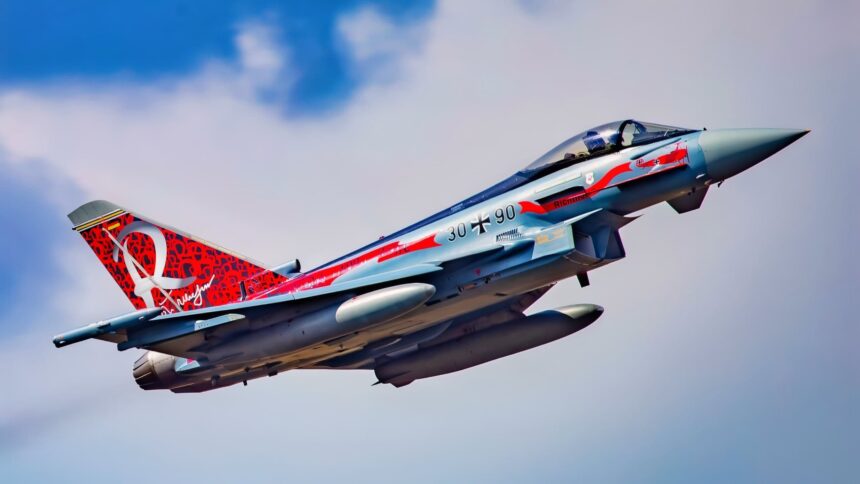
The MBDA Meteor is Europe’s top beyond-visual-range air-to-air missile, designed specifically to destroy maneuverable fighters at distances where traditional missiles typically run out of the energy needed to finish the deal.
The Meteor first entered operational service in 2016 with the Swedish JAS 39 Gripen and was later integrated across several European fighter fleets, notably the Eurofighter Typhoon.
Meteor Missile. Creative Commons Photo.
The basic numbers are impressive: the Meteor can hit Mach 4-plus speed, weighs 420 pounds, measures 12 feet long, and features active-radar terminal guidance, a two-way datalink, and a blast-fragmentation warhead.
The missile’s exact maximum effective range is classified and likely depends heavily on launch conditions, but its defining characteristic of the missile is its unusually large no-escape zone.
Going the Distance
Conventional missiles tend to lose effectiveness with distance.
Most air-to-air missiles, such as the AIM-120 AMRAAM, use solid-fuel rocket motors.
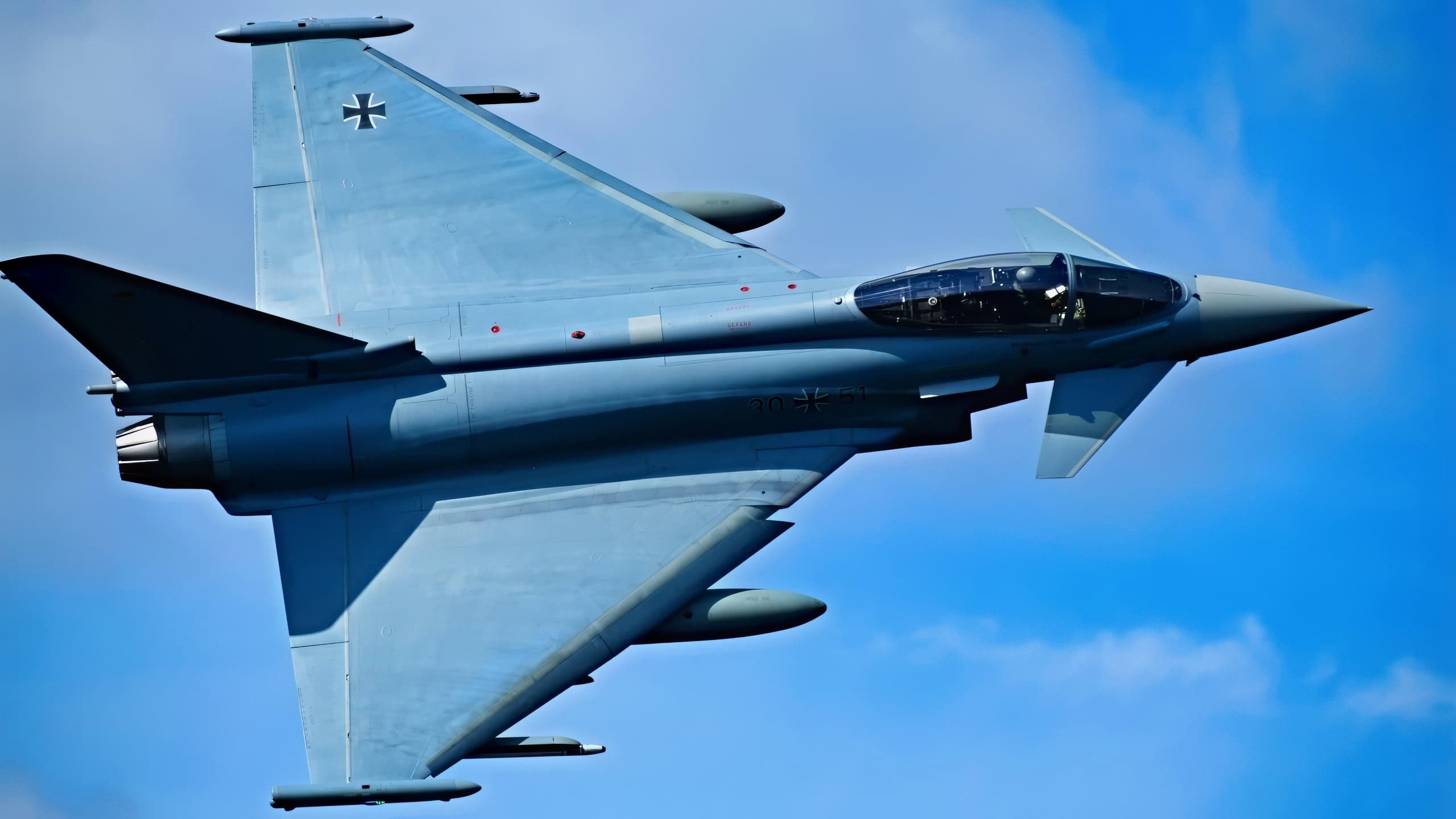
A German Air Force pilot, assigned to the German Air Force Weapons School, conducts strafing runs with an Eurofighter Typhoon in conjunction with U.S. Air Force Joint Terminal Attack Controller assigned to 2d Air Support Operations Squadron identifying targets on the ground at the 7th Army Training Command’s Grafenwoehr Training Area, Germany, June 9, 2021. (U.S. Army photo by Kevin Sterling Payne)
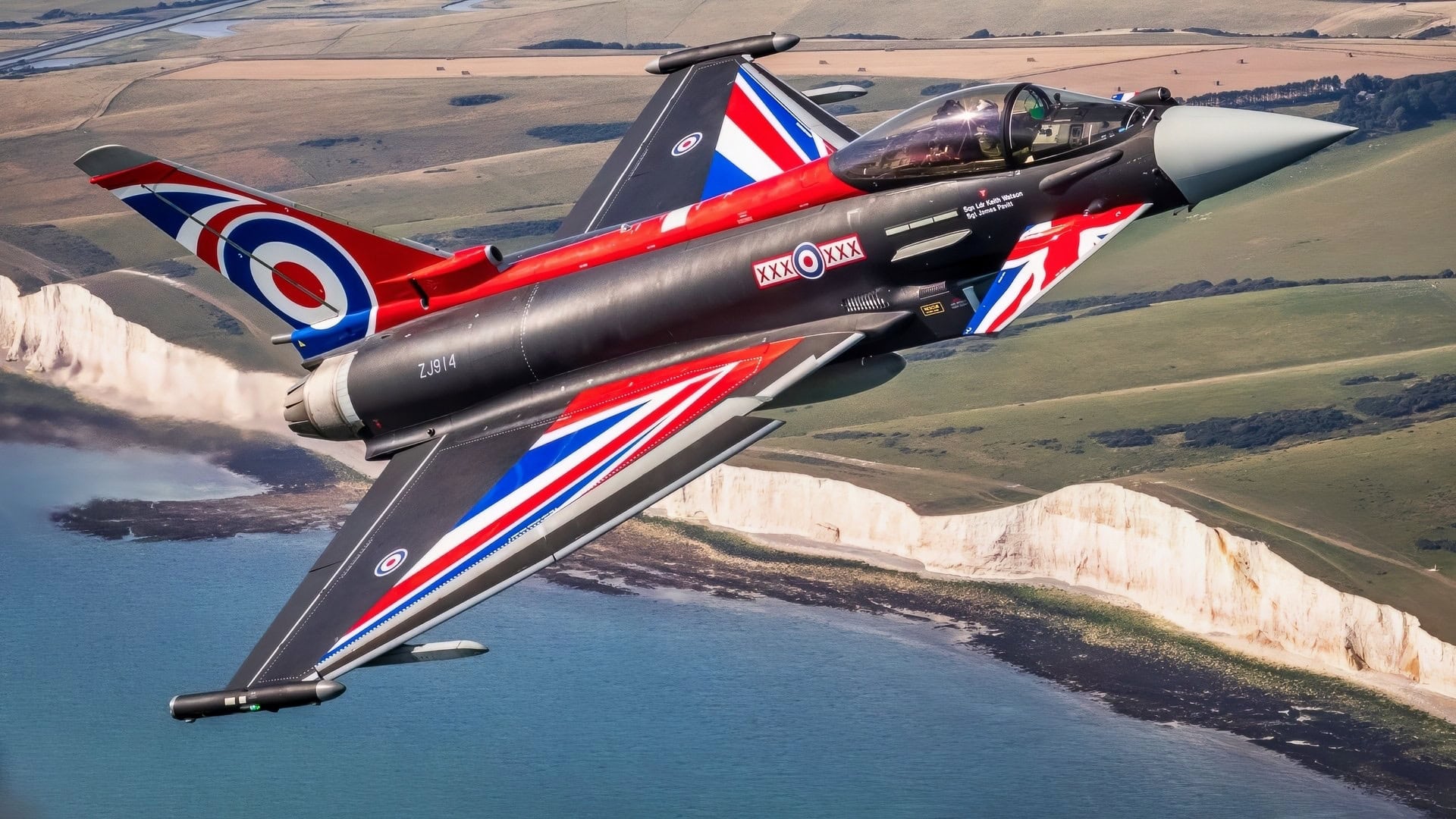
Eurofighter Typhoon Fighter NATO. Image Credit: British Government.
Rocket motors deliver tremendous thrust immediately after launch, but they burn for only a short time; the missile then spends much of its long-range flight coasting.
That works well enough if a target flies complacently and predictably.
But once a target is warned, it will obviously try to evade the incoming missile.
Any effort for the missile to keep up with an evasive target will require maneuvering, which bleeds energy.
A missile that reaches a target but doesn’t have the requisite energy to ultimately kill the target has a vulnerability.
And the distinction here is one between maximum range and no-escape zone, the latter being the envelope within which the target has very little chance of defeating the missile simply through kinematic evasion. The Meteor offers a much larger no-escape zone than the AMRAAM.
Pace Yourself
The Meteor’s trick is that it doesn’t burn all of its energy at once.
Using a Bayern-Chemie variable-flow ducted rocket/ramjet propulsion system, the initial booster accelerates the Meteor sufficiently for its air-breathing propulsion system to operate.
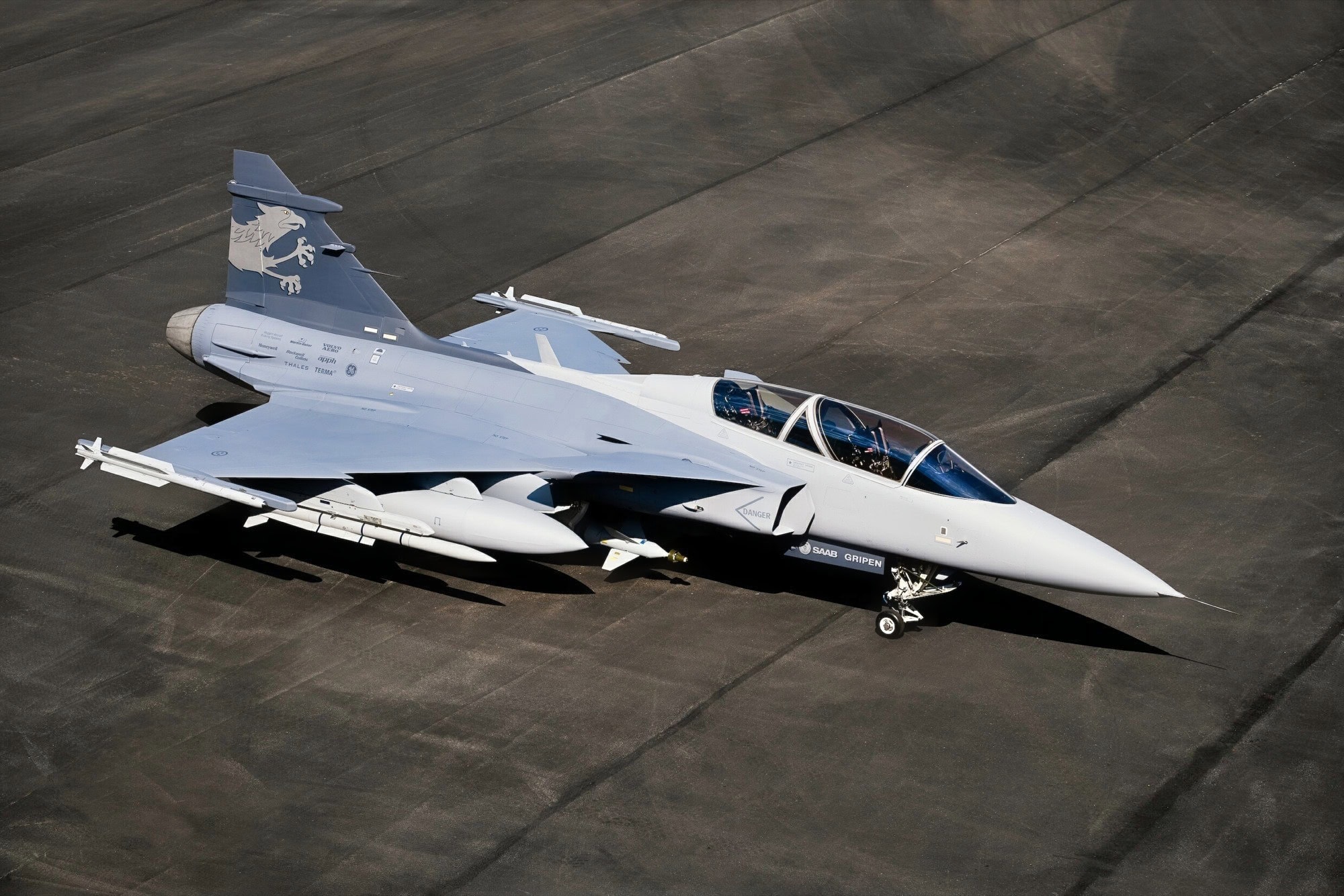
JAS 39 Gripen. Image Credit: Creative Commons.
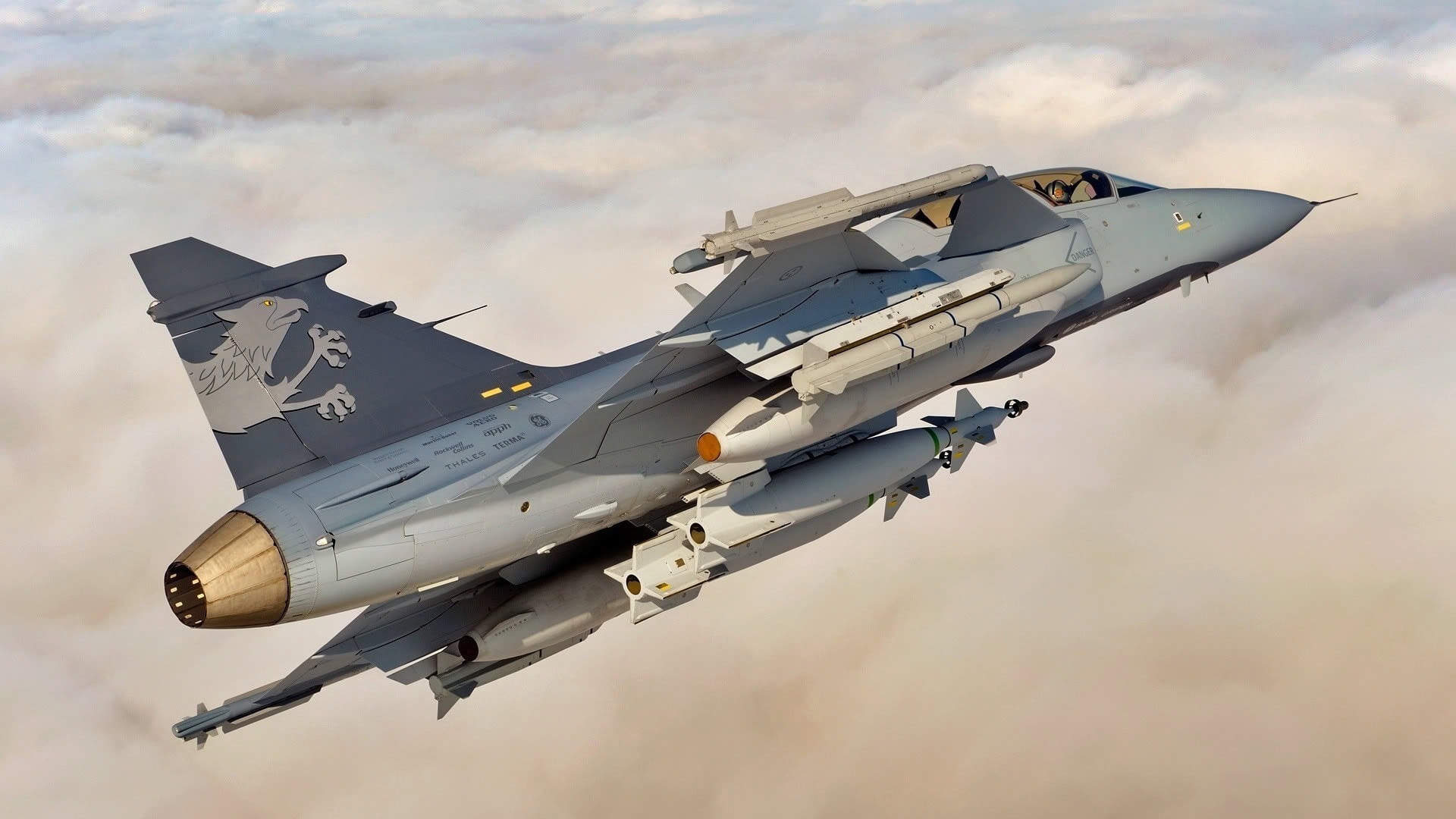
JAS 39. Image Credit: Creative Commons.
Intake ducts then ingest atmospheric air, and, unlike a conventional rocket, the Meteor doesn’t have to carry its own oxidizer for the sustained portion of flight.
Instead, its solid-propellant gas generator produces fuel-rich gas, which mixes with compressed incoming air and burns to provide sustained thrust.
The Electronics and Propulsion Control Unit (EPCU) regulates propulsion.
So, whereas the AMRAAM generates maximum thrust right off the chain, before coasting, the Meteor can manage its energy during midcourse, conserving propellant for the endgame, when thrust is needed for an evasive target.
As a result, the Meteor can reach a target with more kinetic energy and maneuvering ability than a missile that has coasted for a few dozen miles.
Guiding the Way
During the terminal phase, the Meteor isn’t effective simply because it retains thrust, but also because it uses an active radar seeker.
Before going autonomous, the Meteor can receive updated target information through its datalink.
So midcourse updates continuously refine the predicted intercept point, whereas older missiles are launched with specific coordinates that are never updated en route.
Basically, the Meteor is networked, which improves its accuracy.
Fighter Integration
The Meteor integrates well with the Eurofighter Typhoon, which has powerful engines, excellent climb, and high-altitude performance.
Because a missile’s range is so closely tied to its aircraft’s altitude and velocity, the Eurofighter and Meteor are a nice pairing.
Firing the Meteor while the aircraft is high and fast—as the Typhoon permits—means the missile can begin its flight path with more potential and kinetic energy.
The Gripen uses the Meteor differently, as the Gripen isn’t a high-altitude interceptor.
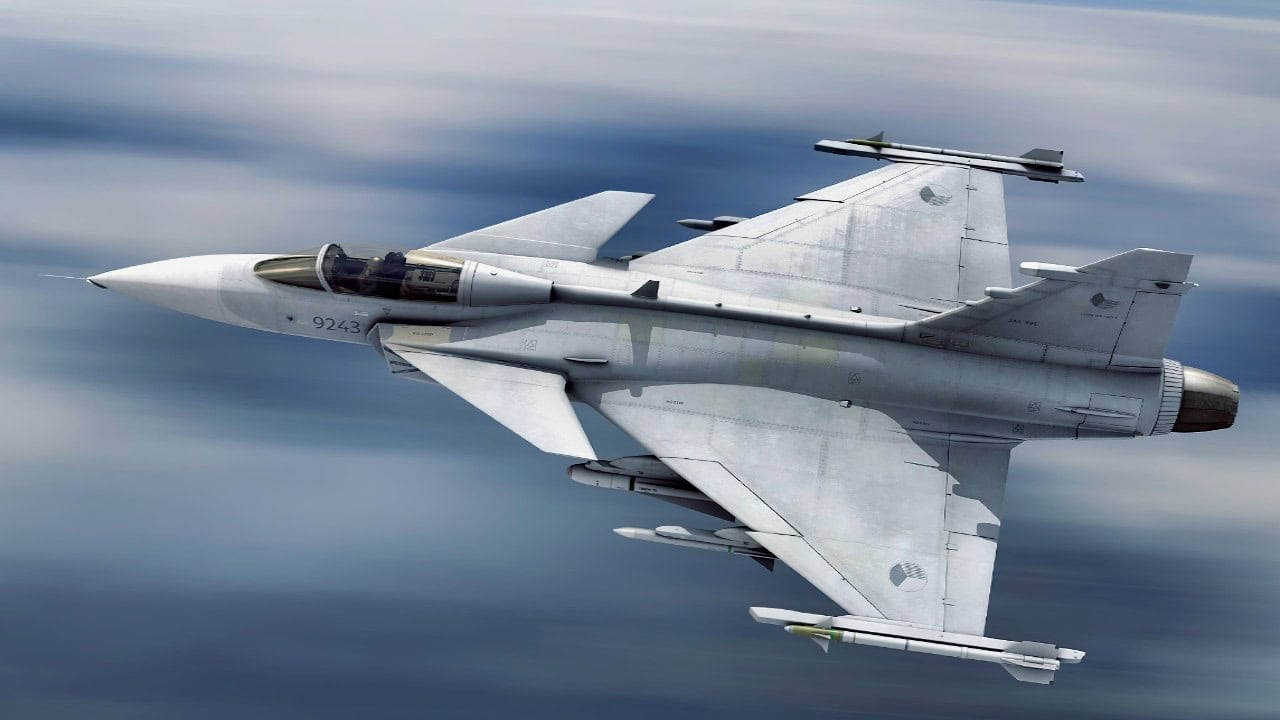
JAS 39 Gripen. Image Credit: Creative Commons.
It’s smaller, less powerful, cheaper, and built to operate from dispersed bases after an attack.
The Meteor complements the dispersal philosophy, serving as part of a larger network for sensing and shooting.
The Meteor also gives Europe strategic autonomy from the US. Built by MBDA, a multinational European program, the Meteor preserves a European-controlled high-end air-to-air weapon.
It also strengthens export prospects for aircraft like the Typhoon, Gripen, and Rafale.
About the Author: Harrison Kass
Harrison Kass is a writer and attorney focused on national security, technology, and political culture. His work has appeared in Tablet, City Journal, The Hill, The Spectator, and The Cipher Brief. He holds a JD from the University of Oregon and a master’s in Global & Joint Program Studies from NYU. More at harrisonkass.com.