
source – https://unsplash.com/photos/a-man-holding-a-cell-phone-in-his-hand-l6xcgjeJ54c
Here’s the moment most pocket EDC setups fall apart: you reach for the right pocket, and the folder clip is fighting your wallet for the same square inch. Or worse, the wallet has bulked up enough that the folder rides at a weird angle, blade tip pressing into the lining.
It’s a small problem. It’s also the thing that decides whether your daily carry feels dialed-in or like you’re hauling around a brick.
If you’re already disciplined about your folder – Spyderco Para 3, Benchmade Bugout, a slip-joint Case, whatever it is – the wallet is usually the part of the kit that gets ignored until it stops working. This is the upgrade that makes the rest of the setup quieter.
The Two-Pocket Rule
source – https://unsplash.com/photos/person-holding-black-and-brown-leather-bag-t5Ui6FXTrO4
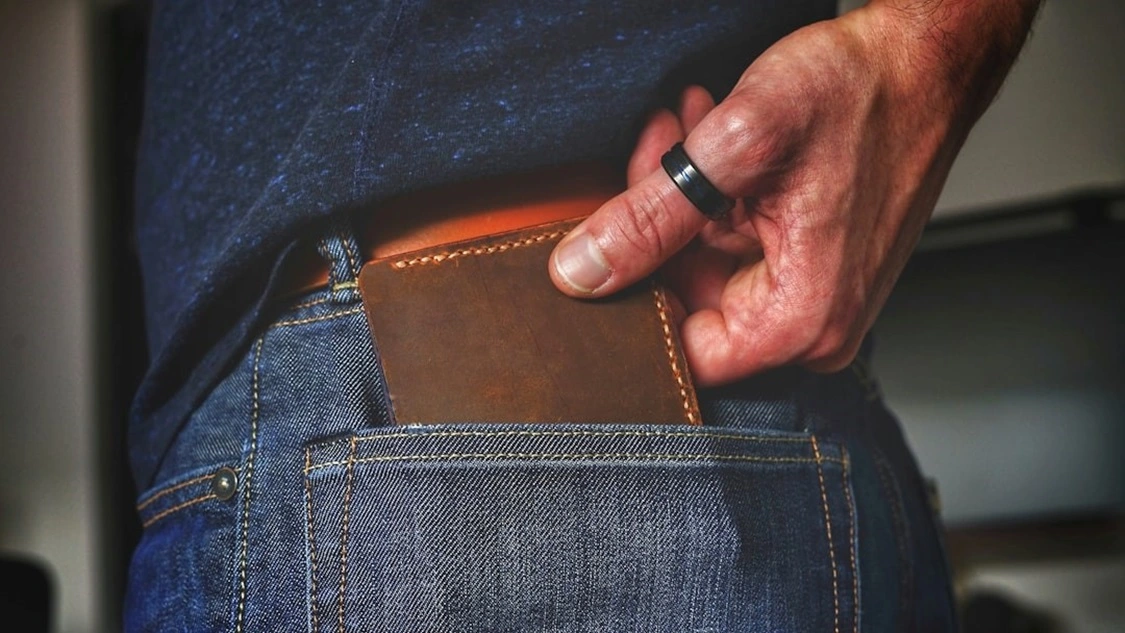
Pocket EDC works on a simple geometry: dominant-side front for the folder, opposite-side front for the wallet. Back pockets are off the table for daily carry. Sitting on a wallet for eight hours angles your hips, stresses the piriformis muscle, and over time produces what clinicians actually call “wallet neuritis” or back-pocket sciatica (source). One spine-posture study measuring seat interface pressure during sitting found that wallet thickness directly affects pelvic tilt and discomfort – even at modest thicknesses, the asymmetric load registers (source).
That means the wallet has to do three things:
- Stay slim enough that opposite-pocket carry doesn’t tug your trousers. A bricked trifold defeats the point.
- Hold the cards you actually use, not your fantasy of them. Most working setups run 4-6 cards. Edit ruthlessly.
- Not outlive your patience. Synthetic wallets warp from pocket heat. Bonded-leather wallets crack at the spine inside 18 months.
A folder you’ve spent $100-300 on deserves a wallet that ages on the same timeline. That’s where most setups fall apart.
Card Count Is the Whole Game

source – https://unsplash.com/photos/white-and-black-books-on-white-table-UorPU70_D60
Before you pick a wallet, audit what’s actually in the one you carry now. A working setup needs:
- Driver’s license / ID
- Primary debit
- Primary credit
- One backup credit
- Optional: transit card, work badge, range membership
- Cash – a few folded bills, not a brick
That’s it. If your current wallet has gym loyalty cards and a receipt from a 2023 oil change in it, the wallet isn’t the problem yet – your stack is.
Once you’re at 4-6 cards plus minimal cash, the form factor question gets simple.
Bifold Is the EDC Default – Here’s Why
source – https://unsplash.com/photos/brown-leather-bifold-wallet-on-table-na8l3EPqpvY
Three form factors compete for daily carry:
- Cardholder – 3-5 cards, slimmest profile, cash folded inside the cards. No flex on cash, no second compartment.
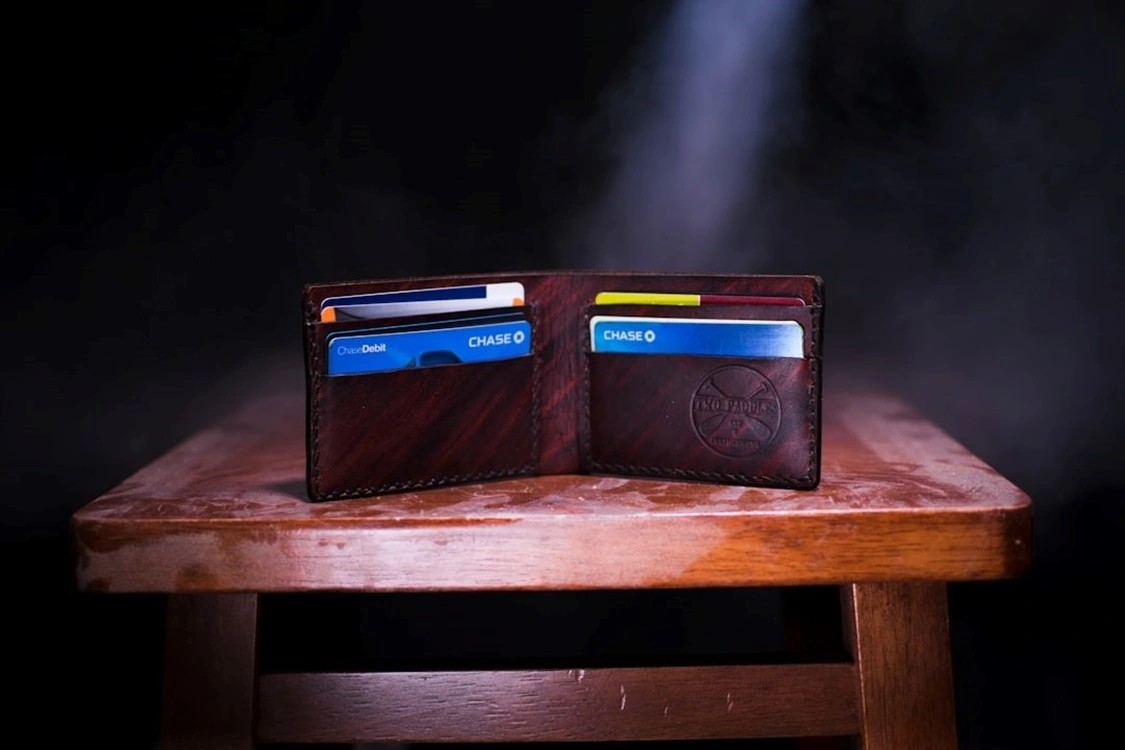
- Bifold – 5-8 cards, mid-slim profile, dedicated cash slot. The sweet spot for folder pairing.
- Trifold – 8-12 cards, thickest profile, dedicated cash slot. Bulk fights the folder pocket.
Bifold wins for folder-pocket pairing because it’s slim enough at 4-6 cards that opposite-front carry stays flat, but versatile enough to hold cash without forcing a separate money clip into the kit.
Cardholders are tempting if you’re truly minimalist – and if you only carry plastic, they’re ideal. But you’ll end up shoving folded cash behind the cards anyway, and at that point the bifold gives you a cleaner cash slot for the same external footprint.
Material: Why Full-Grain Matters Here Specifically
source – https://unsplash.com/photos/a-table-topped-with-a-pair-of-scissors-and-a-book-7YSpSfkaRwI
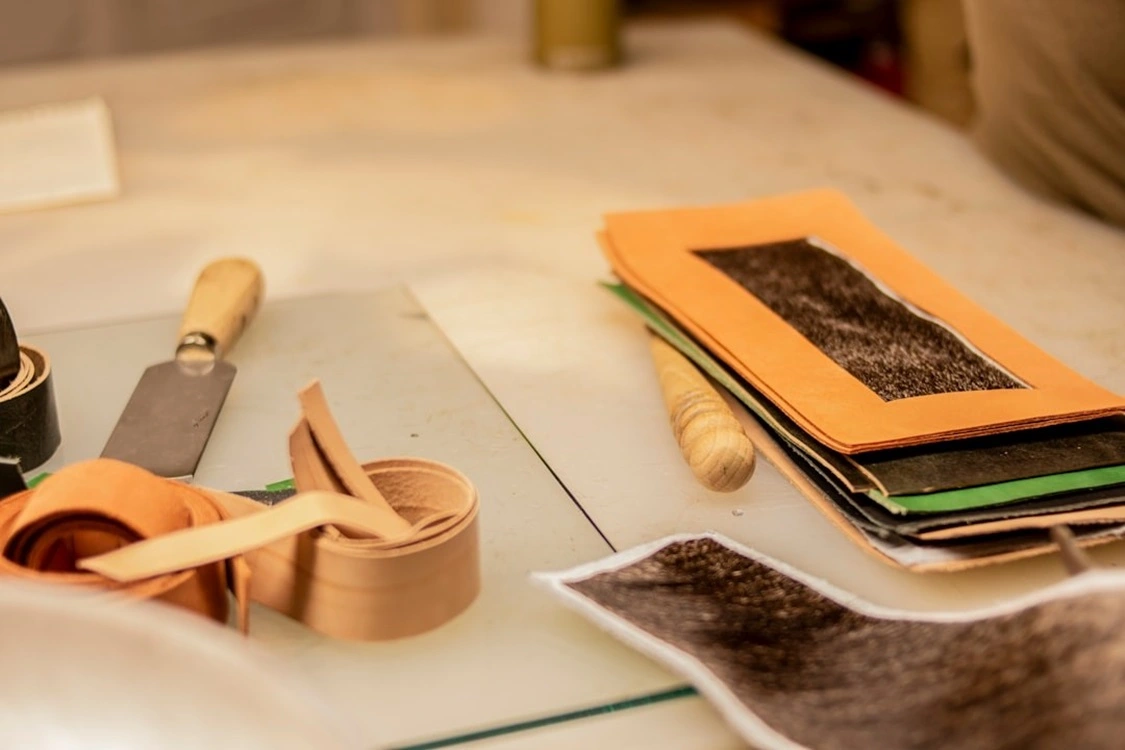
Knife people already get this. The same reason you’d never carry a $400 fixed blade in a bonded-leather sheath applies to the wallet half of the kit:
- Full-grain leather keeps its structure under pocket heat, develops a personal patina, and lasts 5-10 years of daily carry without breaking down at the fold.
- Top-grain is sanded and thinner. Fine, won’t patina the same way but still durable.
- “Genuine leather” is a marketing term for the bottom of the leather grading scale, often glued composite. Skip it.
- Bonded leather is leather scrap mixed with polyurethane. Cracks within 12-18 months on any wallet that flexes daily.
A 2024 durability study comparing tanning techniques through artificial aging found measurable differences in tear strength, surface wear, and structural integrity between vegetable-tanned full-grain and lower-grade alternatives (source). The mechanical-properties side of the same comparison shows vegetable-tanned full-grain holding tensile strength values that match or exceed chrome-tanned equivalents while preserving the natural fiber structure that lets leather develop a real patina (source).
Here’s the practical takeaway: chrome tanning takes about 8 hours and yields a soft, uniform leather that’s fine for fashion goods but doesn’t bond as deeply with the collagen structure. Full vegetable tanning takes 48 to 72 hours of immersion in plant-based tannins like quebracho, mimosa, and chestnut, and the longer cure produces denser tannin-collagen cross-linking. That density is what holds up over a decade of pocket carry instead of cracking at the fold within two.
The other detail to look for: saddle stitching over machine stitching. Saddle-stitched wallets fail one stitch at a time; machine-stitched wallets unravel six stitches the first time one breaks. On a wallet that opens 20-30 times a day, that’s the difference between a five-year and a two-year lifespan.
Source: https://vonbaer.com/cdn/shop/files/von-baer-classic-bifold-luxurious-leather-brown-color-wallet-stuffed-with-bank-and-credit-cards-like-american-express-and-man-taking-out-dollars-in-porsche.jpg?v=1756723313&width=1000
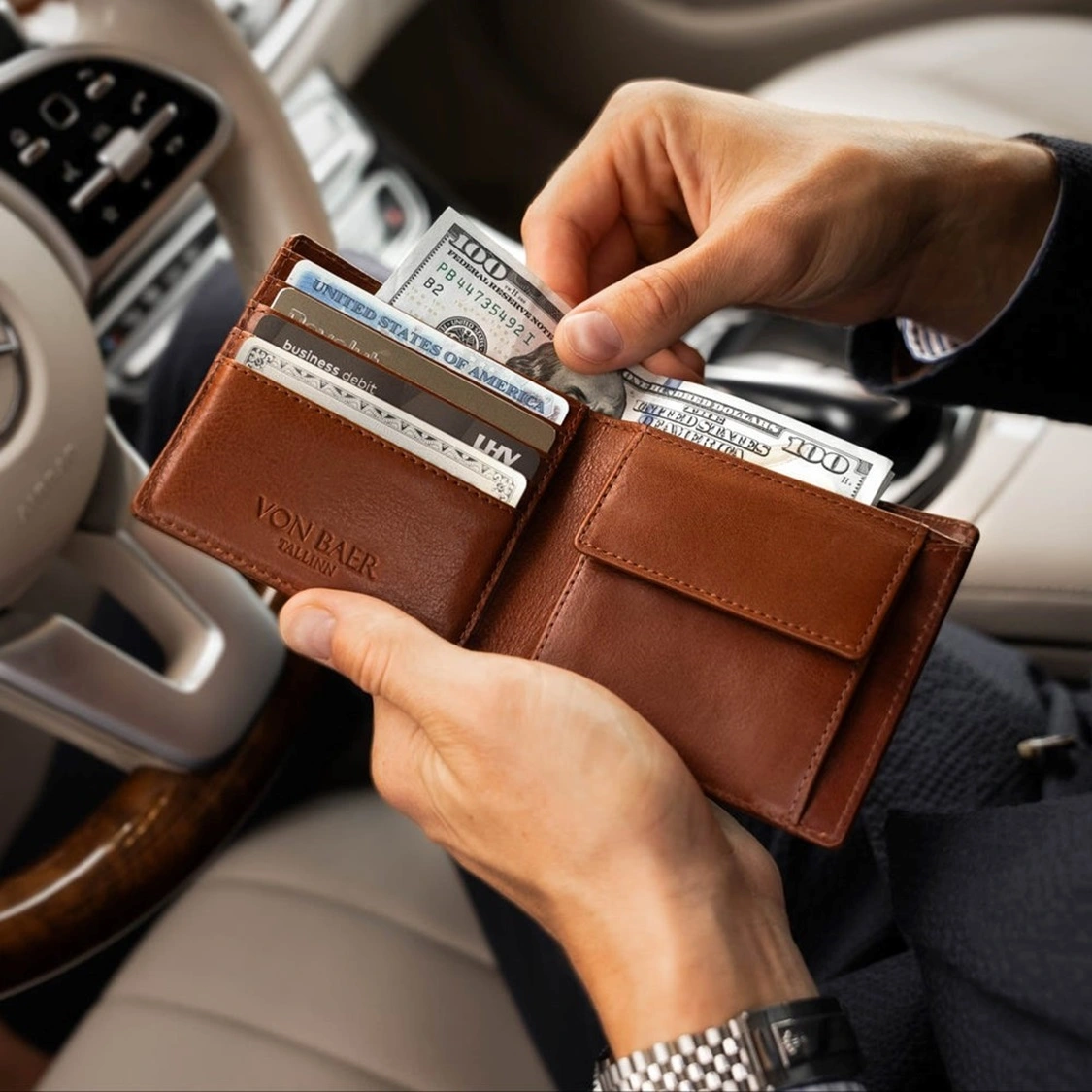
If you want a starting point, Von Baer’s Classic Bifold Wallet is constructed from Cuoio Superiore certified Italian vegetable-tanned full-grain leather with saddle stitching and burnished edges – the same construction logic that goes into a quality leather sheath. It’s also covered by a 5-year limited warranty with repair-rather-than-replace as the default remedy. For genuine ultra-slim minimalists, their credit card wallets drop to a 4-5 card profile.
The Setup, End to End
source – https://unsplash.com/photos/black-samsung-galaxys-7-edge-Mdv0950g-YY
Here’s a working slim EDC build:
- Right front pocket: folder, clipped tip-up. Whatever you’ve already settled on.
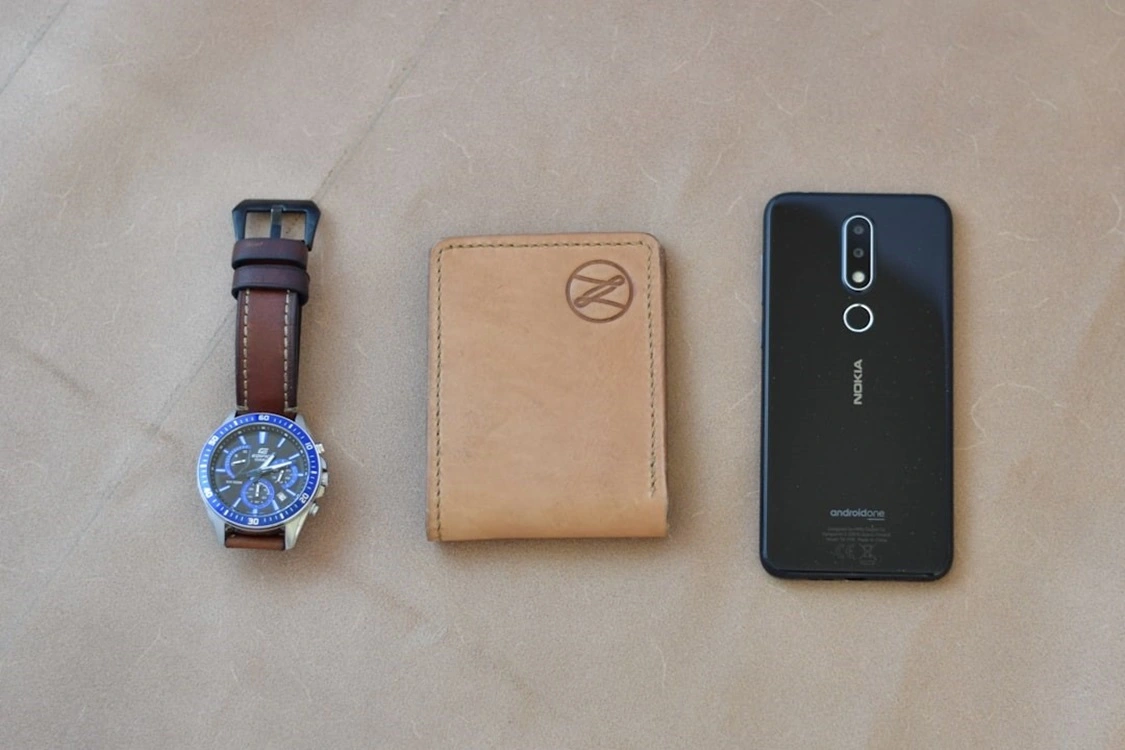
- Left front pocket: slim full-grain bifold, 4-6 cards, folded cash inside.
- Coin pocket: keys on a small ring or paracord fob.
- Back pocket: empty, or phone if you don’t jacket-carry.
Test the build by sitting down with everything in pocket. If the wallet pushes against your hip for more than 20 minutes, you’ve still got too many cards. If the folder rides at an angle in its pocket, the wallet is bulking the trousers and pulling the fabric – slim it down.
Honest Trade-Offs
source – https://unsplash.com/photos/brown-leather-long-wallet-on-brown-wooden-chair-USy_fK9s9hA
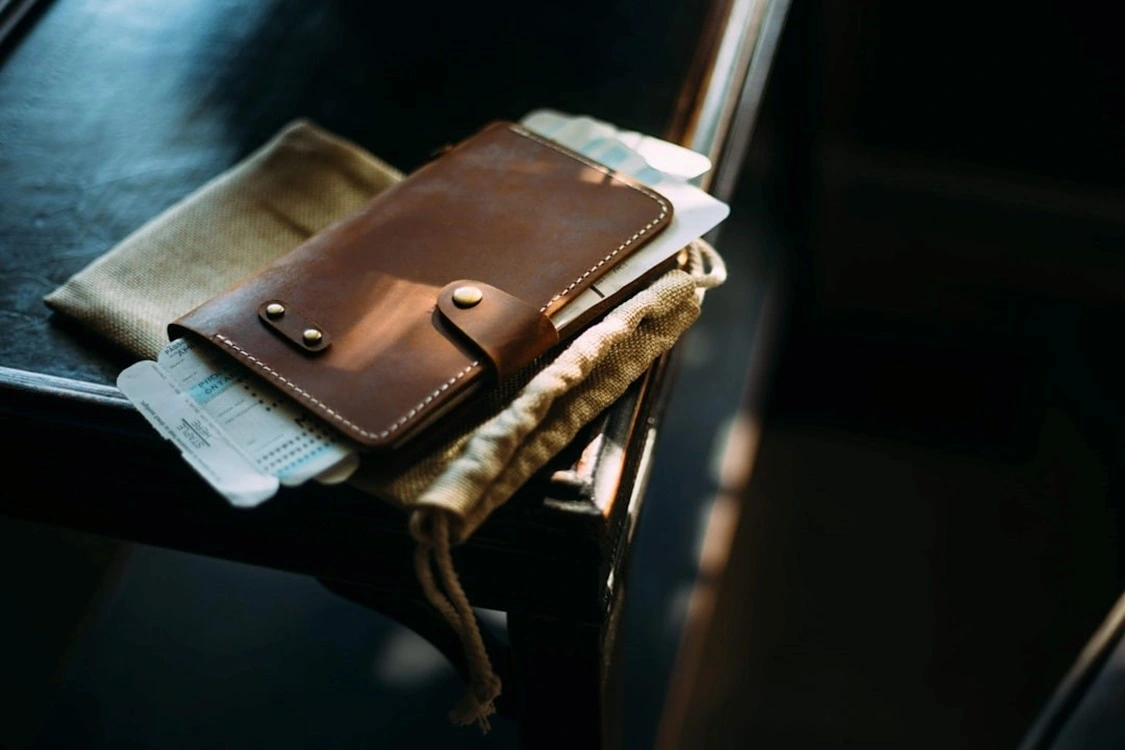
A quality bifold isn’t free, and there’s a 2-4 week break-in period where the leather softens and conforms to your pocket. The first week, it’ll feel stiffer than what you replaced. By month two, it’s molded to you and won’t go back. That’s the same break-in curve as a leather sheath, and the same payoff: a piece of kit that ages with you instead of against you.
It also won’t pair with workout shorts or any pocket without depth. A slim bifold needs five-plus inches of pocket to ride properly. For gym carry, you’re back to a cardholder or a phone case slot.
Verdict
A slim full-grain bifold is the wallet half of pocket EDC. Match it to a 4-6 card discipline and a minimal cash habit, and the folder finally gets to ride in its pocket without competition. Skip it if you’re already happy with your current setup – but if your folder pocket sits at an angle every time you sit down, the wallet is what’s wrong, not the knife.
The post How to Build a Slim EDC Wallet Setup Around Your Pocket Folder appeared first on Knives Illustrated.
Read the full article here