

This article was produced in partnership with Zeiss.
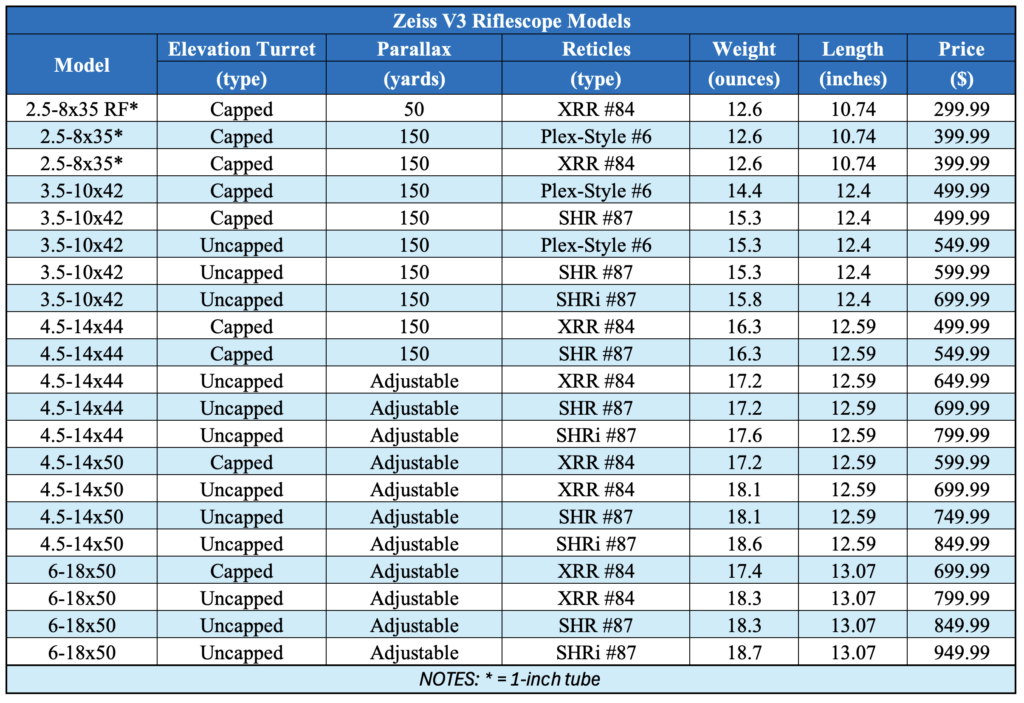
Zeiss has just introduced a new V3 line of riflescopes that seem to have rewritten the rules when it comes to how performance and features interface with price. Hunters most often choose a riflescope after the purchase of the rifle, and they tend to base their selection on performance, features and cost. With the 21 options in the new V3 line, at least one of them should complement your hunting rifle and meet your hunting needs.
Zeiss has long been an icon within the optics industry, manufacturing riflescopes of legendary quality. Up until now their most affordable riflescopes were in the Conquest line and prices started at about $800. In this new V3 riflescope line, prices start at around $299, with the most expensive configuration costing less than a grand. These are not budget riflescopes, but if you’ve ever wanted to experience Zeiss quality the V3 line is the perfect gateway.
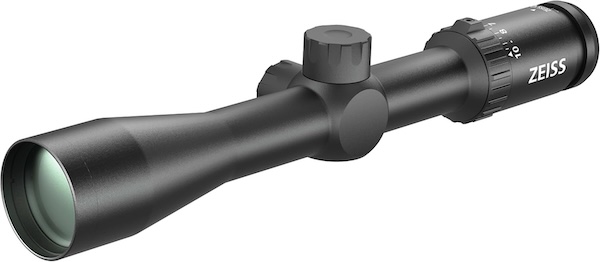
Zeiss V3 3.5-10x42mm Rifle Scope
Specs
- Magnification Range: 3.5X-10X
- Focal Plane: Second
- Objective Lens Diameter: 42mm
- Exit Pupil: 4.2mm to 11.7mm
- Twilight Factor: 12.03 to 20.49
- Field of View: 11.82 to 34.17 feet at 100 yards
- Diopter Range: -3 to +2.5
- Eye Relief: 3.4 inches
- Parallax: 150 yards
- Adjustment Range: 100 MOA (elevation), 80 MOA (windage)
- Click Value: 0.25 (1/4) MOA
- Tub Diameter: 30mm
- Length: 12.40 inches
- Weight: 14.4 ounces
- Reticle: Duplex-Style #6
- Price: $499
Meet the Zeiss V3
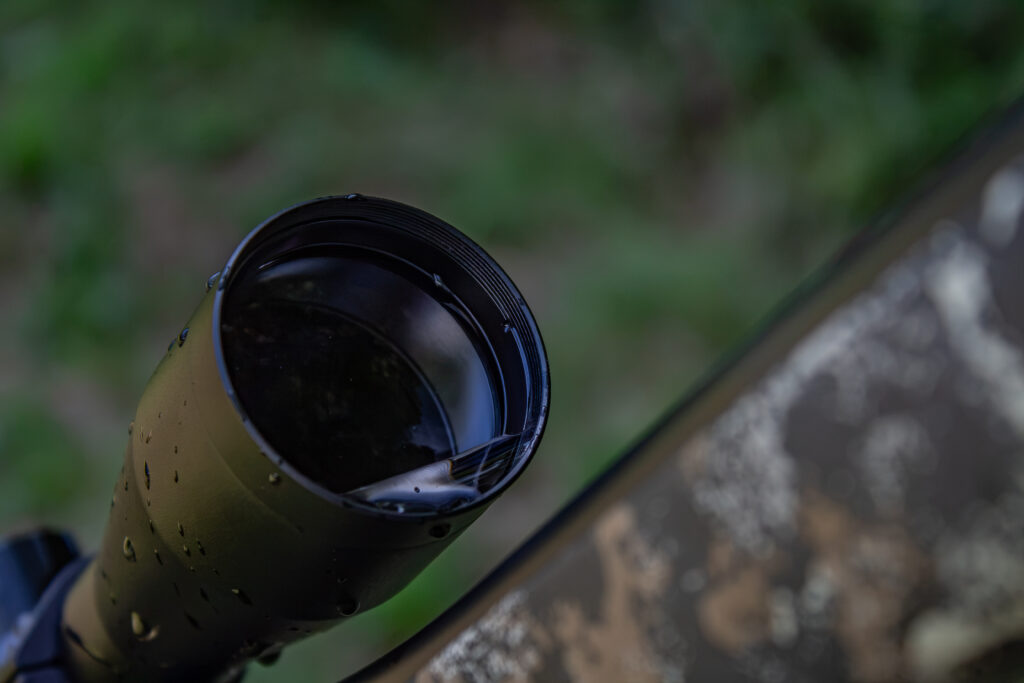
Except for the three 2.5-8x35mm configurations that utilize a 1-inch main tube, all other Zeiss V3s are built on a 30mm tube. All are waterproof even when submerged to a depth of one meter for 60 minutes. They offer a 3X zoom factor ranging from 2.5X-8X up to a 6X-18X. Regardless of the model and configuration, V3 riflescopes feature a High Performance (HP) optical system with multi-coated indexed lenses offering 90% light transmission to the eye. Air to glass surfaces also have a hydrophobic coating that’s designed to repel dust, water, and fingerprints.
Hunters often overlook mounting space when selecting a riflescope. On rifles with rails, it’s not an issue but with traditional mounts limited mounting space can make it difficult to obtain the eye relief you need and/or position the scope low to the bore but still have clearance for the objective housing. The 4.5X-14X and 6X-18X V3 riflescopes have almost six inches of mounting space and the compact 2.5X-8X V3s even have more than five inches.
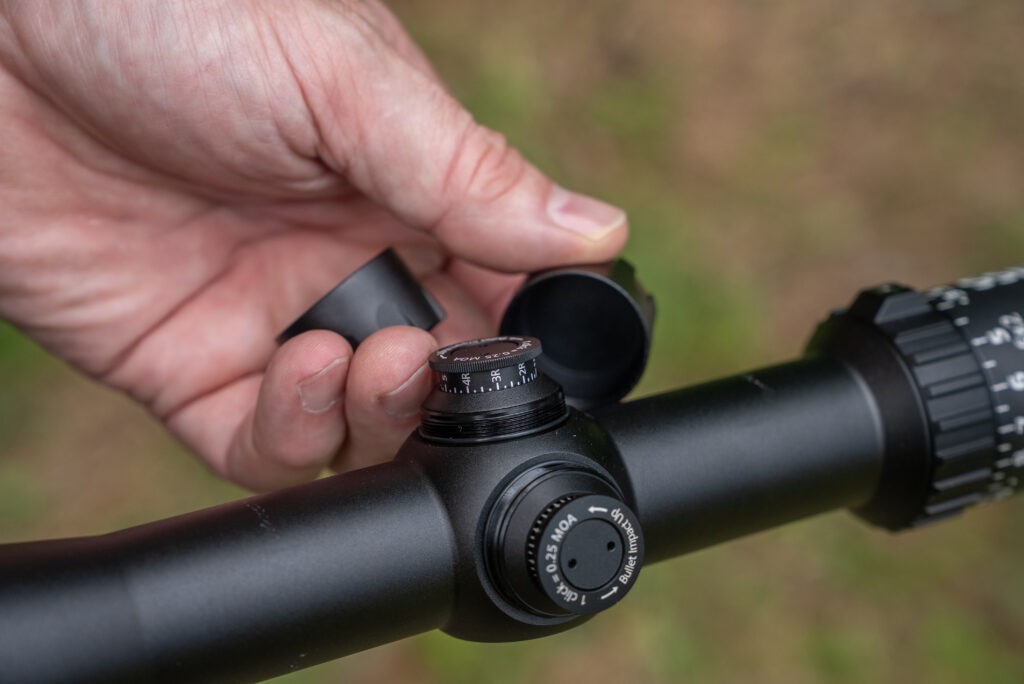
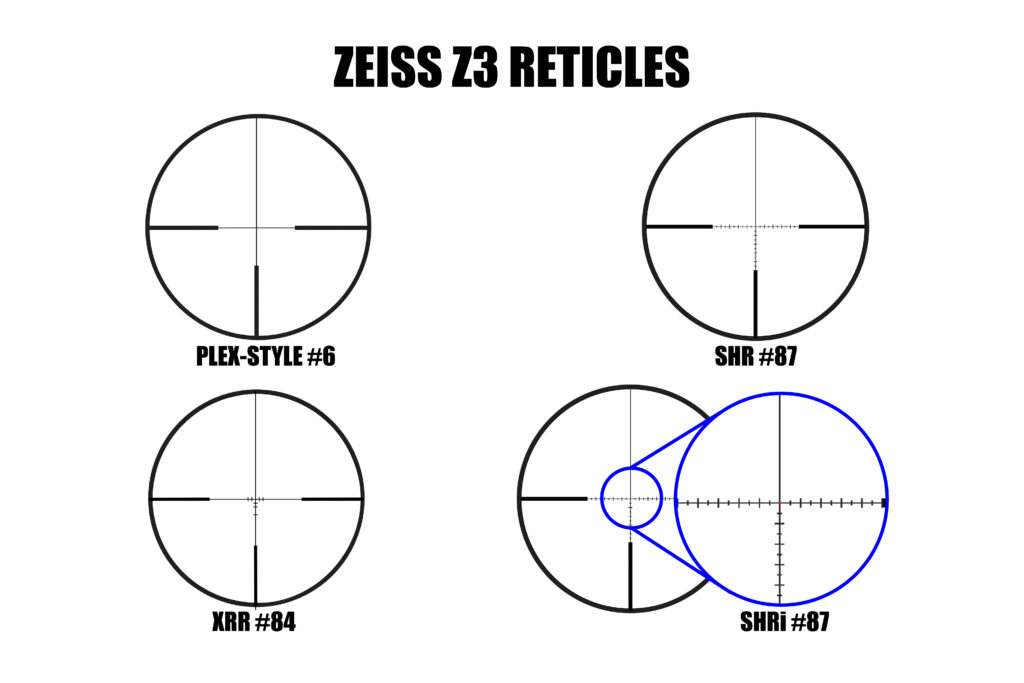
All V3s also have a fast focus European style eye piece, ¼ MOA click adjustments with 10 MOA per turret rotation, and a total elevation adjustment range of between 80 to 100 MOA. A capped or uncapped elevation turret is an option on all but the 2.5X-8X model, and the uncapped target-style turret models have the Zeiss ballistic stop feature—for an absolute stop at zero. Turret adjustment dials on capped models have a lift to zero reset feature. Four reticle options that include an illuminated version are available as well, and an adjustable parallax is an available option on three of the higher magnification models.
Additionally, and not to be overlooked is the recoil testing. V3 centerfire scopes are recoil tested to withstand 800 cycles of 1,000 g-force to include multiple impact cycles at 1,500 g-force. The rimfire model is even recoil shock tested to over 800 cycles at 800 g-force. To put this in perspective, this corresponds to the approximate energy generated when shooting a 460 Weatherby Magnum! And, even if your V3 does happen to break, it’s backed by the ZEISS Transferable Limited Lifetime Warranty and Five-Year No-Fault Policy.
Field Tested
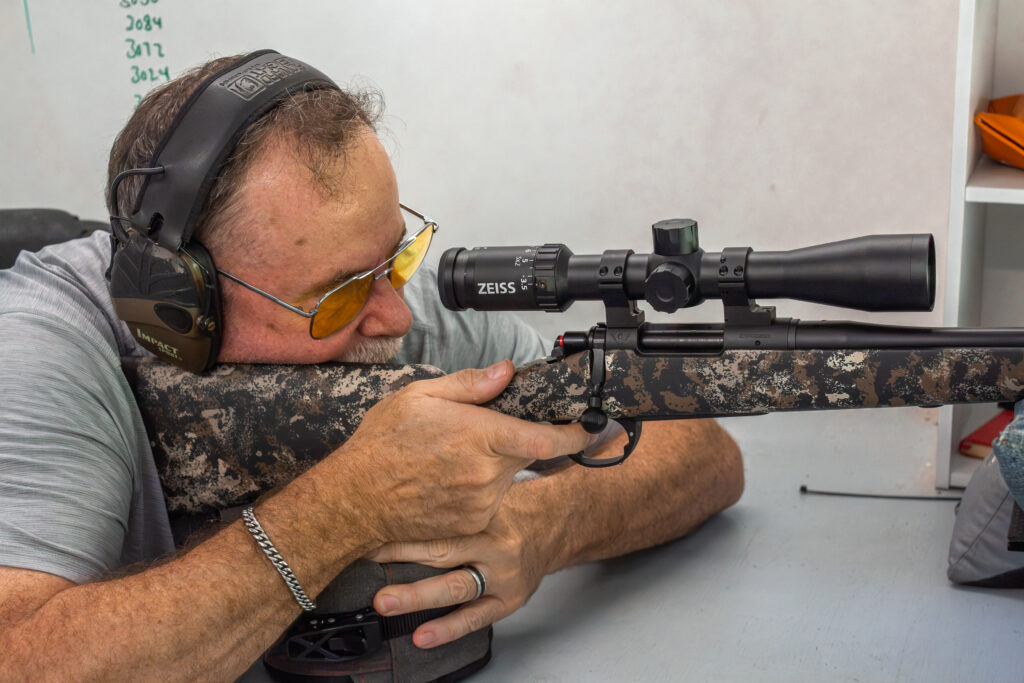
I received two Zeiss V3 riflescopes for testing; a 3.5-10x42mm model with a fixed parallax and the Plex-Style #6 reticle, and a 4.5-14x44mm model configured with an exposed elevation turret, parallax adjustment, and the illuminated Smart Hunting Reticle (SHRi #87). With groceries and gas costing what they do, and given that a lot of hunters would like to experience Zeiss optical quality but may not be able to afford the higher priced V3, V4, V6 or V8 models, I’ll focus on the more affordable 3.5-10x42mm V3.
I mounted the scope on a Wilson Combat NULA rifle chambered for the 300 HAMR using Talley Lightweight rings, and the first thing I did was fire the standard box drill to check for reticle responsiveness and precision. With the load I used for testing, this rifle usually prints sub-MOA groups, and the riflescope performed exceptionally well with perfectly repeatable adjustments—every shot landed within an inch of the adjusted point of impact.

For optical clarity, resolution and brightness evaluation, I set up an optics chart at 100 yards in the direct sunlight and another in the shaded timber. This test is a bit more subjective, and I’ve always felt the best way to conduct it is with several riflescopes, comparing them head to head. I felt the V3 performed better than a Vortex Viper, maybe a shade better than a Leupold VX-3HD, but not as well as a Swarovski Z5 or Leupold VX-6hD. In other words, compared to the competition it outperformed its price point.

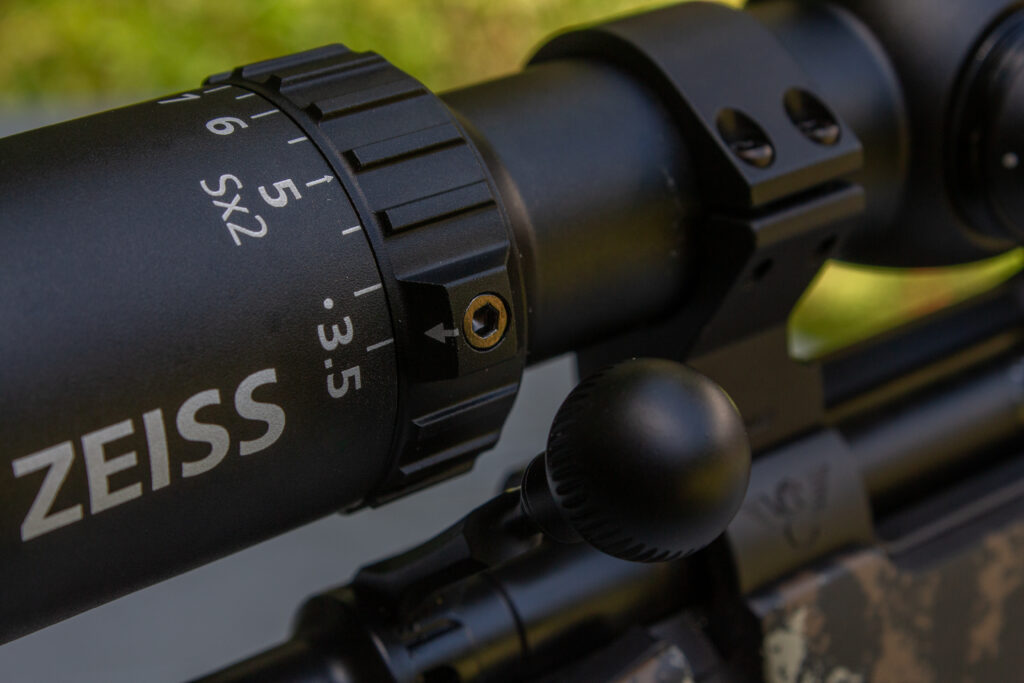
I had no complaints about the performance of the 3.5-10x42mm V3 and there were some features I really liked. I prefer Talley one-piece lightweight rings to a scope rail, and the generous mounting space was much appreciated. I also really liked the zero resettable reticle adjustment dials. Even though these dials are capped, if you want to use them to input a ballistic solution for a shot, you can easily return the elevation and windage adjustments to zero. Another feature I liked was the low profile magnification setting indicator. It was not so proud above the magnification dial that it could interfere with bolt operation.
Summary
Overall, I was very impressed with the Zeiss V3 riflescopes I tested. I told Kyle Brown—a very optics savvy guy—at Zeiss how much these riflescopes impressed me, and he said, “V3s represent the ongoing and natural extension of Zeiss’ proven success from their Conquest V4 riflescopes, Conquest HDX binoculars, and SFL binoculars—all of which are [also] made in Japan. More importantly, V3 scopes were designed specifically for the North American hunter by giving them what they have been requesting in a scope and at the price they have been asking for.”
This is all great to hear. It wasn’t all that long ago when most every European riflescope manufacturer was blind to what American hunters wanted. Clearly, Zeiss has been listening. I have several rifles that with the addition of a Zeiss V3 riflescope could be ideally adapted to the types of hunting I selected them for.
I generally prefer a riflescope with a low-end magnification of less than 4X, so my choice between the 21, V3 configurations would be the fixed parallax 3.5-10x42mm just like I tested, but with the illuminated SHRi #87 reticle instead of the Duplex-Style #6 reticle. This version is loaded with features hunters want, weighs in at less than a pound, is only just a shade more than a foot long. It cost less than $700.
The standard line of advice when it comes to buying optics has always been, ‘you get what you pay for.’ I believe that’s true but based on my experiences with the new V3 line, regardless which V3 you might prefer, I think it’s safe to expect them to perform well above the amount of money you’ll have to spend to get one.
content_scopes-and-sights

EXCITING NEWS
Membership Now Includes

Recommended Products
Read the full article here