

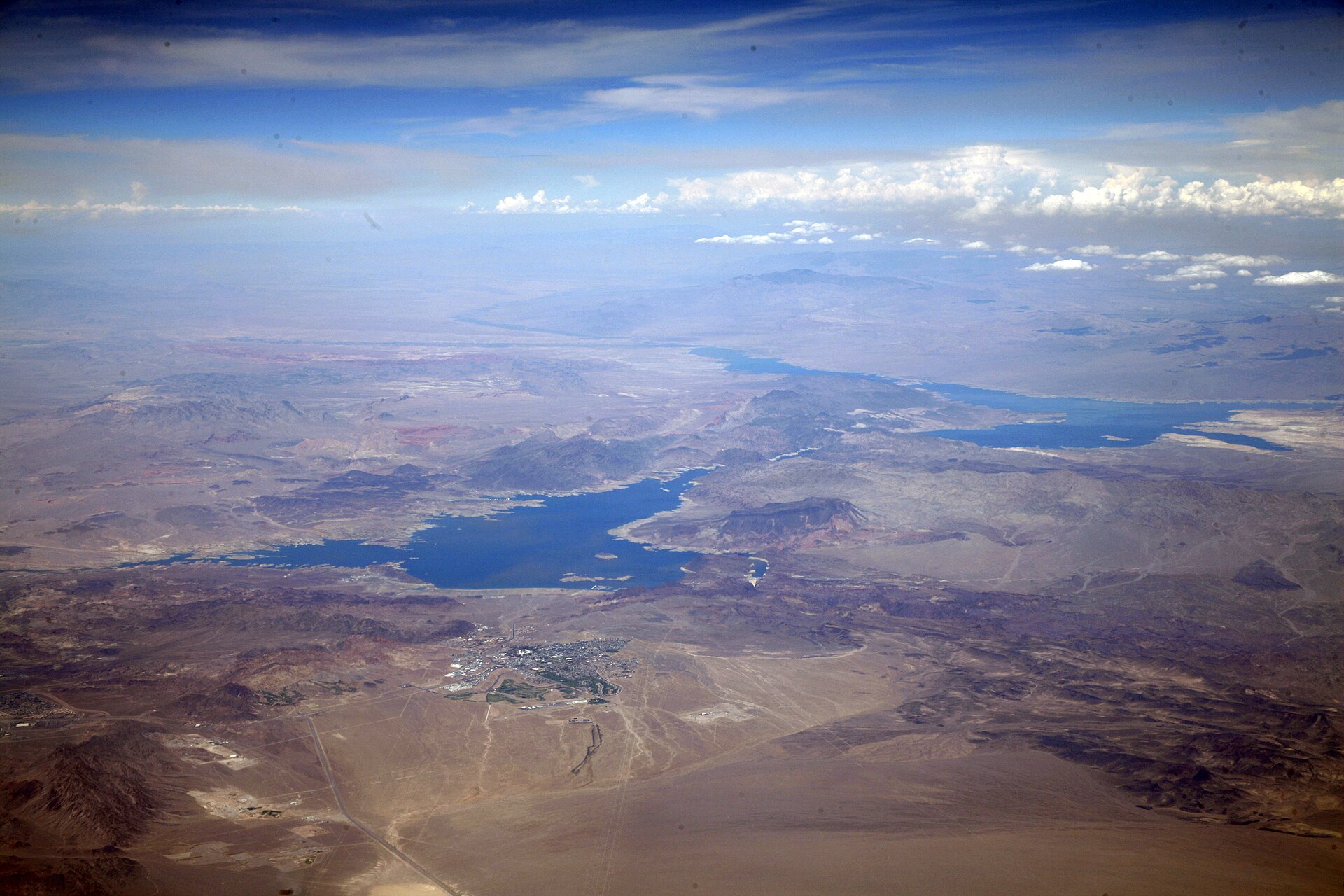
Back in June, the Bureau of Land Management (BLM) quietly approved plans to construct a warehouse-sized data center on public lands in Nevada. Originally slated for a solar panel project, the BLM parcel is in Clark County, Nevada, within the city limits of Boulder City in the Eldorado Valley. The approval marks the first time that an AI data center has ever been approved on federally managed public lands in the United States.
According to the BLM, a company called Townsite Solar 2, based in Houston Texas, is vying to build the data center. Once completed, the facility would sprawl across a full 86 acres of BLM land, just 10 miles from the Lake Mead National Recreation Area.
Local Opposition Bypassed
“There’s been a vocal outcry from people opposed to this project,” Boulder City Communications Director Lisa LaPlante tells Field & Stream. “Our City Planning Commission voted 6 to 1 to recommend that the land not be used for a data center.”
LaPlante says that the BLM did not adhere to typical environmental reviews in the run-up to its decision to approve the data center. For example, the agency did not give the public an opportunity to comment on the plan, which is required under the National Environmental Policy Act of 1970 (NEPA).
The BLM says the decision was based on a internal determination that an AI data center is “substantially similar” to the solar farm that was already approved for this stretch of public land. LaPlante and other town officials disagree with that assesment. “A data center cannot be equated to solar and battery energy storage systems,” she says. “A solar and battery energy storage facility generates power and sends power out. A data center consumes large amounts of power and water.”
According to LaPlante, the facility would require 400,000 to 600,000 gallons of water annually at the outset of construction. Because this BLM land sits inside Boulder City limits, Townsite Solar would have to pull that water from the town’s municipal supply. It would also consume 167 megawatts of electricity each year, more power than the town of Boulder City itself.
According to the Theodore Roosevelt Conservation Partnership, AI data centers have serious ripple effects for wildlife conservation efforts. In a blog post on its website from June 2025, TRCP said the facilities require enormous amounts of power, bringing increased demand for new energy development on public lands—like oil and gas drilling, wind turbines, solar, and coal mining. “Construction of new facilities, transmission lines, and cooling infrastructure often requires large footprints that can fragment or displace wildlife habitat,” the blog post went on to state.
More Public Land Data Centers to Come?
LaPlante suspects that the Townsite Solar data center project is a testing ground for future AI data centers in Nevada and other parts of the western US where BLM lands are plentiful. While this area doesn’t hold habitat for huntable game species, it’s not far from good public-land habitat for desert bighorn sheep, she says.
The move comes about one year after President Donald Trump signed an Executive Order titled “Accelerating Federal Permitting of Data Center Infrastructure.” According to the Harvard Law Review, the EO redirects AI infrastructure toward federal land.
“It directs the Department of Interior [which oversees the BLM] and the Department of Energy to identify suitable sites for data center development and associated power generation,” the Harvard Law Review reports. “The order also directs the Environmental Protection Agency to modify regulations under the Clean Air Act, the Clean Water Act, and other statutes to expedite permitting.”
Read Next: America’s Duck Factory Could Soon Lose Key Habitat Protections
LaPlante says the Boulder City Council has filed a formal appeal against the data center fast tracking within the BLM’s Board of Land Appeals, a rare move for a municipality. The Sierra Club and the Center for Biological Diversity have filed a joint appeal as well arguing that the BLM “unlawfully bypassed environmental laws and shut the public out of the decision-making process.”
content_public-lands-waters
Recommended Products
Read the full article here