
During early dove and duck season, you’re liable to see some of the worst shooting on planet Earth. Some of that may be from new hunters getting into the game, but more often than not, it’s experienced hunters who haven’t shot their shotgun since the previous winter. In wingshooting, like all sports, a little practice goes a long way.
But it’s also true that some wingshooting mistakes are easily avoidable. If you’ve spent the month of September wondering why you suck at shooting early-season doves and ducks, fixing these 5 mistakes might help you have a better fall.
Your Form Stinks
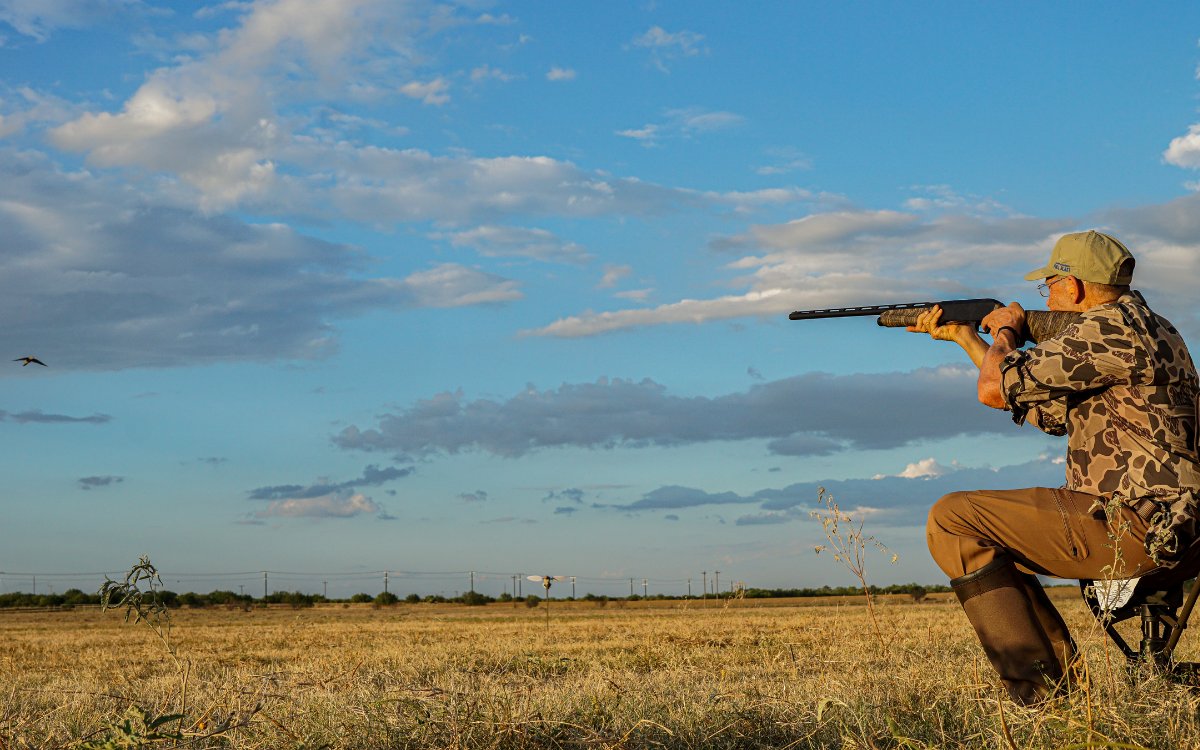
Without practicing during the off season, it’s easy to forget the little things that make a world of difference in the field. Proper footwork, mounting the shotgun effectively, and getting your head down on the gun are the three most important aspects to focus on when rebuilding your foundation.
In the early season, especially when dove hunting, I see a lot of folks taking shots from a seated position. While that can be effective, it’s usually hard to shoot well while sitting down. Setting your feet and facing your front hip toward your target will allow you to properly mount and swing through your shots much more effectively.
I think the second most common mistake is shooters pulling their head off the gun stock hoping to see the shot make impact. But that’s a surefire way to see the dove or teal continue on its route, unharmed. Keep your head down and align your bead. You’ll be able to track the bird falling after the proper form puts the shot on target.
One easy way to fix many of these problems is to simply practice mounting your gun at home. Make sure the shotgun is unloaded, pick a spot on the wall, and practice mounting the gun to that spot. Keep your eyes focused on the “target” and move the gun to it as smoothly as possible. Do this 20 times a night before your next duck hunt and you’ll be surprised by how much it helps.
You’re Taking Too Many Long Shots
Many new hunters are simply shooting at birds that are too far away. It’s easy to get excited in the field and want to take shots at every dove in the vicinity. The old adage, “you miss 100 percent of the shots you don’t take,” may even come to mind. But in this case, taking long shots and missing them is going to hurt you in all cases. It could even cause you to miss easy shots when you get them.
Establishing proper lead requires a combination of instinct, visual recognition, and direct feedback in the field. If you’re taking shots at 20, 30, 40, and even 50 yards on doves or teal, leads and barrel speed will vary drastically. That variance is hard to track, especially if you haven’t shot much. In other words, say you take that 50-yard crossing shot and miss (which of course you will), you’ll have no idea why you missed. That will only confuse you more on the next shot.
To avoid this, limit your shots to 30 yards and in. Sure, you’ll have plenty of targets pass by just out of range, but start knocking down the close shots consistently and you’ll end up bagging more birds in the long run.
You’re Not Following Through
I’ll be the first one to admit this is an area I struggle with every season. Just like throwing a baseball, if you don’t follow through, you’re likely to miss your target.
This means keeping your shotgun barrel swinging through the target during the shot. This can be difficult due to the abrupt recoil of the gun. But swinging through targets is imperative, especially when shooting at fast moving birds like doves and teal. Even with the proper lead and form, you’re likely going to find yourself missing behind the birds if you don’t keep the gun barrel moving.
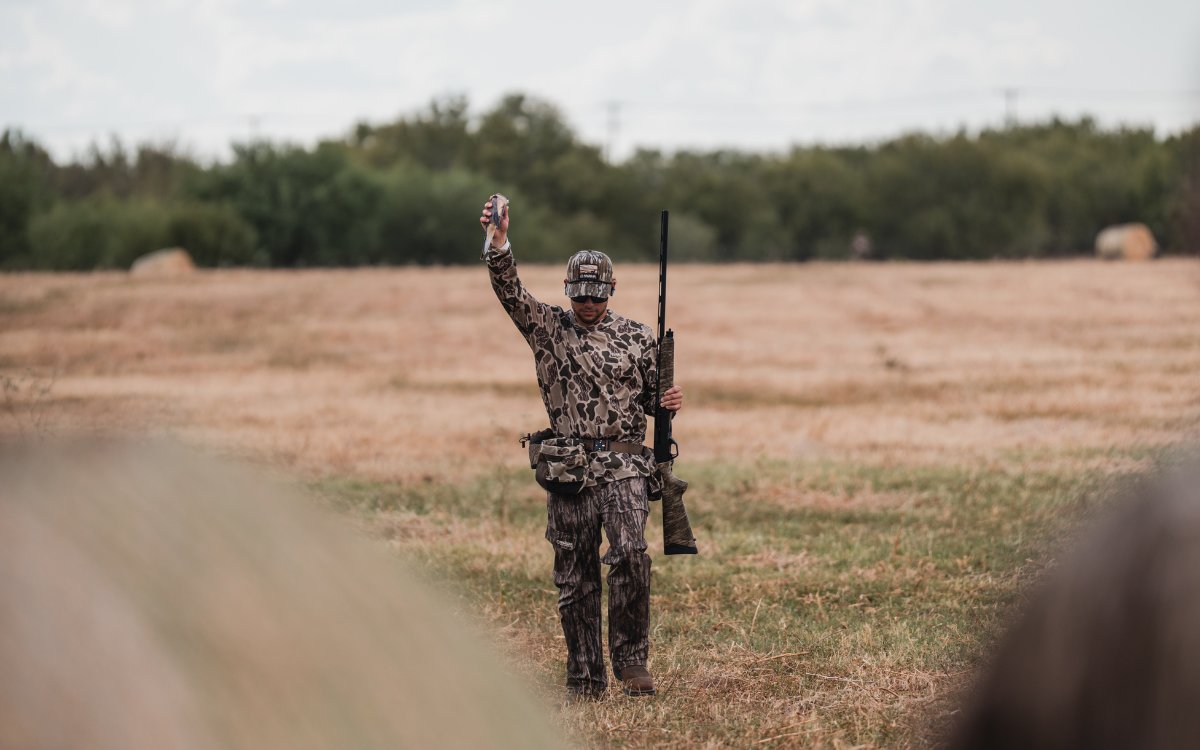
I’ve found it most effective to track from behind the bird, catch up to it, pull out in front and as I shoot, keep the barrel moving. This swing-through-method of shooting almost requires you to keep the gun barrel moving.
You’re Skipping Practice
One of the best ways to avoid sucking in the field during your first few wingshoots of the season is to get the mistakes handled ahead of time. Whether it’s trap, 5-stand, or a sporting clays course, breaking some clay targets prior to a hunt is never a bad idea.
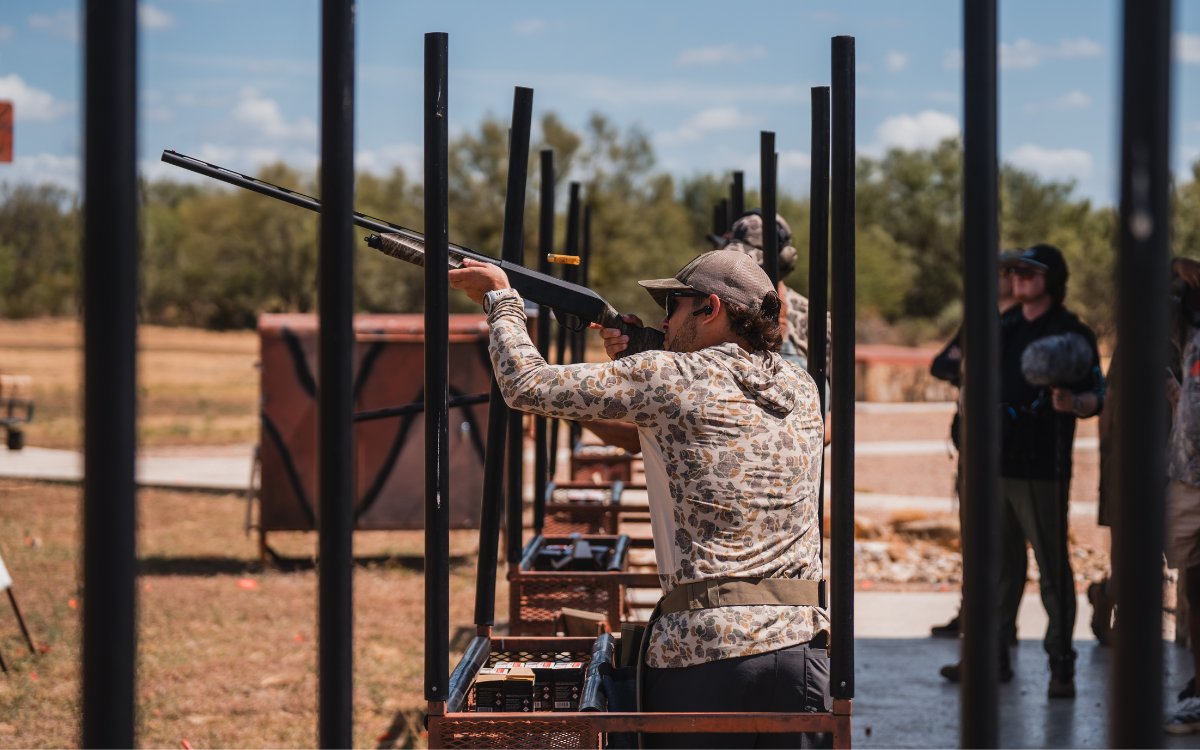
My personal preference would be to run an entire sporting clays course. One hundred shots at various stations and difficulties will really give you a tune up and help you lock in your form ahead of a hunt. Another option for those who don’t have any facilities nearby would be a DIY practice session with an implement like the Caldwell Claycopter.
When you do get to practicing, don’t just mess around. Focus on the basics I highlighted earlier in this story and focus hard on each target.
You’re Losing Sight of Ducks When They Commit to the Decoys
Obviously, this is pointed directly at the duck hunters here. Your setup can make or break your early-season hunt. From proper decoy deployment to a quality hide, there’s plenty that you can mess up. But one factor that is often overlooked is the horizon you’ll be facing when shooting.
Most folks set up with the sun at their back, lighting up the ducks as they dump into the spread. But on some hunts, you might only have action at first light.
Last week in South Texas, I shared a blind with Justin Martin. Martin proved his duck hunting prowess by making a call that surprised me as we set up for some teal on a calm, bluebird forecast. We set up facing directly at where the sun would rise, and he ensured there wasn’t a treeline impeding the sun’s rays as it crested into view. The reasoning was simple, and genius. He knew that the teal were going to fly right at first light, and not long after. That meant we had to take advantage of any opportunities that presented themselves.
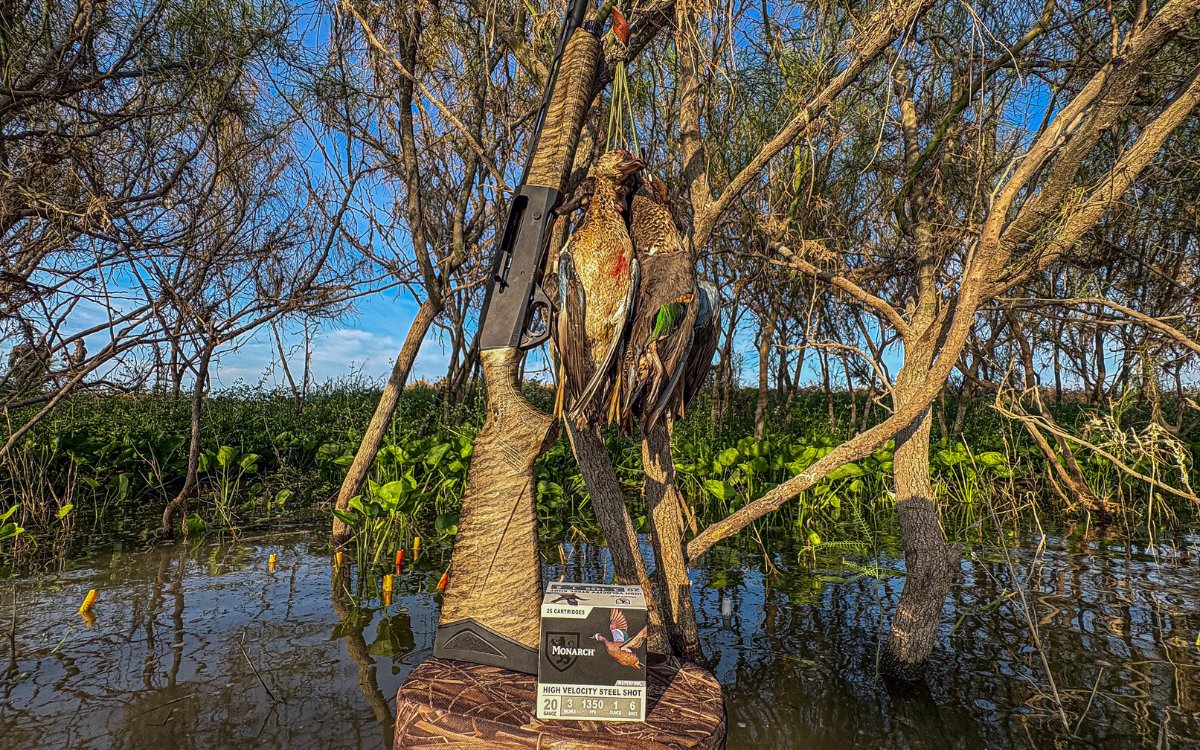
Thanks to the way we were set up, we could make out the teal in the early morning legal light as they came into the spread. With the sun as our backdrop, the outline of the teal was easy to make out against the light gray sky, providing us with shot opportunities we otherwise wouldn’t have gotten.
In any case, you should set up in a way that makes for the easiest shooting. And remember, the better you’re able to hide, the closer (and easier) your shots will be.
Final Thoughts on Shooting Early-Season Ducks and Doves
Let’s be honest, missing doves and ducks is part of the game. Throughout the past month, I’ve missed plenty of birds too. But, as I’ve focused on improving my form, following through my shots, and really trying to only take shots I know I can make, my success rate has increased dramatically. More importantly, that confidence has improved my shooting all around, meaning less wasted ammo, and more birds in the freezer.
Read the full article here