

Your #1 source for blades and firearms news and updates…

  • Home
  • Knives
  • News
  • Hunting
  • Tactical
  • Prepping & Survival
  • Videos
Subscribe
Font ResizerAa
Blade ShopperBlade Shopper
  • News
  • Knives
  • Prepping & Survival
  • Tactical
  • Hunting
  • Videos
Search
  • Home
  • Knives
  • News
  • Hunting
  • Tactical
  • Prepping & Survival
  • Videos
banner
Create an Amazing Newspaper
Discover thousands of options, easy to customize layouts, one-click to import demo and much more.
Learn More

Stay Updated

Get the latest headlines, discounts for the military community, and guides to maximizing your benefits
Subscribe

Explore

  • Photo of The Day
  • Opinion
  • Today's Epaper
  • Trending News
  • Weekly Newsletter
  • Special Deals
Home » DOD Increases Two Hazard Pays for First Time in Nearly 25 Years

DOD Increases Two Hazard Pays for First Time in Nearly 25 Years

Adam Green By Adam Green October 2, 2026 5 Min Read
Share
DOD Increases Two Hazard Pays for First Time in Nearly 25 Years

The Department of Defense (DOD) has raised two forms of combat-related pay for service members for the first time in roughly a quarter-century, doubling the monthly rate for hostile fire pay and also increasing imminent danger pay.

Hostile fire pay rose from $225 to $450 a month, and imminent danger pay increased from $225 to $275, under a memorandum signed in mid-July by Timothy Dill, the assistant secretary for manpower and reserve affairs. The new rates took effect Oct. 1, the first day of Fiscal Year 2027.

The pay increases mark the first increase in the two stipends since October 2002. Congress had already authorized those higher maximums under federal law.

What changed Oct. 1 was the department’s decision to raise the amounts paid to eligible troops, which had been held at $225 for 24 years, up to those existing ceilings.

Specialist Misha Pemble-Belkin (l.) and fellow soldiers from Battle Company, 173rd US Airborne during a firefight at Outpost Restrepo during combat in Afghanistan’s Korengal Valley. (Photo: Tim Hetherington)

“Those who face combat deserve higher compensation that reflects the risks that they willingly undertake on behalf of our nation,” said Anthony Tata, the undersecretary for personnel and readiness, in the department’s announcement.

He also said that “raising imminent danger and hostile fire pays for the first time in two decades is a step toward recognizing that sacrifice.”

What This Means Moving Forward

Hostile fire pay generally applies to service members exposed to hostile fire or a qualifying hostile event. Imminent danger pay applies to those serving in designated foreign areas with qualifying threats.

Both are authorized under the same section of federal law.

Imminent danger pay is prorated by the number of qualifying days a service member spends in a designated area, which the department said works out to about $9.16 per day under the new rate, up to the $275 monthly cap.
9832932

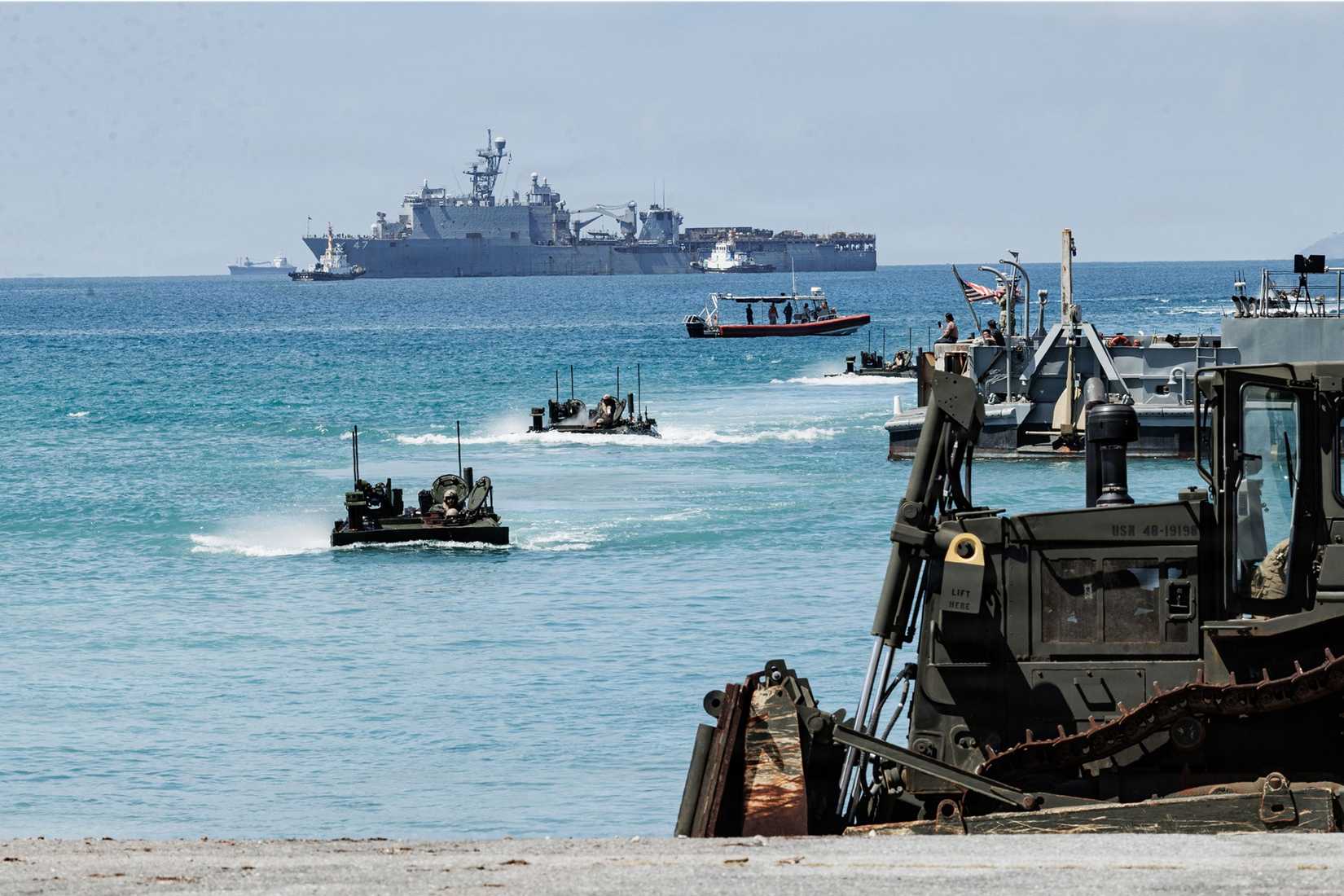
Amphibious Combat Vehicles with the 31st Marine Expeditionary Unit, III Marine Expeditionary Force, from Whidbey Island-class dock landing ship USS Rushmore (LSD 47), arrive at White Beach Naval Facility, Okinawa, Japan, July 23, 2026. (U.S. Marine Corps photo by Corporal Justin Cledera)

Hostile fire pay is paid at the full $450 when a commander authorizes it for that period. Service members cannot receive both forms of pay for the same period of service, and military branches are directed to coordinate with the Defense Finance and Accounting Service to prevent overlap.

Chief Pentagon spokesperson Sean Parnell said the approach aims to draw a clearer line between different levels of risk, according to the memo. If an area is designated for imminent danger pay and escalates into active combat, he said, commanders can immediately shift personnel to hostile fire pay.

What Has Changed Since July

The move follows earlier efforts in Congress to raise the stipends, including a bill introduced by an Arizona lawmaker as previously reported by Military.com that would have boosted monthly combat pay by $50.

It also comes amid ongoing U.S. military operations overseas. The war with Iran recently surpassed the seven-month mark.

9970231
Sailors stand in formation outside Midway Ceremonial Drill Hall during pass-in-review onboard U.S. Navy Recruit Training Command in Great Lakes, Sep. 24, 2026. (U.S. Navy photo by Mass Communication Specialist 1st Class John Suits)

The department encouraged service members and their families to consult their local finance offices or command financial specialists to understand how the changes will appear on their leave and earnings statements and to ask about individual eligibility.

Before the 2002 increase, hazard pay rates varied by the type of qualifying duty and a service member’s rank—typically ranging from $100 to $240 a month, according to DOD.

Officials said the new flat and tiered rates are intended to compensate troops more consistently for the varying levels of risk they face.


Share This Article
Facebook X Copy Link Print
Previous Article “I Felt It Sink to the Handle.” This Hunter Used an Ice Axe to Fight Off a Charging Grizzly Bear “I Felt It Sink to the Handle.” This Hunter Used an Ice Axe to Fight Off a Charging Grizzly Bear
Next Article Elk Hunter Shoots Gigantic 428-Inch Bull in Pennsylvania Elk Hunter Shoots Gigantic 428-Inch Bull in Pennsylvania
Leave a Comment Leave a Comment

Leave a Reply Cancel reply

Your email address will not be published. Required fields are marked *

Elk Hunter Shoots Gigantic 428-Inch Bull in Pennsylvania

October 2, 2026

“I Felt It Sink to the Handle.” This Hunter Used an Ice Axe to Fight Off a Charging Grizzly Bear

October 2, 2026

Finally! The DOJ's Official Stance On The NFA Injunction

October 2, 2026

Old-School Tactics for Hunting Bucks Around Streams and Swamps

October 2, 2026

Saudi Arabia Once Counted on US Protection. Now It’s Pivoting to New Alliances

October 2, 2026

You Might Also Like

NASA Has Made Job Offers to 2 Retired Engineers in Their Seventies to Help Restart an SR-71 Blackbird. The Aircraft Last Flew on October 9, 1999, and Nobody Has Turned Its Engines Since.

NASA Has Made Job Offers to 2 Retired Engineers in Their Seventies to Help Restart an SR-71 Blackbird. The Aircraft Last Flew on October 9, 1999, and Nobody Has Turned Its Engines Since.

News
Armed Robber Killed In Struggle Over His Own Firearm In Chicago

Armed Robber Killed In Struggle Over His Own Firearm In Chicago

News
Flying with Guns: Episode 40 – Southwest from LAS to MSY

Flying with Guns: Episode 40 – Southwest from LAS to MSY

News
Man With Knife Fatally Shot On Bus By Armed Bystander, Police Seeking Shooter

Man With Knife Fatally Shot On Bus By Armed Bystander, Police Seeking Shooter

News

2025 © Blade Shopper. All rights reserved.

Helpful Links

  • News
  • Knives
  • Prepping & Survival
  • Tactical
  • Hunting
  • Videos

Resources

  • Privacy Policy
  • Terms of use
  • Press Release
  • Advertise
  • Contact

Popuplar

Elk Hunter Shoots Gigantic 428-Inch Bull in Pennsylvania
16 Types of Military Helicopters Used By The US Military
Bournemouth Air Festival: The UK’s Largest Air Festival
We provide daily defense news, benefits information, veteran employment resources, spouse and family resources.
Welcome Back!

Sign in to your account

Username or Email Address
Password

Lost your password?