

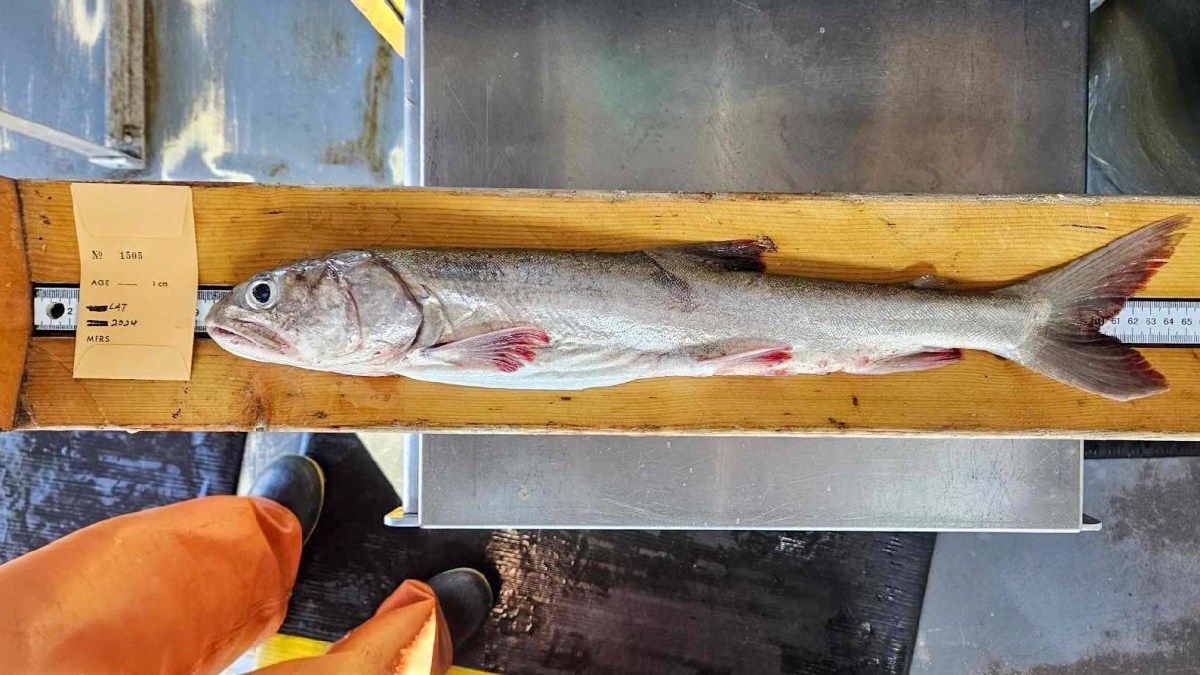
- Zombie trout mystery deepens. Emaciated lake trout, dubbed ‘zombie fish,’ are increasingly found in Lake Superior’s depths.
- Unique subspecies affected. The siscowet lake trout, known for its high fat content, is losing fat and, in turn, buoyancy. That affects its ability to feed.
- Potential ecological imbalance. Changes in the delicate deepwater food web may be causing starvation among these trout.
- Unknown causes. Researchers are investigating possible culprits, including disease and toxins.
Bottom line: Researchers are puzzled by the rise of emaciated ‘zombie’ trout in Lake Superior, but they have some theories about what’s to blame.
Lake Superior is one of the largest and deepest lakes in the world. At over 300 miles long and 160 miles wide, this vast inland sea has fascinated mankind for centuries. The lake is the final resting place hundreds of ships and, according to legend, the lake never gives up her dead. Yet, in the deepest part of Superior’s icy black waters — a quarter mile below the surface — researchers are discovering a growing number of extremely thin lake trout that appear to be wasting away. Due to their skeletal appearance, experts have dubbed these lakers “zombie fish.”
“We’ve been documenting these emaciated fish for around a decade,” says research biologist, Shawn Sitar, who works at the Michigan DNR’s Marquette Fisheries Research Station. “So far, it only occurs in one of the four sub species of lake trout in Lake Superior, the siscowet, which lives in the deepest regions of the lake. And the rising number of emaciated trout we’re finding in these areas is both perplexing and concerning.”
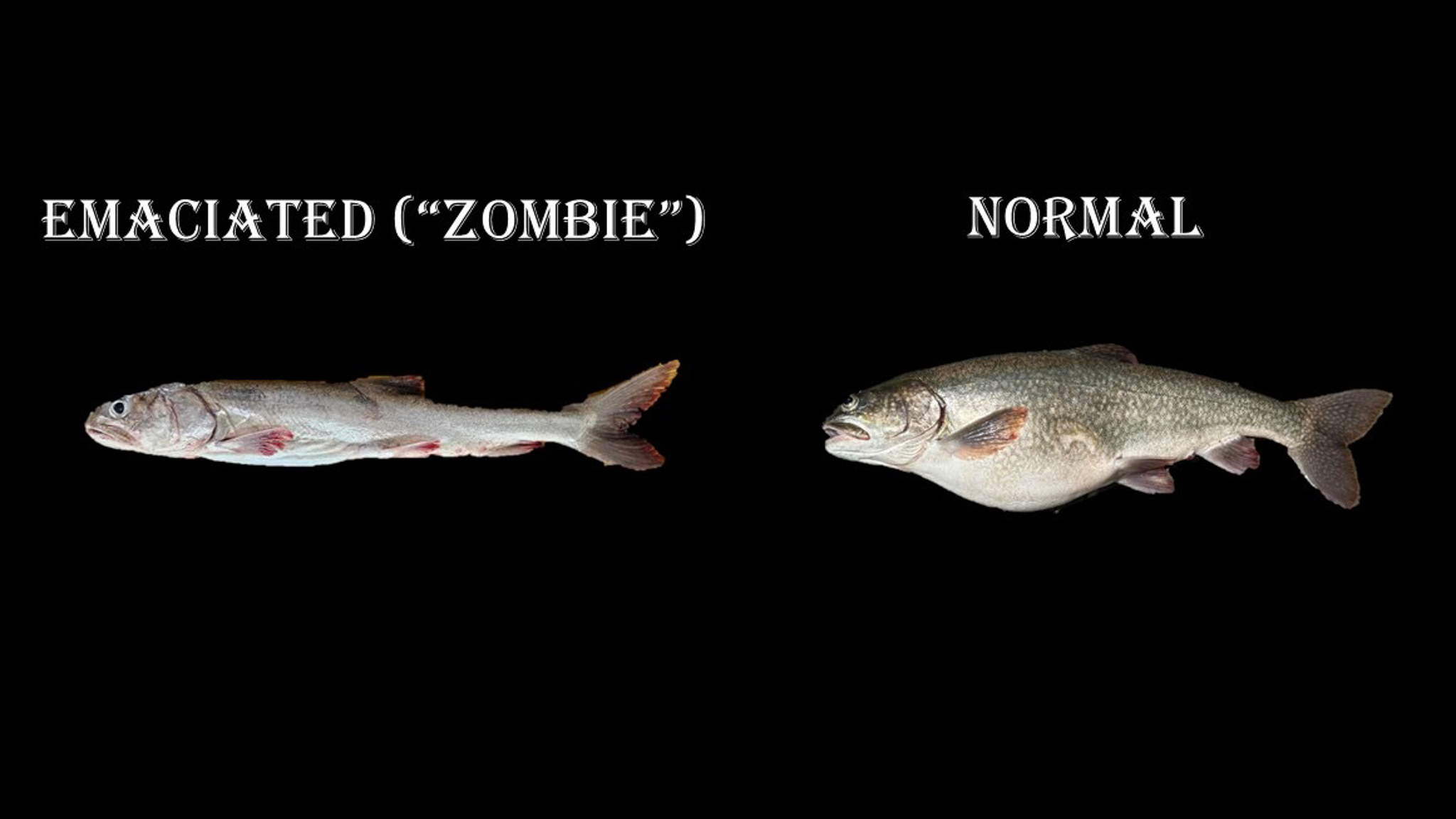
Many of the fish Sitar has found have less than half the body weight of a healthy lake trout of the same length.
Ironically, “siscowet” is Ojibway for “fish that cooks itself,” because this laker subspecies normally has an extremely high fat content that almost makes it appear obese. Back in 2006, Sitar and his colleagues were the first researchers to document the siscowets and other fish that live in the deepest part of Lake Superior, more than 1,300 feet below the surface. It’s an area with no light and intense water pressure — where big lake trout are the apex predator at the top of the delicate food web that exists there.
“These deep water lakers live a long, slow lifestyle compared to other subspecies found near the coast,” Sitar tells OL. “They’re a very adaptive fish, who are a part of what is a relatively barren deepwater ecosystem that’s similar to a desert or even the Arctic, because there just isn’t a lot of sustenance. Through GPS tagging, we’ve found that the trout in these depths are like yoyos, traveling up and down the water column to get their daily caloric intake.”
During his initial examination of deep-dwelling trout in 2006, Sitar discovered flying ants, butterflies, and even birds in their stomachs — along with rocks. That suggests these fish move all the way from the bottom to the surface of Lake Superior to feed.
Many people believe that the siscowet’s normally high fat content helps the fish store energy, but its primary function is to help them stay more buoyant in such highly-pressurized depths. That means these “zombie fish,” which suffer from a loss of body fat, have a harder time feeding.
“When these trout start starving, they lose body fat and when they lose fat they lose buoyancy,” says Sitar. “It’s a vicious cycle as the starving lake trout are unable to move through the water column as easily, so they are unable to get their caloric intake, making them even more emaciated.”
What’s Causing Zombie Trout?
While researchers started observing a slight decline in the population of siscowet in the last decade, their condition has severely deteriorated in the last few years. This is especially true in the deepest regions of the lake where nearly half the fish netted by Sitar and his team were emaciated. There are several theories as to why so many of the siscowet lake trout are turning losing fat, but scientists don’t know yet what’s behind the phenomenon — or if there’s even a problem.
“This could simply be a part of a natural localized ecological happening,” Sitar says. “It’s only occurring in areas of the lake that are one thousand feet deep or over where there’s a very delicate food web. If just one of the prey fish that the trout eat is declining for one reason or another, it could cause starvation for the siscowets.”
But in the last 10 years, Sitar and his colleagues have noticed that incidence of these emaciated fish have grown from 10 to 30 percent.
“And in one particularly deep spot, it was almost half the catch. So, it’s something we want to get to the bottom of because while it could be a natural ecological event, it could also be something more dire.”
The rise of so many zombie lake trout could also indicate the presence of a disease — which could affect other fish species, too. This is something Sitar and his team will be researching on an expedition planned for June.d
“Obviously if it’s something infectious, we’ll want to know the cause and whether we can stop it. Which is why we’ll be getting out there as soon as we can.”
Other possible reasons for this increase in zombie siscowets include toxins, since some of the meat researchers have sampled from the emaciated fish contained extremely high mercury levels.
“Sea lamprey bites are another possibility, though I will say we haven’t seen more bites on these fish than lakers in other areas of the lake and historically, due to their high fat content, siscowets seem to have a higher tolerance for lamprey bites than other lake trout subspecies.”
In November 2024 the Great Lakes Fishery Commission announced that lake trout were fully recovered in most of Lake Superior and even reopened a commercial harvest season. It’s Sitar’s hope that the appearance of these zombie fish isn’t an omen that the commission may have made this call a little too early.
Read Next: Spearfishing for Walleyes Is Coming to the Great Lakes. And That’s Not a Bad Thing
“I would call Lake Superior the Mount Everest of the Great Lakes, and the zombie lake trout are appearing at the very summit,” says Sitar. “We’re only seeing these emaciated fish in the deepest areas of the lake at the moment. However, in the field I make a call on whether I think they are emaciated or not based on what I am seeing. So, some fish that I call ‘normies’ may be also on their way to become zombies, and the percentage of starving fish could be a bit higher, especially at these extreme depths. With such an interconnected ecosystem, a lot more research still needs to be done before we can get to real answers about how zombie trout may be affecting the lake and the fish that swim in it.”
Read the full article here