
We may earn revenue from the products available on this page and participate in affiliate programs. Learn more ›
Grouse and the cover they live in shape grouse guns. Heavy brush demands a light, compact gun that can be carried in one hand while the other fends off branches. Limited visibility dictates open chokes. (Why should a gun shoot 40 yards when you can’t even see that far?) And while grouse themselves can be hard to hit, they are easy to kill, so small-bores predominate.
Grouse guns, though, are more than tools of the hunt. They are totems as well. More than almost any uplanders, grouse hunters immerse themselves in the trappings and traditions of the hunt, which explains why many older designs make this list of 15 great grouse guns—although there are plenty of new classics here as well.
Best New and Currently Made Grouse Guns
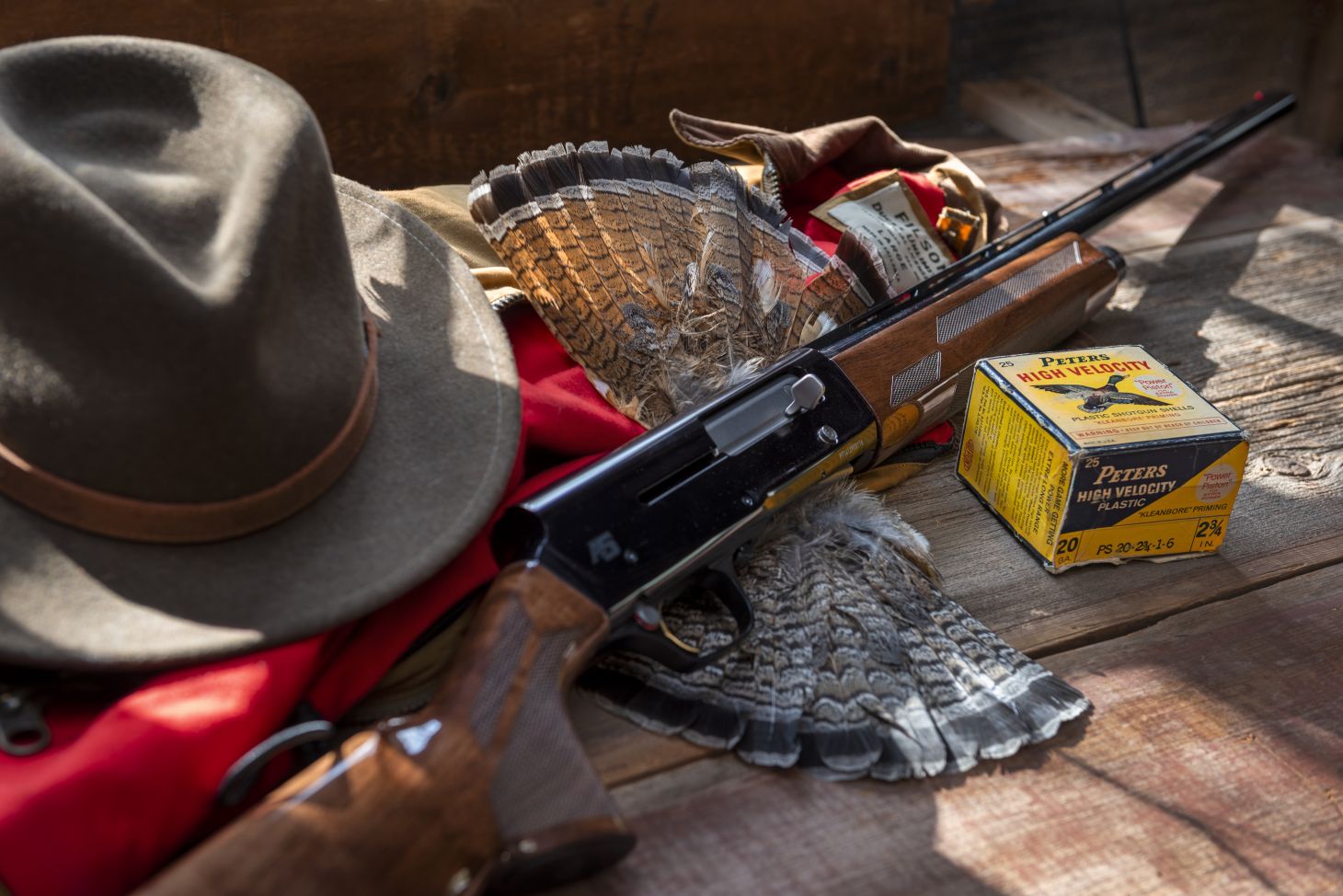
The original Belgian-made Auto 5 Sweet 16 was the darling of semiauto fans, yet the new A5 model may be a better grouse gun. All it shares with its namesake is the humpback receiver and its Browning pedigree. It’s much lighter than the original, weighing under 6 pounds thanks to an alloy receiver. The A5’s reliable inertia action also eliminates the pogo-stick recoil of the long-action Auto 5. Like the Sweet 16 before it, the A5 version combines sub-gauge handling with near 12-gauge ballistics, making it a potent bird-getter and a modern grouse hunting classic.
Also, new for 2024, Browning introduced a 3-inch, 20-gauge A5. It’s a smidge lighter than the 16, but not so light you can’t shoot it. You could absolutely carry this through the grouse woods for miles and make your shots when you finally find birds. You can check out a full review of the 20-gauge A5 here.
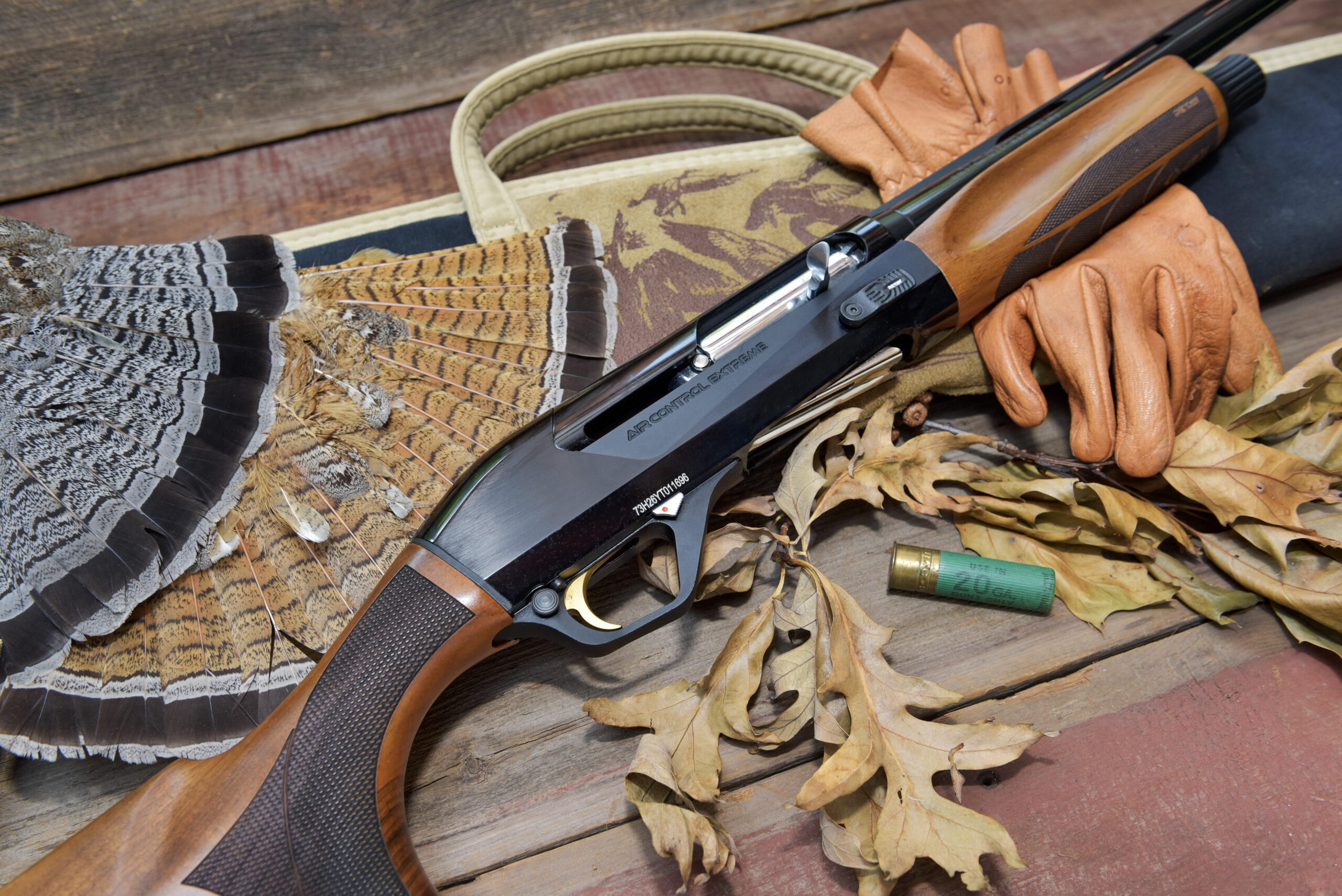
The basic Montefeltro remains Benelli’s entry-level option, with the up-to-date advantages of the Easy Locking bolt for reliable function and a relaxed mag spring and latch that make reloads smoother. The 20-gauge version weighs 6 pounds with a 28-inch barrel and less with the 26-inch, and even less with the 24—inch barrel, which is easier to handle in thick cover. Personally, I’d take the 28-inch and take my chances in the thick brush, but you can’t go wrong with any of these. You can spend a lot more on other Benellis, but why? In my opinion, this is inertia-gun perfection.
You don’t have to search hard to find one of the greatest grouse guns of modern times. Every Bass Pro and Cabela’s stocks bunches of Beretta 686 Silver Pigeons. Last time I hunted birds in Wisconsin, I was struck by the number of 20-gauge Beretta 680s in the hands of local grouse hunters—almost as if they had been issued along with a hunting license. There’s good reason for that. Berettas are low-profile, slim, strong, and light, all qualities you look for in a grouse gun. The Silver Pigeon I is the bottom of the 686 line, but inside, it’s exactly the same gun as the pricier, more decorated models. It comes in 12, 20, and 28 gauge.
If you want a new double gun at a good price, look at a Turkish Dickinson. The guns have been around the U.S. for a while, imported by S&W and others, and they are a good buy in a traditional two-trigger double. The Plantation Grade has full side plates, beautiful case-coloring, and a nice Turkish walnut stock. Despite its traditional looks, it has choke tubes and is rated for steel shot. It comes in 20, 28, and .410.
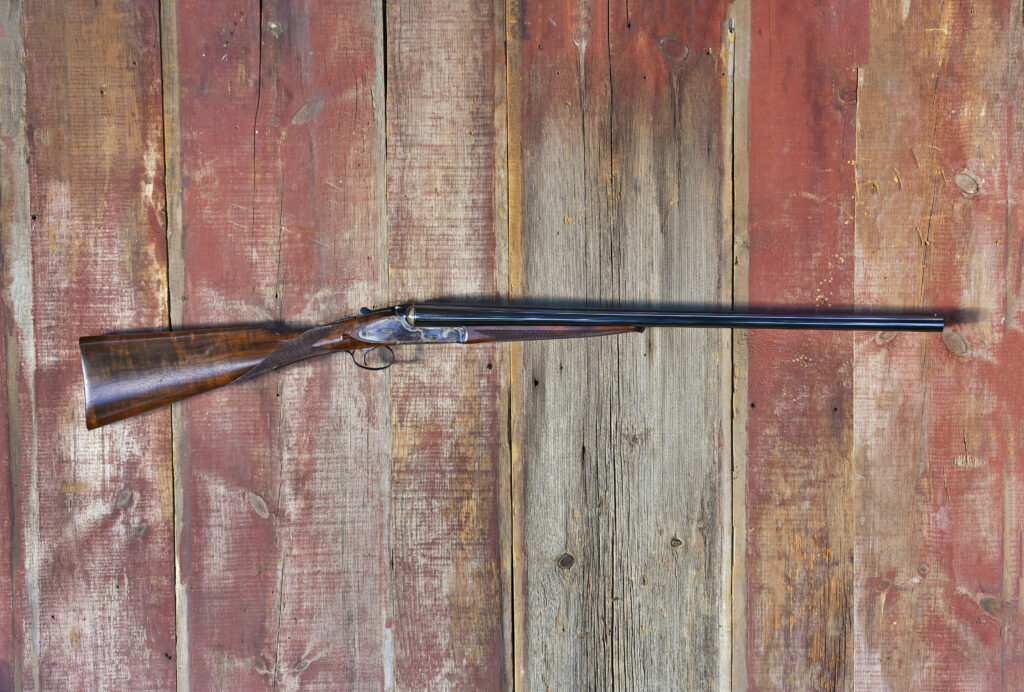
Upland Gun Company in northern Minnesota works with R.F.M. in Italy to offer custom-stocked O/Us and side-by-sides with a wide range of options. All the models make good grouse guns. The Zeus, a basic boxlock side-by-side (and I say that in a good way), is a great gun for the brush. A stock Zeus starts at $3500, which includes custom stock dimensions you specify and your choice of barrel length. My 20-gauge Zeus, with fixed chokes and 30-inch barrels, weighs exactly six pounds. Upland Gun Company can help you arrange a fitting for an added $400-$500, meaning a made-to-measure gun can be yours for $4000, which is actually a bargain.
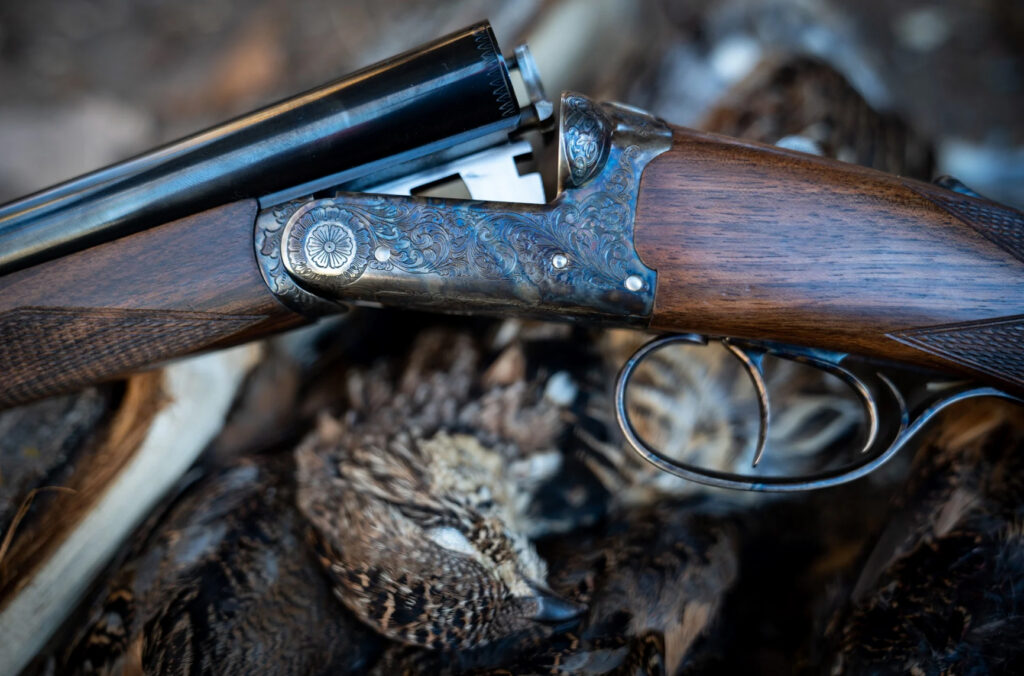
The 825 replaced the already excellent 725, adding a few tweaks like a rounded forend, gently restyled lever and receiver, and an improved trigger. By replacing the steel frame of the 825 Citori with a lightweight alloy receiver, Browning engineers shaved considerable weight off the regular 825. The result is a 6 ½-pound 12, or a 20 that scales just under 6. Either would be a delight in the thick coverts, and both retain enough weight up front to be easy to hit with while simultaneously being easy to carry. The guns still have all the strength and good points of the Citori, without the bulk
The Bobwhite is too good to be true: it’s a classic, well-made, bare-bones side-by-side with none of the clunkiness you’d assume of a double gun that starts at $800. It has two triggers, extractors, steel-friendly choke tubes, and no frills. The straight grip and slender forend give it a classic look and make it an easy, quick-pointer in the woods. Better yet, it comes in 12-, 20-, and 28-gauge, each on its own scaled frame.
The 28 is currently trendy, and the grouse woods are a great place to find out what all the fuss about the little gun is about. Mossberg’s SA-28 semiauto has a 26-inch barrel to make it more compact in the woods, plus a gas system that makes the already soft-kicking 28-gauge cartridge even more pleasant to shoot. At 6 ½-pounds, it’s a bit heavy for a 28, but it’s not too much to carry, and that weight comes in handy when it’s time to actually shoot at something. The gun has a blued barrel and high-gloss walnut stock, so it’s properly dressed for the grouse woods, too.
“Lovely” is the word for the Autumn side-by-side. Made in 20-gauge only, it comes in a choice of pistol grip/beavertail forend or straight stock/splinter. Both versions have oil-finished, deluxe walnut stocks. The case-colored receivers have a floral Art Nouveau engraving pattern that you might not expect on a bird gun, but it works perfectly. The guns come with a choice of 28- or 30-inch barrels bored to Fabarm’s Tribore dimensions for better patterns, and Fabarm’s Inner HP chokes. You can upgrade to a Deluxe model with gold gamebirds, too.
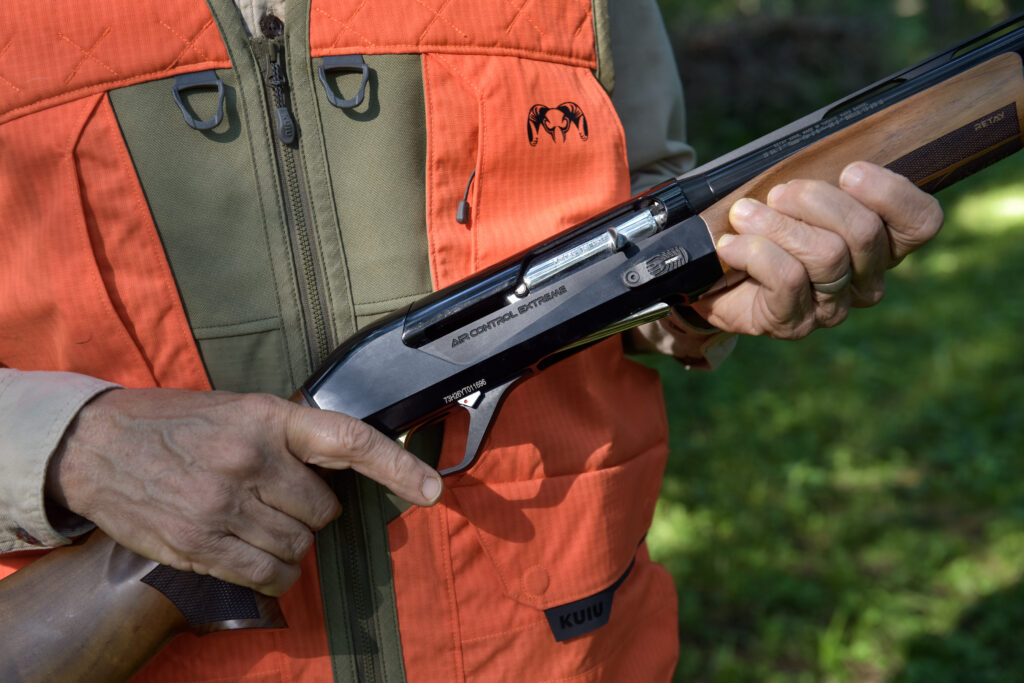
A wisp of an inertia gun, the Upland Ultra Light comes in 12-, 20-, and 28-gauge with 24- or 26-inch barrels. It saves weight with a shortened, two-shot magazine tube. It makes an ideal carrying gun, and it’s great for the poke-and-hope shots you encounter in heavy cover. My 20-gauge sample gun had light-colored but attractive Turkish walnut, an effective “Airy” recoil pad, and Retay’s version of the no-click bolt, plus a trigger group that comes out with the push of a button, and it comes in both the standard ACE and the hump-backed ACE-R profiles, all for well below the price of the competition.
The Model 37 was made in grouse country in western New York. Rather than draw up a pump gun design from scratch, Ithaca waited for the patent on the John Browning/John Pedersen-designed Remington Model 17 to expire. The result was this classic American pump-action grouse gun. The 37 was lightweight, smooth, and featured bottom ejection that made it a favorite of left-handers.
There are tons of used 37s on the market, but prices have risen in recent years, so you can no longer pick one up for a couple hundred bucks. Ithaca fell on rocky financial times in the 80s, but was eventually reinvigorated and moved to Sandusky, Ohio, where the guns are made today. In addition to the 12- and 20-gauge, the new Ithaca offers a scaled-down 28-gauge tailor-made for grouse hunting, and it can be ordered with a 24-inch barrel, albeit at nearly double the price.
Related: 10 Best Shoguns for Pheasant Hunting
Best 4 Classic Used Grouse Guns
12. Parker
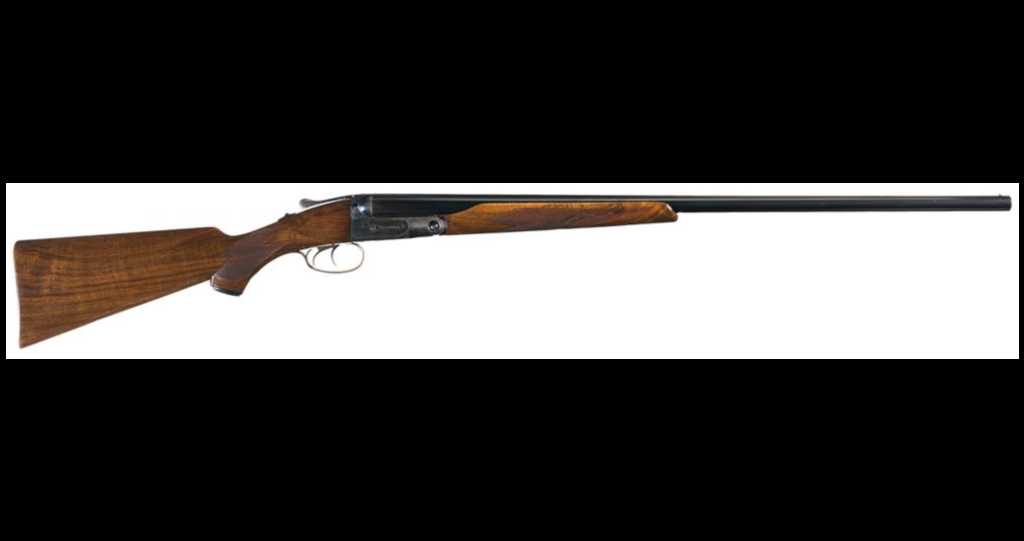
Known as “Old Reliable,” the Parker is the most famous of American doubles. They have looks and cachet and are instantly recognizable by the slotted screw over the hinge pin in the receiver. Parkers came in a variety of grades, gauges, and, most importantly, frame sizes—so you could order one properly scaled and weighted for the grouse woods. They were made from 1866 to 1942, and the company was owned by Remington at the end. They were revived in excellent Japanese-made versions in the mid-80s, too, under the name “Parker Reproductions.”
If there’s a quintessential grouse gun, it might be the VH Parker 20-gauge that belonged to Burton Spiller, “The Poet Laureate of Grouse,” which he passed on to Field & Stream writer (and son of “Tap’s Tips” writer) Bill Tapply. It combines all the features a grouse gun requires and adds a healthy dose of literary pedigree.
13. Ruger Red Label 28-Gauge
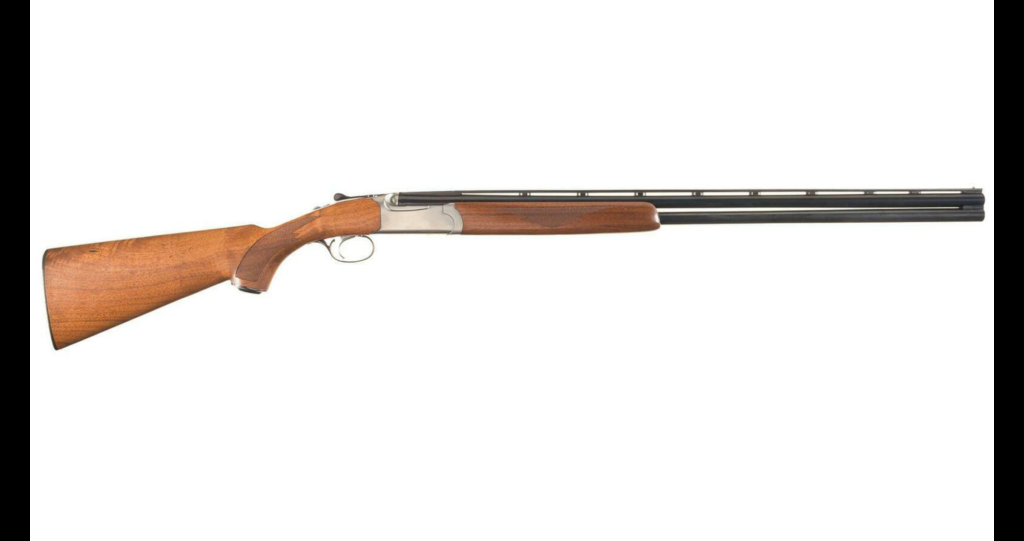
The Ruger Red Label is a love-it-or-hate-it gun. It has a strong cult following and an equally fervent cult of haters. As a serial Red Label owner (I’m on my fourth), I fall in both camps. Red Label fans like the gun’s low profile, mechanical triggers, sleek lines, durable action, and the fact that it was made in New Hampshire. Haters dislike the way it flops open (it’s supposed to), its excessive weight, and the shoddy wood-to-metal fit.
The 28-gauge Red Label, built on a true 28-gauge frame, was by far the lightest, liveliest, most shootable Red Label of all, and a great gun for the grouse woods. I had one and foolishly sold it. It was a deadly wand while I owned it.
14. Ithaca/SKB 100
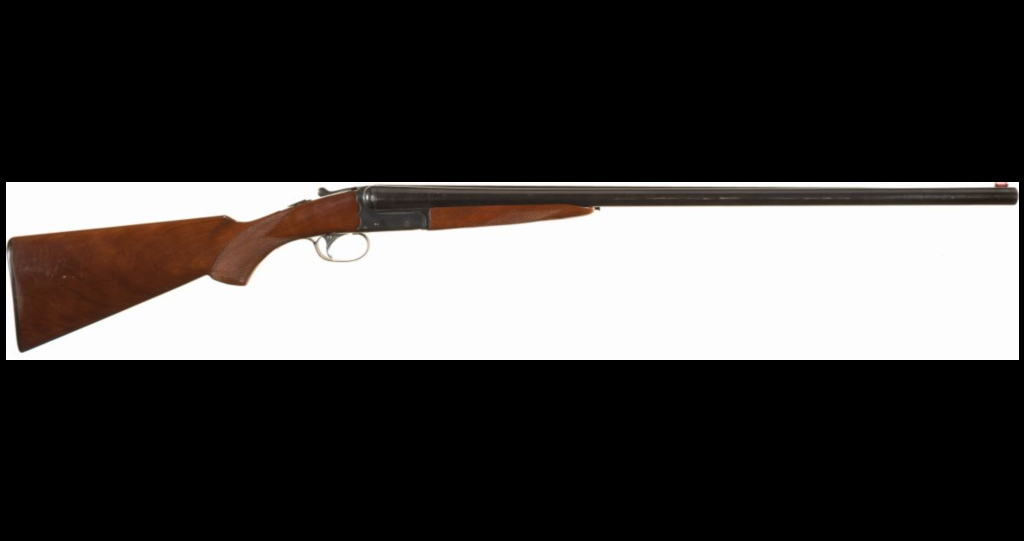
The SKB 100 was a gun ahead of its time. An excellent single-trigger double gun, it made a great carrying gun in the woods. In 20-gauge with a 26-inch barrel, it weighs about 5¾ pounds with a very muzzle-light feel that makes it easy to carry one-handed by its pistol grip. You have to feed it carefully because it is a brutal kicker for such a cute little gun. But when given a diet of light loads, it is manageable to shoot and deadly on grouse. The 100 was the bottom-of-the-line field grade. You could step up to a 200 or 280 to get ejectors in place of the 100″²s extractors, more engraving, and a straight grip.
15. Winchester 101
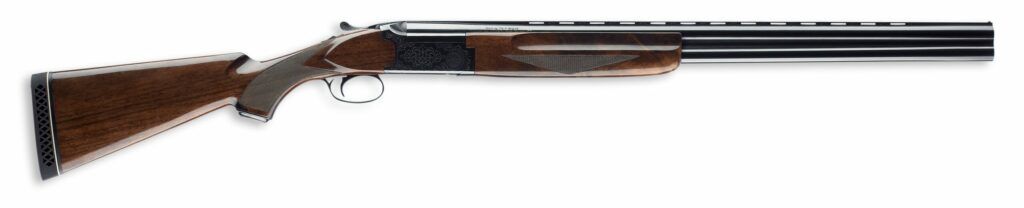
“Made in Japan” meant cheap and shoddy until guns like the 101 came along in the mid-60s. The 101 was a lighter gun than its main competition, the Browning Citori, making it better suited to the grouse woods. The collaboration between Winchester and Japanese maker Kodensha lasted until the factory was torn down in the 1980s.
That collaboration had its bumps. The Kodensha factory also produced Nikko shotguns that were essentially the same gun as the 101. Because there were few Winchester employees watching over the plant, the Japanese allegedly high-graded the best 101 wood to use on Nikkos, so Nikkos are also a gun to watch out for.
content_shotguns

EXCITING NEWS
Membership Now Includes

Recommended Products
Read the full article here