
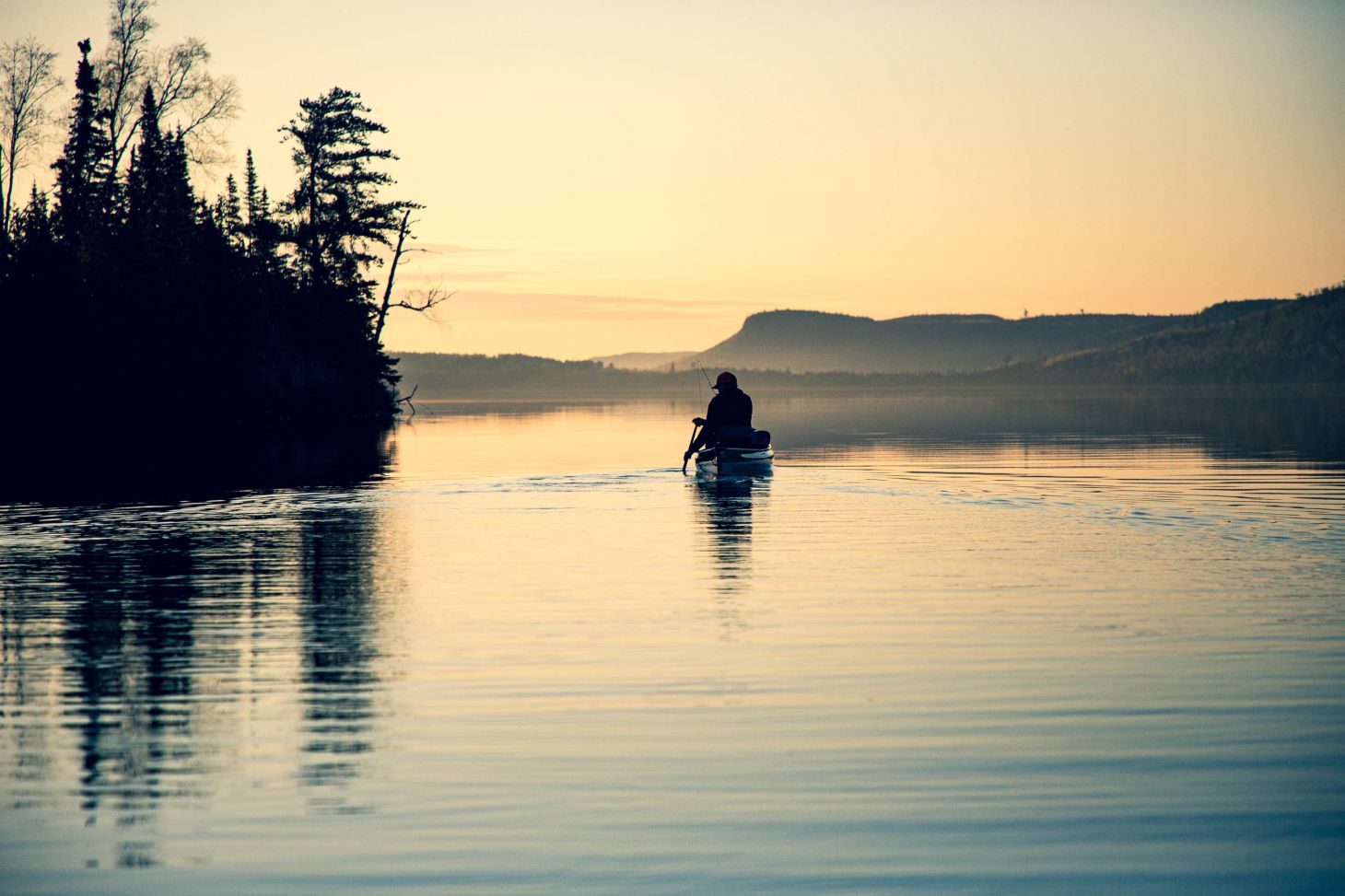
In a partly-line vote with widespread ramifications for public lands across the country, the United States Senate just overturned a 20-year mining ban for the Rainy River Watershed in northern Minnesota. As Field & Stream has previously reported, hunting and fishing groups have fought relentlessly to protect the Boundary Waters Canoe Area Wilderness (BWCA) for over decade. And opposition hit a fever pitch when the current bill (HJ Res 140) passed the House back in January. The bill’s passage in the Senate puts a Chilean-owned mining conglomerate one step closer to its long-sought copper-sulfide mine on the shores of Birch Lake in the Superior National Forest, which flow directly into the BWCA—the nation’s most-visited wilderness area.
Congress used a controversial legislative maneuver known as as the Congressional Review Act (CRA) to scrap the mining ban. Critics warn that using the CRA in this manner sets a dangerous precedent for federally managed public lands throughout the country. Congress and the President used the CRA to overturn public land protections for the first time back in December 2025, scrapping Resource Management Plans on BLM lands in Alaska, North Dakota, and Montana. And Utah Senator Mike Lee is currently using the tactic in an attempt to kill National Monument protections for Grandstaircase Escalante.
What’s at Stake?
Opponents of the proposed copper mine in the Rainy River Watershed have long warned of the adverse impacts it will have on the now-thriving wildlife habitat that makes the Boundary Waters such a cherished hunting and fishing destination. “This 1.1 million–acre hunting and fishing paradise holds over 1,100 lakes, many supporting native lake trout – miles of cold, connected streams, and sensitive fish and wildlife habitat. Today’s vote puts that legacy at risk,” said Corey Fisher, Public Lands Policy Director at Trout Unlimited in statement shared with Field & Stream this morning. “Science is clear: this is no place to risk perpetual pollution from acid mine drainage.”
The Department of the Interior issued the 20-year mining moratorium that the bill will overturn back in 2023 after years of rigorous environmental review and a public comment period that produced more than 675,000 comments—the vast majority of which supported long-standing safeguards for the Boundary Waters. “Sulfide-ore copper mines have not been successful without polluting in some form,” Sportsmen for the Boundary Waters Executive Director Lukas Lead told F&S earlier this year. “The Boundary Waters is an extremely water-rich environment connected by rivers and aquifers flowing all the way up to Hudson Bay. Acid mine drainage and leakage of heavy metals into this water system would have devastating impacts on the intact species in the wilderness area. And remediation of that type of pollution is impossible.”
Poor Environmental Track Record
According to recent reporting in Reuters, Antofagasta—the Chilean company vying to build the mine—was recently fined close $1 million in its home country of Chile for failing to comply with water management regulations at its Centinela copper mine. In that instance, the company did not keep proper track of water resources and did not follow the monitoring rules outlined in the project’s environmental impact study and an additional monitoring plan, Reuters reports.
“History tells us that a mine like this in a place with the hydrology of northern Minnesota cannot be done without catastrophic water pollution issues,” prominent hunter and public land advocate Randy Newberg told F&S earlier this year. “There’s no percolation there. The mine waste will hit the granite and flow with the course of water [into the Boundary Waters]. And we’re looking at a 100-year project to clean it up. Congress is going to have to own this decision. But we won’t know how bad it is for 30, 40, or even 50 years.”
Having passed the Senate on a 49-50 vote with just two Republicans voting no, HJ Res. 140 will now move to the Presidents’s desk.
content_conservation,content_stories

THE 1871 CLUB

Recommended Products
Read the full article here