
Most trout anglers have heard the phrase “hoot owl restrictions.” It refers to state wildlife agencies putting fishing limitations on certain rivers due to low water levels and high water temperatures. These restrictions are used to protect trout in high-stress conditions. That’s why understanding how water temperature affects trout is crucial not only to success but also to trout survival. With the dog days of summer right around the corner, we put together this water temperature guide for trout fishing. And we didn’t just focus on situations where water temps are too warm to fish. This is a year-round overview of how water temperature impacts trout forage, habitat, and fishing tactics. Here are tips and tactics for each of the five main water temperature ranges.
Temperature Basics
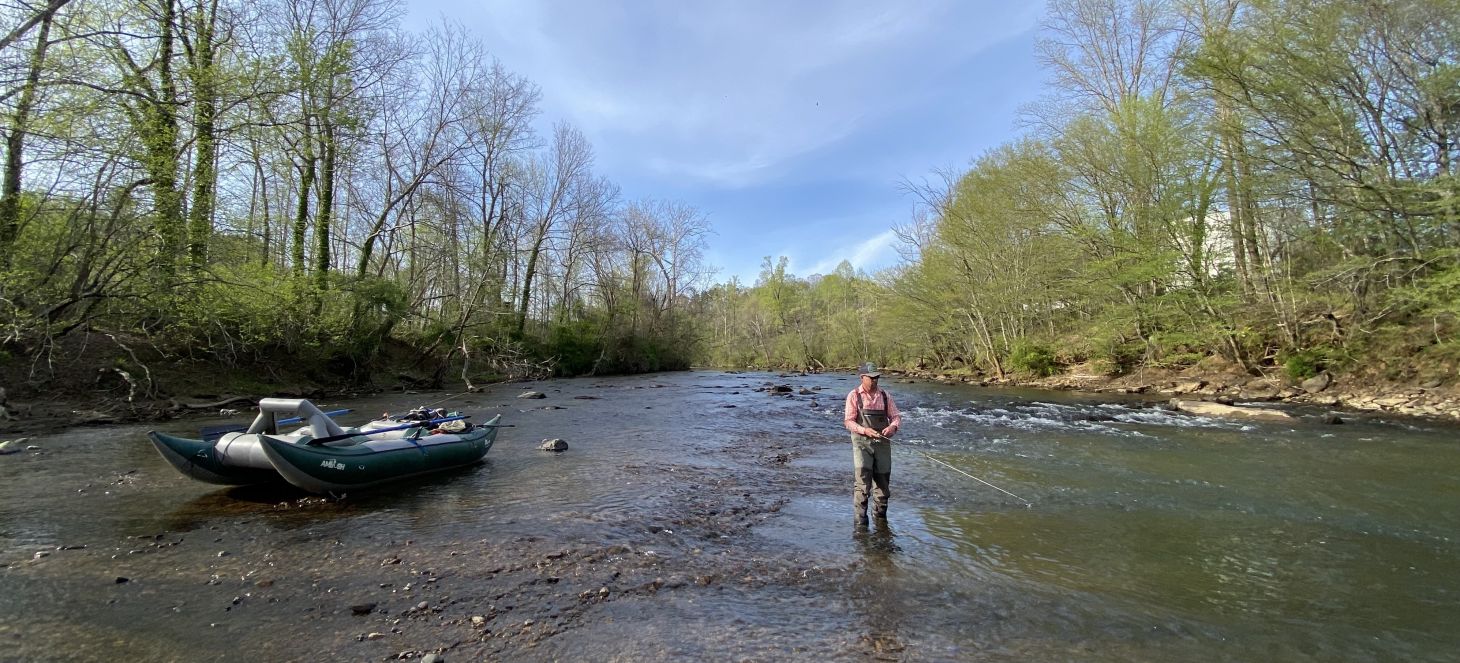
Before I get into the different approaches to trout fishing at different temperatures, there are a couple of things to note. First, you can’t determine the water temperature without a thermometer. Thermometers that use infrared technology to read surface temperatures are super convenient. However, depending on the stream, the temperature can be significantly different below the surface. That’s why I use a traditional thermometer. It may take a minute or two to reach the final temperature, but it’s worth the time investment.
Second, when it comes to temperature-related feeding activity, not all trout are created equal. For example, brook trout (which are technically char) and cutthroat trout are more temperature-sensitive than rainbows and browns. And it’s not just that temperature ranges impact trout activity. The behavior of the critters that trout like to eat—be it aquatic insects, baitfish, crayfish, etc—is also connected to water temperature.
Finally, the direction in which water temperatures are moving can make a difference. When fishing for trout at lower temperatures, activity typically increases as water temperatures climb. At the upper end of fishable temps, a decline in water temperature—such as when sunset approaches or even after a storm has dumped cool rainwater into a stream—can trigger action.
Guidelines for Temperature Ranges
Here’s a look at specific trout fishing tactics for different temperatures and fish behavior at those respective temps.
Water Temp: 33-40 Degrees
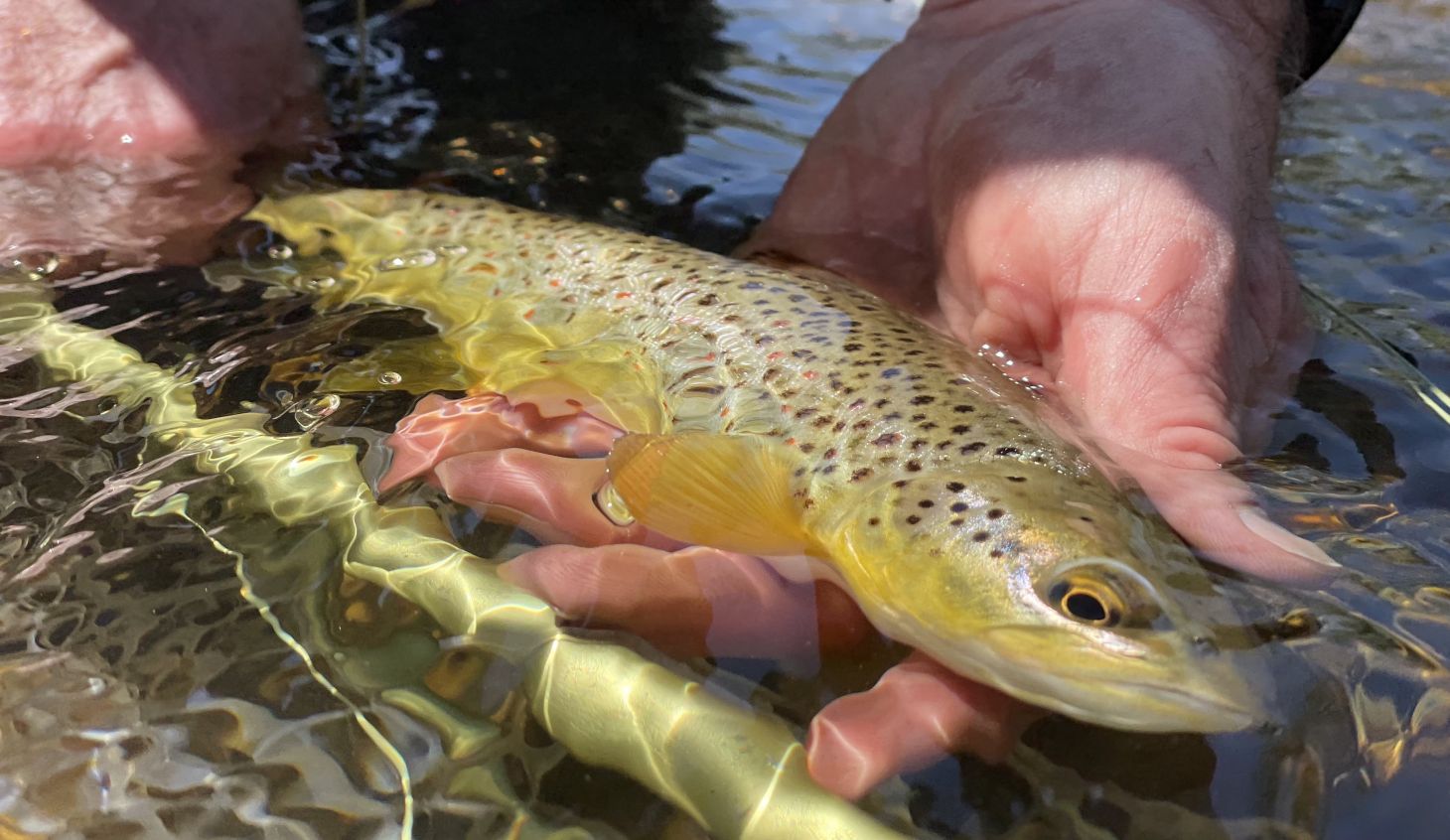
Can you catch trout in water just above freezing? Yes, but you’ll have to work for it. As cold-blooded animals, trout are the same temperature as their environment. When the water’s cold, they’re cold, and their metabolism is extremely slow. They don’t move much, don’t burn many calories, and don’t need to eat very much.
This is when you need to fish slowly, deliberately, and near the bottom of deeper holes where trout hold to avoid energy-sapping current. For fly anglers, this means dragging nymphs. I typically fish a two-fly rig—a larger (size 10 or 12) attractor like a Prince nymph, gold-ribbed Hare’s Ear, or tungsten-headed European nymphing style fly, along with a smaller trailer like a Zebra Midge or bead-head Pheasant Tail. My preference is to fish a double-fly rig Euro-style, tightlining the flies with a long, light rod through pockets and runs. Not into Euro nymphing? Fishing a double-fly rig under an indicator works too.
For anglers who want to take a fish or two home for the pan, where regulations allow it and trout populations can handle some harvest, winter and colder water temps are a good time to fish bait such as a piece of a nightcrawler, a single salmon egg, or a small ball of your favorite bait putty, such as Berkley PowerBait. During cold months, there is no reason to get started at the crack of dawn, either. Hit the stream in the afternoon when it may have warmed up a degree.
Water Temp: 40-50 Degrees
When water temperatures are in this range, usually in late winter, streams start to come to life and the fishing can be quite good. For fly anglers, nymphing will still be the go-to technique, but you can pick up the pace a bit. There’s no need to beat a run to death. Run your nymph rig—it’s still a good time for a basic two-fly rig—a few times through each spot and then move on.
It’s not unusual to see surface action at this temperature range. Blue-winged olives, for example, are small mayflies that often hatch in crummy weather in late winter and early spring. When BWOs start popping off, a fly angler can enjoy great action, whether nymphing early in the hatch, fishing an emerger as the hatch progresses, or a dry fly as the insects hit the surface. Stoneflies are another early spring option.
Conventional anglers can do well with their favorite bait standbys, but many lures will start to work well in these water temperatures, too. You’ll still want to fish lures like spinners and spoons pretty slowly. One of my favorite techniques when the water is cooler is to fish small hard jerkbaits like the Rapala Ultralight Minnow with a twitch-pause retrieve. Most hits come on the pause.
Water Temp: 50-60 Degrees
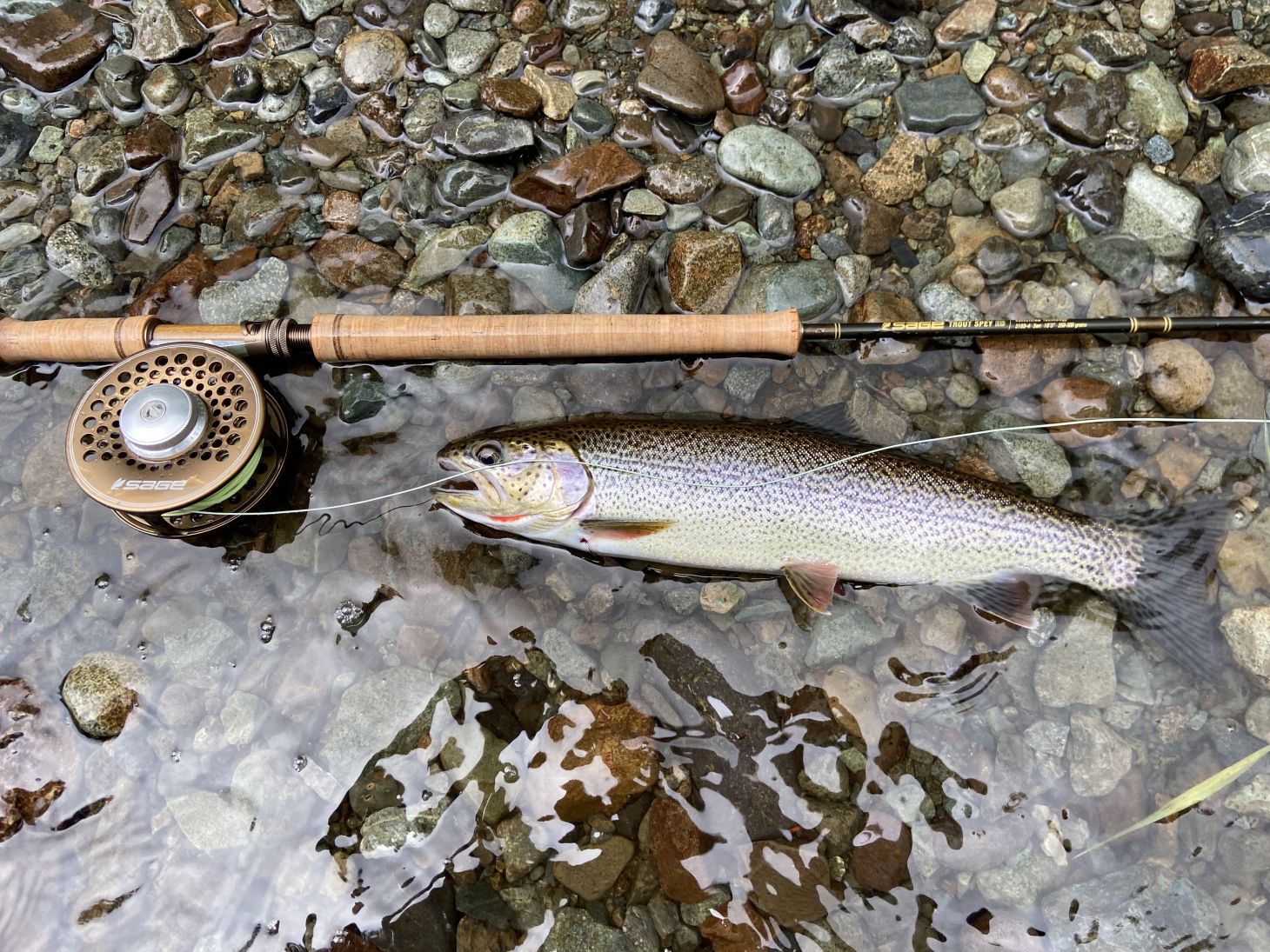
Now we’re talking. In the springtime, streams start coming to life, and hatches can be fast and furious. In the fall, waters are cooling off, and fish are back on the feed after the sultry days of summer. The lower end of this range is also where many spring-fed streams and tailwaters fall year-round.
Figuring out the best approach to targeting trout during this prime time is usually as simple as observing what’s happening in and on the water. If there’s a hatch, you’ll see the bugs to know which fly makes the most sense. You’ll also see what trout are doing, which indicates how to fish the hatch. Underwater flashes typically mean the fish are keying on nymphs. If trout are hitting emergers, they’ll be making splashy rises. Casual rises indicate fish are targeting bugs on the surface.
Even if there’s not an active hatch, it can still be worth fishing on the surface with a generic pattern like an Adams, stimulator, or caddis. If that doesn’t pan out, tie on a search pattern nymph like a Hare’s Ear or Pheasant Tail.
Another option during breaks in hatches is to target bigger fish by hopping a crayfish fly or dragging a woolly bugger along the bottom. Gear anglers can make this presentation with a small tube lure. Crayfish are especially active after sunset, so this can be a great way to wrap up an evening on the water.
If trout are keyed on hatching insects, fishing with natural bait can be tough. You’d think that a trout spending a lot of energy eating small mayflies would happily gobble a large nightcrawler that drifts past, but bug-focused trout usually have blinders on. That said, casting a large streamer or a minnow pattern during an active hatch can sometimes attract a big fish that would rather get their daily calorie allowance in a single meal than lots of tiny bites.
Water Temp: 60-65 Degrees
As water temperatures creep toward the top of a trout’s optimal range, consistent hatches will have largely tapered off. There are still bugs around, though—terrestrial insects that live their lives on land but sometimes end up in the water. Fished tight to the bank, patterns that imitate ants, crickets, and grasshoppers can produce great surface action. Tying on a small nymph below the hopper can increase action. While fly anglers usually deplore having to cast in windy conditions, that wind is blowing bugs into the water, so windy days often offer the best terrestrial action.
This temperature range can also be a great time to fish at night. There’s nothing quite like having a big brown shatter the stillness of a dark night by blowing up on a mouse pattern crawled across the surface. For gear anglers, a big minnow bait or crayfish imitation can be money after dark.
When waters are in this temperature range, it usually pays to focus fishing efforts early and late in the day. If you’re on the stream during the middle of the day, focus on shaded banks and deep holes where trout can avoid bright light.
Water Temp: 65 Degrees and Up
Most experts agree that 70 degrees is the point at which it’s best to turn from trout to other species, like bass or sunfish. However, I tend to be more conservative now, especially when fishing for brook or cutthroat trout, and make that switch a bit sooner. If you do fish for trout in that 65-70 degree range, size up your tippet or line strength so you can quickly land any fish you hook. Keep fish wet after landing them, and don’t hold fish out of the water for more than a couple of seconds if you insist on taking a hero shot. A quick fight and quick release can significantly reduce the chance of catch-and-release mortality.
content_trout-fishing,content_freshwater-fishing,content_fishing,content_stories

THE 1871 CLUB

Recommended Products
Read the full article here