

This article was originally published by Willow Tohi at Natural News.
-
- Iran’s use of cluster munition warheads successfully penetrated Israel’s multi-layered air defense systems, striking targets in West Jerusalem, Beit Shemesh, and Haifa.
-
- Israel’s War Ministry announced Iron Dome upgrades in June 2026 following “operational lessons learned” during the U.S.-Israeli war on Iran.
-
- Iranian hypersonic missiles with decoy capabilities overwhelmed Israeli defenses using swarm and saturation tactics.
-
- Israel faces critical shortages of ballistic missile interceptors, with U.S. officials anticipating depletion as Iran exploits vulnerabilities.
-
- The Iron Beam laser system, delivered in December 2025, remains not yet operational, with at least 14 batteries required for a significant defensive impact.
When the Iron Dome failed
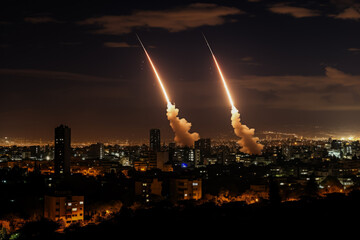
On 28 February 2026, the calculus of Middle Eastern warfare shifted dramatically when Iran launched approximately 650 ballistic missiles directly at Israel in a single barrage. This assault, part of the broader U.S.-Israeli war on Iran, demonstrated what military analysts had long warned: Israel’s vaunted multi-layered air defense system, including the Iron Dome, Arrow and David’s Sling networks, could be overwhelmed by saturation attacks. Iranian forces employed cluster munition warheads that dispersed dozens of submunitions mid-air, allowing sophisticated weapons to penetrate Israel’s defensive arrays and strike infrastructure in West Jerusalem, Beit Shemesh, and Haifa’s Bazan oil refinery. The attack killed at least nine civilians and wounded dozens more, fundamentally challenging assumptions about Israeli military invincibility.
The evolution of the Iron Dome
The Iron Dome system, developed by Rafael Advanced Defense Systems with significant U.S. funding, began operational deployments in 2011. Designed specifically to intercept short-range rockets and artillery shells, it achieved success rates exceeding 90% against primitive Hamas and Hezbollah rockets. However, Iran’s advanced ballistic missile arsenal, particularly the Khorramshahr missile capable of carrying cluster warheads dispersing up to 80 submunitions, represented an entirely different threat category. The 2008 Convention on Cluster Munitions, which neither Israel nor Iran signed, banned such weapons for signatory states due to their indiscriminate nature.
The saturation strategy: How Iran overwhelmed Israeli defenses
Iran’s tactical approach exploited fundamental limitations in Israeli air defense architecture. During the war, Hezbollah launched FPV drone strikes specifically targeting Iron Dome batteries, claiming successful hits. More critically, Iran’s use of cluster munitions forced Israel to fire dozens of interceptors to neutralize single incoming threats. According to missile expert Tal Inbar, intercepting cluster munitions presents unique challenges: an interceptor must strike the carrier vehicle before dispersal, after which interception becomes virtually impossible. This created an unsustainable economic equation, with each Iranian missile costing perhaps hundreds of thousands of dollars while requiring millions in Israeli interceptors.
The interceptor shortage crisis
By March 2026, reports emerged that Israel faced critical shortages of ballistic missile interceptors. While Israeli Foreign Minister Gideon Saar denied these claims, U.S. officials reportedly anticipated depletion. U.S. Vice President JD Vance acknowledged during a White House press briefing that “two-thirds of the defensive weapons” over three months came directly from the United States. Israel’s war minister later warned that long-term force buildup was “dangerously behind schedule.” The economic strain proved severe: a single day of sustained Iranian attacks could cost Israel billions of dollars in munitions, a pace Washington’s defense industrial base cannot maintain indefinitely.
Upgrades and persistent vulnerabilities
On 30 June 2026, Israel’s War Ministry announced the completion of an “extensive series of tests” to upgrade the Iron Dome, including the limited deployment of the Iron Beam laser system. However, an Israeli senior military officer cautioned in May that coverage remains partial, with at least 14 batteries required for significant defensive impact. The Iron Beam, delivered in December 2025, remains not yet declared operational. These upgrades incorporate “operational lessons learned” from the Iran war but cannot address fundamental vulnerabilities: Iran retains thousands of missiles capable of sustained attacks, while Israel’s interceptor stockpile remains finite.
A strategic reckoning
The events of 2026 represent more than a military engagement; they signal a fundamental shift in regional power dynamics. Iran demonstrated the capability to deploy hypersonic missiles with complex decoy systems that bypass Israeli defenses while simultaneously draining interceptor stocks. The cluster munition attacks, which experts at Amnesty International condemned as “flagrant violations” of international law, exposed technical vulnerabilities that no upgrade cycle can fully address. Israel now faces an uncomfortable reality: its air defense systems, once considered impenetrable, can be overwhelmed by sustained saturation attacks. The limited supply of Patriot missiles and other interceptors cannot sustain prolonged conflict against Iran’s vast arsenal. As both nations calculate their next moves, the strategic message from Tehran remains clear: there is nothing you can do to stop us indefinitely. For Israel and its allies, the question is not whether their defenses can hold, but how long they can afford the cost of trying.
Sources for this article include:
TheCradle.co
TheGuardian.com
RoyalNews.tv
Read the full article here