

Estimated reading time: 6 minutes
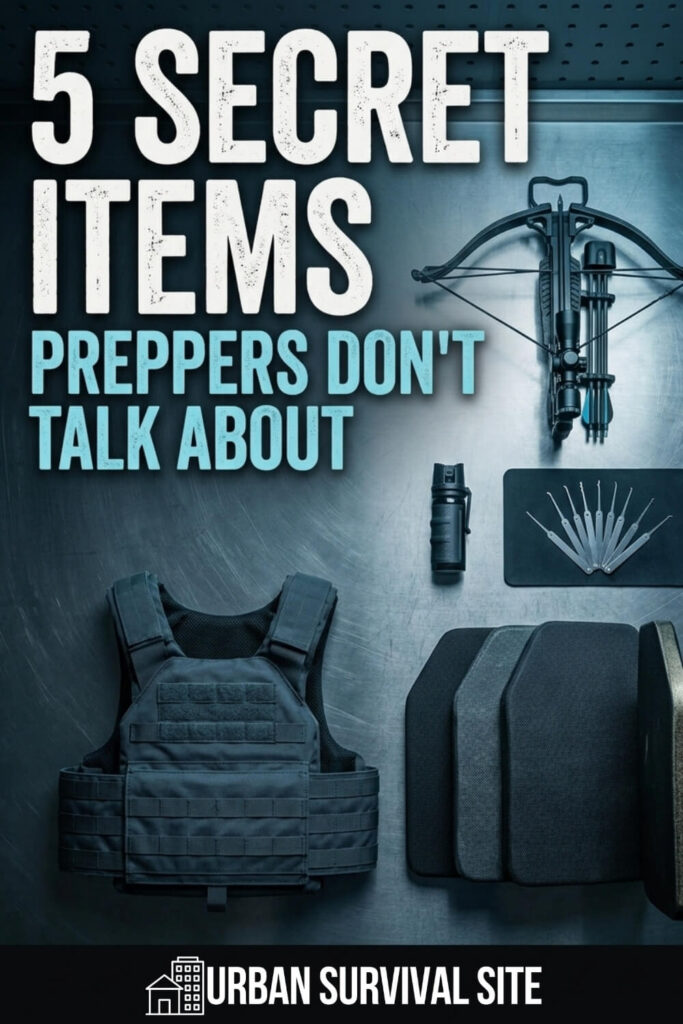
Ask anyone the kinds of things that preppers stockpile and you’ll hear the same things every time: food, water, flashlights, batteries, first aid kits, etc. These things are the foundation of any serious prepper plan, and for good reason. They’re things that will keep you alive when the power goes out or the store shelves empty.
But there’s another category of gear that a lot of experienced preppers rarely bring up in conversation. These are things that don’t make it into the typical beginner checklists, not because they’re useless, but because they sit in a legal gray area or carry a reputation that makes people nervous. In the right scenario, they’ll become extremely important.
The catch is that many of these tools are restricted, heavily regulated, or outright banned, depending on where you live. That doesn’t mean you’re out of luck. For every one of them, there are legal alternatives that get you most of the way there without actually breaking the law.
This particular list comes from the YouTube channel, A Small Town Prepper. You can see their video and list below.
Want to save this post for later? Click Here to Pin It On Pinterest!
1. Crowd Control Weapons: Pepper Spray, Mace, and CS Gas
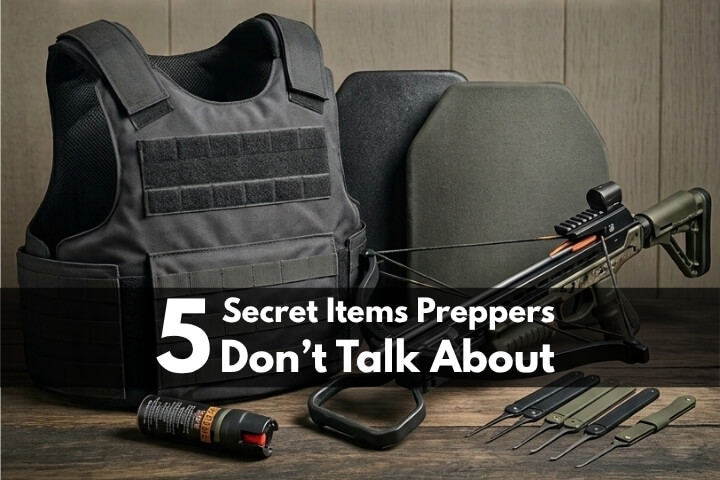
Pepper spray, mace, and CS gas devices are the unsung heroes of self defense. They’re fast, effective, and built to deter rather than kill. That makes them great for home defense when you don’t want to escalate to lethal force. If you’re facing a group or an aggressive intruder, a compact deterrent that deploys in seconds can bring a bad situation under control quickly.
The complication is legality. In some countries, states, and cities, owning these devices, especially the high-powered versions, is illegal or tightly restricted. Before you stock any of them, check what your area allows.
If you can’t get the real thing, there are workarounds. Wasp spray is legal in most places and has surprising range, which makes it a reasonable stand-in. You can also make a homemade pepper gel using hot peppers and an oil base, strictly for defense. For a hands-off option, motion-activated deterrent systems can cover entry points and warn you before a threat gets close.
2. Body Armor and Ballistic Plates
Nobody is suggesting you’re walking into a war zone, but in a genuine breakdown of order, stray gunfire becomes a real possibility, and protection from it could save your life. Body armor and ballistic plates guard against random fire, looters, and raids, and they’re especially important in dense urban areas where a firefight could break out with no warning.
The appeal of body armor is that it protects you even if you never fire a shot yourself. It is purely defensive. The downside is that some regions restrict or even criminalize civilian ownership, so legality is a genuine barrier for a lot of people.
The alternatives are more improvised, but they help. A tightly packed stack of books or a layer of ceramic tiles can absorb a surprising amount of energy as a DIY insert. You can also reinforce a room you plan to shelter in using sandbags, steel doors, and ballistic blankets. The point is not to prepare for combat. It is to have a layer of protection ready for the moment danger shows up unexpectedly.
3. High-Powered Slingshots and Crossbows
High-powered slingshots and crossbows change the equation in a world without easy access to ammunition. They are silent, reusable, and effective at short to mid range, which makes them a smart choice for stealth hunting and quiet defense. Because they do not burn through cartridges, they hold up well over the long haul when resupply is not an option.
Legality varies a lot here. In many rural areas these are perfectly fine to own, but urban centers often regulate them heavily or ban them outright.
If the high-powered versions are off the table, you still have options. A compact survival bow is lightweight and just as capable in trained hands. A wrist rocket loaded with ball bearings uses the same principle as a slingshot in an even smaller, more discreet package that most people wouldn’t immediately read as a weapon.
And primitive tools like throwing spikes or an atlatl or worth learning. Plus, you can craft them from materials found in the field. The real advantage of all of these is stealth. Defending yourself or taking game without announcing your presence can make a serious difference in a survival scenario.
4. Lockpicks, Bypass Tools, and Entry Gear
At first glance, lockpicks and bypass tools look like something out of a burglar’s bag. For a prepper, they’re actually about access. Picture the grid down and the keys to your storage shed lost, or an abandoned cabin that could shelter you from a storm sitting behind a locked door. In those moments, the ability to open a lock without destroying it is genuinely valuable.
The problem is that in many places, simply carrying these tools can look suspicious, and in some areas possession is illegal. Know your local laws before you add them to a kit.
There are lower-profile alternatives. Manual pry tools take more effort but get you through most doors. Shims and credit-card-style bypass methods handle certain lock types with almost nothing in your pocket. A lock bump kit is another route, designed to knock the pins into place so a lock opens, though the legality of those kits also varies by region.
Access to resources can be the deciding factor in a survival situation, so having a way in matters, as long as you stay mindful of the law.
5. Concealed Gear
Last on the list is concealed gear: hidden knives, credit card tools, belt buckle blades, and similar low-profile items. The appeal is discretion. You can carry them every day without advertising that you are prepared for anything, and they work as a genuine last-ditch option when everything else has failed. They also handle everyday survival tasks like cutting, prying, and getting yourself free of a bad spot.
As with everything else here, the legal picture is mixed. Plenty of places restrict concealed weapons, even when they are part of a survival kit, so check the rules where you live before you carry anything.
If concealed blades are a problem in your area, safer substitutes still cover the practical need. A keychain multi-tool is useful, portable, and legal almost everywhere. A paracord bracelet with a hidden blade gives you a real tool that reads as an accessory. Flashlights and pens with built-in tools are practical, non-threatening, and go virtually anywhere without a second glance.
The best tool is the one you actually have on you when you need it, and concealed gear makes that easy.
Final Thoughts
The gear on this list ranges from crowd control devices and body armor to silent weapons, entry tools, and concealed everyday carry. Each one has a place in a survival plan, and each one comes with legal strings attached that differ from one region to the next. The common thread is that the most effective tools aren’t always the flashiest. Oftentimes, they’re the ones people avoid discussing in the open.
Like this post? don’t Forget to Pin It On Pinterest!
You May Also Like:

Read the full article here