

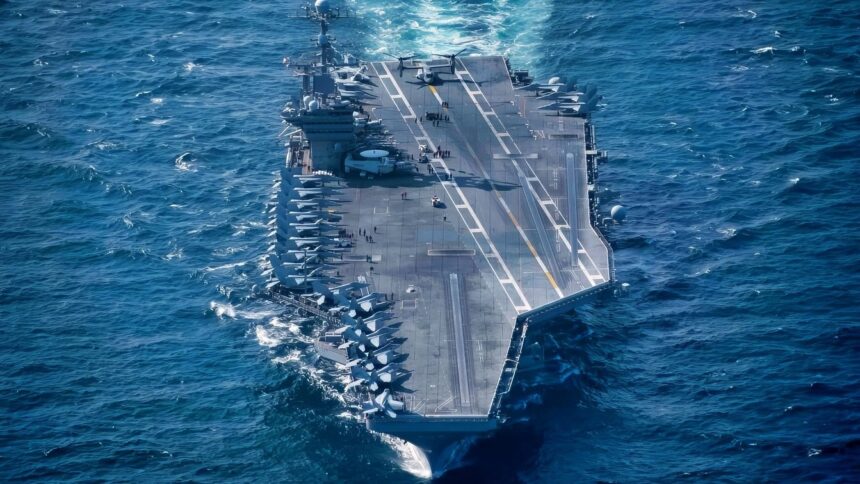
On paper, the US Navy possesses 11 nuclear-powered aircraft carriers—vastly more than any other nation.
But counting hulls alone exaggerates the actual force available to the US on any given day.
USS Gerald R. Ford Aircraft Carrier or Supercarrier
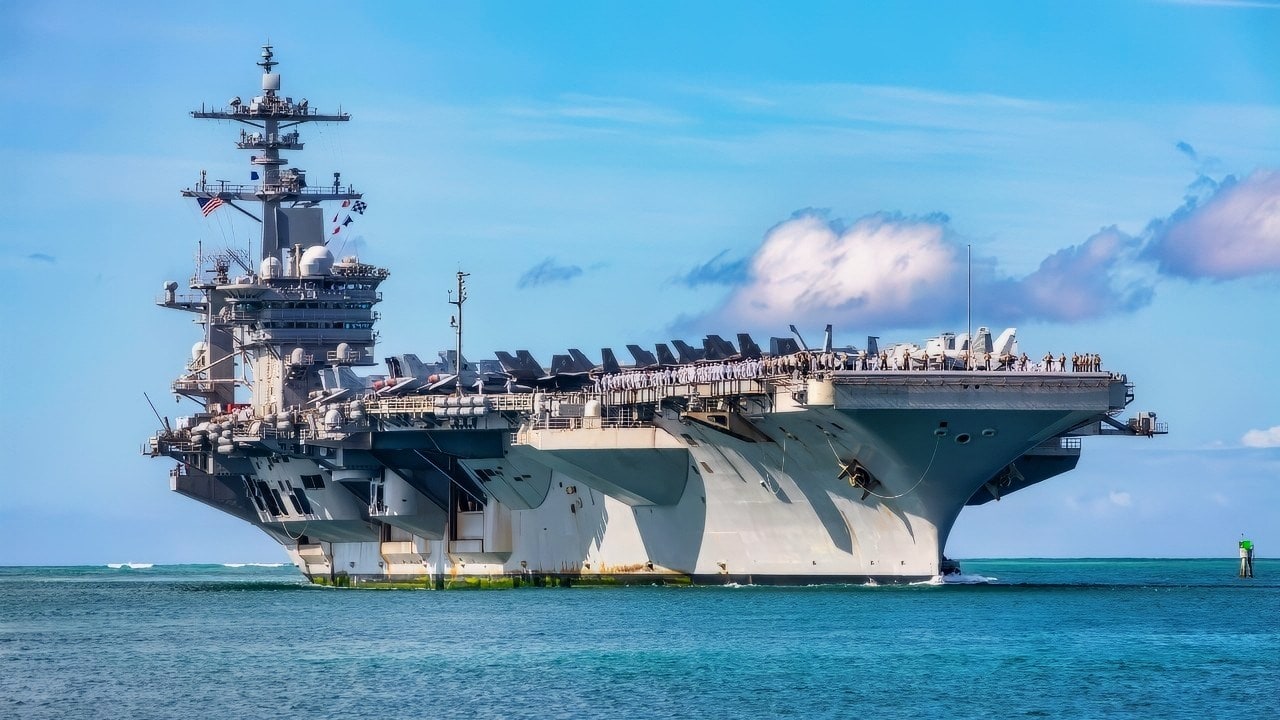
Supercarrier Nimitz-Class U.S. Navy. Image Credit: Creative Commons.
Consider the current snapshot of US carriers: three are deployed or transiting overseas; three are working up for future deployments; four are undergoing maintenance or RCOH; and one is in pre-deactivation status.
In other words, about three-quarters of America’s carrier fleet isn’t currently deployed overseas.
Now, that’s not to say eight of the eleven carriers are broken or defective necessarily; it’s just a reflection of the operational reality, how maintenance-intensive carriers are, and how difficult fielding a combat-ready carrier strike group is.
What “Available” Means
There are several different categories of operational status.
A carrier can be deployed and conducting operations, underway but training, certified and available, or preparing for deployment.
Or it could be entirely unavailable, either undergoing routine maintenance or deeper maintenance that could result in years off between deployments.
The key distinction is that not being deployed does not necessarily mean being non-operational. Some ships could be accelerated back to deployment in an emergency.
Obviously, a carrier deep within the RCOH process cannot.
Why Only Three
Carrier readiness revolves around the Optimized Fleet Response Plan, which basically lays out a multiyear production line for combat readiness.
The cycle, stated simply, features: maintenance (for basic repairs, etc.); basic training (to rebuild individual crew proficiency); advanced training (for increasingly complex carrier and air-wing operations); integrated training (for carrier, air wing, destroyers, cruisers, submarines, and logistics elements to all become a coherent strike group); deployment (lasting roughly six to eight months under normal conditions); and sustainment/post-deployment (to retain some readiness before beginning the cycle again).
So the Navy constantly moves all 11 carriers through this cycle, each at a different stage of readiness.
Complex Organizations
Aircraft carriers are several military organizations welded together.
That’s why the cycles can move so slowly, and why ramping up for a deployment is harder than issuing orders to set sail.
A carrier needs about 5,000 sailors and aviators. It must integrate dozens of aircraft, including the F/A-18E/F, F-35C, EA-18G, E-2D, helicopters, and CMV-22Bs.
Pilots must maintain their carrier qualifications.
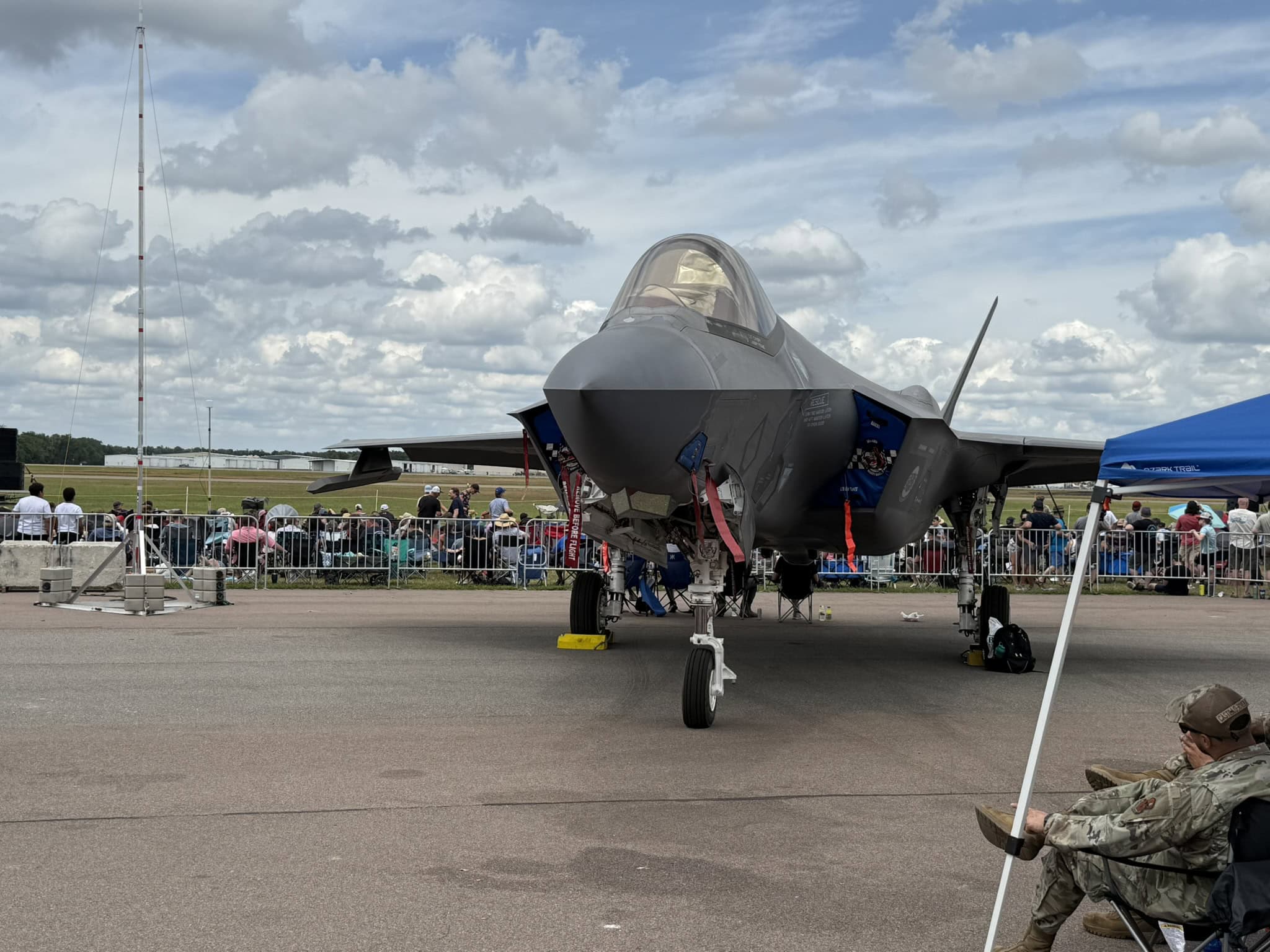
F-35C in Lakeland, Florida. 19FortyFive.com original image.
Flight deck crews must repeatedly practice one of aviation’s most dangerous routines, ensuring that the methods for launching and recovering aircraft are second nature.
Then, once the carrier is proficient, it must integrate with the rest of the strike group to form a multi-layered, coherent fighting unit.
The point here is that just because a ship is mechanically ready to set sail does not mean that the carrier strike group as a whole is ready to wage war.
And the Maintenance
Of course, each carrier has intensive maintenance requirements.
These boats are among the most complicated machines ever built: 100,000-ton nuclear-powered floating air bases that operate more like little cities than traditional surface vessels.
If the complexity wasn’t enough, the boats then endure extraordinary abuse.
Catapult launches and arresting gear catches, where multi-ton aircraft slam the deck at well over 100 miles per hour.
Saltwater exposure erodes the hull and machinery. Propulsion, electrical, aviation fuel, weapons handling, radar, and communications—all of these systems require routine maintenance.
Extended deployments can complicate maintenance schedules, placing added stress on already stressed systems. So extending a carrier’s deployment may ultimately keep the carrier out of action longer on the back end.
Three-Carrier Rule
A simple rule of thumb: maintaining one carrier continuously forward typically requires about three carriers across the readiness cycle.
One deployed.
One preparing or recovering.
One undergoing maintenance.
This isn’t a mathematical law or a strict certainty, but it’s a rough illustration of why 11 carriers in the fleet doesn’t equate to 11 carriers at sea.
Could America surge more in an emergency? Yes—but not all 11. There would be consequences on the back end.
But training and sustainment schedules could be accelerated.
Ships could be kept at sea longer. America could expand its carrier presence in a pinch, though this would violate the most convenient and sustainable cycle.
About the Author: Harrison Kass
Harrison Kass is a writer and attorney focused on national security, technology, and political culture. His work has appeared in Tablet, City Journal, The Hill, The Spectator, and The Cipher Brief. He holds a JD from the University of Oregon and a master’s in Global & Joint Program Studies from NYU. More at harrisonkass.com.