

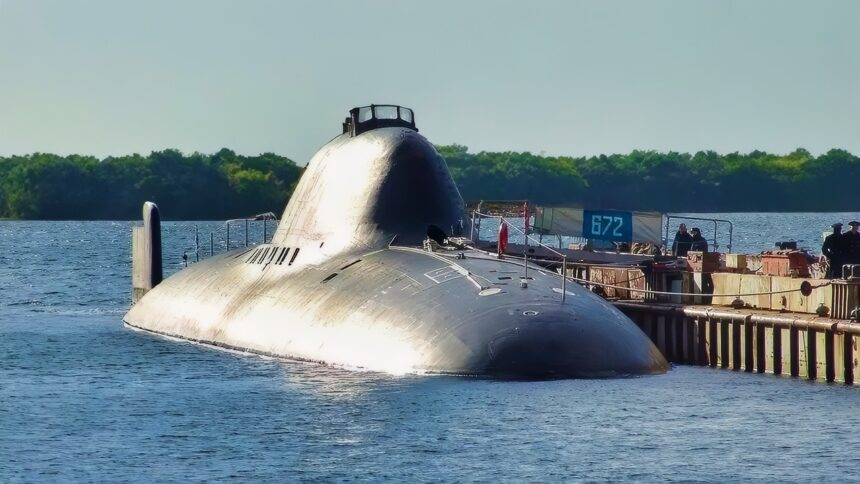
Summary and Key Points: The Soviet Navy wanted a submarine that could dive deeper, run quieter, and take more punishment than steel-hulled boats, so it built the Sierra II around a titanium pressure hull. The engineering worked. The economics did not. Titanium had to be welded in sealed, argon-filled workspaces by crews in special suits, and when the Soviet Union collapsed, the money for a larger fleet vanished. Russia finished just two and never built another, a lesson in how cutting-edge capability without numbers rarely changes the balance at sea.
Sierra: The Titanium Russian Nuclear Submarines That Might Be Useless
In recent years, the Sierra II-class – a pair of attack submarines built by Russia with cutting-edge titanium hulls – have drawn attention for their technological sophistication, despite being constructed between 1979 and 1992.
Despite their age, the submarines that remain in service represent rare engineering feats. They’re impressive in many ways, except one: they’re not actually that useful.
Despite being touted as deep-diving, fast, and quiet hunters of enemy submarines, Russia built only two, and their impact on the global undersea balance is marginal at best.
Meet Russia’s Titanium Marvel
The Sierra II-class appeared toward the end of the Cold War as a successor to the earlier Sierra I design.
Its defining feature, and arguably the reason so many people remember it, is a titanium pressure hull that is strong, light, and durable.
It means the submarine can dive deeper, sustain higher speeds, and emit less noise than most steel-hulled submarines.
Specifically, the titanium twin-hull structure of the Sierra II enhanced survivability under attack, and the system was designed to give the Soviet (and later Russian) Navy a credible search-and-destroy capability against America’s high-value submarines.
Sierra-Class Submarine. Image Credit: Creative Commons.
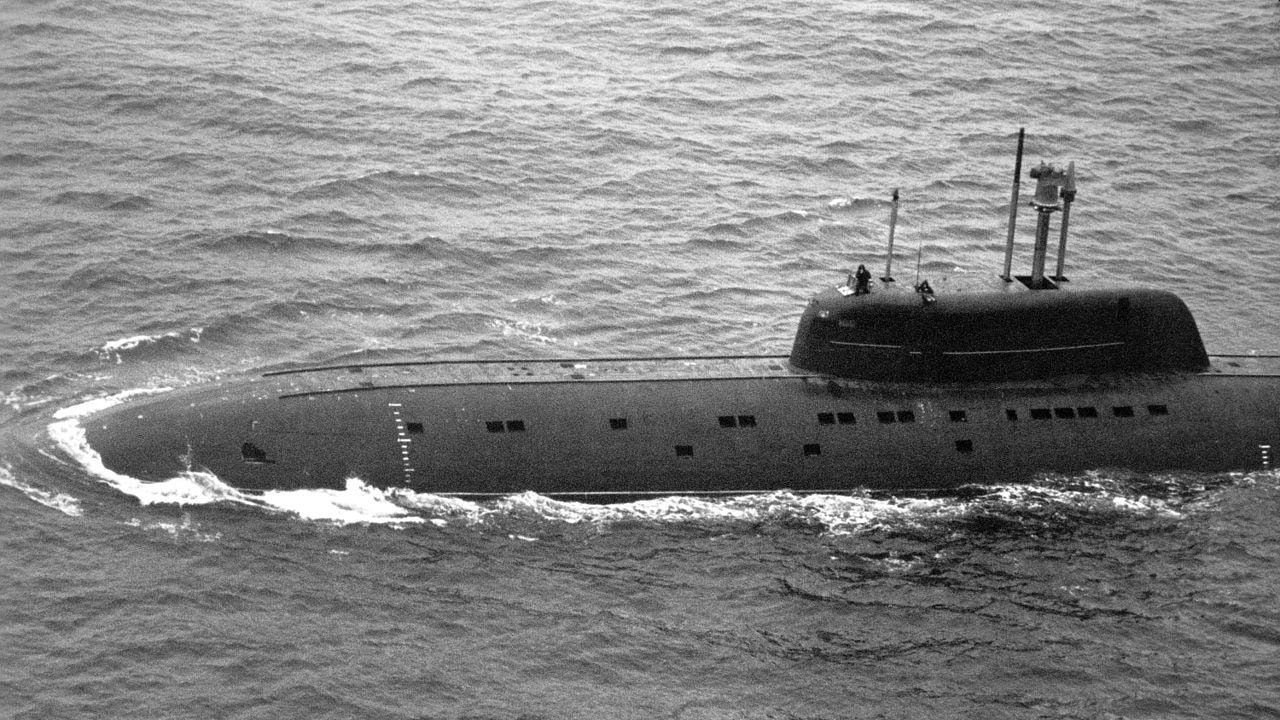
Sierra-Class Submarine. Image Credit: Creative Commons.
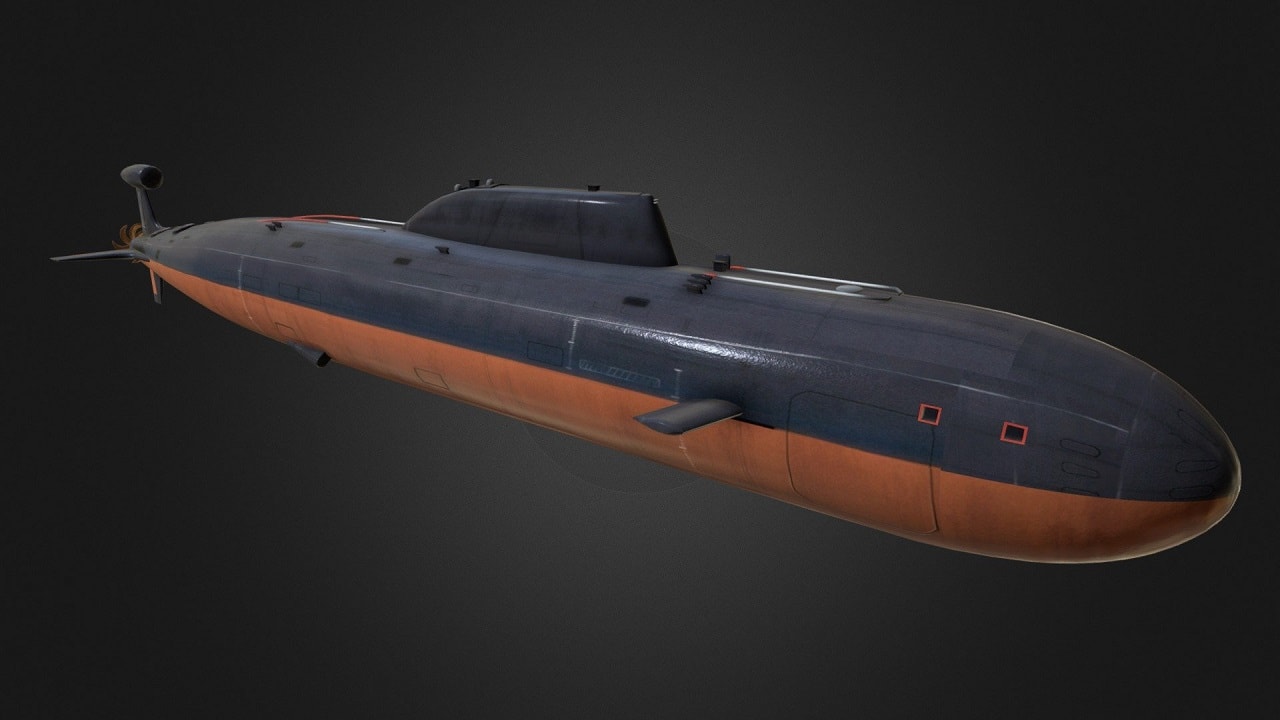
Russian Sierra-class nuclear-powered attack submarine. Artist rendering.
Each submarine runs on a single nuclear reactor — the same type used in many of Russia’s modern attack submarines — which gives it virtually unlimited underwater range.
It was also fitted with advanced sonar and a propulsion system designed to make it harder to hear. Combined with its heavy weapons load, the Sierra II was, on paper, one of the deepest-diving and hardest-to-detect submarines of its time.
There’s no question that the Sierra II is a serious piece of kit, boasting high performance, stealth, and the ability to challenge enemy submarines in deep water and Arctic conditions.
So why doesn’t it matter?
Too Expensive and Too Fragile
Despite its advanced design and impressive features, the Sierra II class never achieved strategic relevance — and for three reasons.
First, Russia only built two of them: the K-336 Pskov and the B-534 Nizhny Novgorod. While the earlier Sierra I boats were produced in exactly the same quantity, the hope of building a large fleet of new titanium-hull attack submarines never materialized.
The collapse of the Soviet Union, along with the cost and complexity of the titanium construction, meant that future orders simply came to a halt. It was too difficult to do and no longer really necessary.
And had that large fleet eventually appeared, the maintenance costs would have been astonishing. Maintaining and operating titanium-hull submarines is extremely difficult and costly.
To weld the massive titanium hull sections together, Soviet engineers needed sealed argon-gas workspaces and specialized suits for welders.
This process is in every way more demanding than regular steel-hull production. Even if that wasn’t the case, the economic conditions of the 1990s meant it wouldn’t be feasible anyway – it couldn’t be scaled or sustained.
But thirdly, even if each Russian-made boat is capable, having only two of them means they can’t really alter the strategic balance.
By contrast, the United States fields dozens of nuclear attack submarines, and NATO collectively even more.
A two-hull fleet can’t maintain persistent patrols across oceans, cover multiple theaters, or saturate defense systems so that one can ultimately slip through.
They certainly can’t impose any burden on anti-submarine networks.
In short, they have excellent theoretical capability.
Still, there aren’t enough of them to matter, and they’re too expensive and too fragile to be economical in a larger fleet, anyway.
An Engineering Curiosity – And Not Much Else
The Sierra II-class illustrates how high-end capability is not the same as strategic utility.
An asset may be capable, but if it is neither fully necessary nor designed to satisfy specific mission demands, it becomes little more than an engineering curiosity.
Breakthroughs like a titanium hull may mean that a submarine can go deeper and move more quietly, but if there aren’t enough of them – and if they can’t be sustained – that engineering trick doesn’t mean much. Russia did build one of the most advanced attack submarines in the world, but it’s something the United States could have done too – and didn’t.
In operational terms, while the Pskov and Nizhny Novgorod remain in the fleet to this day – and even take part in exercises, like the Arctic/Barents Sea operations in 2019 – there is little evidence that they routinely deploy on high-tempo patrols or significantly challenge Western anti-submarine forces in any way.
The secrecy around the submarines also suggests limited readiness and next to no value in public projection. Russia knows they are, to put it bluntly, somewhat useless.
About the Author: Jack Buckby
Jack Buckby is a British author, counter-extremism researcher, and journalist based in New York who writes frequently for National Security Journal. Reporting on the U.K., Europe, and the U.S., he analyzes and understands left- and right-wing radicalization and reports on Western governments’ approaches to today’s pressing issues. His books and research papers explore these themes and propose pragmatic solutions to our increasingly polarized society. His latest book is The Truth Teller: RFK Jr. and the Case for a Post-Partisan Presidency.