

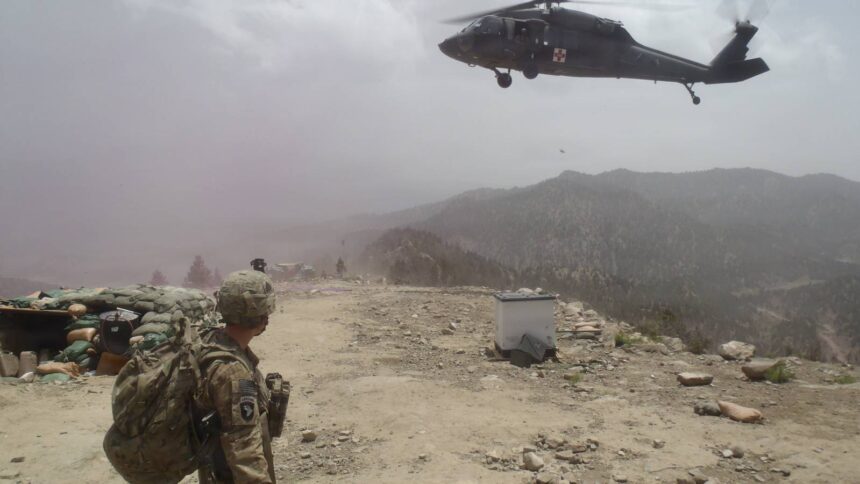
Operation Enduring Freedom began Oct. 7, 2001, when U.S. and British forces launched airstrikes against al-Qaeda and Taliban targets in Afghanistan, less than a month after the Sept. 11 attacks, according to the Naval History and Heritage Command’s official account of the operation. This month marks 25 years since that first strike. The war it opened would become the longest in U.S. history, stretching across four presidential administrations before its final, chaotic weeks in August 2021.
From Enduring Freedom to Freedom’s Sentinel
Operation Enduring Freedom’s combat mission formally concluded Dec. 28, 2014, according to the Naval History and Heritage Command. Four days later, on Jan. 1, 2015, the Army’s official account of the transition states that Operation Freedom’s Sentinel began in its place, splitting the U.S. effort into two distinct missions: a counterterrorism campaign against remaining al-Qaeda networks and a train-advise-assist role supporting Afghan security forces that ran alongside NATO’s Resolute Support mission.
The renaming marked a shift from a U.S.-led combat operation to a longer-term advisory posture that would continue for nearly seven more years.
Related: 25 Years After 9/11: Former CENTCOM Commander’s Strategic Warning on What America Still Gets Wrong
The Cost, By the Numbers
A Congressional Research Service report dated July 29, 2020, compiling figures from the Pentagon’s Defense Casualty Analysis System as of July 16, 2020, put U.S. deaths in Operation Enduring Freedom at 2,349, including 1,370 killed in action, with 20,149 troops wounded in action. Those figures predate the war’s final year and do not include the 13 U.S. service members killed at Abbey Gate in August 2021 or other losses in the war’s closing months, so the true final total is higher than the last comprehensively documented figure available.
The financial toll is still being tallied by researchers years after the withdrawal. The Costs of War project at Brown University, whose figures were detailed by co-founder Neta Crawford in reporting by WPRI, put the war’s total budgetary cost at roughly $2.3 trillion and its overall death toll, including Afghan civilians, security forces, opposition fighters and U.S. personnel, at more than 176,000, with more than 47,000 of those Afghan civilians. Crawford’s project has cautioned that the estimate excludes indirect deaths from the war’s disruption of food supplies, health care and infrastructure, meaning the human cost is likely undercounted rather than overstated.
Related: How 9/11 Reshaped the US Military From the Ground Up
The Withdrawal’s Final Chapter: Abbey Gate
The war’s last major U.S. combat losses came during the August 2021 withdrawal, at the Abbey Gate entrance to Hamid Karzai International Airport in Kabul. A presidential proclamation marking the attack’s fifth anniversary this year states that a suicide bombing there Aug. 26, 2021, killed 13 U.S. service members, wounded 45 more, and injured more than 160 Afghan civilians who had gathered at the gate seeking evacuation.
The same proclamation states that the withdrawal from Bagram Airfield on July 2, 2021, was carried out without notifying Afghan security forces beforehand, after which Taliban fighters seized the base and freed thousands of prisoners held there. That sequence, the U.S. departure from its main airfield followed weeks later by the collapse of the Afghan government and the attack at Abbey Gate, remains one of the most scrutinized stretches of the entire 20-year war.

A War Still Being Assessed
Twenty-five years on, the scale of Operation Enduring Freedom is still coming into full view, with researchers and government auditors continuing to revise cost and casualty figures years after the last U.S. troops left. For the veterans who served across its two decades, from the initial 2001 airstrikes through the withdrawal a generation later, the anniversary lands as both a marker of how long the war ran and a reminder of how much of its final accounting is still being written.
Want to Learn More About Military Life?
Whether you’re thinking of joining the military, looking for fitness and basic training tips, or keeping up with military life and benefits, Military.com has you covered. Subscribe to Military.com to have military news, updates and resources delivered directly to your inbox.