


Earlier last year, Sweden’s Defence Materiel Administration accepted delivery of the HMS Halland, a submarine within the Swedish Navy, following an extensive modernization program for the submarine, the third and final hull of the Gotland-class of submarines. The Gotland-class is famous for sinking a US Navy aircraft carrier in a simulation years back. The Navy knew of the sub’s potential, having already agreed to lease the submarines to study their capabilities as nations like China now have such submarines.
A crucial component of that upgrade program has been the installation of new, modernized systems that replace older subsystems within the submarine, many of which will be incorporated into the Gotland-class replacement submarines, the upcoming Blekinge-class subs.
The introduction of the new technologies, which Saab, the Swedish defense prime that built the submarines, explains, will provide time and experience to validate the tech ahead of the Blekinge-class’ introduction into service.
A Raft of Upgrades for Gotland-Class
Though details on what Saab replaced were sparse in their press release — they mention only that “twenty of the central systems in HMS Halland were replaced, including sensors and command systems” — another Saab release following the upgrade of the HMS Uppland said 50 new systems were installed or modified.
Of those 50, “20 are new systems that in the future will be used in the next generation of submarines, the Blekinge-class. This means, for example, new possibilities to analyze the boat’s surroundings with a so-called Optronic Mast, replacing the traditional periscope and associated management system.”
Saab also added a new section to the submarine’s hull, extending its length by about two meters, or around six feet.
“Securing critical underwater infrastructure and sea lanes is more important than ever.
The launch of HMS Halland is a testament to Saab’s ability to upgrade and deliver advanced submarines with the capabilities the Swedish Navy requires,” said Mats Wicksell, Head of Saab’s Business Area Kockums.
With HMS Halland, the Swedish Navy, and by extension NATO, is given additional muscle to defend and monitor the Baltic Sea.”
Image of Gotland-class Submarine.
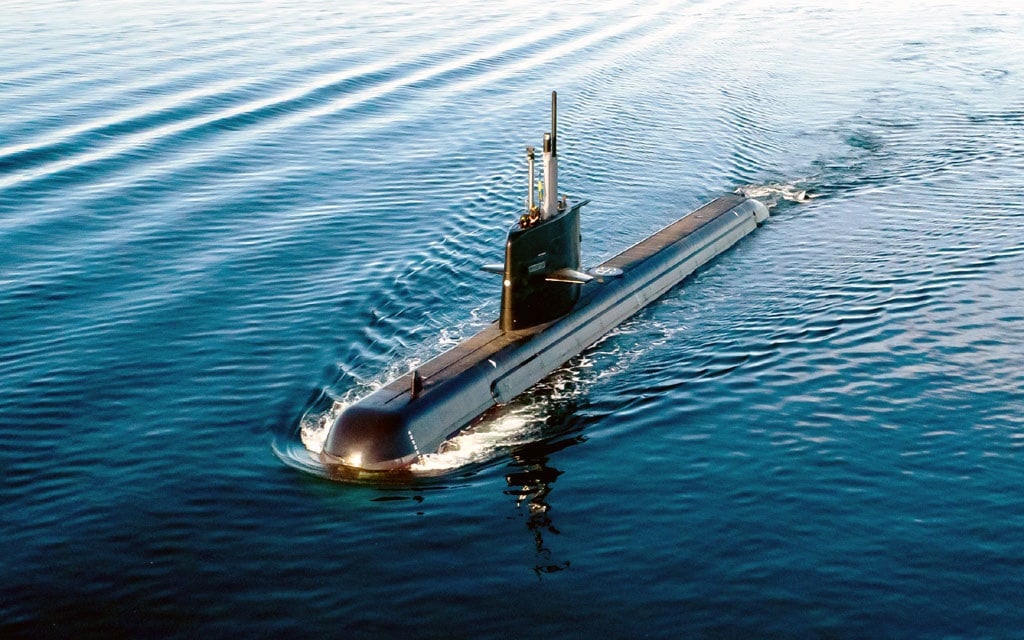
Gotland-class Submarine.
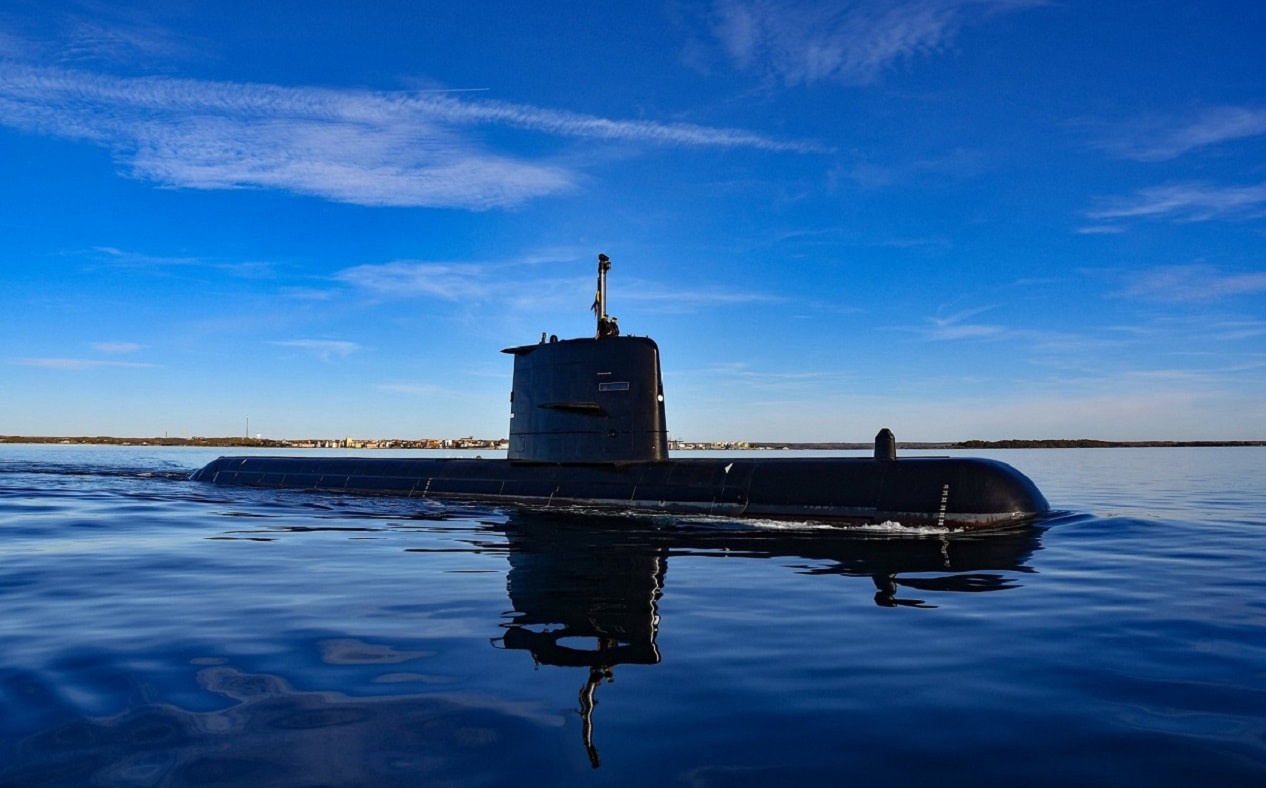
Gotland-class Submarine.
Swift, Silent, and Surprising
Perhaps one of the most famous — or, depending on your perspective, infamous — incidents involving the Gotland-class submarines occurred in 2005, when HMS Gotland evaded detection during exercises off the California coast with the United States Navy.
Thanks to its extremely silent diesel-electric propulsion, the submarine successfully navigated the defensive screens of the USS Ronald Regan, an aircraft carrier, and simulated several hits on the warship, which would have sunk the carrier had actual torpedoes been fired in anger.
But it seems America was wise to all of this. The United States Navy had already agreed to lease and operate the little Swedish submarine out of San Diego for two years to evaluate its capabilities and hone the United States’ own anti-submarine capabilities.
The Blekinge-class
Sweden’s upcoming Blekinge-class submarines are anticipated to be among the most technologically advanced non-nuclear submarines in the world.
As HI Sutton, a submarine expert, explains, though the new class of submarines is somewhat smaller than their massive nuclear counterparts in other navies around the world, particularly those in the United States and Russian Navies, their small size is an advantage in the shallower Baltic littoral waters they are intended to operate from primarily.
Thanks in part to their small size, Swedish submarines have typically favored smaller crews and greater automation, while also pioneering Air-Independent Propulsion.
A central component of the submarines is a special forces support capability, made possible by a multi-mission portal betwixt torpedo tubes.
Another core aspect of the submarine’s design is the attention to detail it incorporates to defeat adversary sonar and remain undetected underwater.
“The A-26 is one of the new generation of submarines with hull lines designed to reduce target strength. This is most visible in the sail, which incorporates a distinctive chinned profile,” Sutton explains, angles and contouring not dissimilar to those seen in fifth-generation stealth aircraft. “The AIP is apparently quieter than on previous boats, allowing more of the patrol phase of the mission to be conducted on AIP than current AIP boats,” Sutton adds.
Thanks to a modern, digital optronics mast in lieu of a traditional periscope, the submarine’s control center is not located below the sail, as has typically been the case for virtually every submarine design that preceded it. The advantage?
“There is no one walking through the command room to get from one end of the boat to the other,” Sutton writes, a fact that is virtually certain to be enjoyed by several generations of Swedish sailors for decades to come.
About the Author: Caleb Larson
Caleb Larson is an American multi-format journalist based in Berlin, Germany. His work covers the intersection of conflict and society, with a focus on American foreign policy and European security. He has reported from Germany, Russia, and the United States. Most recently, he covered the war in Ukraine, reporting extensively on the war’s shifting battle lines in the Donbas and writing on the war’s civilian and humanitarian toll. Previously, he worked as a Defense Reporter for POLITICO Europe. You can follow his latest work on X.