

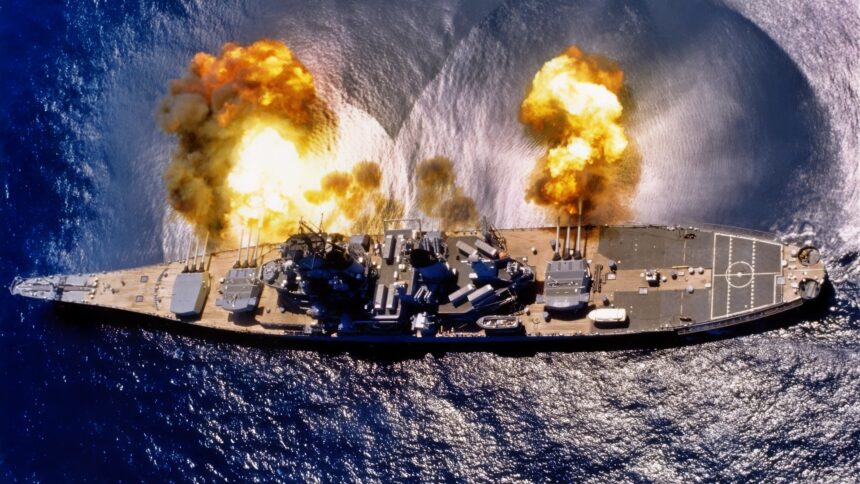
Summary and Key Points: The US Navy mothballed and reactivated its four Iowa-class battleships for decades, but brought them all back under President Reagan’s 600-ship Navy in 1982 as a $1.7 billion response to the Soviet Kirov-class nuclear battlecruisers and Kiev-class carriers. A proposal to replace the aft 16-inch turret with an AV-8B Harrier flight deck was rejected; instead, each ship got eight Mk 143 Tomahawk launchers, four Mk 141 Harpoon launchers, Phalanx CIWS, AN/SPS-49 radar, and SLQ-32 electronic warfare. USS Missouri was decommissioned last, in 1991.
Iowa-Class: The Greatest Battleships Ever
Of all the battleships of the Second World War, the Iowa-class ships are the most iconic, perhaps second only to the Japanese battleship Yamato.
Completed and commissioned in 1943-1944, the Iowa-class actually missed a sizable portion of the war. When they did see combat, however, they made a lasting impression.
Following WWII and the Korean War, the massive battleships were mothballed and decommissioned in 1958 (New Jersey was briefly recommissioned in 1968 for the Vietnam War before being decommissioned again a year later).
However, in the 1970s and 80s, the Soviet Navy began expanding its surface fleet.
With the introduction of the massive Kirov-class nuclear battlecruisers, the U.S. needed a response.
In 1982, President Ronald Regan responded by reactivating and modernizing the Iowa-class at a cost of $1.7 billion.
Why the Navy Chose to Resurrect the Iowa-class
The Iowa-class battleships were recommissioned as part of Regan’s 600-ship Navy plan. After the Vietnam War, the defense budget was cut after years of war spending and public backlash.
USS Iowa Battleship tour taken by 19FortyFive in August 2025.
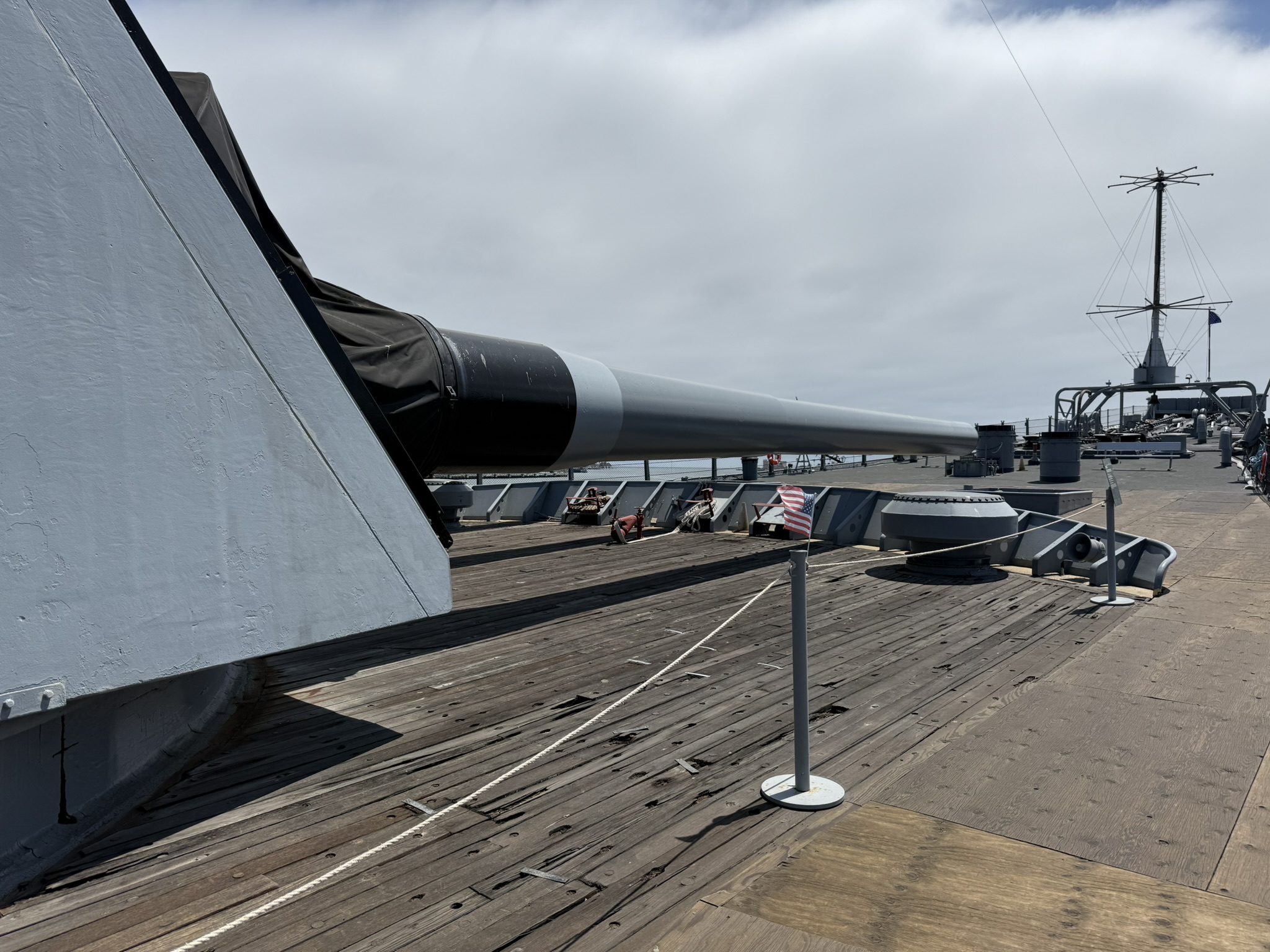
USS Iowa Battleship tour taken by 19FortyFive in August 2025.
The USSR took full advantage of the Navy’s perceived weakness and expanded its blue-water Navy.
The introduction of larger ships like the Kiev-class aircraft carriers, and particularly the Kirov-class battlecruisers, served as a wake-up call for the U.S. When Regen assumed office, he initially pursued an aggressive strategy against the Soviets, hoping to force the USSR to increase its military budget and collapse its secretly fledgling economy.
The 600-ship plan was therefore designed to overmatch the Soviet Navy.
As part of this initiative, the U.S. Navy increased production of new Nimitz-class supercarriers and reactivated the WWII-era Iowa-class.
The Iowa-class served a greater purpose than simply responding to the Kirov-class. The Navy saw the old battleships as a way to plug an existing gap.
The Navy saw them as a short-term solution, cheaper than building new surface ships from scratch. Although the Iowa-class had aged considerably since the 1950s, the ships could still serve a purpose in carrier strike groups and amphibious operations. In the right circumstances, the Iowa-class could be quite versatile.
Transforming WWII-era Battleships into Cold War Combatants
As large and imposing as they were, the Navy still recognized that the Iowa-class desperately needed improvements.
The service considered several proposals on how exactly to modernize the old battleships.
One idea was to remove the aft turret and add a V-shaped flight deck for AV-8B Harrier II V/STOL fighters.
The Navy promptly rejected the idea, deeming an aircraft-carrying battleship impractical. Instead, the Navy added missile launchers to the Iowa-class.
Each battleship received eight Mark 143 quad-cell Armored Box Launchers for Tomahawk cruise missiles and four Mark 141 quad-cell launchers for RGM-84 Harpoon anti-ship missiles.
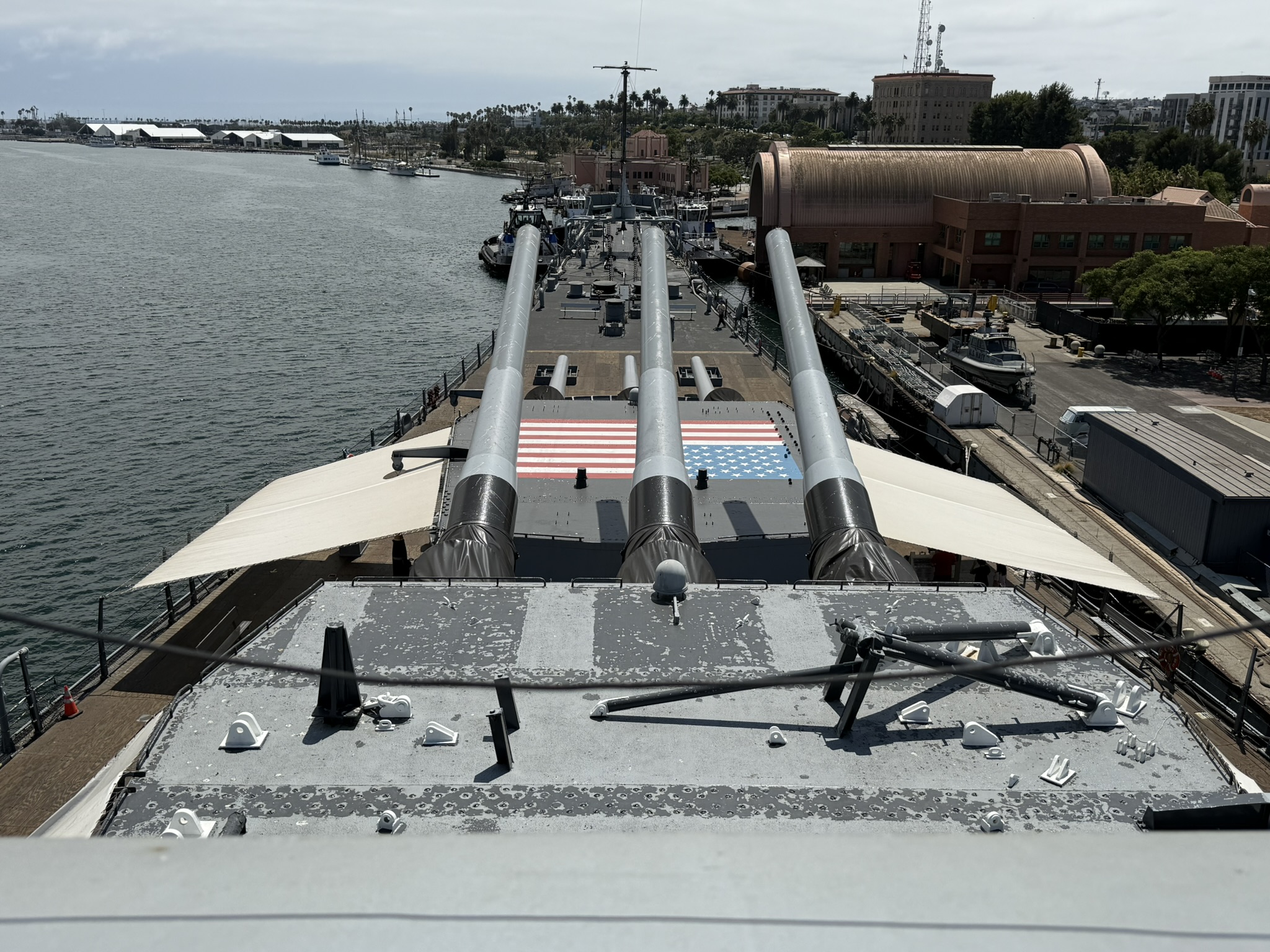
USS Iowa Battleship tour taken by 19FortyFive in August 2025.
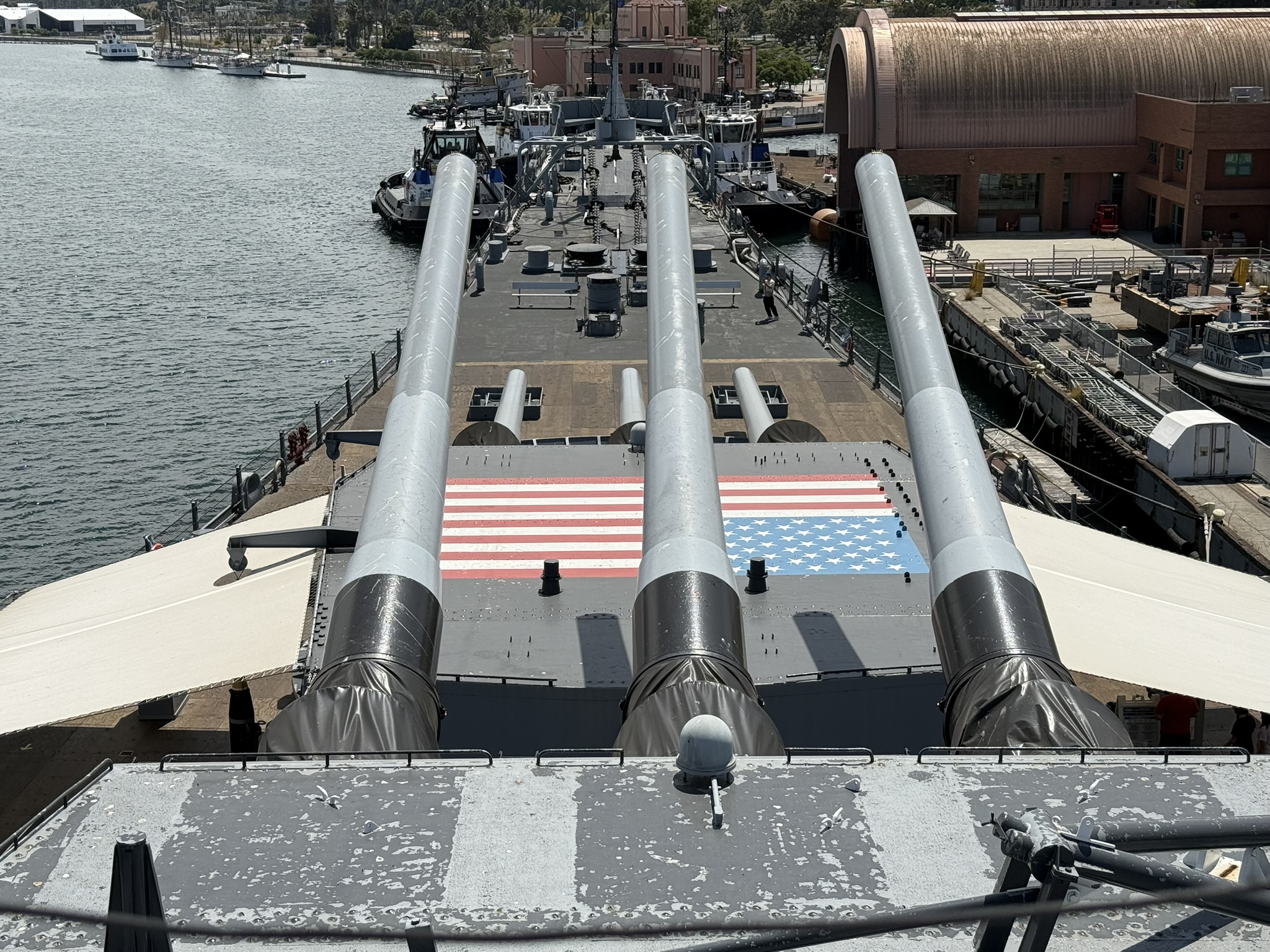
USS Iowa Battleship tour taken by 19FortyFive in August 2025.
In total, the revamped Iowa-class carried 32 Tomahawks and 16 Harpoon missiles. Combined with the Phalanx CIWS and their massive 16-inch guns, the battleships were the most heavily armed ships in the U.S. Navy.
To complement their new armament, each Iowa-class ship needed a complete overhaul of its electronic suite.
The older AN/SPS-6 radars were replaced with AN/SPS-49 long-range search radars alongside AN/SPS-67 short-range radars.
With the introduction of guided missiles, the Iowa-class also received a comprehensive suite of fire support systems to launch and guide its munitions.
The ships also received AN/SLQ-25 Nixie torpedo decoy systems along with the SLQ-32 electronic warfare system.
The Navy also overhauled the onboard communication systems to use the same communication suites as other guided-missile cruisers at the time.
With these new systems, the Iowa-class could operate alongside newer, more technologically advanced surface ships.
In fact, the Navy formed new Surface Action Groups, pairing the battleships with destroyers and guided-missile cruisers.
The Iowa-class’ Cost
Although the Iowa-class is widely beloved, resurrecting the WWII-era battleships in the 1980s raised some eyebrows.
For one, the Navy was transitioning into the age of long-range guided missiles.
Even with new missile systems, it was unclear whether the Iowa-class could survive in the new era of naval warfare.
It was doubtful whether the battleships were still as versatile as they were during the 1940s. Secondly, and more importantly, reactivating the Iowa-class was expensive.
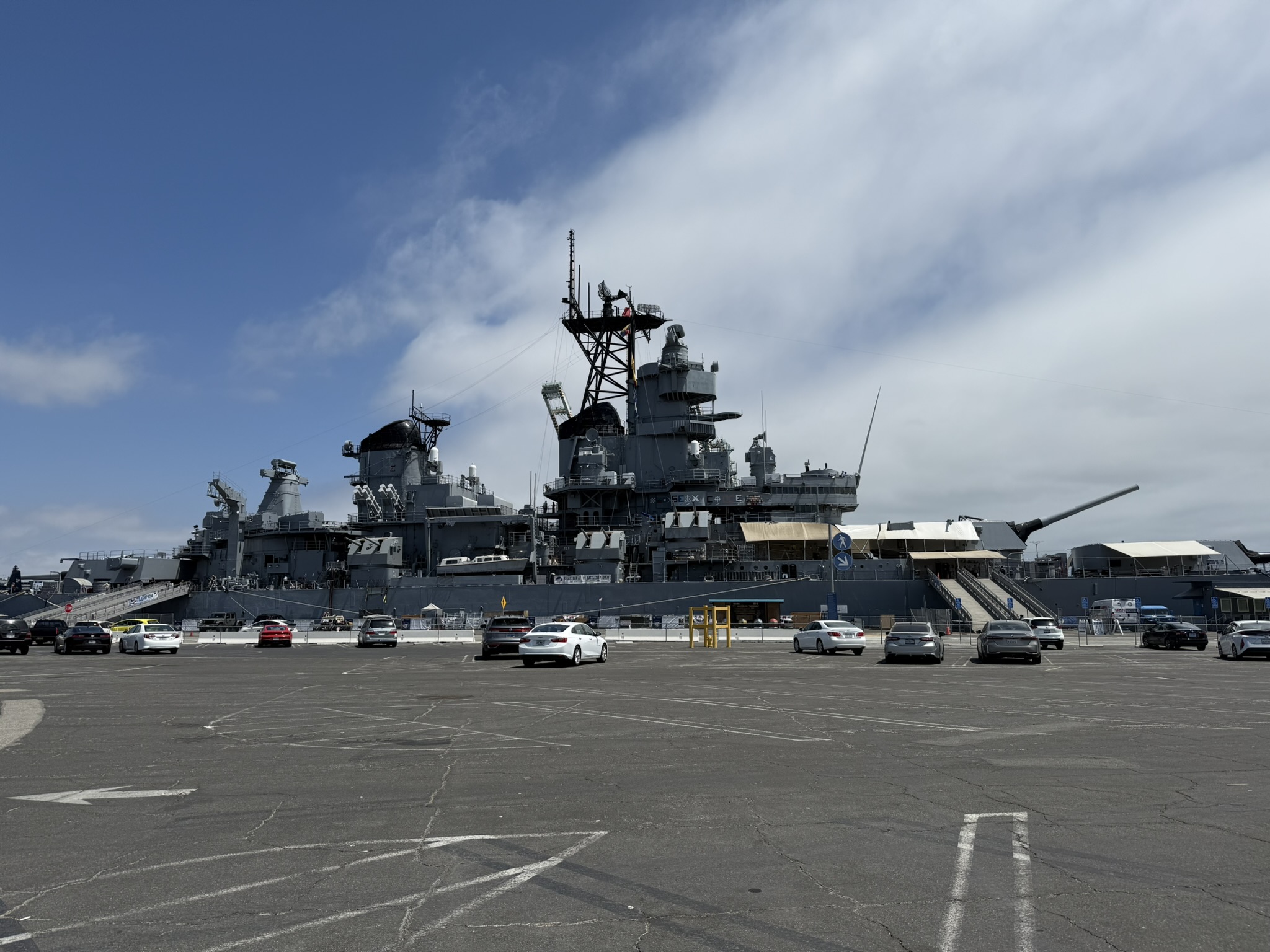
USS Iowa Battleship tour taken by 19FortyFive in August 2025.
In 1982, reactivating and modernizing New Jersey was estimated to cost $247 million.
That’s roughly $857 million in today’s figures.
Some estimates put the total cost of reactivating the Iowa-class at roughly $1.7 billion (it is unclear whether these figures are adjusted for inflation).
The Iowa-class battleships served throughout the final days of the Cold War.
However, from 1990 to 1992, the Navy phased them out as tensions with the Soviet Union eased. When the USSR collapsed in December 1991, the U.S. decommissioned Missouri, the last Iowa-class battleship.
With the retirement of the Iowa class, the battleship concept is generally thought to have ended.
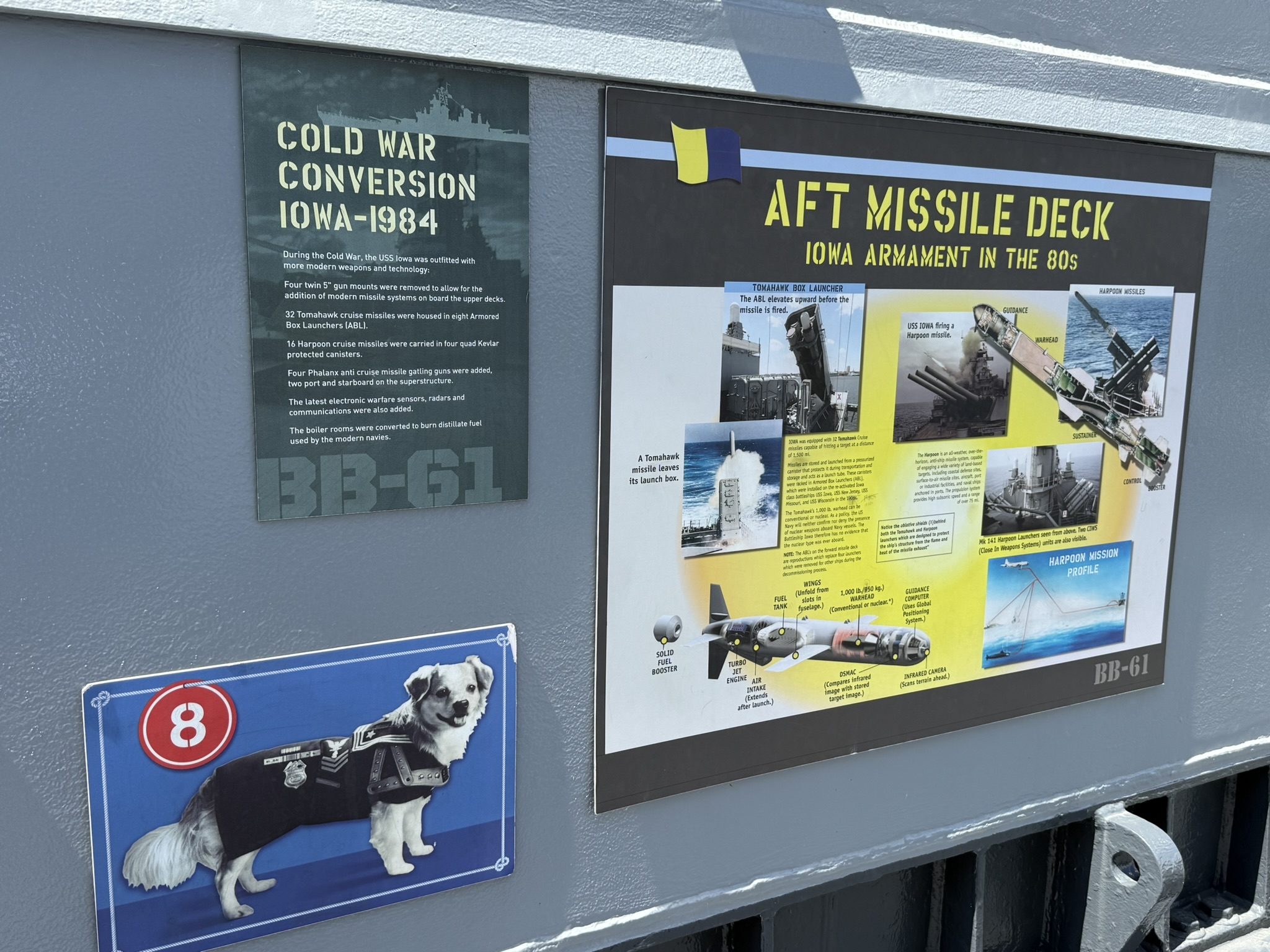
USS Iowa Battleship tour taken by 19FortyFive in August 2025.
However, the concept of a modern battleship has recently resurfaced.
While some argue for large surface warships, the Iowa-class experience shows that maintaining and operating large warships is incredibly expensive.
Is a modern battleship worth its price tag? The Navy’s senior leadership must decide.
About the Author: Isaac Seitz
Isaac Seitz, a Defense Columnist, graduated from Patrick Henry College’s Strategic Intelligence and National Security program. He has also studied Russian at Middlebury Language Schools and has worked as an intelligence Analyst in the private sector.