

A former Department of Defense (DOD) director has urged the U.S. to invest in “better” AI to ward off the impact of China gaining influence.
Jason Rathje, now president of the public sector at the $2.5 billion AI company webAI, told Military.com that to win the tech arms race, the U.S. needs to move away from vulnerable, centralized cloud-based AI systems and more toward local, specialized and secure intelligence.
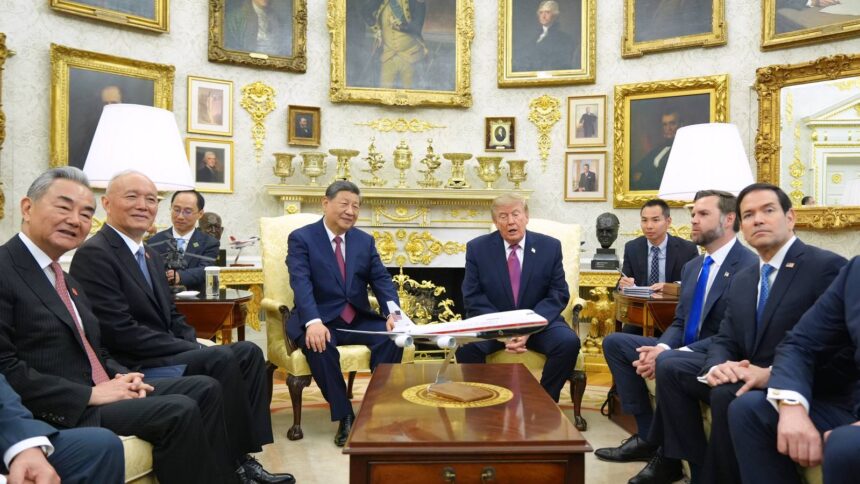
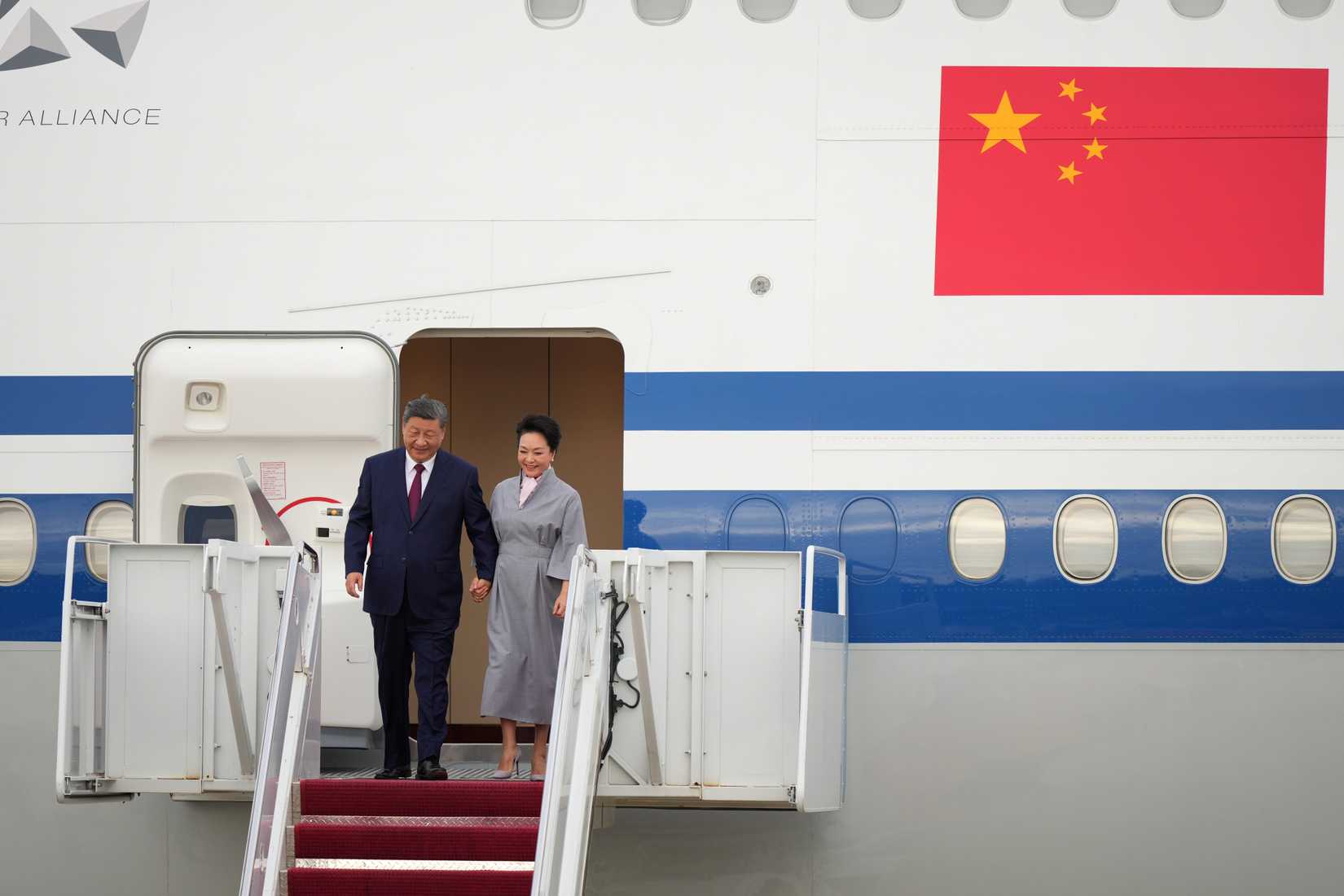
President Donald Trump is currently meeting with his Chinese counterpart, Xi Jinping, in Washington to discuss national security measures and international trade policies during a bilateral summit. Artificial intelligence is reportedly a major topic of planned discussion.
“China intends to win the AI race on scale,” he said on Wednesday. “The U.S. can only negotiate from strength, and any slowdown hands China ground.
“We’ve seen this before: America led on electric vehicles, China scaled faster and cheaper, and BYD now outsells Tesla globally. Being first is not the same as staying ahead.”
Rathje previously served as director and co-founder of the Department of Defense’s Office of Strategic Capital (OSC). That was a newly established office dedicated to attracting private investment in critical technologies vital to U.S. national security.
The US-China Tech Race
The Trump-Xi meeting comes as the U.S.-China tech race has escalated, with both superpowers treating technological dominance as a critical national security priority.
While the U.S. leads in frontier AI innovation and cutting-edge semiconductor design, China dominates clean-tech manufacturing and is rapidly closing the AI gap with efficient, lower-cost open-source models.
Over the weekend, Trump addressed the tech race with China and said on Truth Social that he was creating an “AI Force.”
Trump has also called recent warnings about the potential dangers of AI a “hoax,” even as researchers at some of the world’s largest AI companies have warned about nefarious impacts directly tied to the newer technologies.
Simultaneously, Americans across the country have pushed back against large data centers in their backyards, for reasons including pollution, poor water quality, noise, and increased energy costs.
US Must ‘Rethink’ Long-Term AI Plan
Rathje said creating “better” American AI would encourage people to choose it, which would prevent China’s rise in the sector.
“Right now, Chinese open-source models are spreading worldwide with unknown training data and outputs,” he said. “When an allied government builds on one of those models, Beijing gains influence globally.
“The answer is American AI that is simply better, so businesses at home and allies abroad choose it.”
He also urged a move away from data centers.
“We have to rethink where AI lives,” he added. “Ukraine and Iran have shown that data centers are targets. AI that runs directly on the devices troops already carry keeps working when the network goes down, and that’s where the advantage will be.”
The administration has used AI in some military contexts.
In January, DOD Secretary Pete Hegseth released an Artificial Intelligence Acceleration Strategy to speed up the military’s use of AI.
“We will unleash experimentation, eliminate bureaucratic barriers, focus our investments and demonstrate the execution approach needed to ensure we lead in military AI,” Hegseth said in a speech at the time.
In August, the Navy appointed M. Barry Tanner as the permanent chief information officer, pushing for the use of AI.