
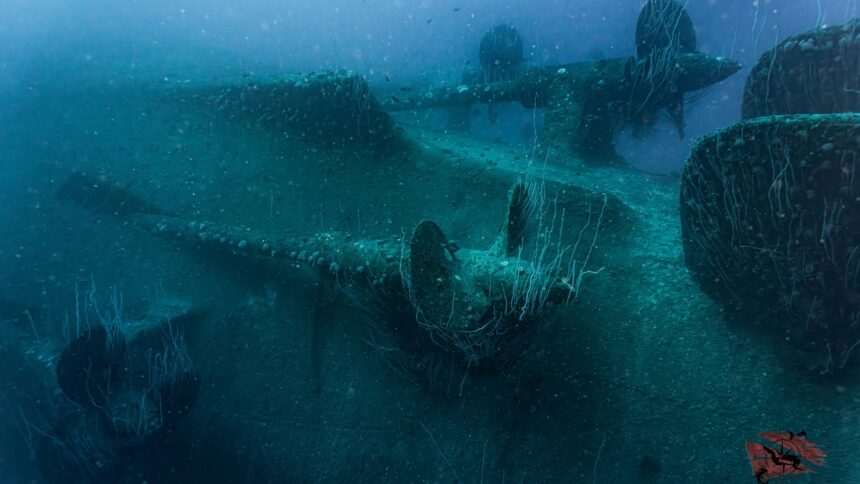
Nearly 200 feet beneath the turquoise water of Bikini Atoll, an American aircraft carrier still rests upright on the lagoon floor.
USS Saratoga survived Japanese torpedoes, kamikaze attacks and years of fighting across the Pacific during World War II. What finally sank the carrier was an atomic bomb detonated underwater in 1946. And Saratoga is not alone.
Battleships, destroyers, submarines and other vessels from the United States and Japan remain scattered across the bottom of Bikini Lagoon, remnants of Operation Crossroads, the U.S. military’s first postwar nuclear weapons tests. The wrecks have become known collectively as Bikini’s “ghost fleet,” a submerged snapshot of the moment the Navy entered the nuclear age.
The Navy Built a Fleet Just to Drop Atomic Bombs on It
World War II had ended less than a year earlier when the U.S. assembled an extraordinary target fleet at Bikini Atoll in the Marshall Islands.
The purpose was simple, if unprecedented: find out what atomic weapons would do to warships. The fleet included more than 90 vessels, ranging from battleships and aircraft carriers to destroyers, submarines, transports and landing craft. Captured Japanese and German ships were mixed among surplus American vessels.
Some were loaded with military equipment, fuel and ammunition to better simulate wartime conditions. Roughly 42,000 personnel participated in Operation Crossroads, most of them sailors.
Before the tests, the U.S. relocated more than 160 Bikini residents from their home islands, telling them the move would be temporary. The consequences of the nuclear testing would make their displacement far more enduring.
The first bomb, Test Able, exploded 520 feet above the lagoon on July 1, 1946. The B-29 carrying it missed its intended aiming point, but the roughly 23-kiloton explosion still sank five ships. Then came Baker.
The Second Bomb Created the Ghost Fleet
At 8:35 a.m. on July 25, a second atomic weapon detonated about 90 feet beneath the surface of Bikini Lagoon.
The underwater explosion threw a towering column of water and radioactive debris into the sky before it crashed back over the assembled ships. Eight vessels sank as a direct result of Baker, according to the Naval History and Heritage Command. Nearly every surviving target ship was showered with radioactive water and material pulled from the lagoon floor.
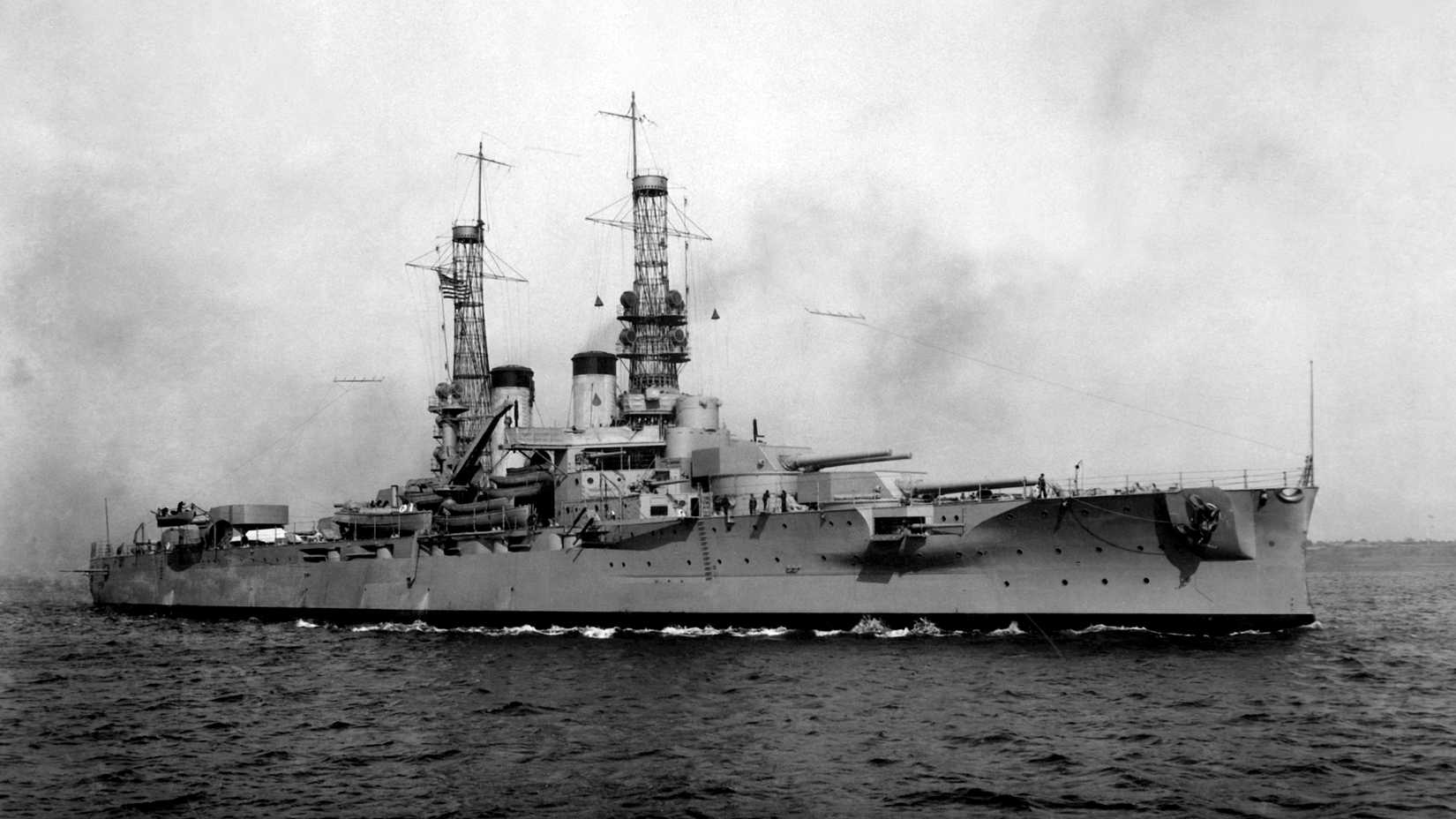
Among the casualties was USS Arkansas, a battleship commissioned in 1912 that had supported the Normandy landings and fought at Iwo Jima and Okinawa. The blast capsized and sank it.
The captured Japanese battleship Nagato, once the flagship of Adm. Isoroku Yamamoto, survived for several days before rolling over and disappearing beneath the lagoon.
Two American submarines, USS Apogon and USS Pilotfish, also went down.
Then there was Saratoga. The carrier had earned seven battle stars during World War II and transported more than 29,000 veterans home after the war. She survived Able with relatively minor damage. Baker mortally wounded her.
The underwater blast hit Saratoga with a massive wave, damaged her hull and collapsed her funnel. Radioactive contamination made sustained damage-control work too dangerous. Seven and a half hours after the detonation, the 888-foot carrier slipped beneath the surface.
She remains there today.
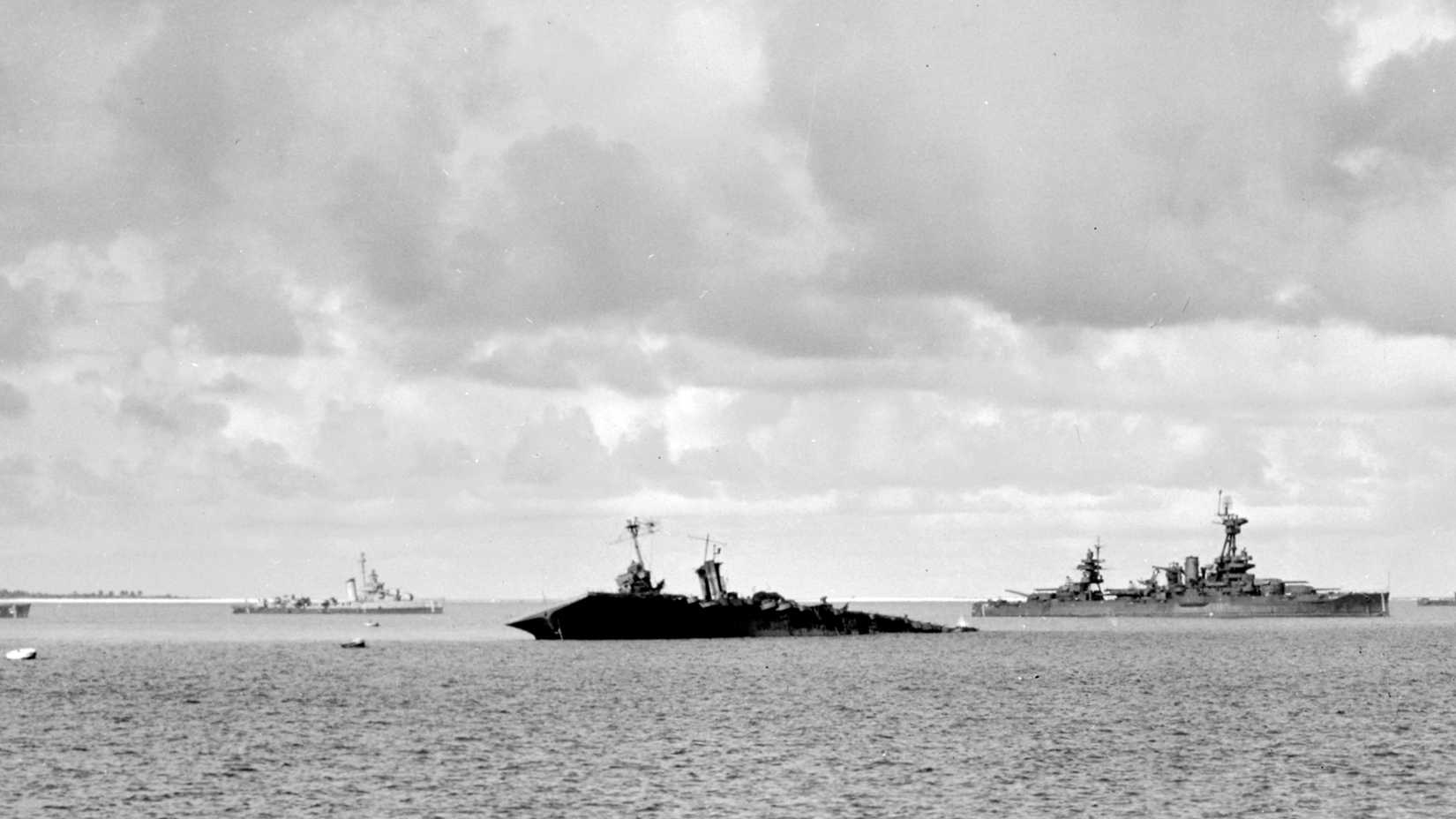
Entire Warships Are Still Down There
The lagoon now contains one of the strangest collections of historic military wrecks anywhere in the world. Along with Saratoga, Arkansas and Nagato, the major wrecks include the destroyers USS Anderson and USS Lamson, submarines Apogon and Pilotfish, attack transports USS Gilliam and USS Carlisle, and the Japanese cruiser Sakawa.
The National Park Service sent underwater archaeologists to Bikini in 1989 and 1990 to document the wrecks. Their work found ships lying on their sides or upside down, twisted superstructures, scattered military equipment and vessels still recognizable decades after the blasts. The NPS concluded that the fleet had exceptional historical and archaeological significance.
Some of the wrecks still contain fuel and unexploded ammunition, according to Bikini Atoll’s UNESCO World Heritage documentation.
Saratoga is perhaps the most haunting. The carrier sits upright, its enormous flight deck stretching across the lagoon floor. Arkansas rests almost completely inverted. Nagato lies upside down as well.
Together they form a submerged museum built by nuclear weapons.
Bikini Became a Nuclear Test Site Long After Crossroads
Operation Crossroads was only the beginning. The United States continued nuclear testing at Bikini through 1958. A total of 23 nuclear tests were conducted at the atoll, including the 1954 Castle Bravo thermonuclear explosion. Across the Marshall Islands, the United States conducted 67 nuclear tests during the testing era.
Bikini residents were allowed to return in the 1970s, but rising radiation exposure led to their evacuation again in 1978. The legacy of contamination and displacement continues alongside the wrecks that made the lagoon famous.
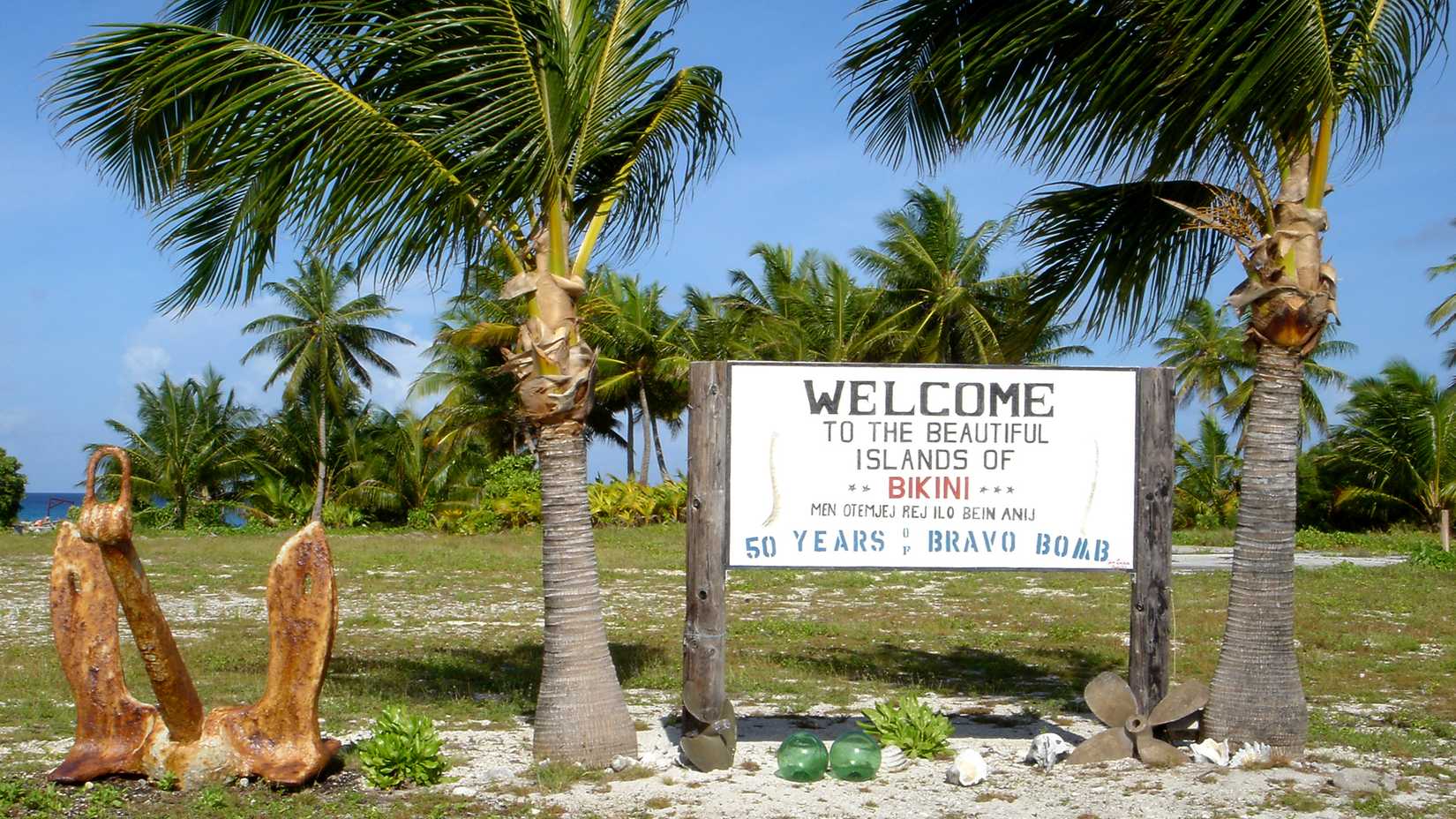
A sign on Bikini Atoll welcomes visitors while marking 50 years since the 1954 Castle Bravo thermonuclear test. Bikini Atoll later became a UNESCO World Heritage Site because of its nuclear-testing history and the military wrecks preserved in its lagoon. (Ron Van Oers/UNESCO)
UNESCO designated Bikini Atoll a World Heritage Site in 2010, citing both the enormous consequences of the nuclear tests and the extraordinary collection of military remains preserved above and below the water.
Eighty years after Operation Crossroads, the ships are still there. An American carrier. Two battleships from opposite sides of World War II. Submarines, destroyers and transports.
A fleet assembled for a war that never came, preserved at the bottom of a lagoon by the weapons that helped define the one that followed.