

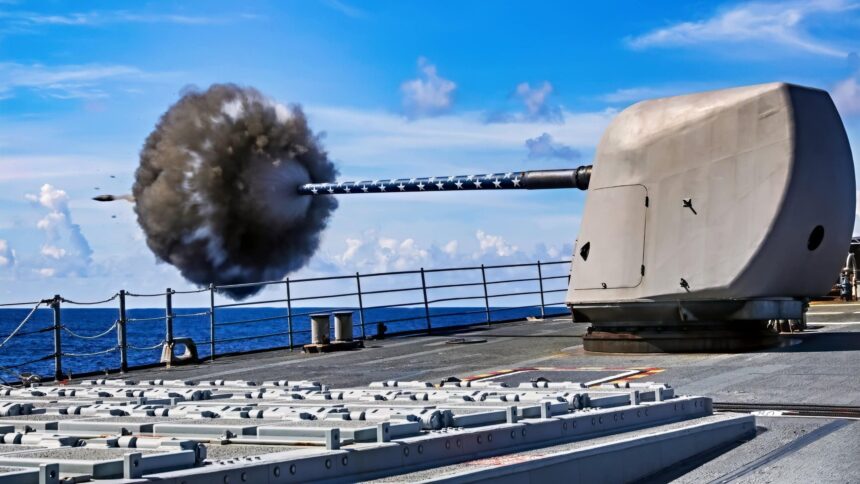
The Ticonderoga-class guided-missile cruisers are advanced, highly capable multi-role warships designed and built during the Cold War. From 1980 to 1994, the United States Navy built 27 ships. Today, only five are still in service. The Navy had originally planned to modernize 11 Ticonderoga-class cruisers. However, as of writing this, only three ships have received their modernization packages, while the others were either removed from the plan or decommissioned during the modernization process.
The program has drawn fire for gross mismanagement and poor oversight. As a result, the Ticonderoga-class modernization program has wasted around $1.84 billion.
TAIWAN STRAIT (Aug. 28, 2022) Ticonderoga-class guided-missile cruiser USS Antietam (CG 54) transits the East China Sea during routine underway operations. Chancellorsville is forward-deployed to the U.S. 7th Fleet area of operations in support of a free and open Indo-Pacific. (U.S. Navy photo by Mass Communication Specialist 2nd Class Justin Stack)
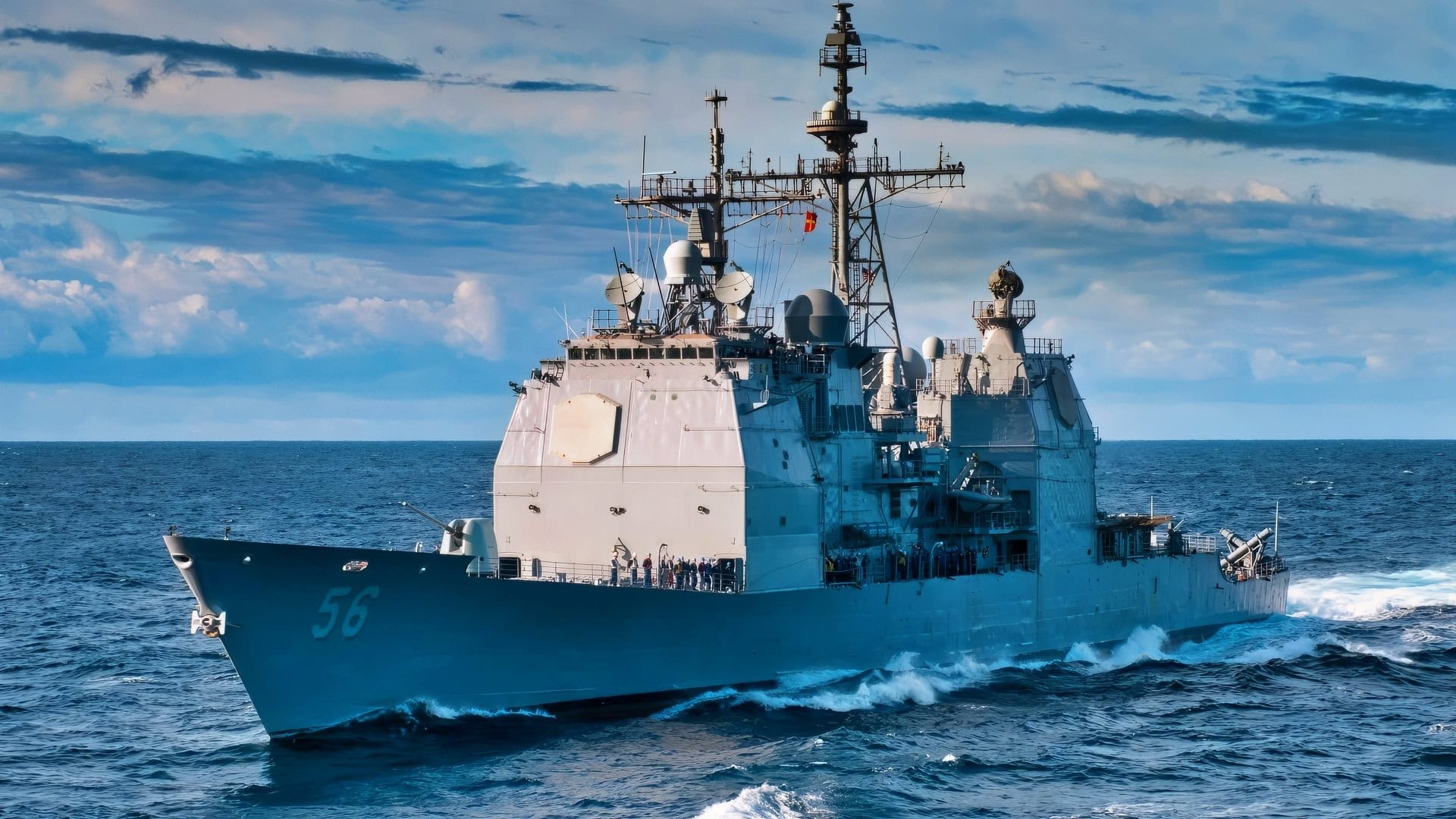
ATLANTIC OCEAN (June 6, 2012) The guided-missile cruiser USS San Jacinto (CG 56) approaches the amphibious assault ship USS Kearsarge (LHD 3) for a fueling at sea. (U.S. Navy photo by Mass Communication Specialist 1st Class Tommy Lamkin/Released)
Ticonderoga-class: The Advanced Missile Cruisers the Navy Doesn’t Want
At first, modernizing the Ticonderoga-class fleet sounds like a great idea.
The cruisers are extremely versatile and have deep magazines, which matters given the current focus on a potential war in the Pacific.
The first two ships, the USS Cowpens (CG-63) and USS Gettysburg (CG-64), began their modernization in 2015.
The modernization effort focuses on incorporating an improved Aegis Combat System, upgrading the current AN/SPY-1B radar, and updating the weapons system.
Originally, the Navy allocated $3.7 billion to modernize 11 ships to keep them active until the 2030s. However, by 2017, that number had been trimmed to seven.
Before the latest modernization efforts, the Navy had tried to retire its Ticanderoga cruisers early.
From its perspective, the cruisers were growing too old, were expensive to operate, and needed a replacement.
However, Congress prevented the service from pursuing its original retirement plans, and instead forced the Navy to retain its guided-missile cruisers.
The Navy saved the ships again when it reached a compromise with Congress that allowed the service to withdraw some cruisers if others received life extensions.
Under the “2/4/6 plan,” two Ticonderoga-class ships would enter a modernization program each year, undergo a four-year overhaul, and a maximum of six ships would be modernized at a time.
Delayed and Over Budget: Another Mishandled Naval Project
However, almost a decade after the first ship was laid up for modernization in 2017, only three ships have been upgraded.
In 2024, the Government Accountability Office (GAO) published a 78-page report detailing how the Navy mishandled the Ticonderoga modernization program.
According to GAO, the program was poorly planned, creating significant additional work.
The Navy reportedly issued about 9,000 contract changes, causing cost overruns and program delays.
What’s worse, the Navy could not identify or explain the additional work, nor did it develop strategies or make changes to prevent future delays.
The report also found that the contractor responsible for some of the modernizations performed low-quality work.
Because of a lack of program oversight, these issues went unnoticed until later, resulting in further delays and cost overruns.
More startling, the Navy decided to retire several Toconderoga-class cruisers while the ships were undergoing modernization.
According to the GAO, the Navy decommissioned four ships during modernization.
The Navy decommissioned USS Hue City and USS Anzio in 2022, and USS Cowpens and USS Vicksburg in 2024.
This follows four ships that were previously withdrawn from the modernization plan.
The report states that the Navy invested $1.84 billion in these four ships, only to retire them before they could complete modernization.
In Hue City’s case, the ship was decommissioned before work began, after the Navy allocated $161.15 million to upgrade her.
The three ships that have received their upgrades, USS Gettysburg, USS Chosin, and USS Cape St. George, are expected to remain in service until 2029-2030, when they will be decommissioned.
After years at dock, the ships have three, maybe four years left in their service lives.
Long Live the Arleigh Burke-class
The Navy’s mishandling of the Ticonderoga-class modernization is an unfortunate end for a perfectly capable cruiser.
Armed with two Mark 41 VLSs (USS Bunker Hill onward), the ships could carry up to 122 missiles.
Had the modernization program worked as intended, the Navy could have had 11 upgraded cruisers, giving the fleet much-needed firepower.
Unfortunately, these cruisers are growing old. According to the Navy, the ships are also expensive to operate, and since the post-Cold War budget cuts in the 1990s/early 2000s, the service has decided they are not worth their price tag.
To account for the gap left by the Ticonderoga-class, the Navy is currently looking to extend the lives of its Arleigh Burke-class guided-missile destroyers.
These upgrades focus on implementing the new Shipboard Electronic Warfare Improvement Plan (SEWIP) Block 3 and the new SPY-6 air-and-missile defense radar.
The Arleigh Burke destroyer has undergone numerous upgrades since the 1990s and continues to receive additional life-extension plans.
The Navy currently intends to keep purchasing new destroyers, with six under construction and two conducting sea trials.
With the cancellation of the Constellation-class in 2025, the Arleigh Burke has become an even higher priority.
About the Author: Isaac Seitz
Isaac Seitz, a Defense Columnist, graduated from Patrick Henry College’s Strategic Intelligence and National Security program. He has also studied Russian at Middlebury Language Schools and has worked as an intelligence Analyst in the private sector.