
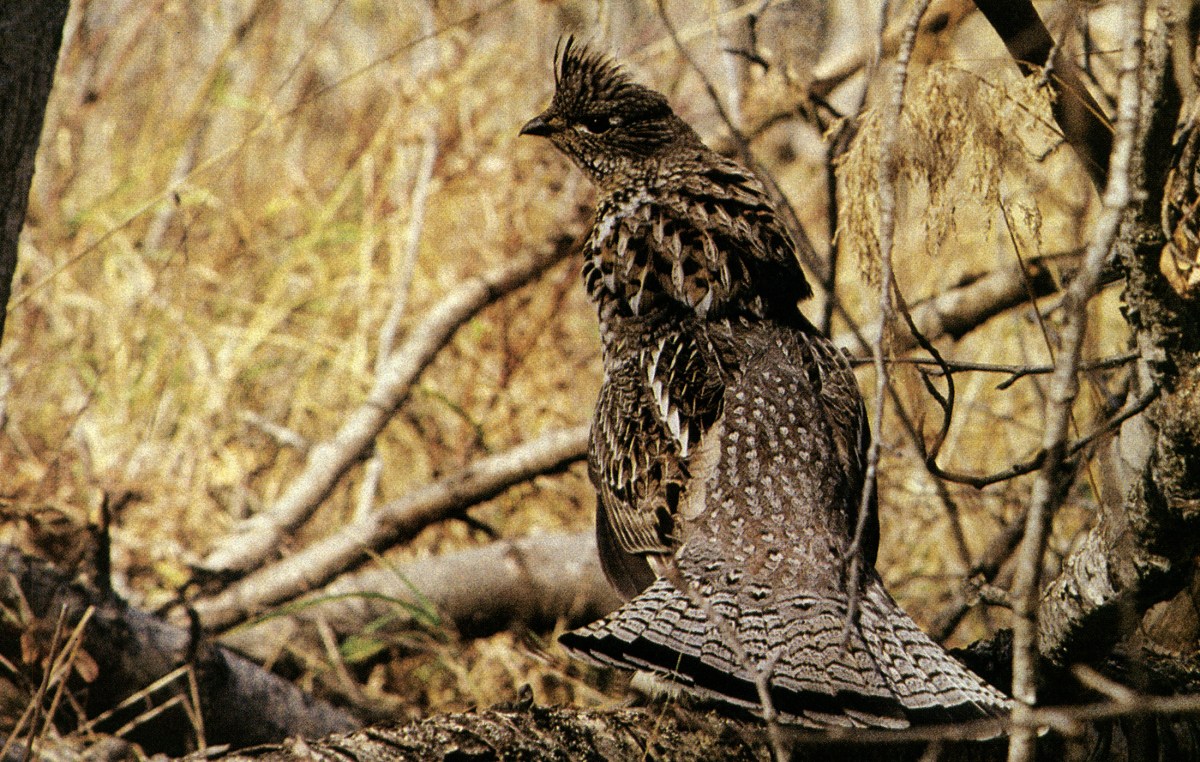
We called the 40 acres of woods and brushlands the Garden of Eden. The rolling land changed from young poplar on the slopes to maturing hardwoods over clumps of fruiting shrubs in the low areas. In the center, a small stream ox-bowed its way along while chasing the sun through alders and gone-to-seed pastures. Ringing this parcel of state land in central Michigan were patches of dogwood.
County roads of gravel flanked the Garden of Eden. Dogwood thickets nearest the roads were always dust-smothered when we went there on Saturday mornings in September. The day would already be hot and the air dry. Our passing usually rattled grasshoppers into careening flight. We wore Levis and sneakers.
Sometimes, our made-in-Taiwan shell vests were too small to hold the grouse we shot. We used full-choke, 12-gauge shotguns because they were the only guns we owned. One time, we ran out of shells.
That was 25 years ago, when I didn’t know a rose hip from six bucks a week and when my high-school chums and I referred to grouse as “pats.” Then, I had few clues as to why those 40 acres bristled with grouse. Today, I do. It was because they contained a stable supply of food, nearby grit, and safe habitat for spring nesting and wintering—two key stress periods that make it tough for a grouse to see its first birthday. I also know why there are few, if any, grouse left there today. While growing up, the Garden of Eden changed far beyond the life needs of its inhabitants. So they moved somewhere else.
Good grouse habitat can change faster than bullpen pitchers in a World Series baseball game. Not surprisingly, perhaps, food resources can dictate where grouse go and don’t go. Put another way, when the grocery shelves grow bare or there is too much danger or energy required to go there, grouse find a new place to shop. Locating those places and knowing how to hunt them can tremendously improve your hourly flush rate. Birds in the bag are another matter altogether, but if you are a confirmed ruff hunter, you already know that.
What foods grouse eat and where they find them have raised the interest of researchers for many years. A hundred years ago, Sylvester D. Judd of the U.S. Department of Agriculture studied wildlife foods, and early in this century he analyzed the crops and stomachs of 208 grouse collected in the Northeast. Thomas Smyth reported on the feeding habits of 331 birds shot in the Ithaca, New York, region in 1922-23. Since then, other researchers have examined grouse food habits in the Maritime provinces and the Virginias, and in New England, Wisconsin, Iowa, Michigan, Minnesota and Washington.
The collective research indicates that the opportunistic ruffed grouse eats just about anything. Nearly 40 years ago, New York state researcher Gardiner Bump found 65 plant families, with a total of 414 species, in the crops of grouse he and others examined. Chicks, in particular, eat large quantities of high-protein insect larvae, beetles, flies, snails, spiders and ants. Adult birds, on the other hand, eat mostly plant matter. Like deer, which are also browsers, grouse eat the foliage of woody plants, twigs, catkins (flowers) and buds. They also like fleshy fruits, including nuts. Their apparently ironclad digestive system allows them to handle such morsels as cockleburs, burdock, poison ivy, poisonous nightshade berries and toxic mountain laurel leaves.
Thanks to the grouse’s catholic tastes, there are no known reports of death by starvation. And, during the hunting season, the banquet table for grouse is never more full. Acorns, dogwood berries, wild grapes and blackberries are just a few of the dozens of fruits now maturing. Fall flowers and mushrooms figure in the diet, too, and some trees begin budding soon after their leaves fall. In short, grouse enjoy a full grocery store and a veritable smorgasbord of foods in September, October and November.
Then why can’t a hunter just step into the woods anywhere and scratch down a limit? On paper, you would think it would be easy. Especially when you consider that young-of-the-year birds are dispersing to new territories in a phenomenon that researchers call the fall shuffle.
Although grouse have been known to strut across manicured lawns and crash into plate-glass windows in the fall, they surely are not as stupid as they sometimes appear to act. They usually seek food habitats that also offer security from predators. This habitat will almost always contain some aspen (poplar) in varying stages of growth, but especially sapling-size stands. The young trees, often called whips, have high stem densities. They protect nesting hens, as well as chicks and adult birds, from avian predators—chiefly the goshawk, red-tailed hawk and great horned owl. When aspen stands contain an understory of fruiting shrubs such as cranberries, dogwood, wild currant and witch hazel, grouse—once they establish themselves—have been known to live out their lives in an area of 40 acres or less.
Ten years ago, Tom Prawdzik, a wildlife biologist with the Michigan Department of Natural Resources, studied the crops of nearly 400 grouse shot in the central Lower Peninsula. During the 1975 hunting season, he identified 79 different foods. By volume, gray dogwood fruit was the most common. It was followed by oak galls, acorns, aspen buds and mushrooms. An interesting note about Prawdzik’s study is that where cover types could be recorded, 90 percent of the birds shot were flushed from aspen stands containing lowland-brush understories. The fact that only 6.4 percent of the total forest study area contained this cover type certainly tells one where to look for grouse. The University of Minnesota’s Gordon Gullion, America’s foremost ruffed grouse expert, has been studying grouse habits and habitat in the Cloquet (Minnesota) study area for almost 30 years. Research there and elsewhere shows that more than 90 percent of birds shot in the continental United States are killed in regions where aspen is an important part of the forest composition. Indeed, grouse needs can be met when no more than 12 to 14 percent of the forest makeup is aspen. In a recent paper, Gullion concluded that “… it is not a coincidence that the most widely distributed resident gamebird in North America correlates closely with the range of the most widely distributed forest tree on the continent.”
So, begin looking for grouse in or near young aspen. Then, with the aid of a good pocketbook on plant identification, look for preferred food types. Know, too, that these can vary around the country. New York revealed that aspen buds and flowers, followed by clover leaves and hazelnut buds and flowers, were the three most preferred foods. Virginia grouse from the Allegheny Mountains showed an equal preference for acorns, grapes and greenbrier fruit and leaves. In Maine, the birds went for aspen buds first, then blueberry fruits and buds, clover leaves, hazelnut flowers and buds, and willow buds and leaves. Pennsylvania ruffs liked large-toothed aspen, grapes, hawthorns, docks and acorns. In Ohio, greenbrier fruits and leaves and aspen were followed by dogwood, grape, sumac, beech buds and fruits, and witch hazel. Wisconsin grouse opted first for quaking aspen buds, hazelnut catkins and white clover leaves, then turned their attention to wild cherries and blackberries. Grouse on Vancouver Island preferred salal fruit. In Idaho, they liked sedge, blueberries, huckleberries and clover. Washington State birds gobbled buttercup, black cottonwood, gooseberries and blackberries in that order.
These studies, for the most part, were year-round. Keep in mind that certain fruits and catkins are simply not available during the hunting season. The best way to find out what grouse are eating in your locale is to examine the crop of your first kill.
In your search for hunting habitat, it might also pay to keep an eye open for green plant material. In the Prawdzik study, grouse depended heavily upon green matter for food, especially as winter approached. About 63 percent of crops inspected in late September contained green plants, compared to 82 percent in October and 100 percent during the first halves of November and December. However, following a four-inch snowfall one December, only 11 percent of the crops yielded green plants.
Keep in mind, too, that grouse will gorge themselves on a particular food, especially in the fall. Bob Odom, a Michigan Department of Natural Resources wildlife biologist and avid grouse hunter, tells the story of a grouse he shot that was stuffed with wild grapes. As the bird fell, it hit Odom in the chest, splattering his shirt with purple stains. It is also nothing short of amazing how much food the fist-size crop of a grouse can hold. An Adirondack, New York, bird yielded 20 whole strawberries and more than 6,000 seeds.

Aspen is the most important food source, and large buds in the fall and winter are especially rich in protein, fats and minerals. They far outweigh other foods in equal volume. Yet grouse may ignore them preferring, instead, tastier, more available foods. In his book Grouse Of The North Shore, Gullion calls these “junk foods.” In Minnesota, at least, he believes that birds making extensive use of fruits and berries are having difficulty finding better-grade foods, especially aspen, to eat.
Much remains to be learned about aspen and its connection with grouse survival. Gullion believes, for instance, that the big, nutritious buds are always male; however, preliminary results of Michigan State University studies in Michigan’s Pigeon River country suggest that the biggest buds may not be exclusively male. Consequently, smaller buds are not necessarily female, and both large and small buds may vary from tree to tree, year to year. Gullion and others are studying another phenomenon regarding aspen flower buds—an apparent periodic change in their chemistry that renders them unfit as food at certain times. Those cyclic population crashes of grouse that prompt hunters to drag out the good old days for contrast may well be linked to this phenomenon.
The hunter who understands something about grouse eating habits and where to look for preferred foods improves his chances at bagging ol’ ruff. I hunt grouse in my native Michigan throughout our long season. Breaking down food and cover needs into three distinct periods has helped me to find birds all season long. Here is how I do it.
Even in states that have an early season, some hunters completely avoid the lush hell of September woods and the corresponding mosquitoes, black flies and Indian summer heat. I, too, prefer those frost-fired woods of October and beyond, but September can provide some one-of-a-kind hunting experiences. Then, grouse broods are usually still intact, making for multiple flushes and follow-up points. In southern Michigan’s farm country, I target brushlands and open woods near weed and crop fields. The edge of meadows or fields containing goldenrod and abutting heavier cover is especially productive, so long as there is some protective canopy. The crops of grouse I have shot there yielded green plant material, (especially strawberry leaves and clover), but also thorn apples and crab apples, which usually grow along the edges of two cover types. Young birds shot near this forest/field edge have also been eating insects. Hunting along sandy lanes that snake through alternating fields and woods will be productive, too. Look for oval depressions in sunny patches of sand where grouse took dust baths.
Open stands of mature hardwoods are other good spots, especially after mast crops fall. You will also likely find grouse around fruit-bearing apple trees. Blackberries, wild grapes, dogwood and other maturing fruits become increasingly important as autumn waxes full. Another key early-season staple is witch hazel catkins.
I look for these same foods in northern Michigan woods where pure stands of aspen are more abundant. These upland covers often hold the bonus of woodcock. Wrist-size “popples” containing yet-green bracken and fruiting shrubs are what to look for. They help pad the hunter’s hourly-flush rate, although they can also contribute to a miserable killing average. But that can improve if you remember to skirt the edge of such jungle cover instead of plunging through it.
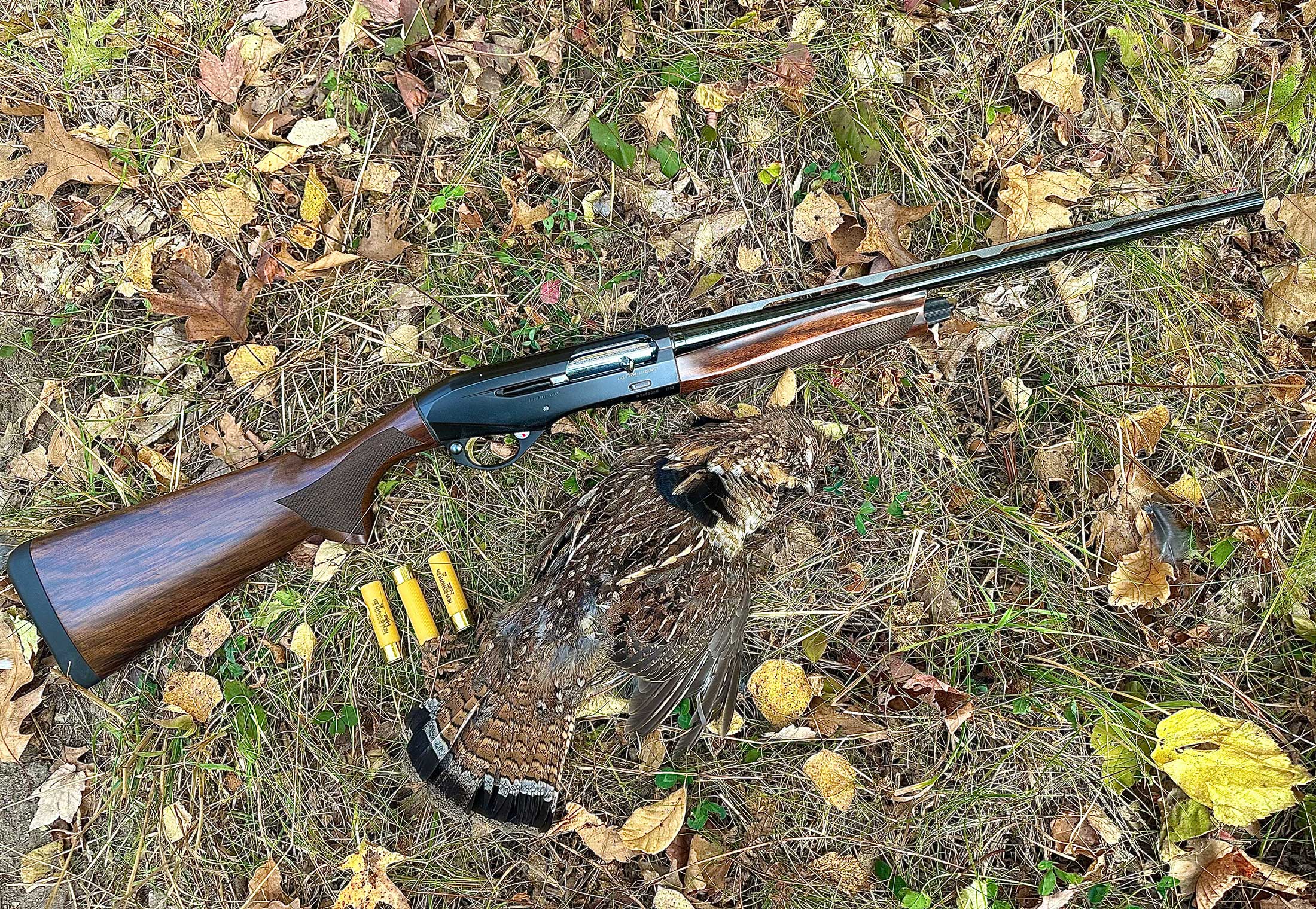
The middle season of early October until snowfall brings tremendous changes to grouse woods. Browning bracken fern goes down, leaves tumble and woods begin to open up. Grouse become increasingly concerned about overhead protection from raptors and therefore begin moving into heavier cover. This shift from upland stands of ridge oak and aspen-covered swells to lowland habitats of stream-bottom brush and swamp edges is subtle, occurring over several weeks. Aspen/alder edges with an understory of hazelbrush are prime Michigan locations. Eating habits change, too. Although grouse still want green matter, they feed more heavily on fruits and begin turning to buds and catkins.
Aspen flower buds that began developing in leaf axils over the summer now become increasingly available. Early one October afternoon while bowhunting for deer, I watched a downed aspen below my tree stand suddenly begin to shake violently. Whatever was making the racket was sure to ruin my chances at tagging a deer. In another moment, I could see the culprit, a grouse, ripping away at buds as though this was his last meal. Gullion has observed such grouse picking off nearly 50 buds per minute. During a 15 to 20 minute feeding, it is possible for a grouse to eat several hundred buds. Gullion calculates such gluttonous habits to be similar to a 150-pound person eating 27 pounds of chow at one sitting.
Nearly all states with grouse hunting seasons permit December hunting. Many have seasons extending deep into January, and a few allow hunting in February. Good grouse habitat continues to change tremendously during this winter period. Screening cover diminishes, and the birds will almost always be in lowland covers that offer both security and food. Fruits—except for rose hips, withered wild grapes and perhaps a few others—are pretty much gone. So, too, is most green plant material, except for wintergreen and occasional clover if it is not snow-covered. Now is when grouse turn almost exclusively to aspen flower buds, when they can find them, and to the catkins of beech, birch and ironwood when they cannot.
Snow and cold weather, along with a shrinking dining table, may cluster grouse in groups of up to a dozen birds. You may have to walk for hours to find them, but when you do, expect fast shooting. That is because late-season birds are edgy, due to hunting pressure and to increased vulnerability to natural predators. Another time, while bowhunting in December, I watched a grouse fly 200 yards from roosting cover in a small belt of Scotch pines to a pod of aspens bordering an alfalfa field. For three consecutive evenings, just before dark, this bird zipped to the dining table, gobbled down a quick meal, then hurried back to its roost. He didn’t show on the fourth evening; I imagine a hawk or owl nailed him. Had food and security been closer together, the grouse might have lived to strut on a drumming log in the spring.
The combination of lowland conifers interspersed with aspen is prime winter habitat. Pines with branches sweeping the ground provide protection from cold winds and raptors alike. Multiflora rose, hawthorns and greenbrier near heavy woods are good spots to hunt. So, too, are blowdowns when found along the edge cover. Grouse will even turn to corn along the edge when it is only a jump away from escape cover. Birds will often roost in deep, fluffy snow, usually in open, mature timber near food sites. Sometimes, they squat in snow (look for yellow-green droppings about a half-inch long), and other times they burrow completely under. In the absence of snow, grouse will roost in conifers or thick aspens.
Throughout the season, grouse normally feed soon after sunrise and again after sunset. Like people, the birds occasionally like to lounge in bed, sometimes not leaving the roost until midmorning or when dew is gone. Other good times to hunt are just before and right after a storm when grouse will stuff themselves. Some hunters step into woods only during the last hour or two of the day because heavier, cooler air settles to earth then, and grouse are on the move. Both improve scenting conditions for dogs.
Read Next: How to Find and Hunt Grouse in Successional Habitat
Besides hunting roosting and feeding sites, find travel corridors of cover linking the two. Brushy draws and the compromise, or edge, between two habitat types are especially productive. Grouse don’t always fly back and forth. Sometimes, they walk, and you can follow their triple-toed prints in snow or put them into thundering flight with the help of a dog. Wildlife biologists live-trapping grouse for release in new areas have excellent success when they key on these travel corridors. Hunters can, too.
Thanks to successful reintroduction in states such as Missouri and Indiana, along with release efforts in new areas, ruffed grouse are now found from Newfoundland to Nevada. They live in nearly every state, including Alaska, and all but a dozen have seasons. Much remains to be learned, though, about these remarkable gamebirds, and it is unlikely that anyone will ever know all there is to know. The best hunters are those that, over many years afield, have committed to memory mental photographs of habitat that produced and those that did not.
Without exception, those habitats will offer protection and will contain preferred foods. The combination can make for a Garden of Eden for grouse and grouse hunters.
This story was originally published in the September 1988 issue of Outdoor Life.
Read the full article here