
We may earn revenue from the products available on this page and participate in affiliate programs. Learn more ›
Selecting a bait for trout isn’t rocket science. They like garden worms, mealworms, wax worms, and nightcrawlers. Salmon eggs score big, as do all of the synthetic dough baits on the market these days. Rather buy bait at the grocery store? Corn and marshmallows hammer trout, too. What’s more important than what you’re using—especially if you’re targeting stocked trout—is how you deliver the goods. Effective trout fishing rigs aren’t exactly complex, but you’ll fill the stringer faster this spring with a solid understanding of the three most common methods of getting bait in front of hungry trout. Here are three rigs you need to know.
1. Split Shot Trout Rig
The most common and effective of all the trout fishing rigs is so simple it’s tough to even call it a rig. It’s just a hook tied to the end of your main line, and one or more split shot crimped anywhere from 6 inches to a foot above that hook. Despite the simplicity, you still need to put some thought into this easy setup. It’s also worth noting that it’s more effective in some waters than others.
There’s a reason why split shot is available in such a wide array of sizes, styles, and materials. Tin split shot, as an example, is lighter and falls more slowly than lead split shot. It also splashes a little quieter, making it the better option in small, clear streams where the trout are spooky. The split-shot rig particularly shines in moving water when you want your bait to tick along the bottom through a seam or eddy to mimic natural forage riding the current. With that in mind, the objective is to achieve that natural drift with as little weight as possible.
How much weight you need will be determined by depth and current speed, but as a rule, start with just one split shot and add more if you need them. If your bait is moving through the target area and you’re not feeling it occasionally tick the bottom, you need a bit more weight. Conversely, if it’s frequently getting stuck in the rocks or hopelessly hung up, you need to lighten up.
Although you can use a standard split-shot rig in a lake or pond, you often need to cast farther in these locations versus making short casts to smaller target areas on a stream. Though you could add a mountain of heavier split shot to the rig to send the bait the proper distance, there are more effective trout fishing rigs for still waters that’ll also help you catch more trout.
2. Distance Rig for Trout
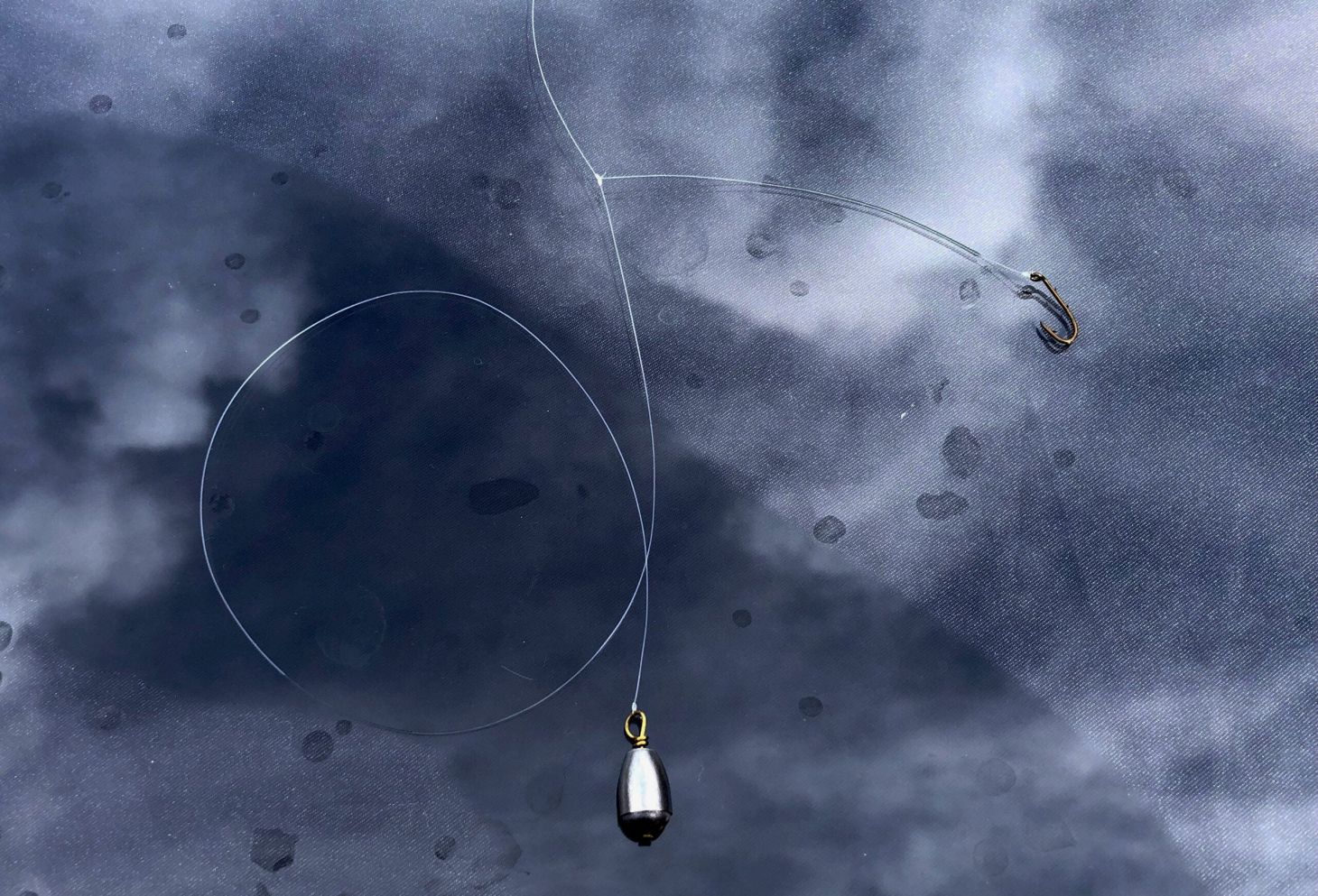
If you were to add a bunch of split shot ahead of your hook to bomb it out into the lake, a trout will feel the resistance of all that weight as soon as it grabs the bait. This can cost you fish. The better solution for targeting stillwater trout is a distance rig that positions the weight below the hook.
To create this trout fishing rig, start by cutting off approximately 18 inches of your monofilament main line. Next, reconnect the cut piece to the main line with a Blood knot. Ideally, the tag ends created when you cinch the knot tight will measure 6 to 8 inches long. Trim one close to the knot, but leave the other intact. Tie your hook to the end of that remaining tag end.
What you have now is a hook positioned perpendicular to the main line in an L shape. Using a Palomar knot or improved clinch knot, tie a casting sinker to the end of the main line, which will place the sinker below the hook. When you fire this rig, the weight leads, helping you achieve maximum distance. However, when it lands on the bottom, the bait sits above the weight, so when a trout grabs it, it doesn’t instantly feel resistance.
You can enhance this trout fishing rig by threading a synthetic floating salmon egg or Bait Sac Floater onto the short perpendicular arm that holds the hook. This will not only make your bait more visible to the fish but also ensure that your mealworm or chunk of nightcrawler is hovering well off the bottom at all times.
3. Float Rig
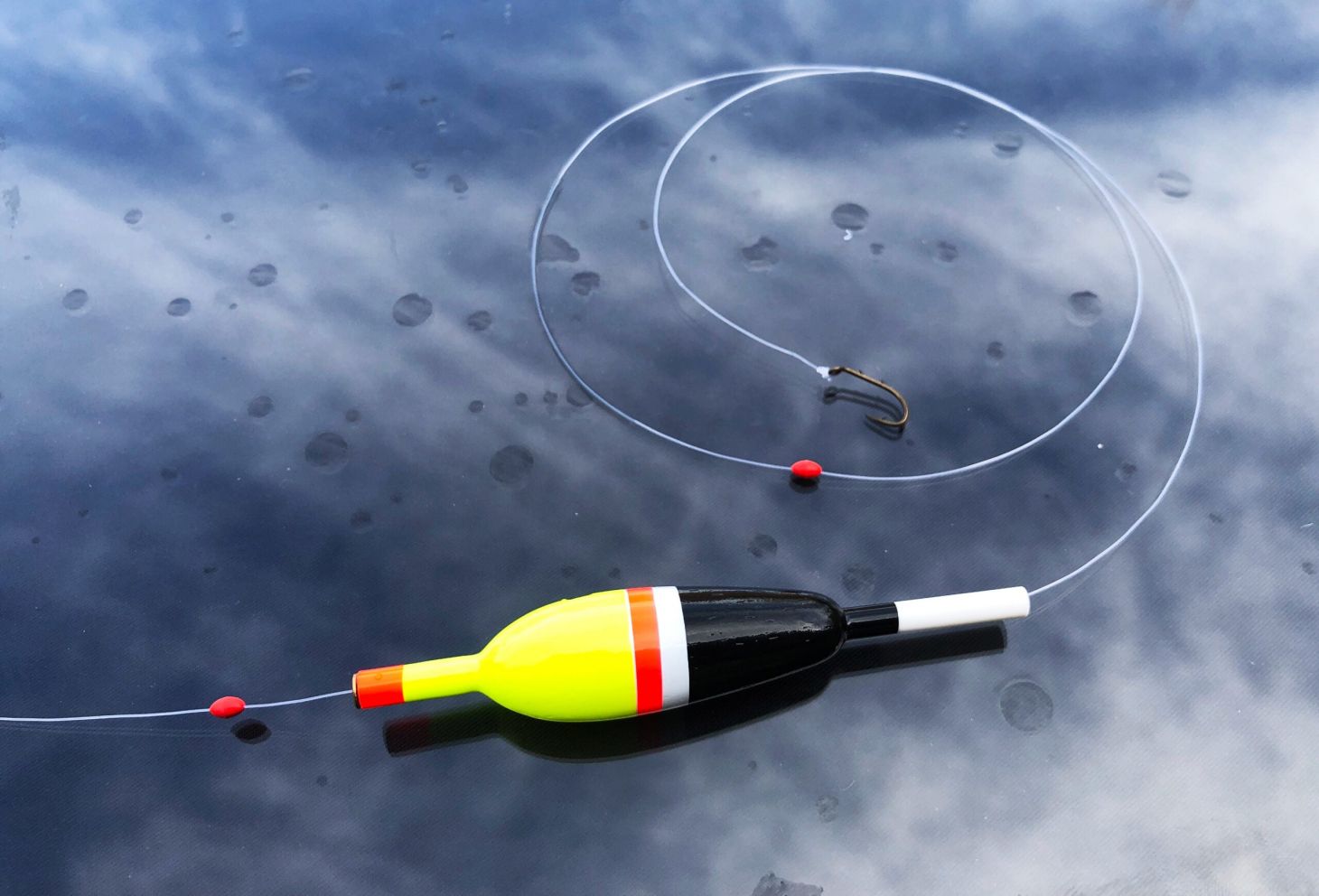
“Float rig” is nothing more than a fancy way of saying “bobber rig.” All you’re doing is hanging your bait under a bobber, which is a common way to catch a wide variety of fish. When it comes to trout, however, float selection is key, and it’s all based around exactly where you’re fishing.
The reason you’d want to use a float rig is to either suspend your bait at a certain depth in still water, or to create a natural presentation in the middle of the water column when drifting your bait in moving water. The problem is that your standard round plastic bobber isn’t a great option because it splashes down loudly, rides current awkwardly, forces you to adjust the depth of your bait before you cast, and, in some cases, can be hard for smaller trout to even pull underwater. The way to go is with an unweighted slip-float rig.
Slip floats slide freely on your main line, and the distance between the float and your hook can be quickly adjusted by sliding rubber float stops up and down your line. Furthermore, you can set the top float stop to any depth you want without having to cast a fixed bobber set to that depth. At rest on land, the slip float will slide down to the lower float stop, which will be closer to your bait. After the cast, the line slides freely through the slip float until it reaches the top float stop. As a result, this trout fishing rig makes depth adjustments a snap.
If I’m fishing a lake or a bigger river, I like the Carlisle Balsa Slip Micro-Float. It can be cast a good distance on lighter trout gear, but it’s small and unobtrusive. The tapered shape also creates less resistance when a trout pulls the line, helping it hang on longer without getting spooked. In smaller, more intimate streams, where I don’t have to cast as far, I’ll switch over to a tiny foam EZ Float. They barely make a sound when they hit the surface, and they’re so light that even the slightest nudge from a little wild brook trout registers instantly.
content_trout-fishing,content_freshwater-fishing,content_fishing,content_stories

THE 1871 CLUB

Recommended Products
Read the full article here