
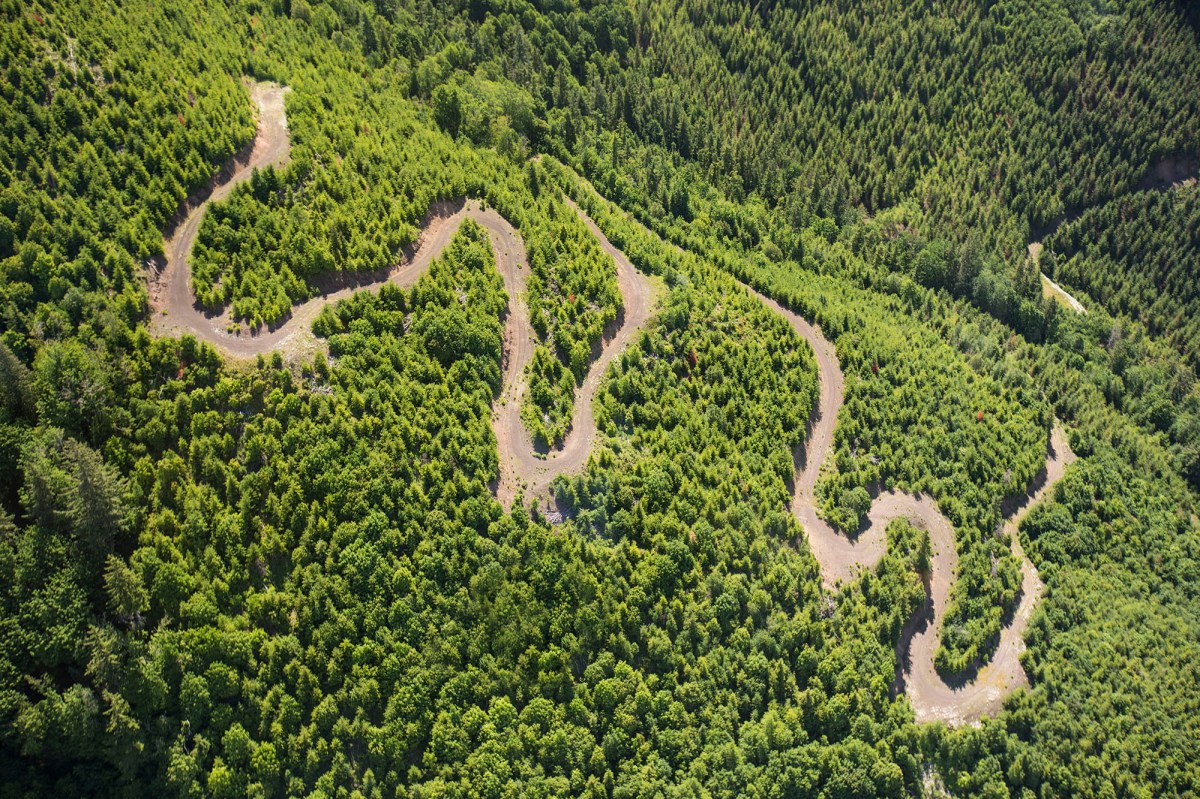
Last week, the Trump administration announced its intention to scrap the landmark roadless rule. Rescinding the so-called roadless rule could result in road construction, reconstruction, and timber harvest across more than 44 million acres of U.S. Forest Service lands. One of the key talking points around the rollback: this administration says building more roads on Forest Service lands will reduce wildfires.
That’s why on this episode of the Outdoor Life Podcast I interviewed Chris Wood, president and CEO of Trout Unlimited and one of the key policy architects of the Roadless Rule, which he helped develop while working for the chief of the U.S. Forest Service before the rule was enacted in 2001. Wood explains why repealing the roadless rule will actually make wildfires worse, why “roadless” is a misnomer (yes, you can drive in many roadless areas) why these chunks of national forest are the best hunting and fishing areas we’ve got, and what the real reason is behind the rollback.
Listen to this week’s episode of the Outdoor Life Podcast on Apple, Spotify, or wherever you get your podcasts.
Full Episode Transcript
Natalie Krebs: Okay, so Chris, you’re currently heading up Trout Unlimited, but I’d really like to start with your career in the Forest Service and your background with public lands before that, so our listeners can understand why you’re the guy I wanted to talk to about what’s going on with the Roadless Rule right now.
Chris Wood: Well, it’s interesting. I have a not-so-traditional public lands background. I grew up in New Jersey. I went to high school in Jersey City. The public lands that I knew were a place called Tuers Park, where I played hours and hours of hoop as a kid. And I went to college in Vermont. The other piece that’s important is that we never left New Jersey, other than to visit my mom’s family in Ireland — because when you’re from the promised land, why would you leave? But I went to school in Vermont and I discovered the Green Mountain National Forest, and it’s where I caught my first native brook trout, in a roadless area there, the Breadloaf roadless area in the Green Mountain National Forest. And I was just blown away by this concept that this is my land.
I could walk anywhere I wanted on it. I was a part owner of it. It was completely mind-blowing. It was so mind-blowing that after I graduated, I took a couple of months and basically car camped my way across America with my dog, Gus, and we stayed on public lands all across the country. It was such an eye-opening experience, and that love affair with public lands led me to make conservation a career. I ended up starting out with the Bureau of Land Management, which manages about 270 million acres of public lands, primarily in the West. And then when the director of the BLM, a guy named Mike Dombeck — who’s a good friend and mentor of mine — became the only person to have ever led the BLM and then go lead the Forest Service, I went with him.
He became the chief — that’s what they call the person who heads the Forest Service. So I worked for the chief when he was over there, and I was his policy and communications guy.
Natalie: Okay. And about what year would that have been?
Chris: We went over in ’97, and the roadless rule was enacted in January of 2001.
Natalie: Talk to me about the original conceit for the Roadless Rule, because in the current [national] discussion it seems to be cast as this idea that’s born out of preservation. And that’s really not the case. So tell me about that.
Chris: Well, let me talk about the rationale for why we created it, and then I’ll talk about how that rationale is being ignored today. Back in the late ’90s, the Forest Service was in year seven or eight of a transition. Between 1960 and 1989, the Forest Service, without fail, harvested 9 to 12 billion board feet of timber a year. As a frame of reference, it takes about 30,000 board feet of timber to build a large home. And today, just to give you a comparison point, they harvest about two to two and a half billion. So these were the halcyon days of the Forest Service. And most of the timber was coming from the Pacific Northwest.
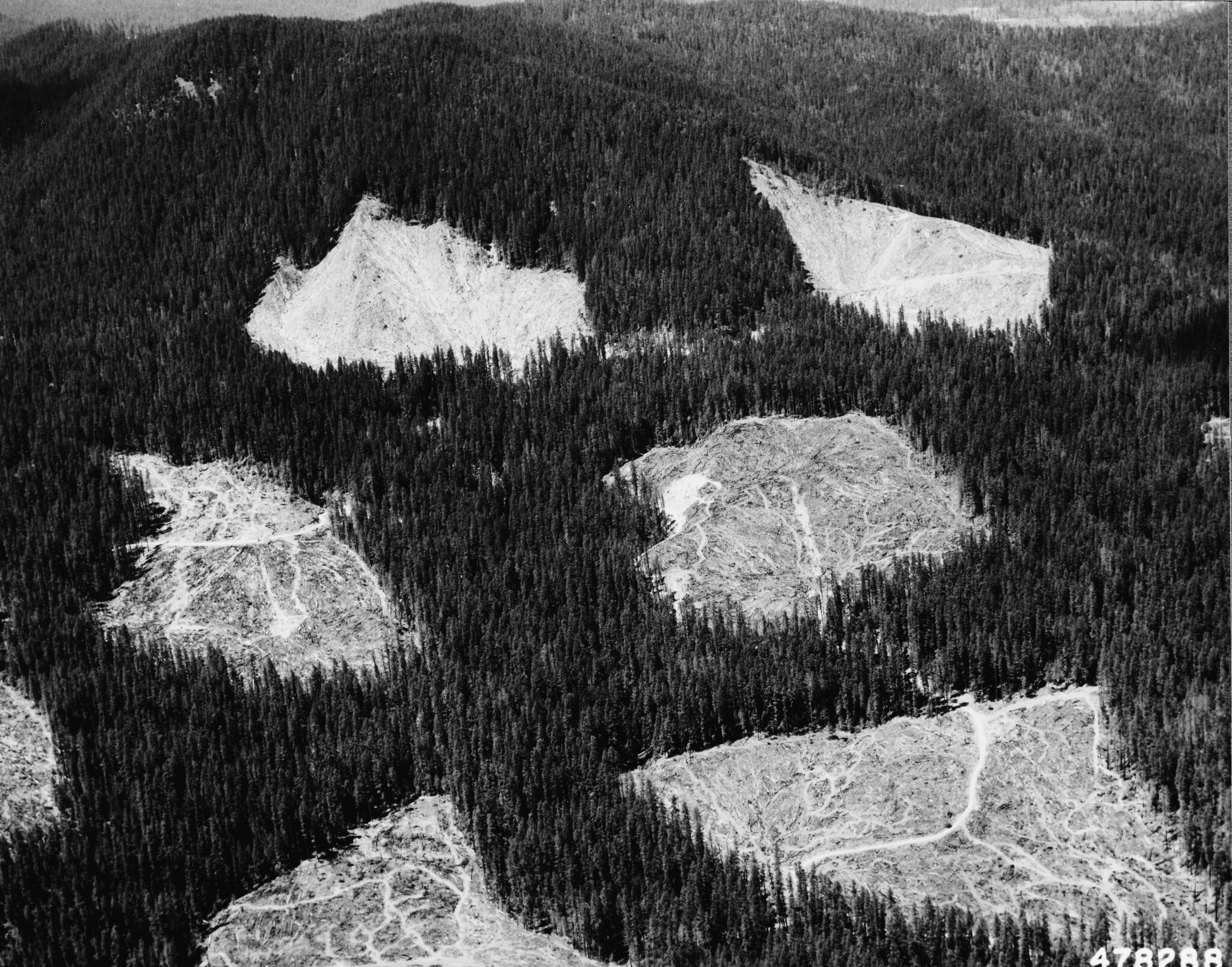
Just again, as a frame of reference: there’s one forest out there called the Willamette National Forest, and they were harvesting over a billion board feet of timber from that one forest a year. What we were doing was liquidating stands of old growth for a good reason — to provide wood fiber for the market, initially to help servicemen coming back from World War II build homes. But that was the objective of the Forest Service. And then we had the growing environmental movement in America, and frankly, the Forest Service kind of missed it. They just missed it. I mean, they didn’t entirely miss it. They did certain things — as they were building roads, instead of clear-cutting right from the road, they would create what they called a beauty strip.
So there would be a row of trees. If you were just driving a passenger vehicle, or in Alaska on a cruise boat, maybe the beauty strip would block the clear-cuts. But people were really getting frustrated with these clear-cuts. And then what happened in the late ’80s was there was this furtive little owl called the northern spotted owl, which was heavily dependent on these old-growth forests, that was listed as threatened under the Endangered Species Act. And at the same time, from a fisheries perspective, there was a seminal paper that came out a little bit after that called “Pacific Salmon at the Crossroads,” written by Willa Nehlsen, Jack Williams, and Jim Lichatowich, that identified that we had already lost 106 stocks of salmon, and 214 more were at risk of extinction. And they were also dependent on these old forests.
Because the trees, first of all, provide thermal cover for the streams, which is important for coldwater fish like trout and salmon. And then they would fall into the creeks, and pools would scour out, so that would provide holding cover, and log jams would form. That’s great habitat for fish. As any angler knows, that’s where you target — you always hit those logs first. And if you clear-cut down to the stream’s edge, you don’t get any of that. You lose the thermal cover, you lose the habitat. So all of this came together at the same time, and that’s what led to the Northwest Forest Conference, back when President Clinton was president in [1993]. They basically created these old-growth reserves and then developed something called the Aquatic Conservation Strategy to protect the salmon streams.
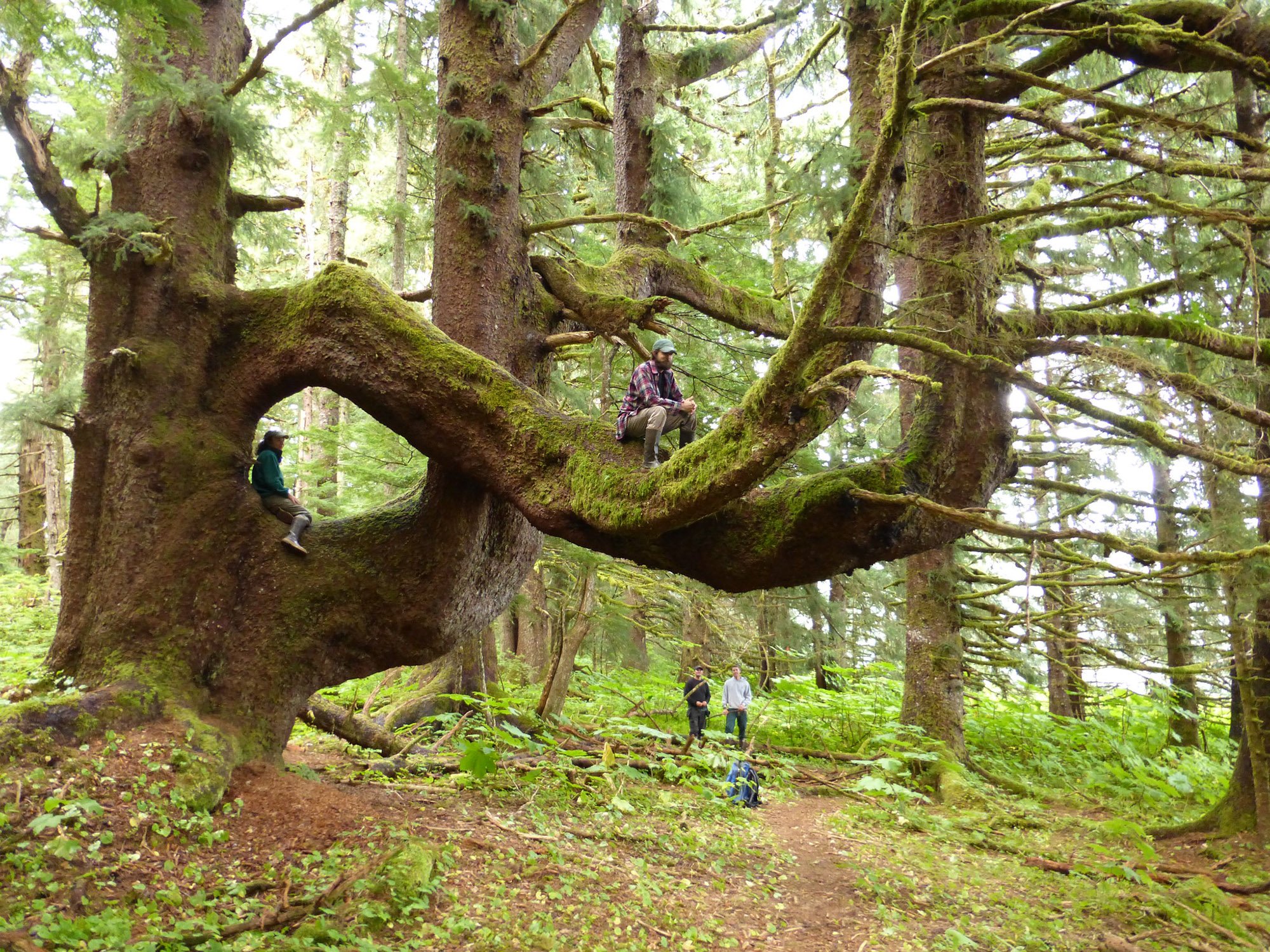
And it was kind of forced on the Forest Service. It was imposed on the agency, and on the Bureau of Land Management. Even though the person who became chief before Mike, Jack Ward Thomas, was very much a part of developing the Northwest Forest Plan, he wasn’t part of the agency hierarchy. This was something that society basically imposed on the Forest Service. So from ’89 to ’97, when Mike Dombeck became chief, they were in this long period of transition, honestly just trying to figure out their way. So we come over from the Bureau of Land Management to the Forest Service, which back then was considered heresy. You’ll laugh at this: now the chief of the Forest Service is a former timber executive from Idaho, and they’ve got political appointees in the agency. We never had any of that.
But the fact that Mike came over — even though Mike had spent the first 17 years of his career at the Forest Service — the fact that he was coming from a different agency was considered heretical. And then, shock of shocks, there were people who didn’t come up through the agency, this guy included, who came over with him. So it was a very strange time for the Forest Service. They were really trying to figure out their path. And as soon as we got there, we realized that we were sitting on an $8.6 billion maintenance backlog on a 370,000-mile road system. That’s enough to encircle the earth 15 times. It’s a massive road system. And all of these roads were built to facilitate the harvest of timber — almost entirely built for that purpose. So I think it was our second year over there, the House of Representatives came within a single vote of eliminating the Forest Service roads budget.
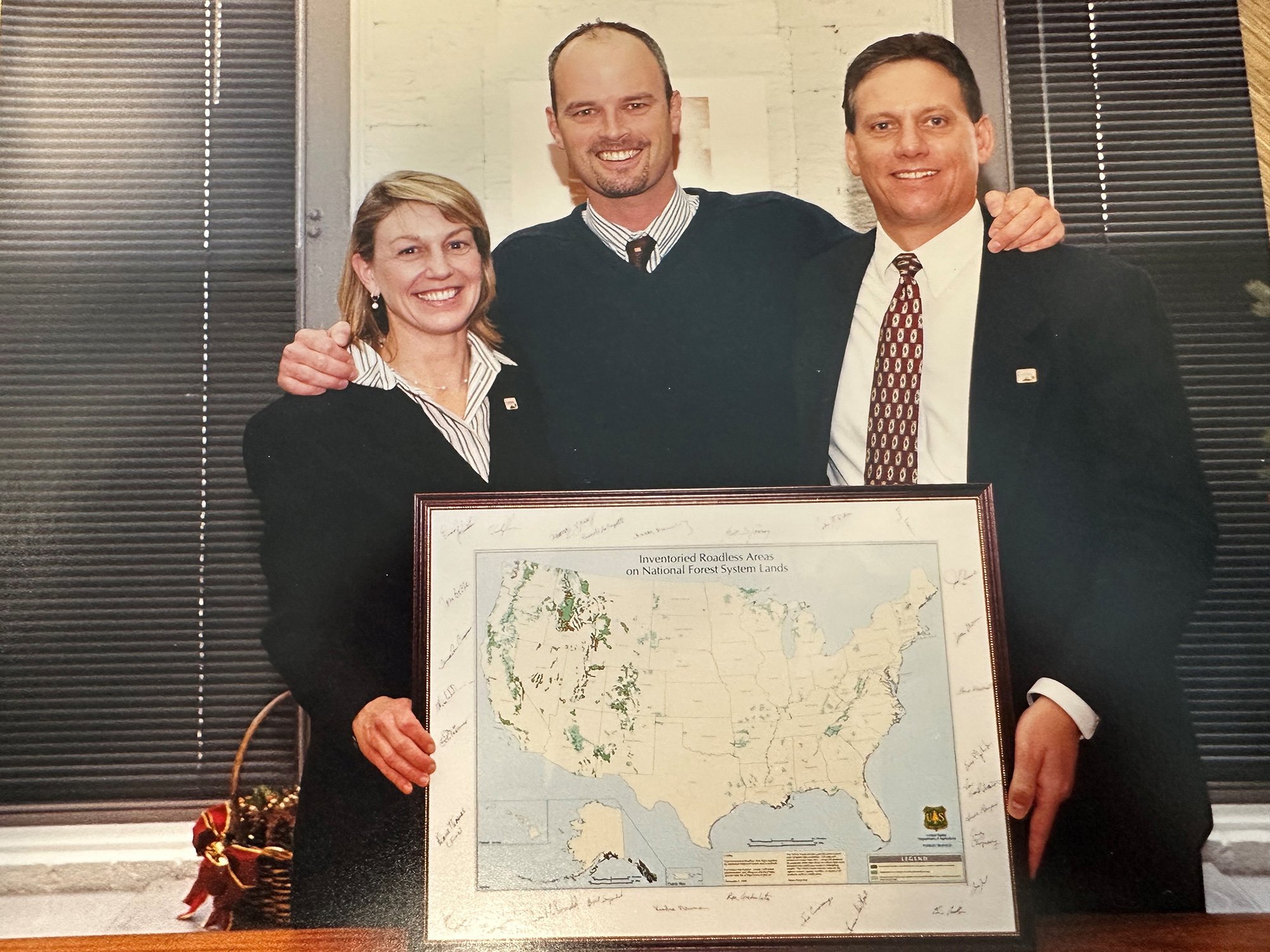
And that roads budget included the funding to take care of the existing roads, which would have been devastating ecologically and socially, because if these roads keep falling off the hillsides, then people can’t use them. And typically below a road is a stream, so it’s causing water quality degradation as well. So what we did initially was — I jokingly used to call it the rule of holes: when you’re digging a hole and you find yourself in over your head, just put the shovel down. So we initially imposed an 18-month moratorium on new road construction across the whole 192-million-acre National Forest System. These are public lands that are owned by all of us as a birthright. These are our lands. But we just thought it was responsible to take a pause, take a knee, and try to rationalize or right-size the forest road system before we allowed any more new road construction.
And we quickly realized that we were trying to solve the wrong problem. The American people don’t care about roads. They do care about roads if their access to the national forest has been impeded because those roads aren’t being taken care of, or if they break their front axle on a ridiculous pothole. But it’s not roads that Americans care about. It’s naturalness and wildness and fish and wildlife habitat and hunting and angling opportunity and the ability to find solace in nature, because these are all of our lands as a birthright. That’s what they care about. And that is what those 58 and a half million acres of roadless areas represented. They represented the best of what was left of our national forests. So again, we took this inherently conservative argument — namely, that you shouldn’t make investments in new roads until you can take care of the roads you already have, especially in roadless areas.
After 18 months, we allowed road construction to continue for the general national forest. But in roadless areas, it just seemed to us like it was the height of conservatism to say “No más.” If you look at the root of the word conservative, and conservation, it’s conservare. It means to hold or keep in a safe state. And that’s what we figured we were doing: let’s hold or keep these roadless areas in a safe state. They’re not going anywhere. And if in 50 years we discover, during the Martian invasion of earth, that there’s something in there that can repel the Martians, well, then we can go get it. They’re just not going anywhere. So that was the justification. And the ecological values of roadless areas are beyond repute.
We can talk about that more — in fact, we would be remiss not to. But initially, it was a basic economic argument. It was like, wait a minute, this doesn’t make sense. We’re going to build roads in these high-elevation areas — and the reason they hadn’t been roaded previously is that the timber values weren’t high. We would have gone in there before. So we’re going to build a road that nobody wants and we can’t afford to take care of, into an area with highly granitic and erosive soil at high elevation. And gravity works cheap and it never takes a day off. Those roads are going to fall eventually into the creeks below, and we’re going to lose money doing it, because it’s low-value timber up there generally.
So it just didn’t make sense to continue that program. And that was the origins of the roadless rule. The reason I told you that long history earlier, Natalie, was that we absolutely wanted to reestablish the fact that the Forest Service was a conservation leader — that conservation didn’t need to be imposed on the agency by external forces or by society. That was their job, right? Every single person I know who ever worked at the Forest Service and the Bureau of Land Management went there to make the world a better place. And we were trying to reestablish the Forest Service as a conservation leader, not as an agency that had things happen to them that they then had to spend eight or nine years trying to respond to. And that’s what the origins of the roadless rule was.
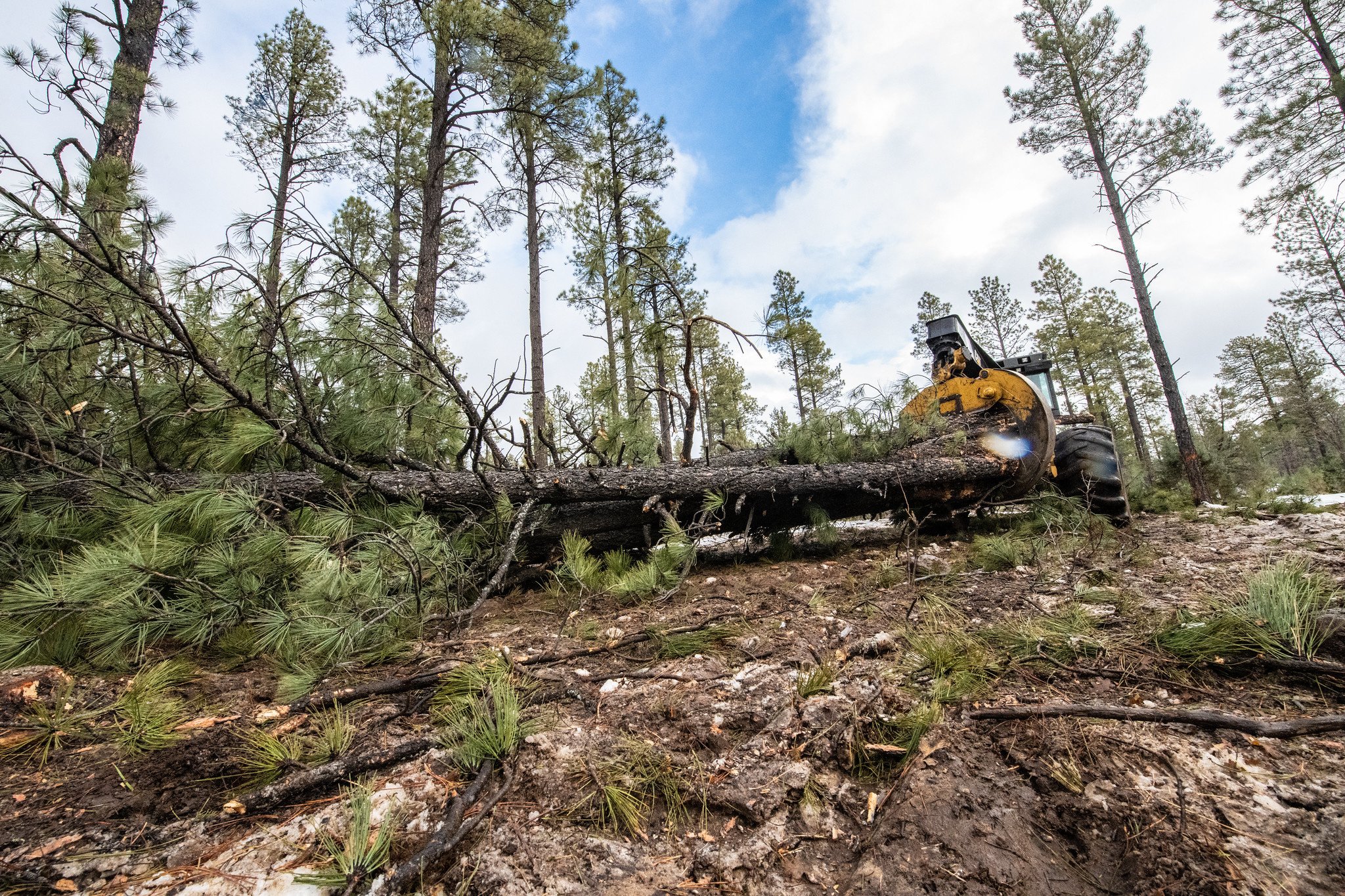
Natalie: I think a current fact that’s helpful to keep in mind as we continue talking about this is the current backlog. Just for existing roads, the maintenance backlog for existing U.S. Forest Service roads is currently $6.9 billion. So it’s not like the backlog went away. It’s still a problem. And that timber revenue still often is not enough to cover even the cost of the log itself, let alone go toward that maintenance backlog. So real quick, because I want to get into all the conservation benefits we were just talking about — could you bridge the gap between the idea for the roadless rule and what that 2001 rule actually did? What did it set aside? And then I want to talk about why “roadless” is a misnomer.
Chris: Yeah, it’s interesting. The roadless rule has withstood 12 separate litigations. It’s won every one of them. And we were able to develop a rule that protects 58 and a half million acres in about 18 months. It typically takes the Forest Service about 10 years to do a forest plan revision for one million acres. Part of the beauty of the Roadless Rule is its simplicity. It’s like a page. Basically all it does is say you cannot build new roads in roadless areas unless you have a valid existing right, or in cases of emergency like fires or floods when you need to build a road. That’s basically the one prohibition. And you have to remember the timing here.
I will give USDA credit — things have changed in 25 years. We’re in the midst of a megadrought in the West that was just beginning back then. But we knew enough to know that we didn’t want to take the flexibility and the ability to manage forests out of the hands of the land managers. And so we prohibited what we called industrial-scale logging, but we allowed for forest health treatments. And I hope we’ll be able to get to that later: if you look at the amount of forest health treatments that have occurred in roadless areas versus the general forest, they’ve actually occurred more frequently on a per-square-kilometer basis in roadless areas since the roadless rule was enacted than in roaded areas. But that was the other prohibition — industrial-scale logging.
And we looked at the whole gamut of things, because the federal government has an obligation to its citizens to analyze and disclose the effects of its proposals in a public forum. That’s why we go through this big National Environmental Policy Act process. The USFS just released a draft environmental impact statement for that reason. And a lot of people wanted us to prohibit oil and gas leasing, prohibit off-road vehicles. That was another thing people wanted us to do. And we thought, no — the problem we’re trying to solve for is keeping these areas, their naturalness and the sense of place that they provide, intact. We’re not trying to create de facto wilderness areas. Only Congress can create wilderness. And so unlike wilderness, you can ride off-road vehicles in roadless areas.
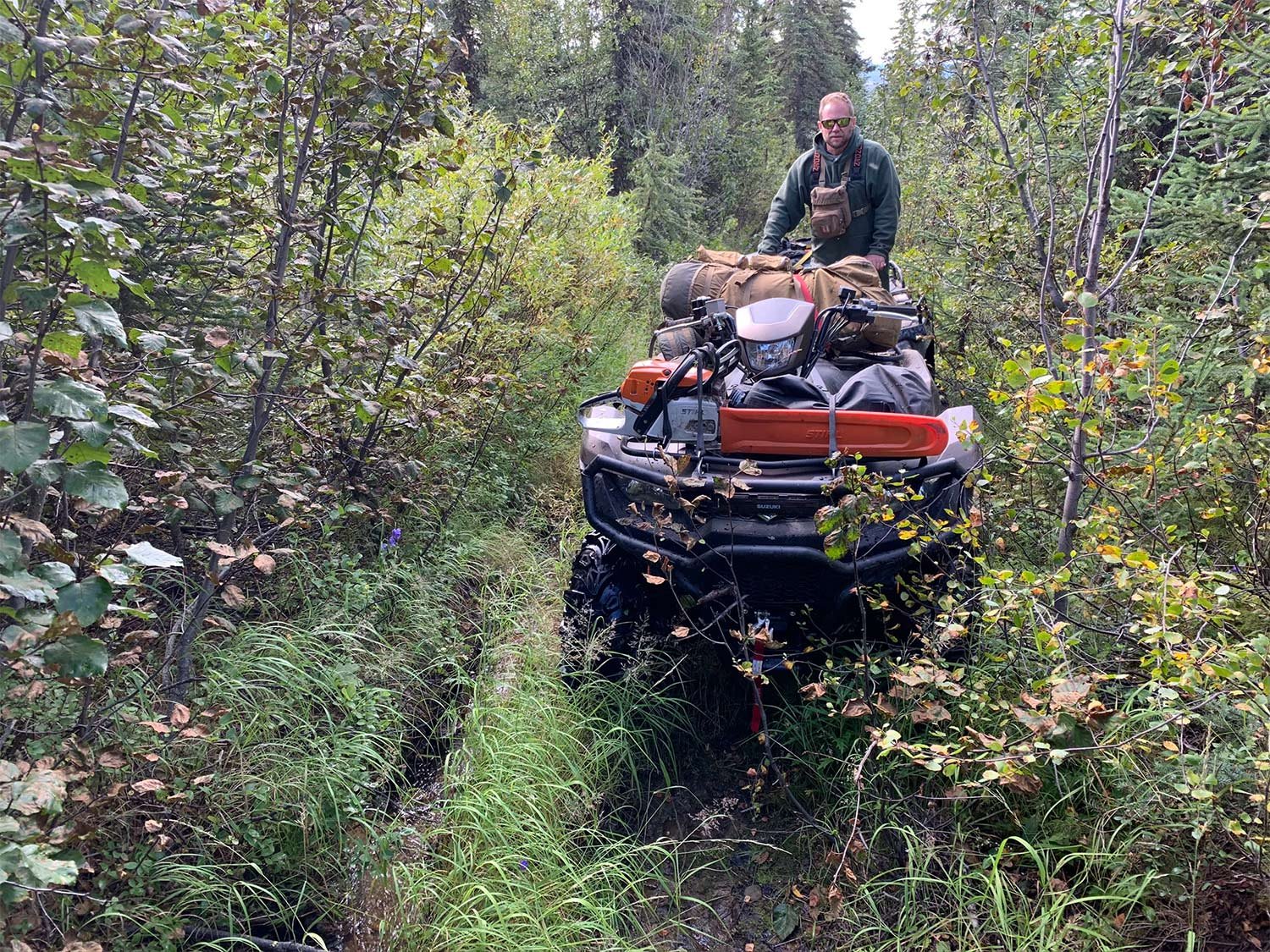
In fact, in the Western states, a third of all the motorized trails for people who ride ATVs are in roadless areas. You can develop oil and gas in roadless areas — in Utah alone, they have 83,000 acres of mineral leases in roadless areas. You can graze cows in roadless areas; there’s over 15 million acres of grazing allotments in just four Western states alone. And I could go on and on with these stats. It’s only Congress’s role to designate wilderness, but it was our role to be responsible stewards of the public trust. And the responsible thing to do then, as it is now, is to keep those areas intact and free of roads.
Natalie: Real fast, I’m going to make you reel off some more stats, Chris. Our audience loves to hunt, loves to fish. Talk about how important roadless areas are for game and fish.
Chris: It is the game, Natalie, for hunters and anglers. And one of the things that frankly inspired me to come to Trout Unlimited all these years ago was that my job at the Forest Service was to take all of the meetings that the chief didn’t want about roadless. And that was all of the meetings. He’s a smart man, Mike. So I heard from all the regulated community — the commodity groups, the timber guys, the oil and gas guys, the coal guys, ski area people, off-road vehicle people. They all came to see me and tell me what was on their mind, what they thought. And then the other group I always heard from was the environmental community: the Sierra Club, Defenders of Wildlife, the Wilderness Society, Earthjustice, dozens more came to see me to tell me we weren’t doing enough.
The one group I never heard from — I never got a single meeting request from the hunting and angling community. Not one. And they stood to gain the most or lose the most from this rule. It’s part of the reason I came to TU: I wanted to try to help create an analog to the environmental community, but with hunters and anglers, who often have similar goals but different tactics and ways of getting to those goals. And I’m very proud of the fact that TU has played a leading role in protecting 38 million acres of land in the past 25 years, almost exclusively by working with hunters and anglers, and almost exclusively protecting areas that don’t have roads.
But to get to your point, just to speak to the values of these landscapes for hunting and fishing: I shot my first elk in a roadless area adjacent to the Frank Church River of No Return Wilderness in Idaho.
Idaho has the longest centerfire rifle seasons in roadless areas. You can actually hunt the rut with a gun in roadless areas in Idaho. In Utah, 99 percent of all the roadless areas have been designated by the state as either crucial or important mule deer habitat, and 87 percent for elk. In Wyoming, you’re 10 times more likely to harvest big game in a roadless area than you are in any other part of the state. Seventy-five percent of the chinook and steelhead habitat and 68 percent of the bull trout habitat in the state of Idaho come from areas without roads. Seventy percent of the greenback cutthroat trout habitat in Colorado comes from roadless areas. All five salmon species — six, if you include steelhead — in Southeast Alaska come from the Tongass National Forest, and from its roadless areas.
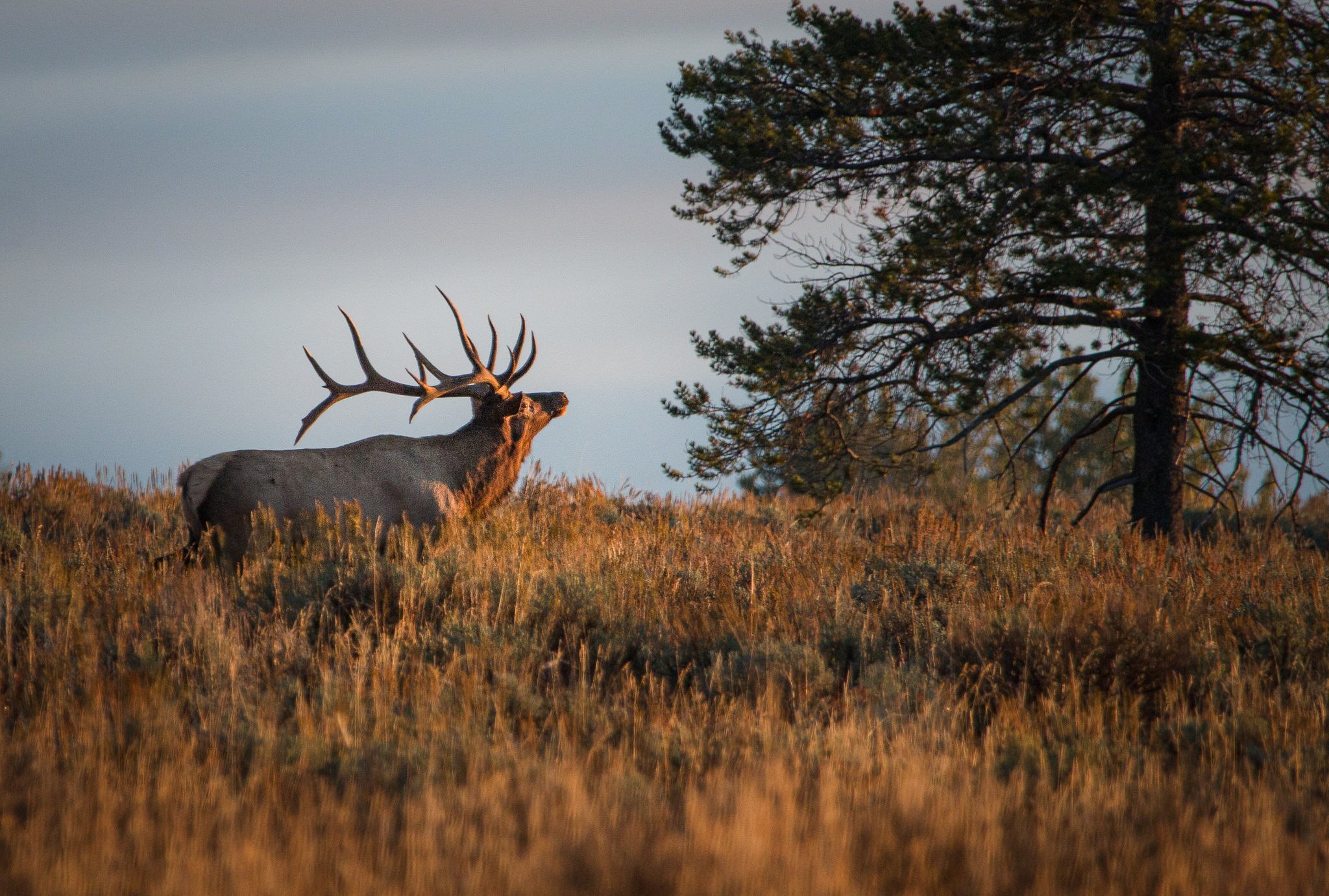
And I could do this for the next 10 minutes. We actually documented a lot of these values in a report recently that’s available on our website. From a hunting and fishing perspective, roadless areas are the game. And even if you’re not a backcountry person, if you’re not someone who enjoys getting away from the road, these areas are the sources of the coldest, cleanest water. It’s where the little fish go to get big and then move downstream eventually. These are areas of summer refugia for big game, and then they move back down in the winter. So they’re just absolutely vital to keep roadless on the landscape.
Natalie: Okay, so we’ve talked about some of what people might think a roadless area is. I’m curious whether some of the misconceptions being cited as part of the campaign by this administration to roll back the roadless rule are rooted in that common public misconception, or whether some of this portrayal is intentional. Let me give you an example of what I mean.
One of the previous stories we reported and talked about on this podcast was the reduction of the Bears Ears and Grand Staircase-Escalante national monuments. During the signing of that rollback, President Trump said that you cannot hunt and you cannot fish on national monuments, which we know is patently false. But that was a talking point of the administration to justify scaling back these monuments.
So I’m curious how intentional this seems from a misinformation perspective, or if the administration truly isn’t sure what it’s doing. That’s a complicated question, but I’m curious what your perspective is on that.
Chris: Oh, no, I appreciate it. I saw that when the president said that about Bears Ears. I honestly think that — I mean, I’m a fly angler, I’m an eternal optimist. By definition, we are. That’s why we’re always late for dinner. That could have been a mistake. He’s not a hunting and fishing guy. I think he’s more of a golfer — in fact, I think he’s an excellent golfer, I’m told. So I just don’t think he’s a hunter or an angler, and he probably just didn’t know. But his people should have corrected him, and they didn’t.
Natalie: Yeah, they corroborated that statement. And those are the folks running these agencies.
Chris: Yes, to your point. And it’s a little frustrating, because for most of us, the public lands are all the land we’re ever going to own. It is such a gift. It is the envy of the world. And the people running these agencies should know better. They’ve gotten more political — the Forest Service now has its first political chief. It used to be that the chief always came up from within the agency. They used to say that Dombeck was the first political chief, even though he had been 15 or 17 years at the Forest Service before he went to the BLM. But whether it’s intentional or just not knowing, I can’t judge. There have been a lot of misstatements about what is allowed in roadless areas and what’s not, including and especially around forest health treatments.
These are fire-adapted forests, many of them in the Western states. Just like a river is eventually going to find its floodplain — you can ditch it, you can dam it, but eventually it’s going to get up and find its banks — eventually a fire-adapted forest is going to burn. And we knew that 25 years ago. The Forest Service corroborated that we have actually done, on a per-acre basis, more treatments in roadless areas than we have in the rest of the general forest. In fact, I’ve got a paper in front of me here. It’s a Forest Service research paper from a couple of years ago, and this is a quote — this is not Chris Wood, this is the Forest Service: “Agency management records show that a lack of roads has not stopped fire prevention measures. Fuel management activities in roadless areas have actually been more numerous on a per-square-kilometer basis than elsewhere in the National Forest System.”
So roadless areas — again, this is Forest Service data, this isn’t Chris Wood, who, because I’m an angler, every fish is this big — roadless areas represent 21 percent of the forested landscape in national forests, and yet 34 percent of the total fuel treatment activities, meaning thinning of overly dense forest stands or use of fire to manage forests, has happened on those landscapes. So we’ve actually disproportionately treated roadless areas in comparison to the general forests of the National Forest System. And then the other piece of data that I just think is really important is this misconception that you can’t build a road to fight a fire. The Roadless Rule explicitly states that you can do that if you need to.
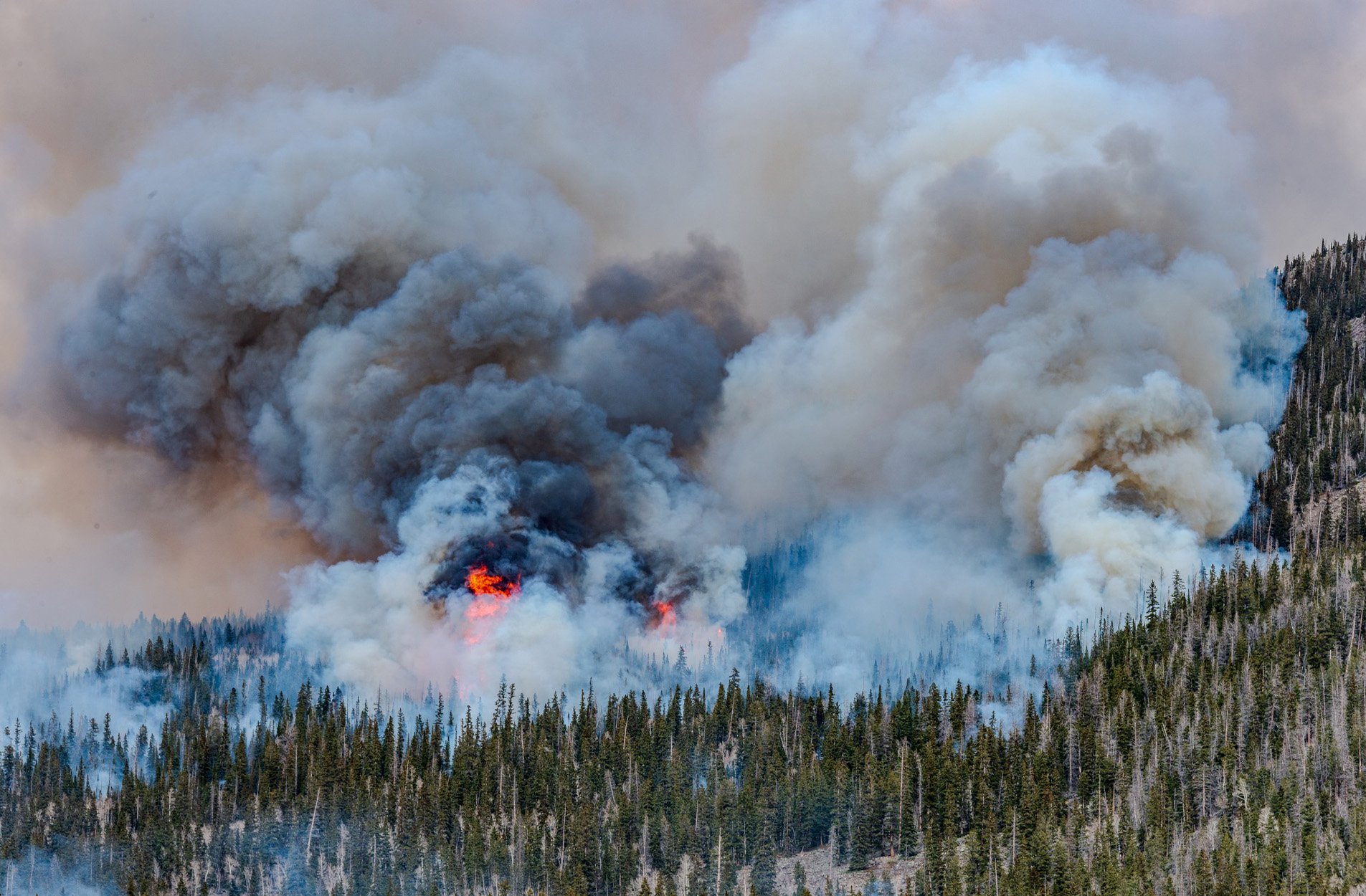
We called it the imminent threat of a fire — you could build a road. Most firefighters will tell you that they never do that, but we thought it was important to put it in there. But more important is that — and again, this is not my data, and not TU’s data, it’s Forest Service data — 85 percent of all fires in the National Forest System are started by people, and almost 80 percent of them are started within a half a mile of a road. So more roads don’t equal better fuel treatment. What more roads equal is more fires.
Natalie: And I think it’s essential to mention the science, because one of the key talking points to justify rolling back the Roadless Rule by the current administration has been, “Well, we’re going to prevent wildfires by rolling back the Roadless Rule.” And all the data — again, coming from the U.S. Forest Service and USDA — suggests that that’s not the case. It’s actually counterintuitive, and may make the problem worse. Is that fair to say?
Chris: Yeah, it’s totally fair to say. I don’t want this to sound condescending to my friends at the agency, and I have a ton of them, including many of their political appointees. But I remember years ago, I used to have all these little adages, and it’s so fun as a dad to hear your kids starting to repeat the adages you’ve grown them up with. One of mine was, “You take care of your tools and your tools will take care of you.” And I had been under the car at our place in West Virginia, and I left a wrench out in the grass, and it rained, and I forgot about it for a couple of days. And then Casey, my middle child, picked up the wrench and brought it in to me.
He was probably six at the time, and there was some rust developing on it. And he said, “Hey, Dad, just remember: you take care of the tools and the tools will take care of you.” And that’s kind of what’s happening to the Forest Service. This is their own data coming back at them. We didn’t create this. It’s an agency peer-reviewed research paper.
Natalie: Yeah, that’s a great point, and an adage that’s familiar to me — delivered by my own dad. Okay, so then how do you wrap your head around what’s happening? Is a lot of the roadless rule rescission just about deregulation? Resource development? Ideology? What’s the ultimate goal here?
Chris: Natalie, this is not — we’re not having a [national] policy debate. This is not a substantive policy debate. This is a religious argument. And I say that as a practicing Roman Catholic; I don’t mean that derisively at all.
We’re not having a substantive policy debate. That would be great — that’s what we should do, and I want to talk about that in a minute, because there is a substantive policy debate to be had, and it’s not the one we’re having right now. It’s not about travel management. It’s not about roadless areas. It’s not about shrinking monuments — maybe shrinking monuments is different, I don’t know. But this is basically a deregulatory agenda. That’s all it is. There’s nothing more to it. There’s no rationale. There’s no constituency for building roads in roadless areas. It just doesn’t make sense.
Natalie: What policy debate should we be having? What do you want to talk about that we’re just letting slip by?
Chris: It’s funny — the more things change, the more they stay the same. Twenty-five years ago … I’ll tell you something I don’t think I’ve ever told anybody before. We started with the Roadless Rule, and if there had been four more years, we were going to eliminate the logging of old growth on national forests. And then the third part of that was, we were going to double the cut. Roadless areas and old growth have long been the hobgoblin of the Forest Service. It’s the third rail. Every roadless entry — you have no idea how hotly controversial these things are. They’re all litigated. And back in the day, they were just timber sales; now it’ll all be couched in the context of forest health. So we were trying to build these roads that we wouldn’t be able to take care of, into these backcountry areas where we were going to lose money on the timber sale.
So we’re selling public assets at a loss, which is what third-world countries do. And so they were just wildly controversial. And so our gambit was, let’s take those two things off the table. We frankly shouldn’t be cutting old growth in the United States anyway, right? It took 400 years for that tree to grow. Do we really need to make toilet paper out of it, or two-by-fours? I mean, honestly. And the roadless areas were just economically illogical. But we knew — we could even see then — that we had way too many trees per acre, way too many stems per acre, the foresters call it. I was at the Outdoor Writers Association of America conference yesterday, and Congressman Bruce Westerman, who I believe is the only trained forester in Congress, gave an incredibly eloquent talk about how important it is to get our forests back into balance.
We have these fire-dependent forests that evolved with frequent fire, which would come and clean out the underbrush and remove a lot of the so-called ladder fuels. Think about climbing a ladder — because the worst thing you can have are these crown fires, where the fire gets up into the crown of the trees and it’s throwing embers for miles, and they create their own weather pattern. We’ve seen this in horrible, horrible fires across the West in the past 10 years. Absolutely devastatingly tragic fires. And we saw that same thing evolving 25 years ago. It was the beginning of the megadrought, but we knew there were too many stems per acre. So what we wanted to do was take roadless and take old growth off the table. Just take them off the table.
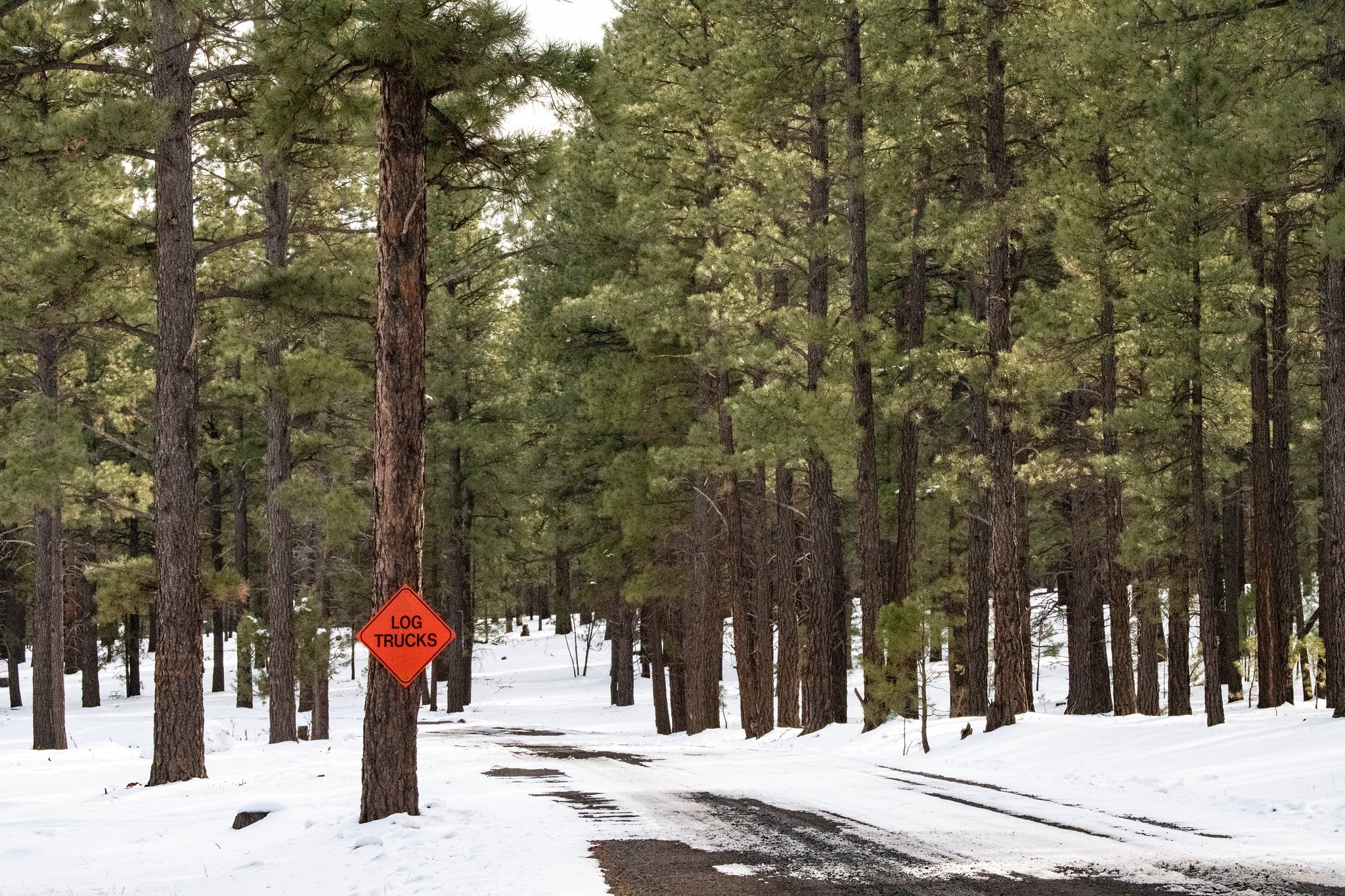
And then, instead of cutting two and a half billion board feet, we’re going to cut five. And we’re going to create the social license that’s needed to cut the five by taking these two issues off the table. And we’re going to focus on aggressive thinning around communities that are at risk of unnaturally intense fires in these fire-adapted landscapes. That’s a substantive debate. That’s a conversation we should be having. And the tragedy of all this, Natalie — the real tragedy — is that we’re not having that conversation right now. Instead, the agency is going back to 2001 and fighting a fight of 25 years ago, when the realities on the ground demand a completely different policy discussion. And they will lose the social license, through this, to have that discussion in a constructive way. That’s the tragedy.
Natalie: And again, we don’t need to dive into this, but I just want to add that this is all happening at the same time as a massive restructure of the U.S. Forest Service this year. The way that we fight fires is changing from an agency perspective. So there’s a lot of change happening there that’s as of yet untested. I’m curious, where do we go from here, Chris? Is there any recourse for preventing the rollback of the Roadless Rule? What can listeners do? Leave us with a little bit of hope, please.
Chris: No, I feel like I’ve been a bit of a Debbie Downer. I do have a lot of hope, and I want to be clear about something. I know the political leadership of the Forest Service, and I know the chief, and they’re good people. They’re truly good people. And I think they think they’re doing the right thing. I just have a difference of opinion with them, but they’re still a huge partner of ours. We work with them all the time. Just like in your family, there’s a little bit of a difference of opinion here. And I know that they’re well-intentioned people. I’m optimistic for the future, because we don’t really have a choice but to take better care of these forests. And I know that there is a cynicism that attends these public processes.
A lot of your listeners right now are probably thinking, “Come on, man. Give me a break, Chris. I’m not going to file a public comment. Who’s going to read that? Come on.” And so what I’ll say is this — I’ll say a couple of things. Number one: in 2001, we had 1.6 million people participate in what they call the National Environmental Policy Act process, the NEPA process, to develop the Roadless Rule. It was a record. And 90 percent of the comments were overwhelmingly in support of more, not less, roadless protection. It was because of that that we actually included the Tongass National Forest. Initially the Tongass in Alaska — which is our largest national forest, with the most roadless areas — wasn’t included. And public comment demanded that it be included. So we analyzed that and decided, okay, that makes sense, we should include it.
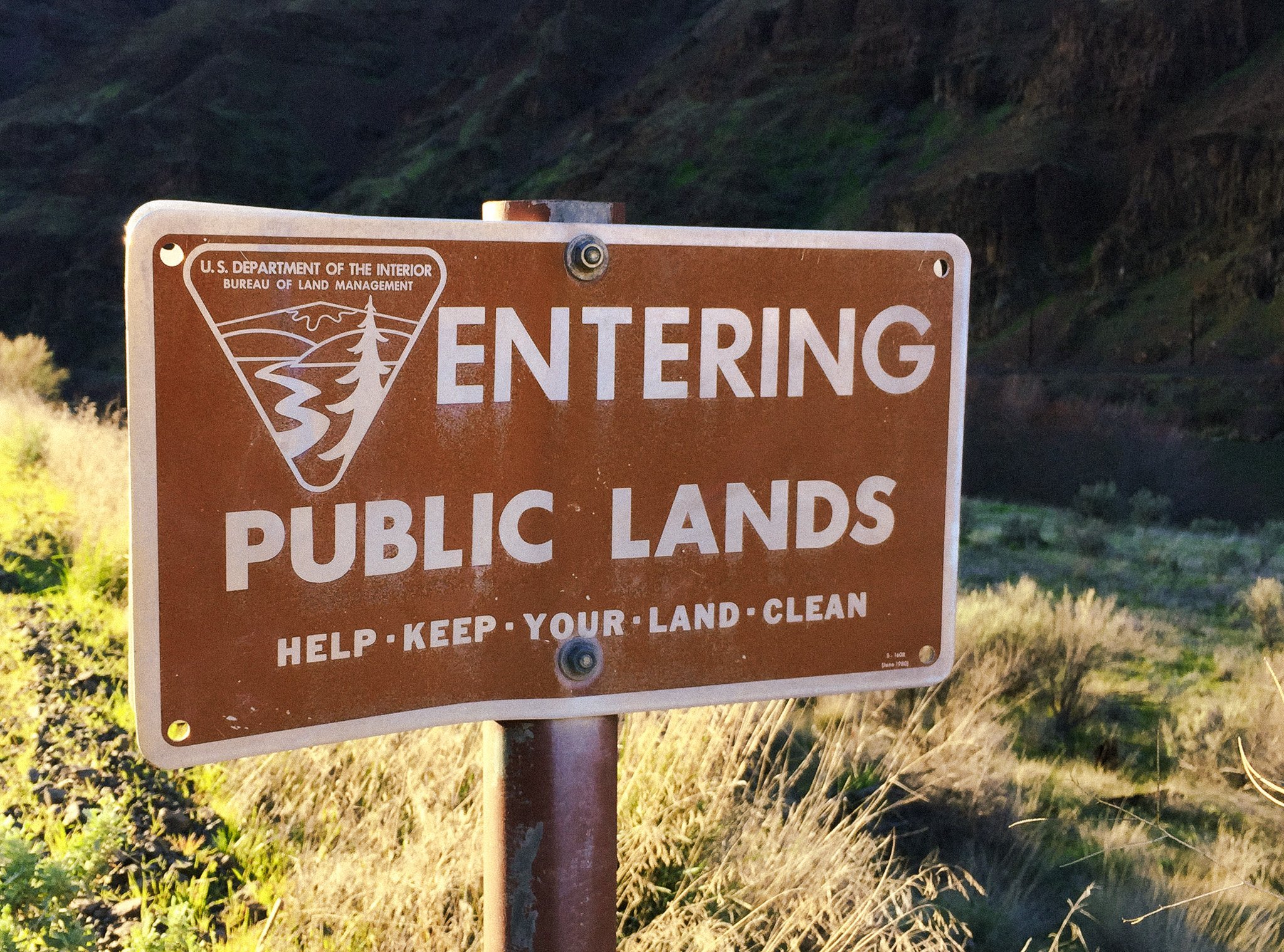
So I’ve seen it make a difference, number one. And then number two: these are our lands, right? This is what I discovered when I was 18. These are our lands. They’re managed in trust for us by these folks at an agency called the Forest Service, who are public servants, serving us, the public. And so it’s just imperative. If you had an oil and gas company that came onto your property and said, “Hey, I’m going to build a well over there,” you’d probably voice an opinion about that. Well, there’s no difference here. This is your land, and everybody should. You can go to tu.org — we make it super easy to register a comment. I would try to personalize it if you can, like my story about catching my first brook trout in a roadless area in the Green Mountain National Forest and shooting my first elk in a roadless area in Idaho.
That stuff makes a difference. It really does. And then second, you should contact your elected officials, because elected officials have to listen to their constituents or soon they become unelected officials. So that one’s really important too. And then the third thing I’d say is, we had 1.6 million comments back in 2001. What if we doubled that this time? I just had to do the math in my head and I almost got it wrong: 3.2 million comments this time. Could you imagine that? I think there would be a political risk for the administration in not listening to that. But more important, what that will do is create momentum for reinstating the Roadless Rule down the line, if truly they take it out.
So there are a lot of good reasons to make your voices heard. You own these lands. They’re not the king’s lands. Elected leaders have to listen to their constituents, and we’re building a record and creating momentum to do the right thing down the line.
Natalie: Absolutely. And I think it’s a good thing — we’ve both referenced some other public lands issues in this episode, and I think it’s good to remember the victories too, not just the bad news. When hunters and anglers and conservationists at large got together last summer, we stopped federal land sales through a larger budget bill. Most recently, a lot of waterfowlers and folks who care about water in the Prairie Pothole Region weighed in on a very short public comment period and got the U.S. Fish and Wildlife Service to say, okay, we’re going to hold off on looking at changing drainage practices. One thing I discovered in my reporting through that — and I want to reemphasize what you said — is make your public comments unique. A lot of sources I talk to say that’s essential for making sure your comments are counted as a unique comment by whichever agency, whichever folks are analyzing those comments, because there’s not a mandatory checklist on how you analyze those.
So the more volume and the more unique comments we can add to this, it really does make a difference.
Chris: And Natalie, to your point, I am convinced that it was the efforts of largely sportsmen and women that helped convince the Trump administration to do the right thing in the first term by not allowing a key permit for the Pebble Mine in Alaska. So it really does matter. I can almost guarantee that whoever came up with this idea is not a hunter or an angler. I think somebody who probably wears expensive suits and has soft hands said, “Hey, let’s just get rid of the roadless rule. Nobody cares about it. Everybody forgot about it. Out of sight, out of mind, whatev.” I think that’s probably what happened here. And I think if we can demonstrate that no, it’s not out of sight, out of mind, and no, these landscapes are really important to us and we want to keep them intact, I do think they’ll reconsider. I do. The gain isn’t worth the pain.
Natalie: Yeah, that’s a great point.
Chris: Until the Martians attack — and we need to go get that stuff, whatever it is, from roadless areas to repel the Martians.
Natalie: That’s Chris’s threshold for when it’s appropriate to roll back the Roadless Rule.
Chris: Martian invasion.
Natalie: That seems fair. Okay, real quick — I can drop links in the show notes to tu.org, to where you can go to leave a public comment. What is the deadline? How long do people have?
Chris: People can make their voices heard up until September 21. It’s a relatively short comment period, so it’s really important that people register their positions as quickly as they can. And to the extent they’re able, personalizing comments makes a big difference, as you suggested earlier.
Natalie: Yeah, you have until September 21, but go do it now while you’re thinking about it.
Chris: That’s right — before you forget. And get your friends and family to do it too.
Natalie: Spread the word. Okay, Chris, well, thank you so much for breaking this down for us, for giving us the straight facts, and also for leaving us with some of your optimism. We appreciate it.
Chris: Yeah. Thanks, Natalie. It was great talking to you.
Read the full article here