
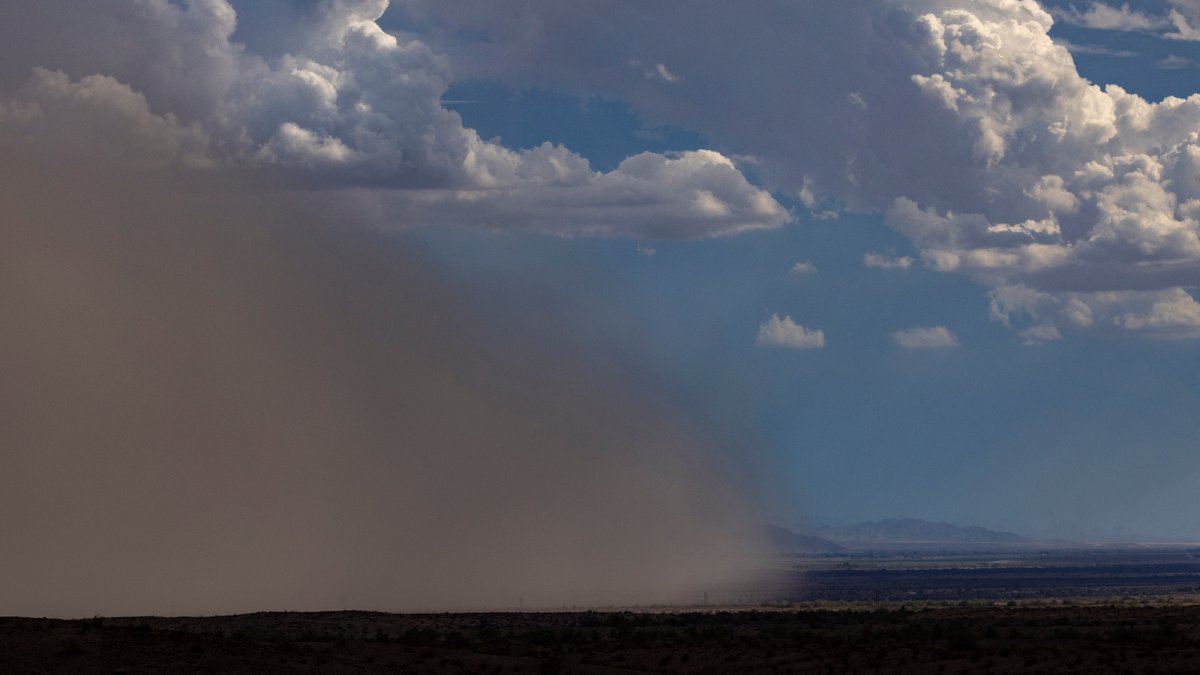
- Impending severe droughts. Experts warn of potential Dust Bowl-like conditions in the Southeast, Central Plains, and interior Rockies.
- Critical role of planning. Understanding local conditions and developing response plans are essential to mitigate drought impacts.
- Vegetation stress concerns. High temperatures and prolonged drought threaten soil stability and moisture absorption.
- Utilizing digital resources. Tools like Drought.gov and Climate Engine offer vital data for monitoring and planning.
Bottom line: Experts predict severe droughts reminiscent of the Dust Bowl, emphasizing the need for informed planning and resource use.
It’s easy to be hyperbolic about the weather. Any big snowstorm or dry stretch can grow to mythic proportions just by adding the modifier “ever,” to become “worst blizzard ever” or “longest drought ever.”
Meteorologists don’t help. The normally sober profession has taken to calling extreme storms “bomb cyclones” and extended rain events as “atmospheric rivers.” Wintertime low pressure becomes a “polar vortex” and sweltering conditions a “heat dome.”
Editor’s Note — This is the third of three articles about the perfect storm of fire, snow drought, and dust bowl conditions across the West in 2026.
That overblown language makes almost any severe weather seem biblical, and can obscure especially troublesome weather events. Like the drought that’s blowing up right before us this month in the Southeast, Central Plains, and interior Rockies. Some normally restrained climatologists claim we’re staring down the next Dust Bowl or a “thousand-year” drought in some places of the Southwest and Central Plains.
It’s a “snow drought,” says Charlie Luce, a U.S. Forest Service hydrologist who notes the combination of winter precipitation that fell as rain in the West’s mountains and the subsequent early runoff is setting up the region for catastrophic drought.
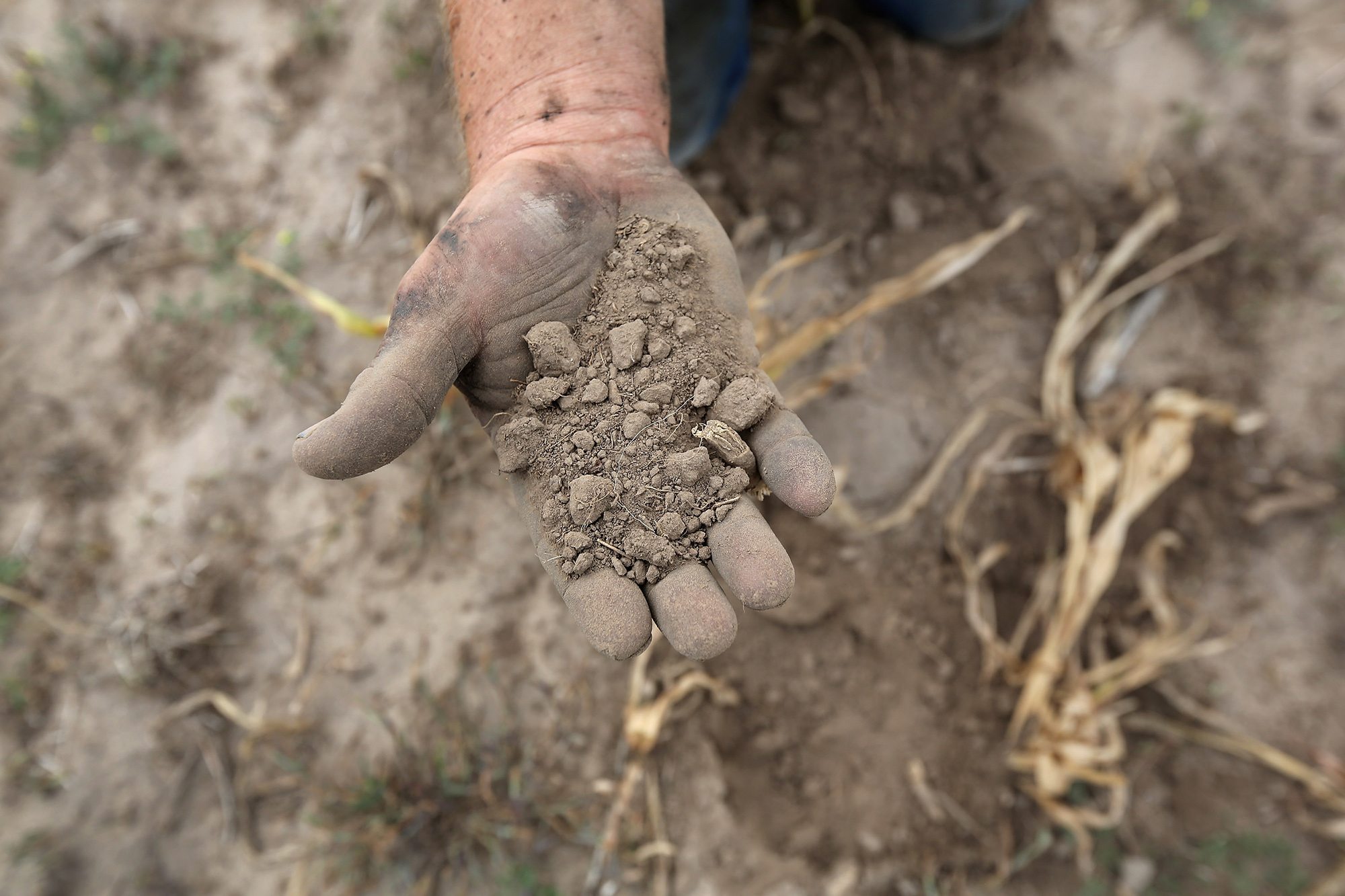
He’s joined by fellow Forest Service range ecologist Matt Reeves, who says historic high temperatures in the late-winter and early spring, on top of years of drought, have stressed vegetation to the point that shrubs and grasses may not be able to hold soil or have a root structure capable of taking up moisture if it ever falls.
Reeves is especially worried about what he calls “the bullseye” of extreme drought: the central Plains across Nebraska and parts of Kansas and Oklahoma. Similarly, Luce says the Cascades and Central Rockies are in such a moisture deficit that wildfire season this year could be early, long, and catastrophic.
Start Planning for Dusty, Dry Conditions
But both scientists say the best way to look ahead isn’t with either terror or denial. It’s to get educated about conditions — both current and predicted — in your particular neighborhood, and then develop a plan that guides how you’ll react if things get as bad as they could.
“What’s that quote from Eisenhower? ‘Plans are worthless, but planning is everything,’” says Reeves. “There’s some truth to that. The details of a plan depends on who it’s for, but regardless it should include some key data that help you understand what could be in store, whether that’s precipitation or any drought metrics. Learn the resources that are out there, not only for your own knowledge but also so we can all get on the same page with data. That’s important so that when we have pivot points, we all know the basis for actions, whether that’s buying hay or reducing stocking rates if you’re a producer or communicating between conservation partners saying we think this is in store, get ready.”
A plan that quantifies the severity of the situation in the Southwest or much of Colorado, for instance, should inform folks about their water supply.
“If I was a producer there, I’d be thinking: How am I going to haul water? Where am I going to get water? Is there going to be a run on hay?” says Reeves, who works with livestock producers and public-land grazers.
Both Reeves and Luce are what you might call deep ecologists, using long-term data to inform their perspectives. But they’re also harnessing real-time data from satellites, low-orbit drones, terrestrial monitoring stations, and artificial intelligence to get a good idea not only of current conditions but what’s ahead of us in the near term.
They both say the best resource for understanding your area’s current and projected moisture, temperature, and landscape conditions is a range of websites and free mapping services that agencies and scientists use regularly.
“Even though we can’t see the future, we can say that in each day through the growing season that we don’t get measurable precipitation, the ability of the vegetation to use it is shrinking equally as fast,” says Luce. He’ll know precipitation patterns, from Cloudcroft, New Mexico to Enumclaw, Washington, by consulting a dozen websites that every reader of this story can access right now, on your phone.
Luce and Reeves, along with a couple state climatologists and a National Weather Service senior forecaster, recommend these sites for general precipitation and temperature conditions and near-term forecasts.
This could easily be the most boring story you’ll read this week, but congratulations for getting to this point. It’s about to get either way more boring, or way more useful, depending how you’re wired. Because I’m about to open the toolbox that most climate scientists use every day to understand not only specific conditions where they live, but wider and longer weather and climate trends across the country.
Here are the digital resources Reeves and Luce wish every Outdoor Life reader would know about, not only to build your own weather-response plan but to communicate current and predicted conditions to your friends and neighbors.
Drought.gov
Drought.gov is a catch-all site powered by the federal National Oceanic and Atmospheric Administration and the wonky National Integrated Drought Information System. It’s optimized for quick looks at current conditions. The primary product is a national map with color-coded drought severity. It includes a cool tool that encourages users to input their Zip Code to see hyper-local conditions, including current precipitation and temperature trends and their deviation from normal patterns. This site also has sector-specific insights for ag producers, manufacturers, recreation and tourism managers, public-health administrators, and wildfire managers.
USDA Drought Monitor
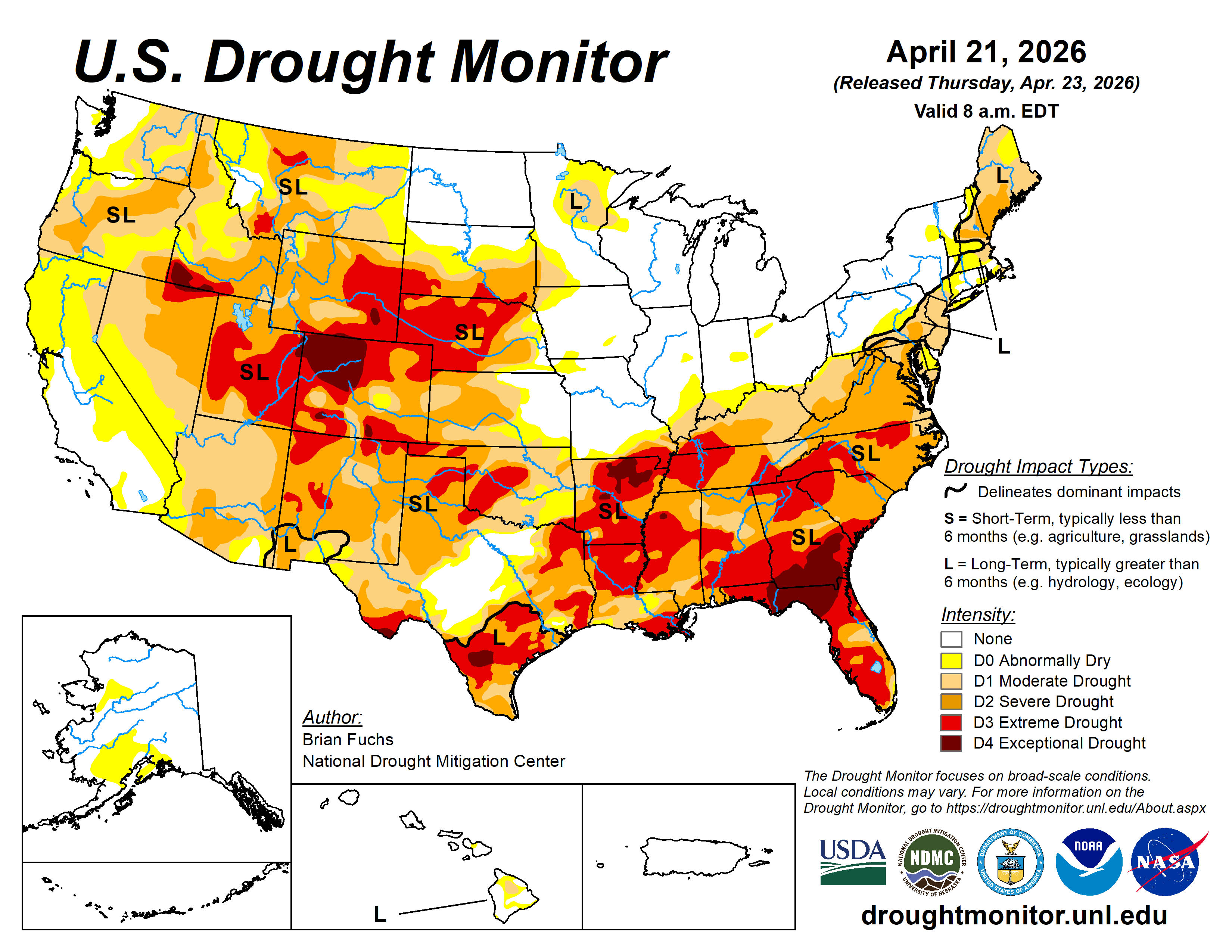
The USDA Drought Monitor is a deeper dive into drought’s effects on vegetation, wildfire potential, and water availability. It includes a very sobering weekly regional drought summary but has tons of maps and other data. Interestingly, it includes a portal that encourages individuals to submit a Condition Monitoring Observer Report, along with photos, that can be used to communicate local conditions to a national audience.
NRCS Snow and Climate Monitoring
The NRCS Snow and Climate Monitoring from National Resources Conservation Service is a little more oriented toward resource managers. It’s pretty dense, but it is more forward-looking than the drought monitors, with an interesting Water Supply Forecasting Program and real-time snowpack and snow-depth reports, plus their deviation from median values recorded from 1991-2020.
Standardized Precipitation Index
Strap in. The Standardized Precipitation Index is a powerful and very influential site. If you really listen to climate scientists, you’ll hear them refer to this SPI. It’s a site that “characterizes meteorological drought on a range of timescales.” In other words, when you want to know how extreme the drought is in your county, consult this site to learn if it’s as bad now as it was in the Dirty Thirties, or just slightly drier than normal. This site looks back more than it does forward, but it can really give conditions a wider context. Plus, it’s pretty deep. Here’s a typical sentence from the SPI: “On short timescales, the SPI is closely related to soil moisture, while at longer timescales, the SPI can be related to groundwater and reservoir storage.”
NWS Climate Prediction Center
The NWS Climate Prediction Center is a vital catch-all site that tracks temperature, precipitation, and even oceanic conditions in the near term, with outlooks from 8 to 14 days. Your local television or radio meteorologist uses this site for their weather forecasts. Sniff around in its hyperlinks and you’ll learn a ton about other local climate, water, and weather topics.
National 7-Day Significant Fire Potential
Getting a little more granular, the National 7-Day Significant Fire Potential mapping service is consulted hourly by resource managers to inform them about wildfire risk. It has regional outlooks and describes wildfire potential by specific risk, from wind, to lightning, to human starts, to dry vegetation.
Climate Engine
Forgive me, because once you drill into Climate Engine, you may lose entire days. To fully use the resources here, you’ll need to create an account and launch the app, but it’s an immensely powerful suite of data provided by satellite observations, cloud computing, and other inputs. It’s the first place I’ve seen the term “petabyte” to describe digital information storage (it’s one quadrillion bytes, or 1,000 terabytes). The Forest Service’s Matt Reeves tells me that he uses Climate Engine “when I want to get a quick snapshot of moisture deficits and how that relates to temperature. We rely on it quite heavily to communicate about the things we’re seeing that may be concerning.” In other words, learn it, and it may give civilians some important insights into local and national trends.
SMAP (Soil Moisture Active Passive)
Want to know whether it’s time to plant peas in your region? Or how global sea salinity has changed over time? Then SMAP (Soil Moisture Active Passive) is possibly the most powerful predictive site that aggregates satellite data and allows users to build their own reports that inform crop productivity, grazing conditions, flood predictions, and carbon-storage metrics. It’s a little too science-forward for most civilians but once you harness its power, it can give important insights into whatever metric you want.
StockSmart
If you’re a livestock producer, you’re going to want to become familiar with this StockSmart. It allows anyone to assess soil moisture, forage availability, and environmental conditions to understand how the landscape works, or doesn’t, not only for cattle but for wildlife and water users.
Standardized Precipitation-Evapotranspiration Index (SPEI)
The Standardized Precipitation-Evapotranspiration Index is pretty far down the rabbit hole, but the SPEI is an important tool that’s designed to identify the onset, duration, and magnitude of drought conditions by combining precipitation and potential evapotranspiration (PET) data. It’s important because in the depths of a drought, traditional evapotranspiration data doesn’t fully describe the impacts, because when it’s exceptionally drive there’s not much moisture to evaporate. This is a site that resource managers rely on when things are real bad, when readers start using “ever” to describe drought conditions where they live.
Read the full article here