

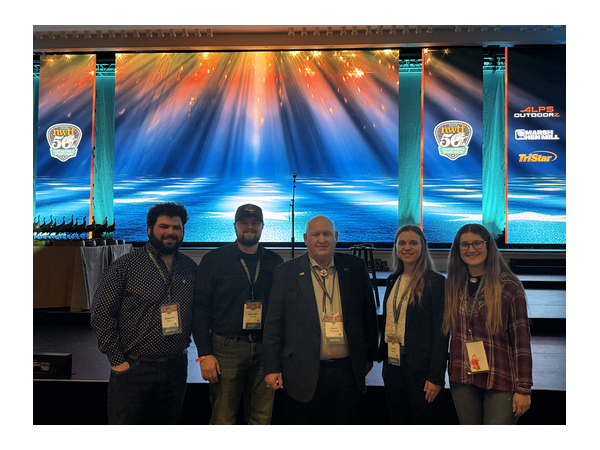
EDGEFIELD, S.C. — As college students, new and old, flock to campuses across the country for the fall semester, finding a community of like-minded individuals is a priority for most. Every campus offers a long catalog of clubs, sports teams and social circles, but for students passionate about hunting and conservation, being a part of a National Wild Turkey Federation chapter might just be the perfect fit.
“The benefits of joining an NWTF collegiate chapter are endless,” said Chance Wiggins, NWTF collegiate ambassador for the Habitat for the Hatch Initiative. “Students meet lifelong friends, learn about turkey hunting and conservation and gain real-world experience along the way. Being involved in or helping run a collegiate chapter can teach students about event planning, nonprofit organizations, networking, finances and so much more.”
Last spring, students from the NWTF Penn State Spur Collectors Chapter hosted a heritage banquet that gave them valuable experiences. From selling tickets to networking with prospective banquet vendors and donors, participating students gained hands-on experience planning an event and raising money for conservation.
“I love seeing the energy at events like the Spur Collectors Banquet,” said Jackson Mabon, NWTF collegiate ambassador for the Forest and Flocks Initiative. “And it is just one example of the culture our collegiate chapters cultivate. But the deeper value is in the professional development happening behind the scenes. These students are running meetings, managing budgets, planning networking events and developing soft skills that translate directly to the workplace. They’re not just becoming members of a college club, they’re building resumes and professional networks that will serve them for decades.”
The Spur Collectors also offer enriching opportunities for students, like unique field trips and partnering with the Pennsylvania Game Commission to host youth pheasant hunts. Other chapters across the country have hosted recruitment socials, cornhole tournaments, field days and guest speaker lectures. Every chapter is unique, giving students the opportunity to make it their own.
“I also think having that hands-on experience raising money makes students care a lot more about how that money is ultimately spent, and that leads to a greater appreciation for the conservation work it supports,” Wiggins said.
There are a lot of different ways to raise money and spread awareness for the wild turkey, and college students bring fresh ideas, energy and a passion for wildlife, all of which are crucial for sustaining the NWTF’s mission.
As the NWTF works to expand its reach across college campuses, it continues to grow endowed professorship programs at schools like the University of Georgia and Mississippi State. By building out university-based professorships and programs dedicated to coordinated, long-term wild turkey research across the country, there will be more faculty and programs supporting students who are interested in learning more about wild turkey research, conservation, hunting heritage and how all of those things are connected.
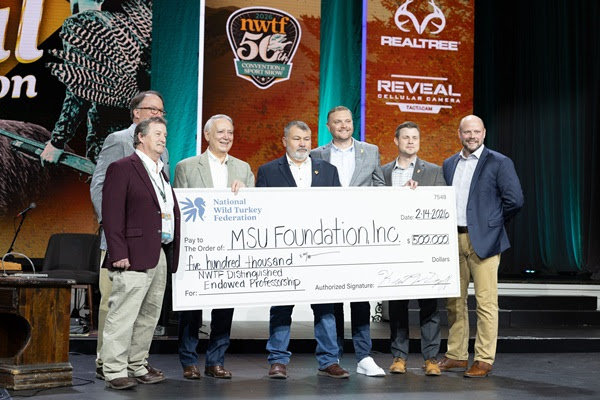
Other campuses have partnered with the NWTF for wild turkey research projects. Across the nation, university researchers are awarded funding through the NWTF’s Research Grants Program. These grants bring the important work of wild turkey conservation to campus and offer opportunities for students to get involved with game bird management.
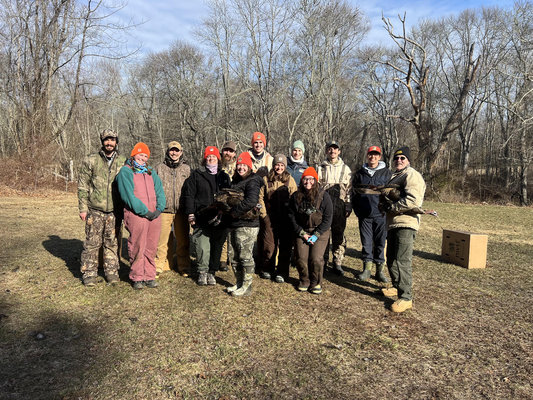
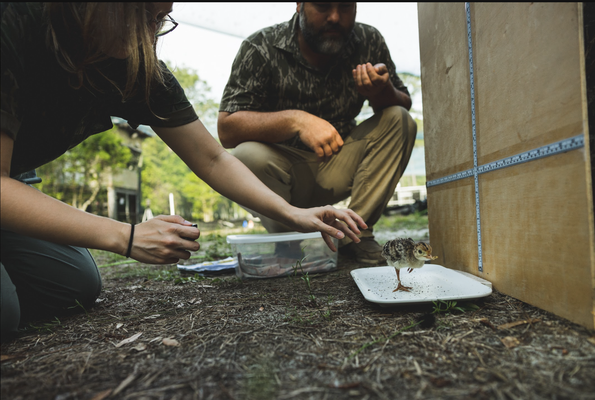
For example, the University of Rhode Island received funds from the NWTF to study if and how diseases impact wild turkey reproduction and habitat use, and the University of Florida’s Game Lab launched a research project focusing on Eastern and Osceola wild turkey poult survival with partial funding from the NWTF. Both projects offer opportunities for graduate and undergraduate students to conduct field work and lab research to better understand wild turkey populations and biology. Learn more about NWTF wild turkey research projects.
Aside from collegiate chapters and wild turkey research efforts, the NWTF offers opportunities for graduating high school seniors who will be pursuing higher education through the annual national Dr. James Earl Kennamer Scholarship. Each NWTF state chapter also has a scholarship opportunity to ensure students can continue their education.
If students are interested in getting involved with the NWTF on their campus to learn more about hunting, conservation work, wild turkey biology or simply want to get involved in something new, they can contact Wiggins at 912-592-4129 or Mabon at 704-698-5575.
About the National Wild Turkey Federation
Since 1973, the National Wild Turkey Federation has invested over half a billion dollars into wildlife conservation and has positively impacted over 25 million acres of critical wildlife habitat. Since 2022, the NWTF has also invested over $2.3 million in critical wild turkey research that, when leveraged with partner contributions, has resulted in more than $22 million to guide the management of the wild turkey and to ensure sustainable populations. The organization continues to deliver its mission by working across boundaries on a landscape scale to create healthy forests and wildlife habitats, clean and abundant water, resilient communities and robust recreational opportunities. With the help of its dedicated members, partners and staff, the NWTF is committed to creating a nation united by the life-changing power of the outdoors.
Read the full article here