

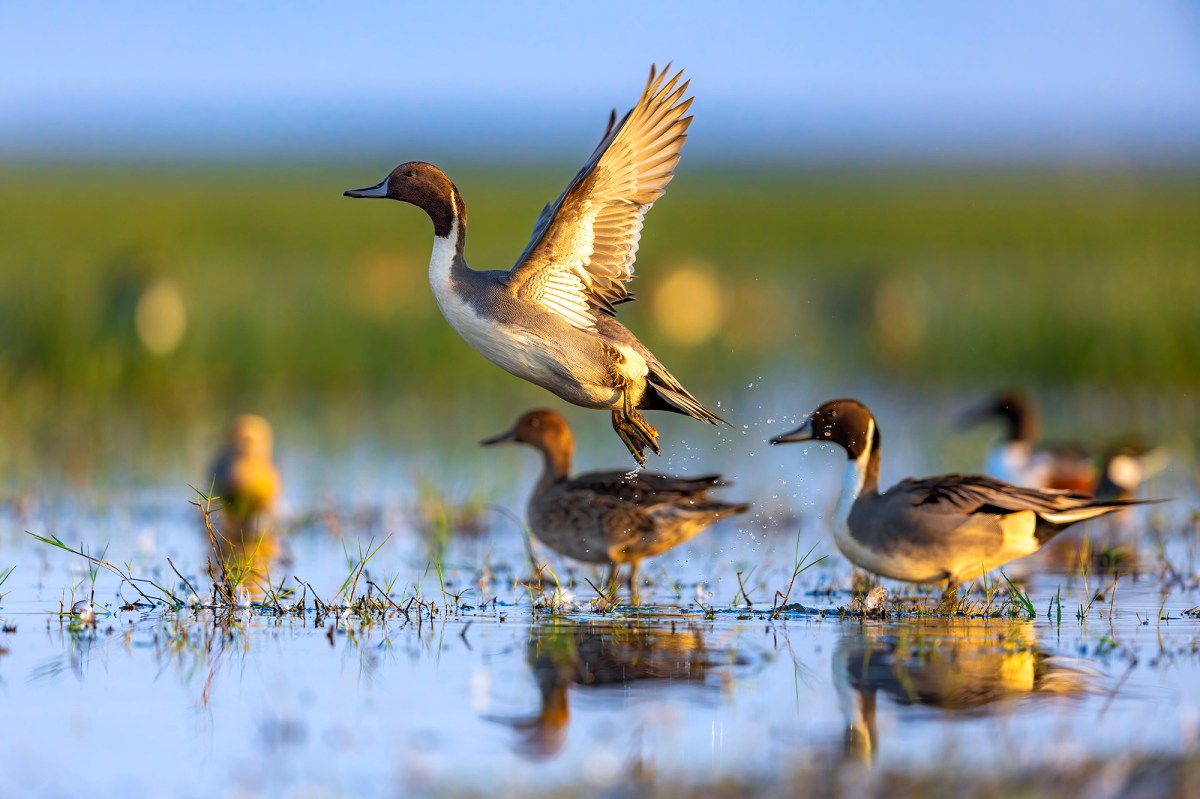
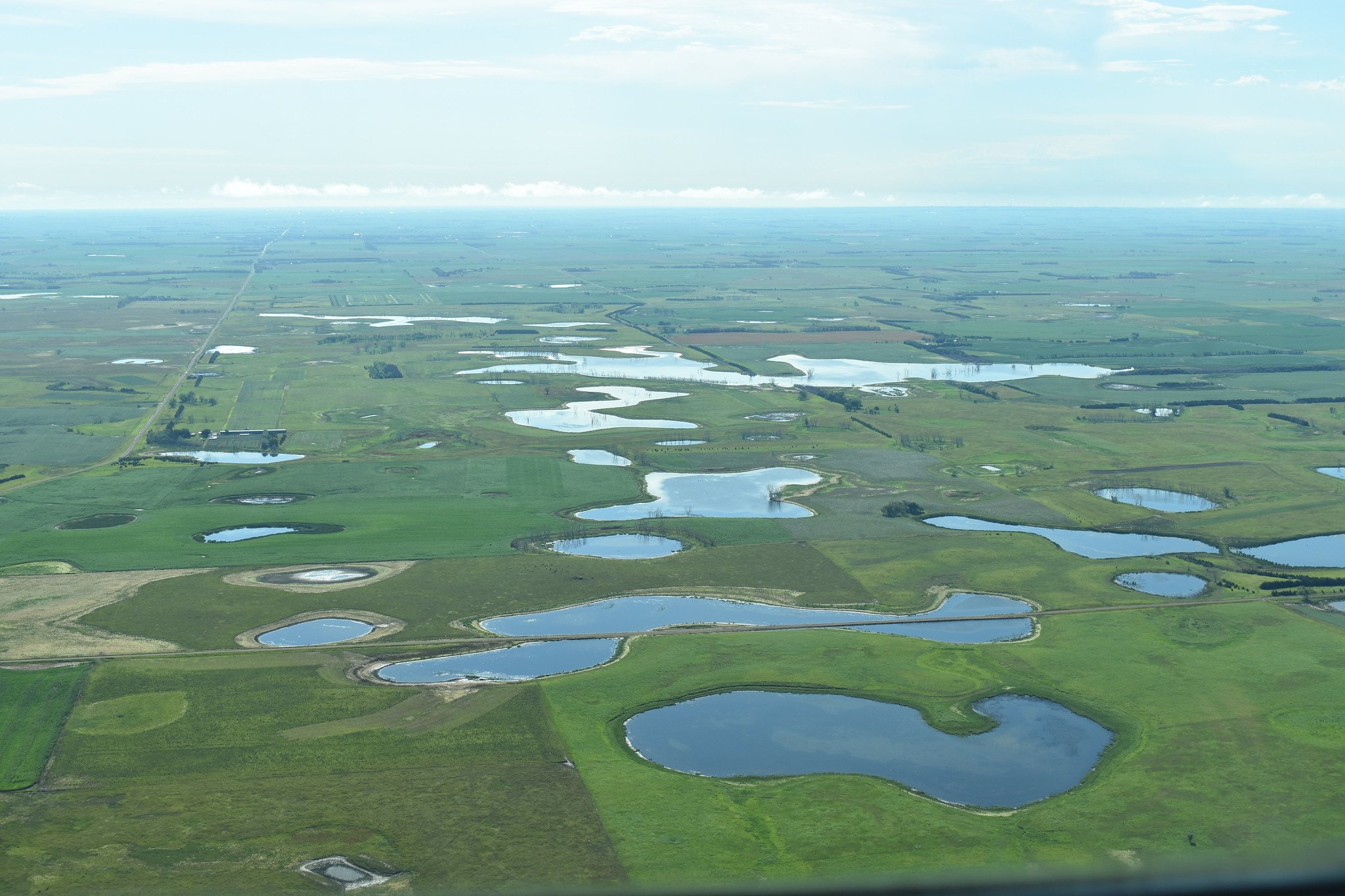
One week after the closure of an unusually short comment period on drainage practices in the Prairie Pothole Region, the U.S. Fish and Wildlife Service acknowledged the sheer volume of public feedback around a decades-long policy that directly influences the health of critical duck breeding grounds.
More than 219,000 comments were submitted to a Request for Information in just 14 days, prompting the USFWS to conclude in a Friday afternoon X post that “at this time, no further action is planned as we review the information received.”
The announcement was largely celebrated as a victory by the waterfowl community, which rallied behind conservation groups like Ducks Unlimited and Delta Waterfowl, state agencies, hunting manufacturers, and other industry leaders to submit comments ahead of the Aug. 7 deadline. DU and Delta Waterfowl both applauded the statement from USFWS and its appreciation that the agency conducted the RFI.
“Thank you to all of our members, supporters, and the outdoor industry at large for taking action here. You made your voices heard, and that meant something, clearly,” says Ducks Unlimited communications director Parker Williams. “The industry really united around this issue in a way that I don’t know has happened very often.”
In practice, Friday’s statement from the USFWS leaves the door wide open to future rule changes. The agency simply describes what happens — or what should happen — after every public comment deadline. A federal agency asked for input, the public delivered, and now USFWS is going to sift through that mountain of feedback before deciding what, if anything, to do about changing drain tile setbacks.
The fact that USFWS issued such a statement is unusual, however. The Department of the Interior and its agencies have opened scores of public-land and conservation comment windows under the second Trump administration. Rarely, if ever, has it acknowledged the routine conclusion of one as it did Friday.
The Fish and Wildlife Service thanks the more than 200,000 commenters who responded to the request for information on the process for calculating setbacks for the drain tiles around the wetland easements. Our administration is dedicated to protecting both the wetland easements…
— U.S. Fish and Wildlife Service (@USFWS) August 14, 2026
Though the vast majority of published comments urged USFWS to leave wetland easement regulations as they are, the agency can and may still choose to pursue revisions to drain tile setbacks. Because, as it turns out, public opinion doesn’t have a legal bearing on federal rule changes.
“[The USFWS is] not required to do what the public says,” explains Martha Williams, a lawyer and the former director of the USFWS from 2022 to 2025 (no relation to Parker Williams). She firmly supports gathering public feedback, but acknowledges the lack of strict regulations about exactly how to interpret or apply those comments. “You just have to analyze the comments and show you’ve taken a hard look at the issue and you have a response that’s commensurate.”
But policy insiders say that, in this case, the outpouring of support from the waterfowl community for keeping USFWS wetland easement rules in place has caught the attention of agency staff, who may be reluctant to pursue further changes against the clear wishes of Americans.
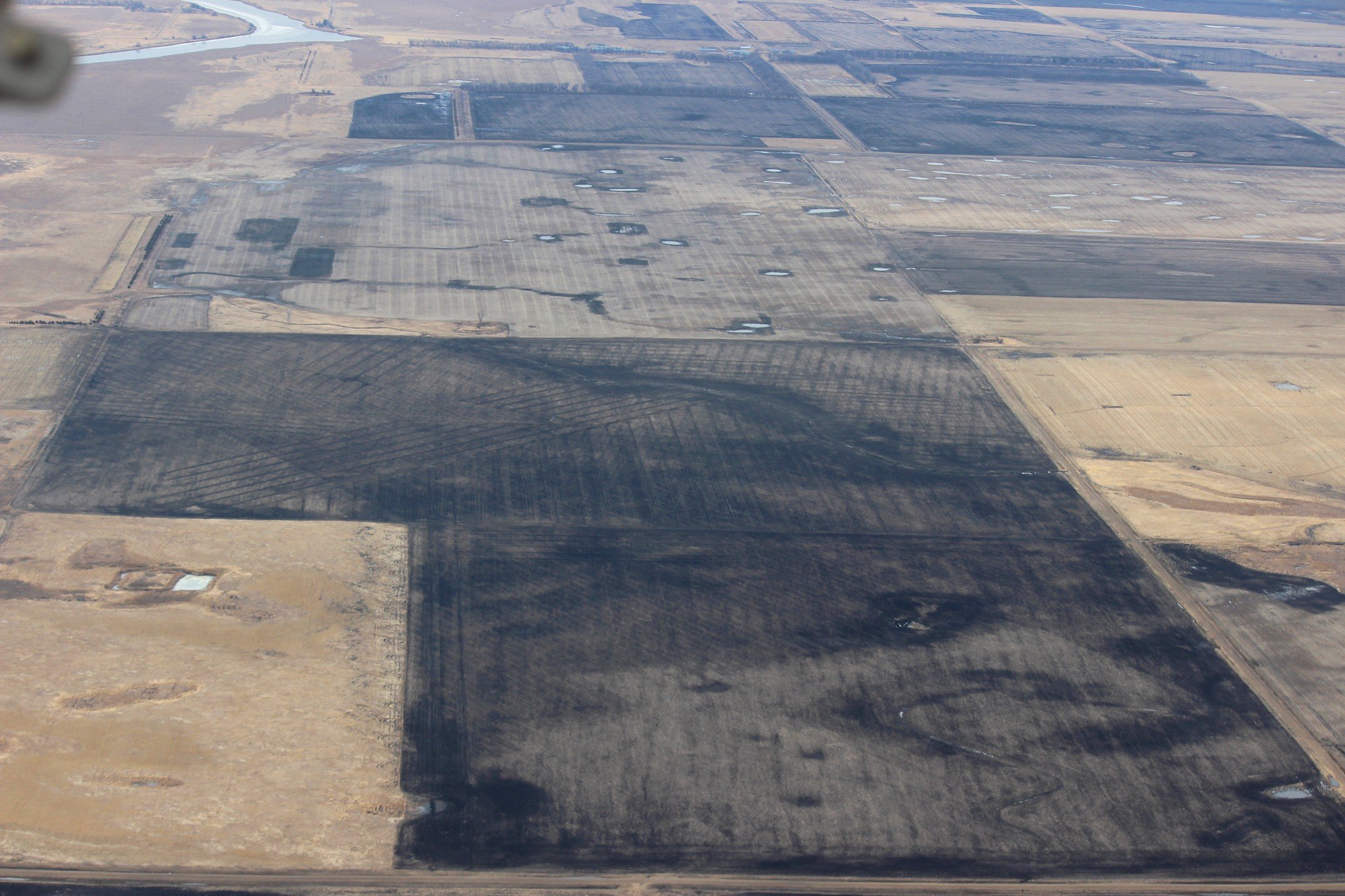
An analysis by Outdoor Life of the roughly 98,100 comments published by the USFWS found that of the published comments, about 80 percent support the existing drain tile rules.
(Although 219,431 comments were submitted, not quite half were published for public review. This analysis will inevitably vary from any analysis performed by USFWS based on its own criteria, which it did not provide to Outdoor Life. Our figures are designed to offer a snapshot of the comments, not exact figures.)
Nine records in the docket were flagged as a “Mass Mail Campaign,” representing a total of 121,284 submissions. The largest among them was managed by Ducks Unlimited, which submitted a petition signed by 100,277 people as one comment.
Alongside 16 other state game agencies across the country, Minnesota and Iowa submitted comments in support of existing drain tile regulations. North and South Dakota’s state game agencies, who work closely with landowners and hunters, did not provide comment nor did they respond to requests for comment from OL about their lack of participation.
Meanwhile, our analysis found that many duck hunters did not address the questions posed by the USFWS. And why should they, say conservation groups? The request for information involved technical science and convoluted policy that asked for specific feedback like alternative ways to calculate drainage distances from wetland easements.
Desirée Sorenson-Groves, the president and CEO of the National Wildlife Refuge Association, grew up playing in drainage ditches in Iowa’s Prairie Pothole Region and knows more about drain tiling than most.
“Most people don’t have the expertise,” to address the technical questions posed by the RFI, says Sorenson-Groves. “Most people are not PhD hydrologists — myself included — and are not going to be able to come up with a substantive comment on the hydrology of drainage and tiling in the prairie potholes. It’s just not reasonable. But people being able to express their support of the program is important. And I think it gives federal employees an idea of where the sentiment is of the American people.”
In the end, it might not matter that so many commenters mistakenly believed the RFI was proposing direct draining of wetland easements, or that there was a proposed change already on the table. They commented, and it might be enough to prevent future changes.
But that’s not usually the case.
There are many examples in which the federal government acknowledges that the majority of comments oppose an issue, then plows ahead anyway.
“Every administration goes into a comment period with an idea of what they would like to happen,” says Sorenson-Groves. “This goes both ways. The Biden administration got millions of comments against the Willow Project, which is an oil and gas project in the National Petroleum Reserve in Alaska. They still went forward with it. I think comment periods matter a bit, but administrations always have an idea of the outcome that they want.”
Other examples include proceeding with mineral withdrawals at the headwaters of the Boundary Waters Canoe Area Wilderness despite public feedback in which 98 percent of participants opposed it.
“There’s nothing that requires you to do what public comment says,” according to Martha Williams, the former USFWS director. “Obviously, you can’t. Because you get comments that are all over the map. It would be really impossible to change an action so that it follows public comments because they are inherently conflicting.”
Despite this, she says her philosophy was always to follow agency guidance of reviewing every substantive comment. If the majority of comments are focused on one particular stance on an issue, she says “any good leader would say, ‘Huh, this indicates that Houston, we have a problem.”
Some members of the hunting community have criticized fellow waterfowlers for failing to participate in the comment period (there are roughly 2.8 million migratory bird hunters in the U.S., according to the best available figures). In reality, the USFWS gave the public very little time to participate.
“Anything under fifteen days is really short and should be reserved for issues that have no potential significance and aren’t controversial,” says Martha Williams. “If you’re going to do a short comment period and it’s controversial, you’re hiding something or you don’t want comment. But if you think it’s rout[ine] and/or people’s minds are made up, I guess go ahead.”
During her tenure at USFWS, Williams’ rule of thumb was to stick to 30-day comment periods, and closer to 60 days if a topic was complex or controversial. Whenever there was a request for an extension to a comment period, “we had to have a good reason not to do it.” A Request for Information in particular, she says, should not be so short.
“This issue is of enormous consequence,” Martha Williams says of the drain tile setback RFI, which allowed only 14 days for comment. “It ticks all the boxes. It’s complex, it’s controversial, there are potentially significant impacts not only to the environment, not only to wildlife species, but also to the property interests that the government has acquired.”
The public wasn’t the only group caught flat-footed. Lawmakers were also among those surprised by the short comment period. The House had just recessed for more than a month on July 23; the RFI was published on July 24. This slowed at least one Senator’s campaign from consulting with the necessary officials to appropriately understand and respond to the RFI, according to a D.C. insider.
The same was true for many conservation organizations.
“None of us are used to trying to make substantive comments” in such a short period, says Sorenson-Groves. “If you’re just trying to get a general sense of where the public is? Okay. But trying to really dig into an issue and put together substantive comments? Fourteen days is really difficult … Many organizations and other agencies and states want to provide important feedback. These comment periods shouldn’t just be performative.”
The USFWS did not respond to Outdoor Life’s requests for clarity about how it handles public comments or why the RFI drain tile setback comment period was set to just 14 days.
Form Letters Are a Necessary Evil
DU’s form template helped increase participation among the waterfowl community and succeeded in making an impression on agency staff around drain-tile setbacks.
But the lack of individuality inherent to form letters also makes it easier for the government to dismiss them during the review period. Thousands of users forgot to delete or modify this line in the DU comment template, and submitted it to the agency: “[PERSONALIZE HERE: Explain why wetlands, waterfowl, hunting, or conservation are important to you.]”
“Form letters are a good way for an agency to discount a comment,” says Sorenson-Groves. “If you get ten thousand comments and they’re all the same? Is it ten thousand comments or is it one? It probably depends on what you [a given administration] want the outcome to be. If people can’t write their own comment, cutting and pasting something is better than nothing. But it’s much better to write something unique, so it has to be counted as a unique comment.”
This is why conservation groups urge members to write their own comments. If you’re not sure what to write— like on the complex policy surrounding drain tile setbacks, say — they urge personalization of form letters to create a unique comment. Indeed, plenty of hunters simply wrote two-sentence comments like this one from Kasey Martin: “Leave the current system and rules in place. Do not roll back drain tile setbacks.”
Individual hunters don’t necessarily need technical knowledge to potentially make a difference when it comes to conservation policy, says John Devney, chief policy officer of Delta Waterfowl.
“If you read our comments [from Delta], we didn’t spend a lot of time worrying about the RFI either,” says Devney. “It was simply an effort to double down on the value of the easement program.”
Form letters are also a key tool conservation groups have to manage the sheer volume of public comment periods — including increasingly shortened periods — rolled out under the current administration.
Read Next: Duck Hunting’s New Reality: It Will Keep Getting Tougher for the Workaday Waterfowler
“When you have a lot of these public-land comment periods all at the same time,” notes Sorenson-Groves, “maybe it precludes organizations or individuals from being able to dig in on all of them or comment on all of them.”
Read the full article here