

We may earn revenue from the products available on this page and participate in affiliate programs. Learn more
Last year, Moultrie launched its best cellular trail camera models to date—the Edge 3 and Edge 3 Pro—the third generation of the company’s Edge series. For me, both of those cellular cams produced excellent results in the field. I give the Edge 3 Pro full credit for helping my pattern and arrow a beautiful Sooner State 11-point buck last October. Battery life was impressive, photo and video quality were excellent, and setup took seconds.
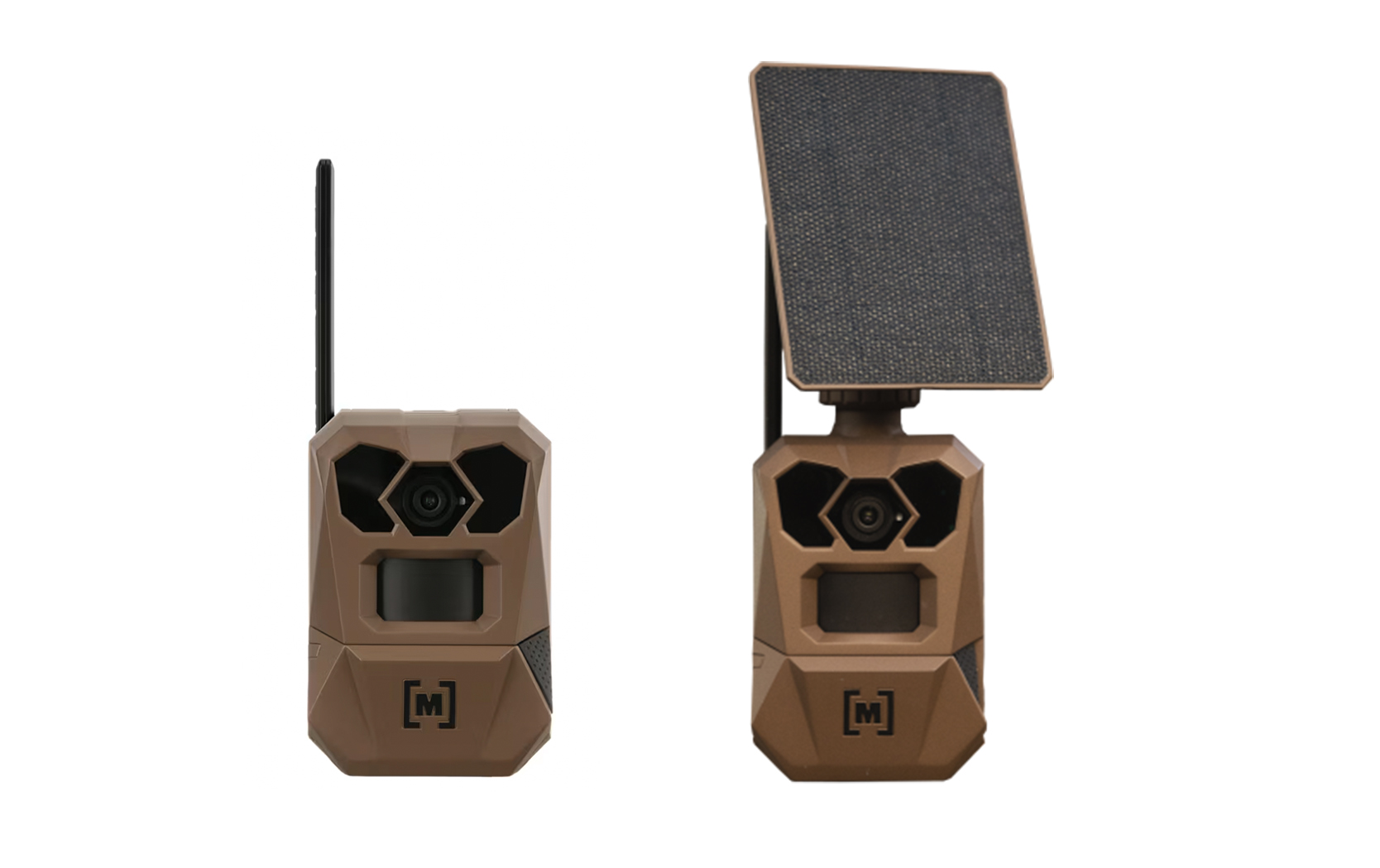
For 2026, Moultrie adds the Edge 4 and Edge 4 Solar. It tells you something, as a consumer, when a manufacturer continues to build products based on an existing line. If generations 2 and 3 had been a flop, you’d be reading about a 2026 Moultrie cell cam without the word “Edge” in the name. The fact that the newest models keep that name means the company has something that works. The only question is, do they work better? I spent months testing the Edge 4 and Edge 4 Solar to find out. Here’s how they fared.
Quick Overview
Moultrie Edge 4
Pros
- Improved nighttime image quality
- User-friendly interface
- Good detection range
- Affordable
- Comes in a solar option
Cons
- Requires a lot of batteries if you aren’t using solar
- Poorly designed door latch
Specs
- Trigger Speed: .5 seconds
- Detection Range: 100 feet with IR LEDs
- Power: 8 or 16 AA batteries or Power Mag+ rechargeable battery pack; both units can run on solar, but the Edge 4 Solar comes with the panel
- Cellular: Network and Carrier: Connects to the strongest cellular network available
- On-Board Screen: No
- Price: $129.99 for Edge 4; $169.99 for Edge 4 Solar
Related: 30 Trail Camera Tips for Getting More and Better Photos
A Closer Look at the Edge 4 & Edge 4 Solar
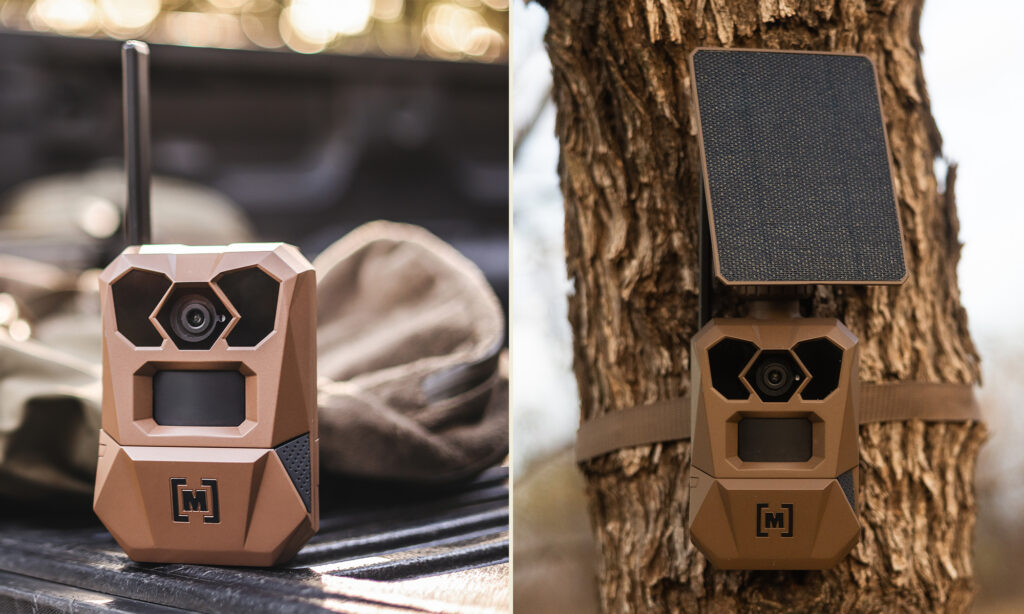
I’ve had four Moultrie Edge 4 cameras—two solar and two standard—running on my Colorado whitetail lease for two months. The only difference between the two models is the on-board solar panel (more to come on this). Moultrie’s Edge 4 features an all-new internal control panel that trumps the Edge 3 in just about every way. Two of the six Edge 3 models I tested last year had a push up/down on/off switch that started sticking. One got worse throughout the season.
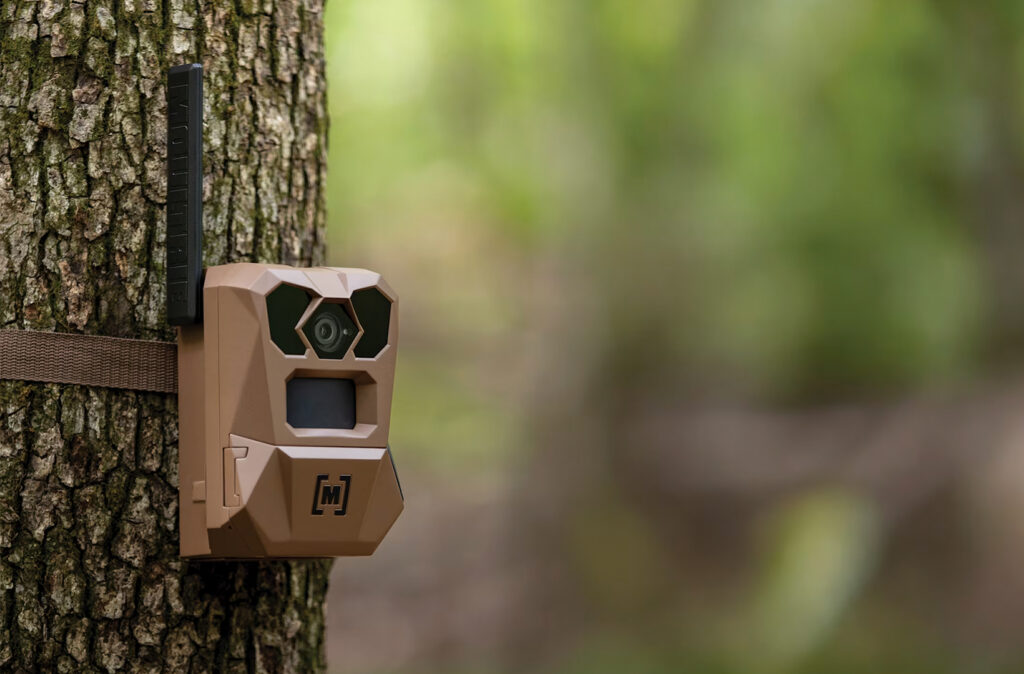
The new Edge 4 interface features an on/off dial system, an easy push Connect button, and a new light dial with Not Connected (Red), Connecting (Yellow), and Connected (Red) indicators. The battery life icon remains. The door latch is also new. It’s a black push-button design. I don’t love it. I prefer lock-and/latch. The new design does work, but make sure when you push the door closed, the button clicks. Twice I was sure the door was closed and returned the next day to discover I didn’t get the door to fully engage.
Southeast Colorado is an excellent testing location for trail cameras. During the cams’ 60-plus days in the field, they have been exposed to 12 100-plus-degree Fahrenheit days, rain, wind gusts over 80 miles per hour, and a hailstorm that has State Farm agents cutting lots of checks for new roofs. My Edge 4 cameras are all still running and show zero damage. Moultrie added a new IP67 waterproof coating, and it works. I also love the built-in SD card and Live Aim features that make in-the-field setup hassle-free.
How I Tested The Edge 4 & Edge 4 Solar Cell Cams

Moultrie’s app is very user-friendly; adding and pairing cameras is hassle-free. I can’t say that about every cell cam in this year’s roundup. I tested the Edge 4 and Edge 4 Solar in my backyard before field deployment. Moultrie claims 100-foot detection via enhanced IR LEDs. I measured and set a cone at 100 feet and walked, jogged, and ran in front of the camera. Moultrie’s 100-foot detection range is accurate, and in all but one running image, my body was centered in the frame. No walking or jogging images were blured, picutre quality was excellent, and the .5-second trigger proved fast enough to keep up.
In the field, I set Edge 4 and Edge 4 Solar cameras in a variety of locations, including a long ditch leading to an ag field, along a large alfalfa plot, at a three-way trail intersection, on a pond, and overlooking a scrape deer visit year-round. I wanted a combination of tight in-the-woods testing and long-range testing. The paddle-style antenna stays upright, and Edge 4 cams grab the strongest available cellular service. I also appreciate that when in tow, the paddle folds down and holds tight into the built-in slot on the camera’s lower half.
Moultrie’s AI technology has come a long way, and I’m a fan of the new Buck Shot. I love looking at images of deer, but don’t love filtering through hundreds of doe and fawn pics, which this feature does for you. This isn’t a huge issue on my Colorado lease, but in Oklahoma, where feeding deer is legal, the process is extremely time consuming. Buck Shot will be a highly useful tool in states where feeding deer is legal.
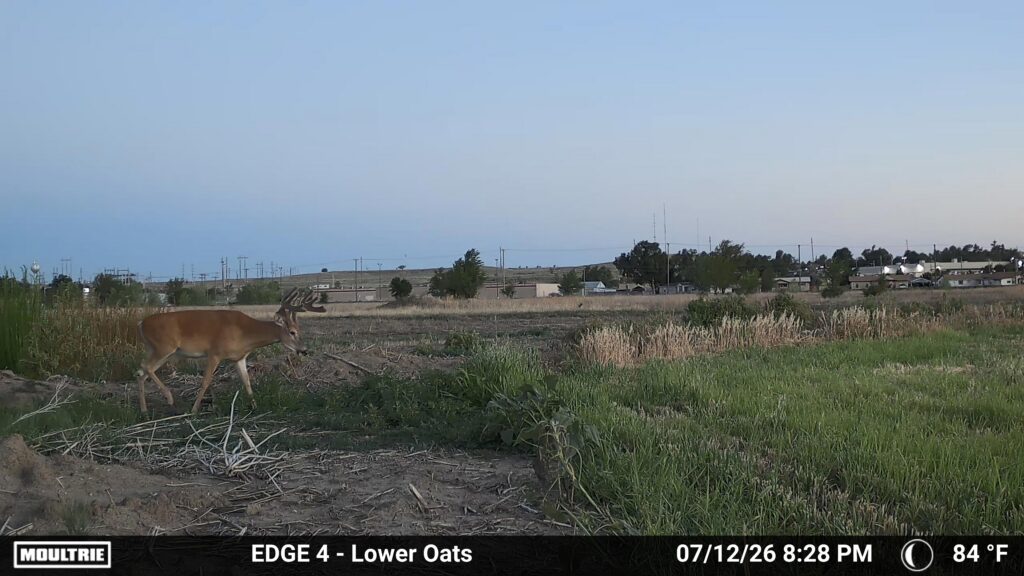
With Buck Shot activated, the Edge 4s send a zoomed-in, high-resolution image of every buck. The image clarity is impressive, especially at night. Since I enabled Buck Shot on the app, the cameras seem to be capturing every buck—even a 3-inch spike.
Another feature worth noting is On Demand. Activity around my scrape camera during the summer is random. Twice, just to ensure there was no technical issue with the camera, I requested an On Demand image and got one seconds later. This can be done anytime from anywhere and is handy for confirming that your camera is still where you put it and running. Edge 4 cameras, once activated and set, also automatically pin their location on a map that can be viewed in the Moultrie app, which is nice.
I ran my Edge 4 and Edge 4 Solar models non-stop for two months. I recorded any misfires and tracked battery life. I tested the camera’s AI capabilities, map locating, On Demand, photo and video quality, and detection range.
Related: 10 Trail Camera Tips for Elk Hunters
Moultrie Edge 4 & Edge 4 Solar Test Results
Though Moultrie’s Edge 4 can run on 8 AA batteries, 16 AAs increases battery life. Personally, I recommend spending the extra $30 for the Edge 4 Solar. You can also convert your standard Edge 4 to a solar model by purchasing and adding a wireless slide-and-plug solar panel later. Solar will save you time and money.
One of the features that always impresses me about Moultrie cell cams is how few false triggers they produce. Aside from the 80-mph wind-gust day, my four Edge 4 cams captured a total of 32 blank images over 60 days. I can certainly live with that. The 40MP photo quality is excellent, video is clear, and the audio is impressive. Detection range is spot-on, trigger speed is fast, and it was obvious that Moultrie stepped up their nighttime image game with these latest Edge models. The new enhanced IR LEDs delivered brighter nighttime images with excellent color fidelity. This helps with buck identification and counting antler tips.
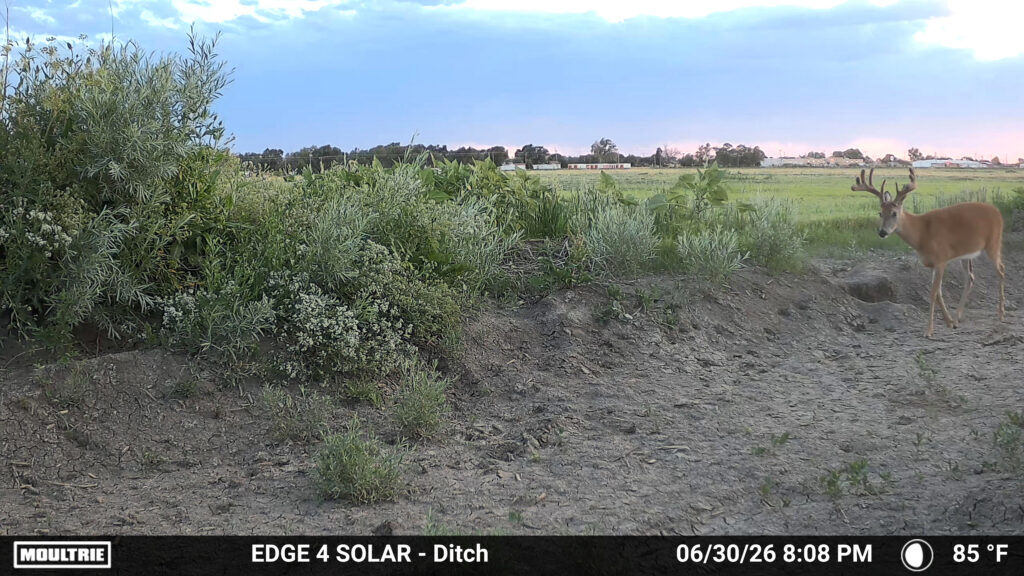
Close or far, the LEDs didn’t seem to spook game, and the Edge 4s captured deer—day and night—up to 110 feet in the field. All distances were measured precisely. In total, my Edge 4s took 1,223 photos and 118 videos. The pair of standard Edge 4s operating on 16 AA batteries dipped below 50 percent after two months. Both Edge 4 Solar models stay above 80 percent all the time.
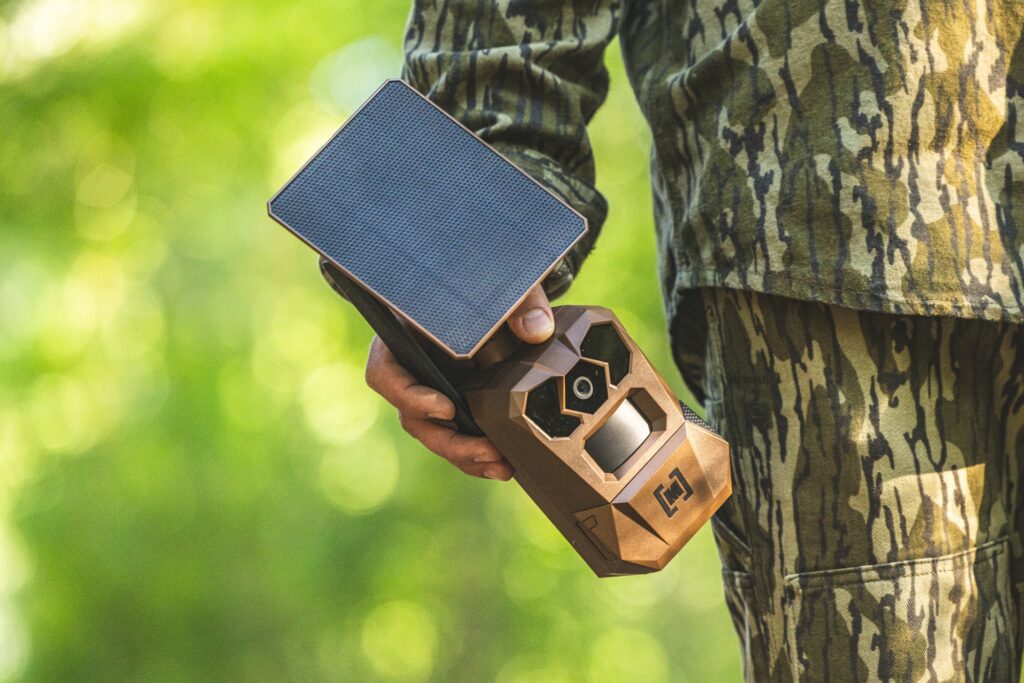
I like the adjustable panels on the Edge 4 Solar Models. Not only can you change the position of the panel, but you can rotate it 360-degrees to ensure it grabs the most sun possible. The turn-and-lock system is simple and hassle-free.
I appreciate that over 70 percent of all photos placed the deer in the center of the frame. Images, even when deer were running, weren’t blurry. Buck Shot’s max-resolution images are excellent. I love getting immediate, zoomed-in, cropped photos of any buck that triggers the camera. Antler points are easy to count, and there is no squeezing and zooming in, waiting for another trigger to receive a high-resolution photo, or straining the eyes trying to decipher if what you’re looking at is a branch or a kicker off a G2.
Every photo and video goes directly into the Moultrie app. Adding your cameras to your own digital scouting app is possible. However, I like that the Moultrie app adds it accurately and instantly, and you can easily transfer them to your favorite digital mapping app later. The GamePlan feature, which takes all the data your cams have accumulated—including weather patterns, etc.—to predict buck movement. I don’t use this feature often, but it’s nice to have, and the analytics seem surprisingly accurate.
Related: Can Big Bucks Really Detect Cell Cams?
Final Thoughts
Moultrie once again packs lots of purposeful and handy features into a pair of trail cameras that are both well under $200. Cellular trail cameras are addictive, and it’s nice when you can purchase several you trust without dropping too many greenbacks. In the end, both the Edge 4 and the Edge for solar combine the two key qualities many hunters want most: The are easy to use and affordable.
Why Trust Us
For more than 125 years, Field & Stream has been providing readers with honest and authentic coverage of outdoor gear. Our writers and editors eat, sleep, and breathe the outdoors, and that passion comes through in our product reviews. You can count on F&S to keep you up to date on the best new gear. And when we write about a product—whether it’s a bass lure or a backpack—we cover the good and the bad, so you know exactly what to expect before you decide to make a purchase.
The post Moultrie Edge 4 Cellular Trail Camera Review—Expert Tested appeared first on Field & Stream.
Read the full article here