
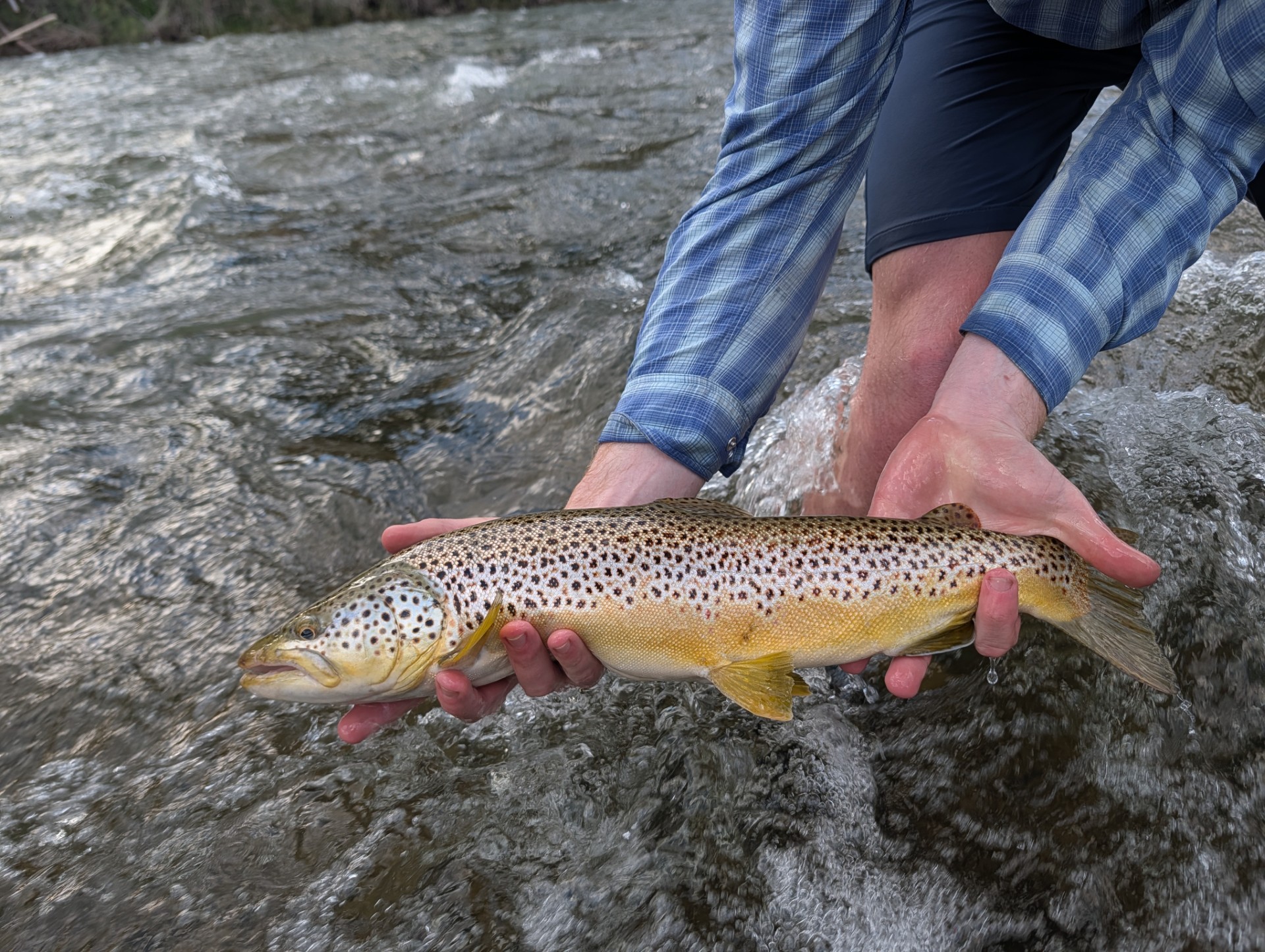
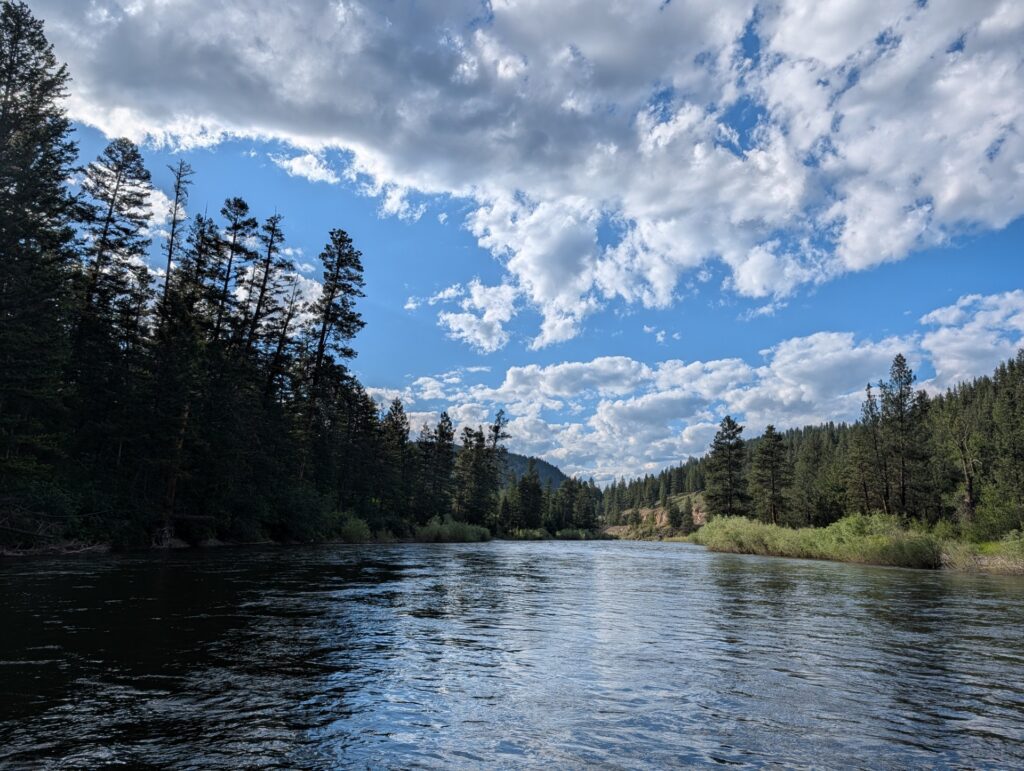
The Blackfoot River is a world-class trout fishing destination that runs through western Montana. Made famous in Norman Maclean’s A River Runs Through It, the Blackfoot still draws anglers from all over the world. But today, it’s facing serious development threats that could degrade water quality and fish habitat for many years to come.
In April, a possible gold mine in the headwaters and a data center on the river’s lower stretches made headlines. Now, those threats are moving closer to becoming reality. On June 8, the Montana Department of Environmental Quality (DEQ) approved an exploratory permit for the Australian-owned Sentinel Metals. The license will allow Sentinel to drill core sampling holes up to 14,359-feet deep in the Blackfoot’s headwaters.
Exploratory drilling isn’t expected to have an outsized impact on the fishery. But what comes next certainly could. “The next step will be a gold mine,” Big Blackfoot Riverkeeper Executive Director Jerry O’Connell, who lives in a homestead on the banks of the river, tells Field and Stream. Given the vertical position of the gold vein, experts say the likeliest method of mining it would be an open-pit mine. “It’d be a quarter-mile wide, half-a-mile long, and at least 700-to-900 feet deep to start,” O’Connell says.
David Brooks, Executive Director of Montana Trout Unlimited, says the only way to make an open-pit mine profitable is to use cyanide-heap leaching to extract the gold. “Montanans passed a ballot inititive that banned cyanide-heap leaching years ago,” Brooks tells F&S. “Now, there’s the potential that they will look to overturn the ban. The company says they aren’t going to use an open pit or use cyanide, but the geo-technical evidence says otherwise.”
One of the reasons the proposed mine is so worrying has to do with the history of the river. In 1975, the Mike Horse Dam failed, flushing heavy-metal mine tailings all the way downstream. A decades-long, multi-million-dollar mitigation effort helped the river recover—only to face additional mining threats today.
A New Mining Outfit Enters the Fray
In addition to Sentinel, another mining company called Mogotes Metals—a mineral exploration company focused on Argentina and Chile—recently announced renewed exploratory efforts under existing permits in the “Copper Cliff Site” near Potomac, Montana. Mining activities there could also threaten the water quality of the Blackfoot River.
According to Brooks, mining companies are eyeing spots along other famous Montana trout rivers. Not far from the Blackfoot, for instance, a proposed rare–earth mine on the headwaters of the Bitterroot River has also raised concern. “There’s an economic driver,” he says. “In 2026, gold prices have been over $5,000 twice, which is unprecedented. The prices for other metals are high, too. And Montana in particular has pretty mining-friendly laws.”
Brooks and O’Connell say that since the mines proposed for the Blackfoot are still in exploratory stages, there’s not much that can be done—for now. Court challenges are likely the best path to stopping them, despite the fact that the public is overwhelmingly against the new mines.
“There’s no box to be checked in the state’s permitting process for public opinion,” says Brooks. “The [Blackfoot] is a place we’ve invested a lot in to clean up from past mining and to bring back this fishery. We should be really careful about new mines undoing all that investment.”
Data Center Looms, Too
Another threat to the Blackfoot River is the development of a data center in Bonner, Montana, along the bottom-most segment of the river. According to Missoula County, the proposed data center in Bonner, backed by Idaho-based Krambu, would operate 24-hours a day, seven days per week and use approximately 7 megawatts of electricity to start, before potentially ramping up to 29 megawatts. Krambu is currently finalizing its materials to be presented to the Missoula Consolidated Land Use Board.
The required infrastructure to supply electricity at this level, as well as the water-use of the proposed AI data center, and the impact of noise on the community and the river corridor, have locals alarmed. “Krambu says they’re going to use a closed-loop cooling system,” says O’Connell. “That’s bull. The water is going to come out of the water table, and the river and the water table are connected. It will have an impact on the Blackfoot and the Clark Fork River. It’s just a bad place to put a data center.”
Brooks shares O’Connell’s worries. “There needs to be much more transparent information about water and habitat impacts,” he says. “There also needs to be more data about the other infrastructure that the data center would necessitate, which could also impact the health of the river.”
Over the past few weeks, multiple grassroots organizations, such as Missoula Neighbors United and the No Bonner Data Center Instagram page, have organized public community discussions. Overwhelming public sentiment shows grave concern about the potential impacts of the data center to the Blackfoot itself and the popular recreation corridor that surrounds the river.
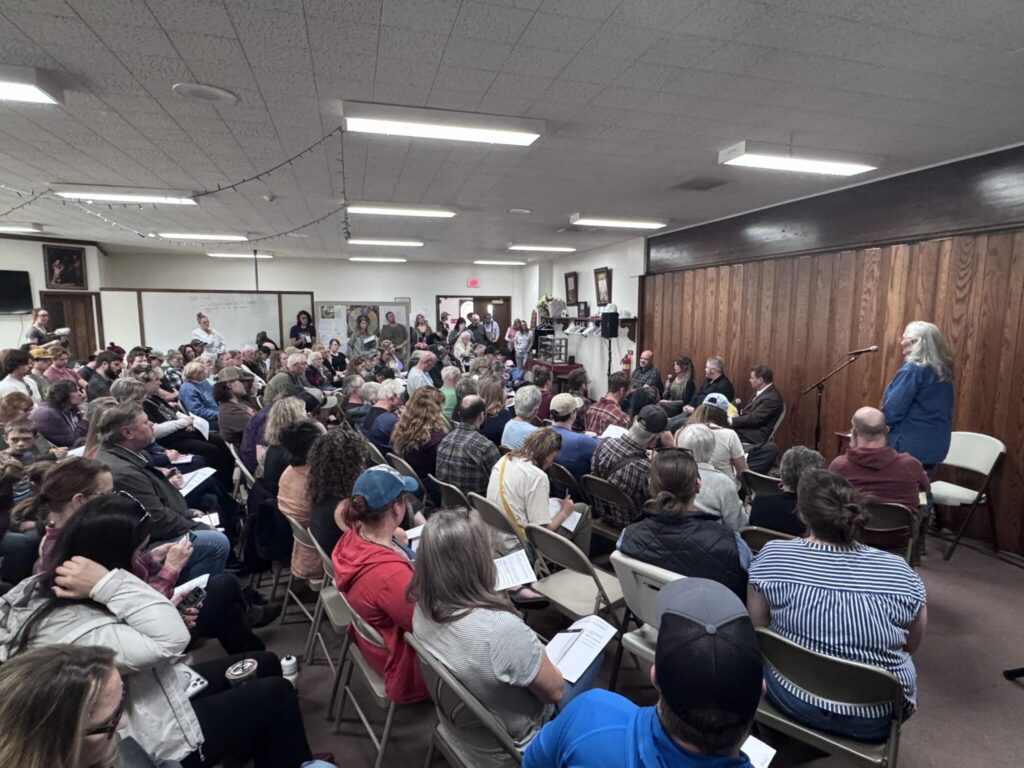
On June 12, Missoula County announced that its staff had reviewed another application submitted by Krambu but that it was considered “insufficient” for review by the Missoula Consolidated Land Use Board. The company is expected to revise and resubmit its proposal.
Read Next: Utah’s Massive Data Center Could Be the Final Death Knell for a Struggling Waterfowl Refuge
The threats come as drought conditions and low flows have also taken a toll on the river and its fish. “The Blackfoot is at risk,” says O’Connell. “But the good thing is we’re getting exposure for those risks. And there’s interest from people, not just around here but worldwide, because the Blackfoot is special. It is something special.”
content_conservation,content_stories

THE 1871 CLUB

Recommended Products
Read the full article here