
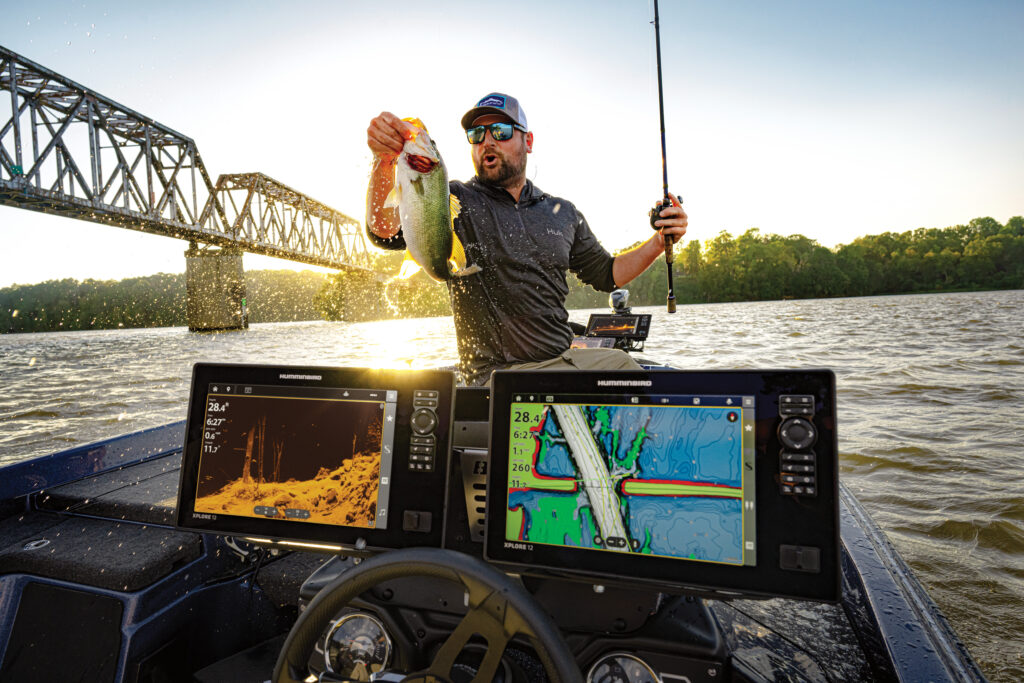
While bass typically spawn in shallow water, modern marine electronics with sophisticated sonar can still be used to target fish from the pre-spawn through the spawn and into post-spawn. Advancements in side sonar, down sonar, Live sonar, and 360-degree sonar have completely changed our understanding of fish movement over the last decade. Here are ways you can use sonar to catch more bass through this year’s spawn.
Pre-Spawn
During the pre-spawn phase, bass typically stage in deeper water around cover and structure, feeding heavily to prepare for the grueling spawning process. How deep they stage depends on the fishery, species, and water clarity. For instance, spotted bass could be on rocky points in 10 to 15 feet of water, while largemouth might be hunkered down in submerged hydrilla in 6 to 8 feet of water. But no matter the fishery, you can use sonar to locate these fish.
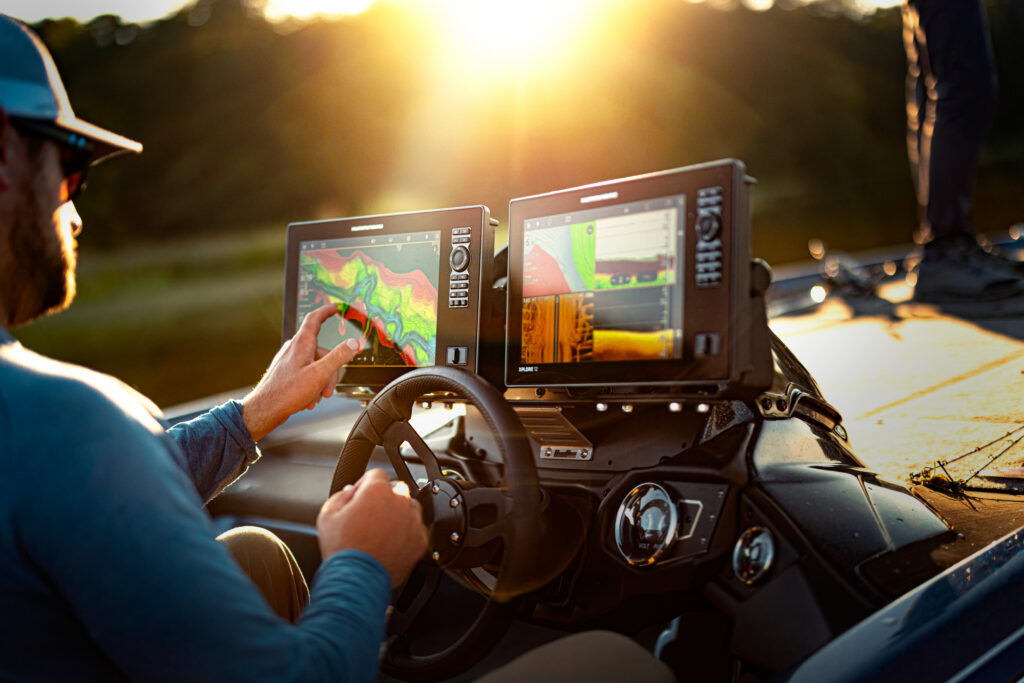
Live sonar (or forward-facing sonar) like Garmin’s Live Scope functions like a flashlight strapped to your trolling motor, which gives you a vertical beam to view what’s around you. When you pan left and right with the trolling motor, a real-time image is relayed to your graph, and you can see everything that’s happening beneath the surface. This is great for finding fish and balls of bait, but it’s also extremely helpful for finding cover and structure in the pre-spawn.
If the fish are hanging close to the bottom or are mixed in with rocks, brush, or vegetation, they can be hard to see, even with Live sonar. But identifying this cover or structure is a good indication to fish the area. Look for these two wherever deep water comes close to shallow water, such as channel swings and points. Side sonar can also be really helpful, as it lets you cover much more water. It works best from the console while idling along with the big motor, providing a clear view of the bottom to the right and left of the boat.
Spawn
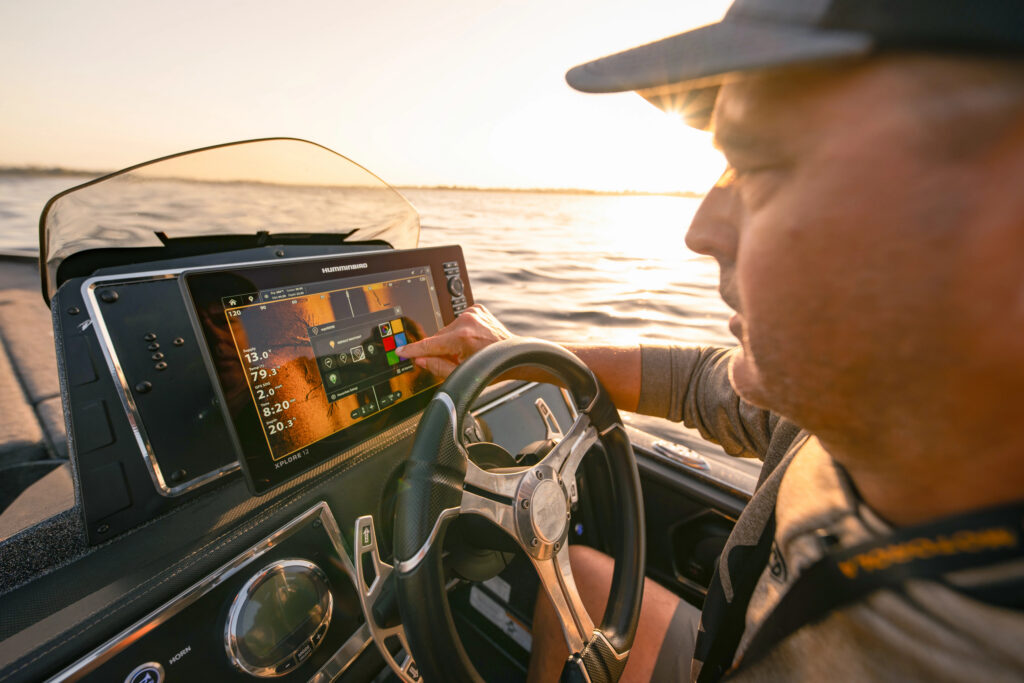
Once fish start bedding, Live sonar and 360 sonar are very helpful. Humminbird was the first to introduce this type of tech, which works similarly to weather radar, making a wide, sweeping 360-degree pan around the boat. This image isn’t live, but it’s updated every few seconds. This gives you a clear view of a large chunk of the bottom, which can be very helpful for locating bass beds, as well as stumps, rocks, and other shallow cover bass may be bedding near.
With 360 sonar, you can quickly scan a large area. Then, with Live Sonar, you can settle in and look at a real-time image of individual fish that are cruising around shallow or actively on a bed. Some modern units can even provide a different live image of the shallows. By pivoting the Garmin transducer, for instance, you can switch to their Perspective mode and effectively rotate the sonar cone so it shows a horizontal slice of the water column rather than a vertical one. When you’re in deeper water, this isn’t as helpful, since you’d basically only be able to see what’s happening the first few feet under the surface. But in shallow water, you can see everything that’s happening top to bottom at a pretty wide angle. Now you have a live image of the shallows similar to the peripheral vision of your eyes, and you can still pan left and right to see this view in every direction.
Post-Spawn
When we get into the post-spawn, Live sonar is supreme. You can use it to find individual bass leaving the beds as they cruise around in search of something to eat, or post up near shallow cover to recuperate. But 360 and side sonar are awesome tools for finding shallow baitfish and bream spawning beds, too. Bluegill and other bream often spawn anywhere from a foot deep to 10 feet or more. The shallower beds are visible with a good pair of polarized glasses, as long as the water is fairly clear. But you’ll need sonar to find the deeper ones.
You can idle down the shoreline with side sonar and find these beds pretty easily. What you’ll see will look a lot like a honeycomb, or a bunch of tires lying on the bottom in a group. These are beds that bluegill have fanned out, and the depressions are deep enough in the beds that the sonar casts a shadow, allowing the graph to pick it up. Bass are desperate for food after the spawn, and they’ll often loiter near these beds in hopes that one of the bream becomes an easy target.
As post-spawn carries on, a large population of bass will begin to move offshore. This is when bass and bait school up on ledges, humps, bridge pilings, and other deep structure. Using Live sonar, side sonar, down sonar, and traditional sonar all work well at this stage, while the effectiveness of 360 starts to wane after leaving the shallows.
content_bass-fishing,content_freshwater-fishing,content_fishing,content_stories

THE 1871 CLUB

Recommended Products
Read the full article here