
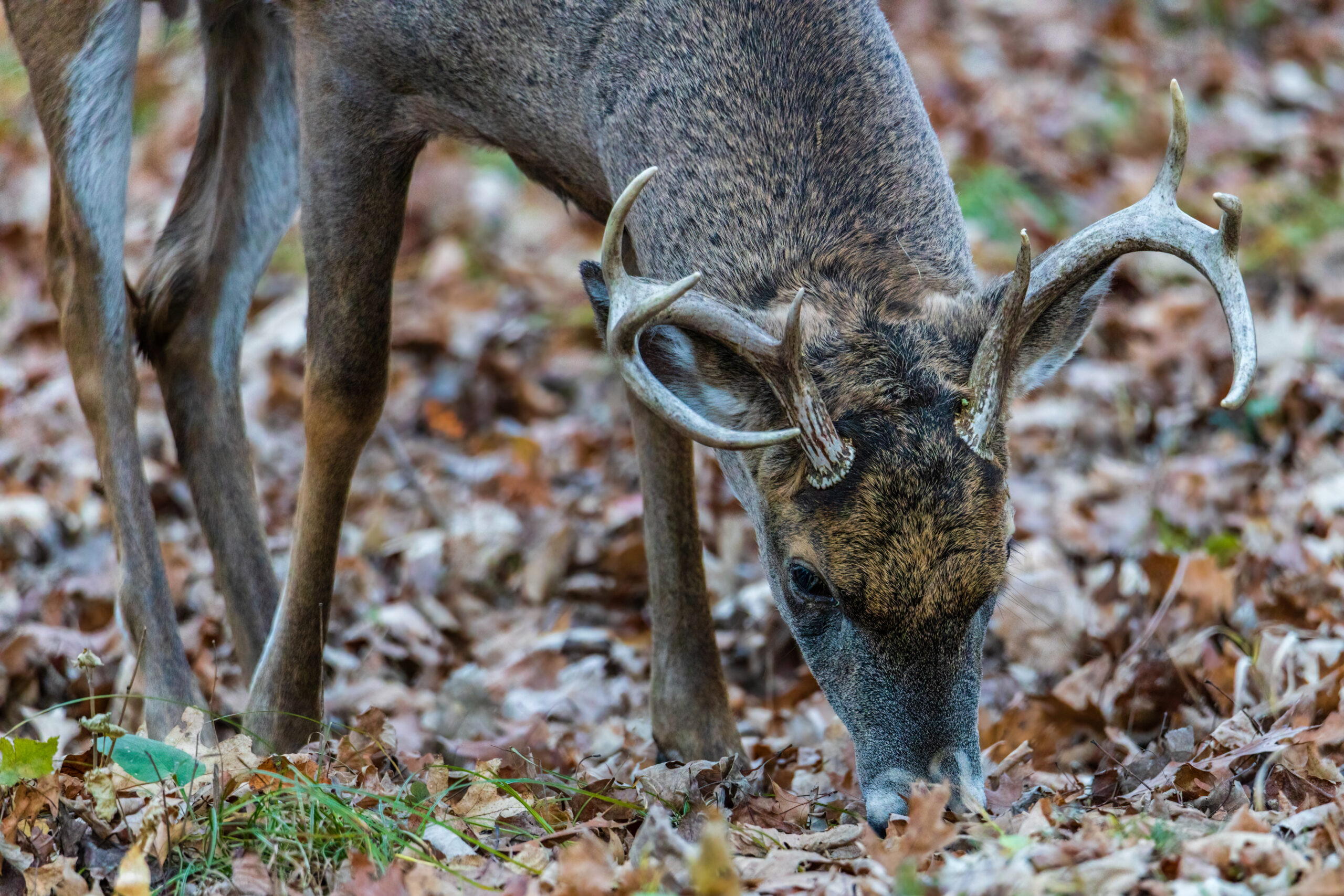
It’s no secret that whitetails love acorns. Ask any food-plot or farm-field hunter where his buck disappeared to in early fall, and if he’s not guessing “to an oak stand somewhere,” he hasn’t been hunting deer very long. And while deer may scarf up the best-tasting nuts early on, they’ll still be searching the leaf litter and digging in the snow to reach the next-best-tasting ones well into winter. Still, tagging a buck in the oaks isn’t as simple as finding a tree raining acorns, hanging a stand, and waiting. Here are seven key things you need to know to consistently tag bucks that are hitting the hard mast.
1. Know Your Oak Tree Species
Most oaks fall into one of two major subspecies, reds and whites. Red oaks are hugely important to deer, as they produce mast more reliably and drop acorns later in the fall that are high in fat and protein, providing a critical food source for whitetails—especially those that don’t live in farm country—well into winter. Red oak acorns contain more tannin than their white oak cousins, so they’re not as tasty. So, given a choice, deer will select white oak nuts over the red variety, but in many instances, whitetails don’t have an option and they’ll scarf down reds whenever they can get them. Red oak trees have smoother bark and leaves with pointy edges.
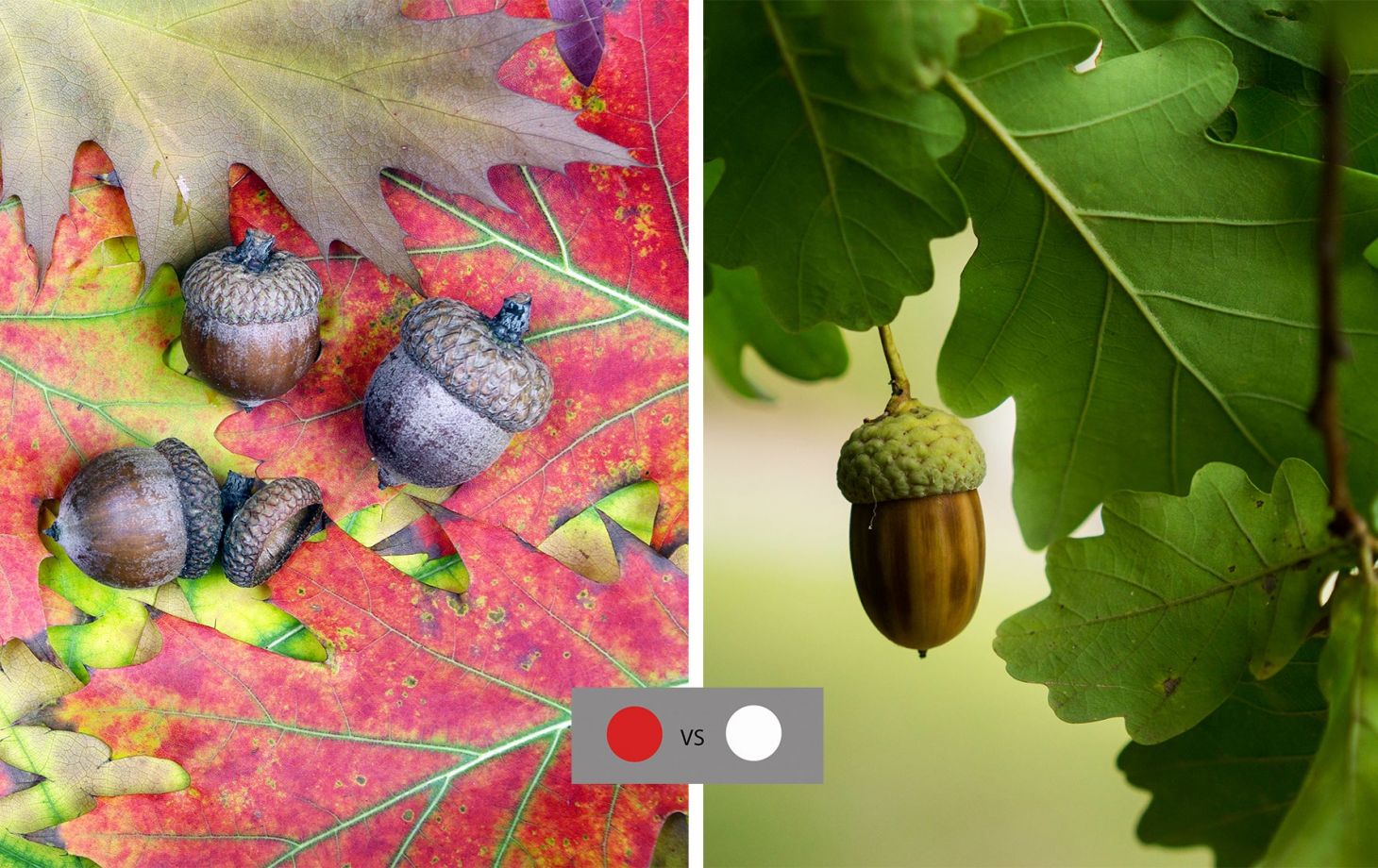
Red oak acorns (left) tend to be rounder in shape compared to the typically more elongated white oak acorn. (Adobe Stock / Field & Stream)
As mentioned, white-oak acorns taste better to deer as a rule. Also, white oaks tend to drop their acorns earlier in the season than reds, so they’re often one of the first hard mast crops available. If you see feeding action tank on your early-season food plots or farm fields, the white oak acorn drop is typically to blame. The shift to acorns can resemble something of a feeding frenzy and can last a week or two; because so many critters like white oak acorns, they’re typically eaten up quickly. White oak trees usually have lighter-colored, furrowed bark, and the leaves sport rounded lobes.
Related: Red Oak vs White Oak”“A Hunter’s Guide
2. Know How to Spot the Best Acorns
It’s easy to assume that all acorns from a particular oak species will taste the same. But it’s not true, any more than apples from trees growing right next to each other will taste the same. Some trees, for whatever reason, produce acorns that don’t taste as good or are rotten inside, and deer will turn up their noses at them, especially at the beginning of the acorn drop, when there are plenty of other trees dropping better-tasting nuts. So, how do you know the difference? Here’s a trick. Pick up a few acorns that still have their caps and split them open with a knife. Then find a few capless acorns from nearby tree and do the same. You’ll find that the capped acorns tend to have rotten or wormy flesh while the capless ones have fine, firm flesh. You can guess which ones the deer prefer.
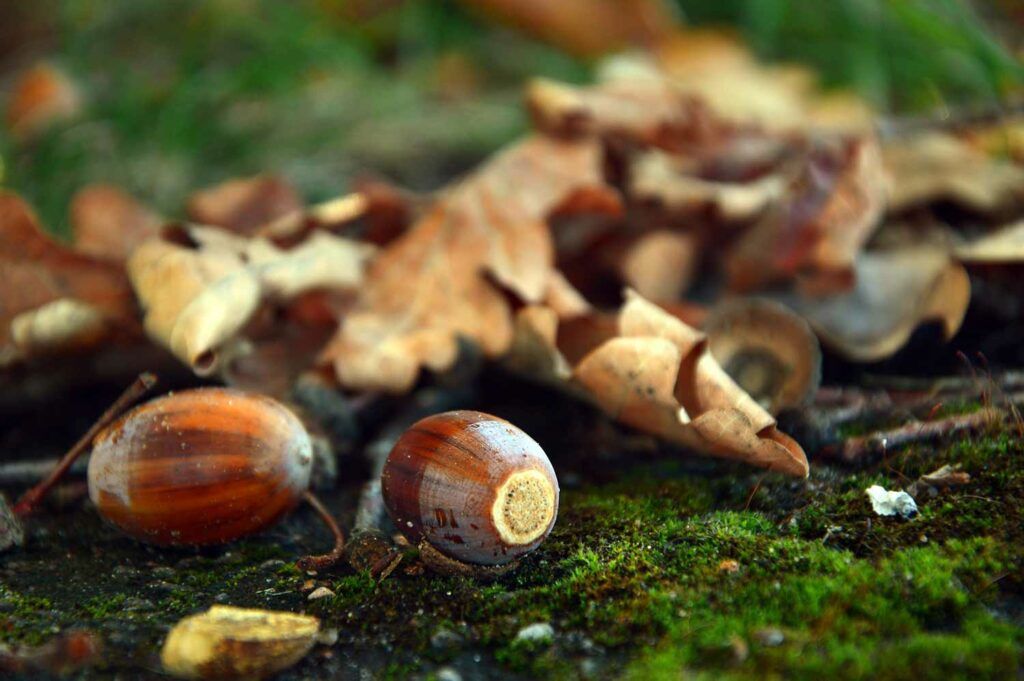
Capless acorns typically have the fine, firm flesh that deer prefer. (Photo/Adobe Stock)
3. Find the Ice-Cream Tree
Taking this concept a step further, in any given oak stand, there is often one particular tree that produces the best-tasting acorns. A big-woods hunting buddy of mine and I have come to call these “ice-cream trees,” because deer flock to them like kids to an ice-cream truck. The ironic thing about these trees is that they often have very few—and sometimes absolutely no—acorns lying on the ground. Why? Because deer, and other critters, are eating them as fast as the fall.
So how do you identify ice-cream trees when they’re leaving almost zero mast for evidence? Two ways. The first is simple: Set up near the tree you think looks best and if you see every deer, squirrel, raccoon, and bluejay head to a different tree, you’ll know where to move your stand to for tomorrow. The second way is to rely on feeding sign. It takes some faith to set up on a spot where the food seems nearly absent, but if you see plenty of droppings, lots of scuffed-up leaves, and visible trails leading to and from the spot, use your binocular to look at limbs above you. If you see plenty of acorns about to fall, then start looking for a stand tree. And, of course, there’s another bit of spoor that can really seal the deal, which leads us to…
4. Dial in on Buck Sign
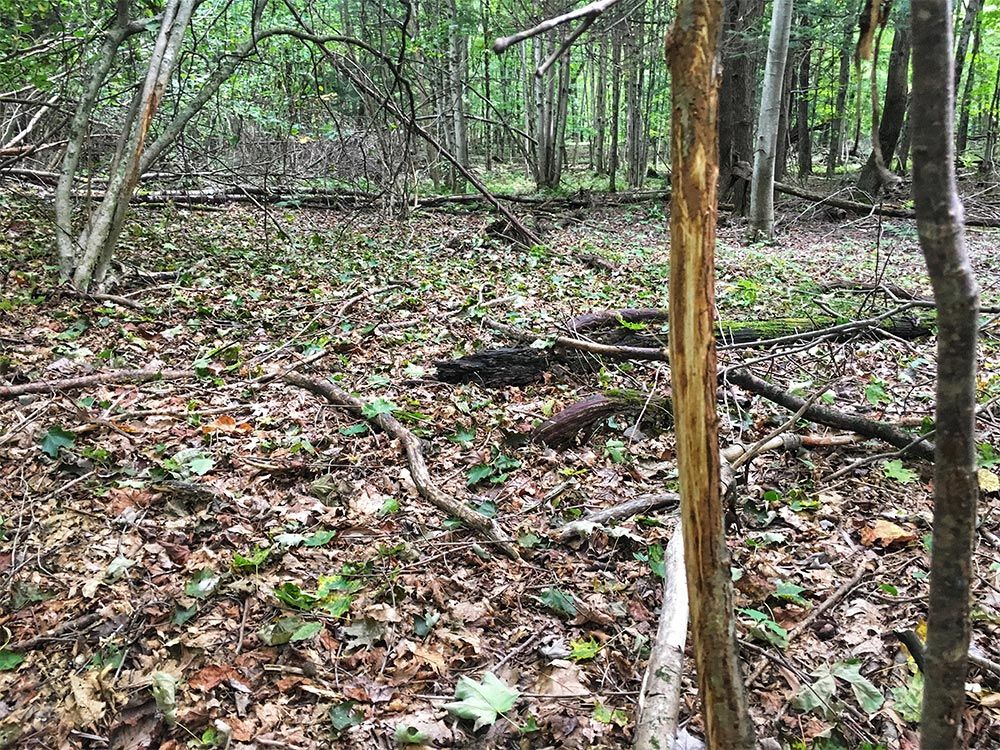
Look rubs and scrapes to tell you which oak trees are dropping the sweetest acorns. And remember that small rubs are often made by big deer in the early season. (Photo/Dave Hurteau)
Many hunters don’t get serious about finding rubs and scrapes until closer to the rut, which I feel is a huge mistake. Bucks start laying down sign as soon as they shed velvet, and one of their favorite locations to drop that spoor is near their favorite feeding areas, including oak flats. A key thing to understand about this early buck sign, however, is that its rarely as impressive as the stuff you find as the rut nears. Don’t let that discourage you.
When I’m scouting in late October and early November, I’m looking for rubs on trees as thick as my forearm or better, and scrapes as big as an elk wallow. But when I’m scouting in September and early October, a rub on a whip-thin sapling or a scrape no larger than a dinner plate will get my attention. Research has proven that mature bucks are the first to make rubs and scrapes, and they don’t always lay into it like they will later on. As proof of this, my buddy Tom and I were scouting a northern Wisconsin oak stand when we found a likely ice cream tree with a handful of sapling rubs and half-hearted scrapes. Tom set up on the spot that night and killed a 160-inch buck. This time of year, any bucks sign is good buck sign, so jump on it.
Related: The Truth About Hunting Buck Rubs
5. Check the Openings and Edges
Sometimes the search for a hot acorn-dropper is as simple as finding the tree(s) getting the most sunlight. In farm country, or any place where there’s a good mix of fields and forests, some of the best oaks will grow right on the field edge. Because these trees receive more sunlight than their deep-woods cousins, they frequently grow taller, healthier and are better at producing acorns. In the big woods, scout for oaks growing on or near the edge of natural openings or cuts.
One of my favorite setups in northern Wisconsin’s big-woods public spots are the oaks growing near recent clearcuts. Loggers are required to leave most hardwoods alone when clearcutting aspen, and the remaining oaks benefit from the additional sunlight and flourish. In both environments, these oaks not only tend to pump out more nuts, but they’re growing on the transition between openings and woodlands. Since whitetails adore edge habitat, these oaks represent a win-win for hunters.
6. Identify the Bedding Areas
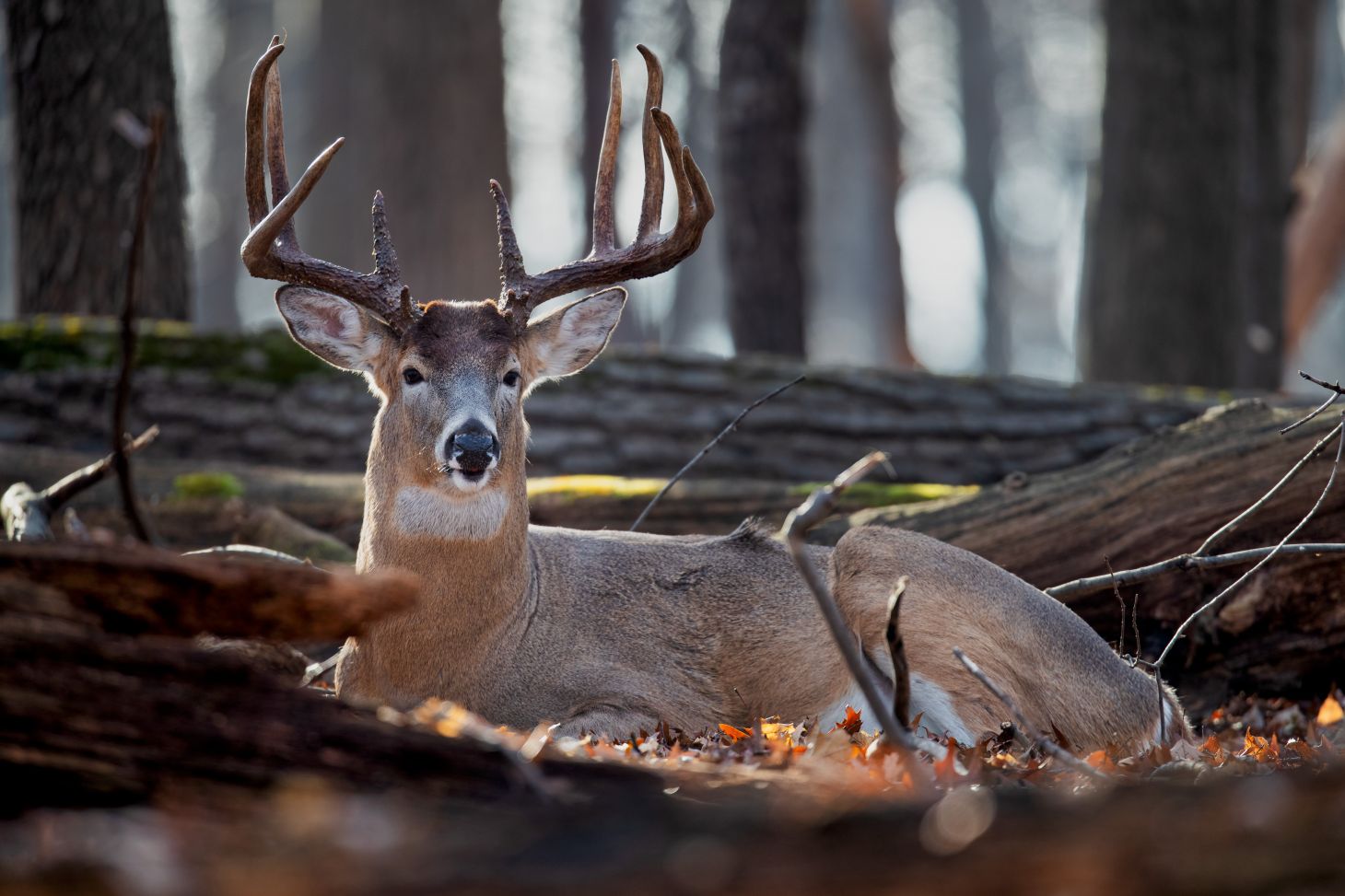
A mature whitetail buck lies hidden among a blowdowns. (Photo/Adobe Stock)
Every farm-country and food-plot hunter understands the need to figure out where deer bed in relation to food sources. Without that information, it’s nearly impossible to construct an ambush for a buck heading to or from groceries. This can be a lot trickier to figure out in the timber, but it’s critical to make you best guess. Start with the entry trails used by deer to get the an oak flat and walk them back away from the food for ways to get the general direction. Then bust out your mapping app and satellite imagery to find the rugged terrain or densest cover nearby that deer would use for bedding. Once I think I understand where deer begin their march to the acorns, I can nail down the best setup and the appropriate wind direction and the safest entry and exit for hunting these spots.
Related: 13 Top Buck Bedding Areas
7. Make Return Trips
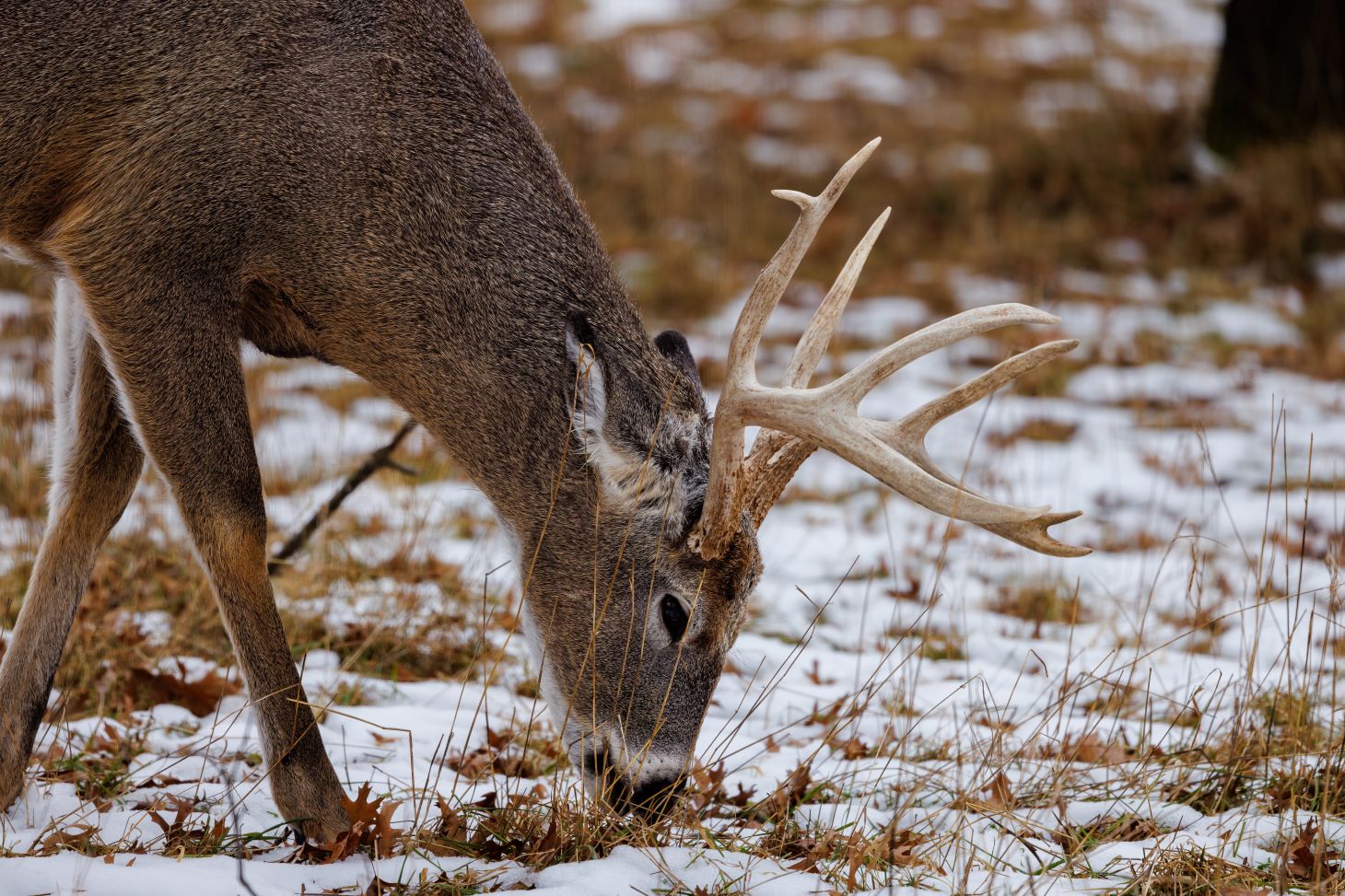
Bucks will continue to eat acorns well into winter. (Photo/Aaron J. Hill – Adobe Stock)
Remember those trees dropping nuts that deer turned their snooty little noses up at in September? Well don’t write them off entirely. Whitetails have the luxury of being picky during early fall, when the landscape is a cornucopia of food and they can forage like their world is an all-you-can-eat buffet. Fast forward just a few weeks, and that opportunity has largely disappeared. Deer (as well as bears, squirrels, turkeys, songbirds, etc.) have had ample opportunity to fatten up on the best-tasting acorns, which disappear quickly. Pretty soon, deer have no choice but to switch to those second-tier nuts they avoided just a short time ago. That makes it important to circle back to check out oak-stand trees that deer were previously ignoring and see if hunger has caused an attitude adjustment regarding the palatability of their nuts. Sometimes this can take awhile, but sometimes its just in time for you to suddenly be sitting over a late-season hotspot.
content_whitetail-hunting
Recommended Products
Read the full article here