

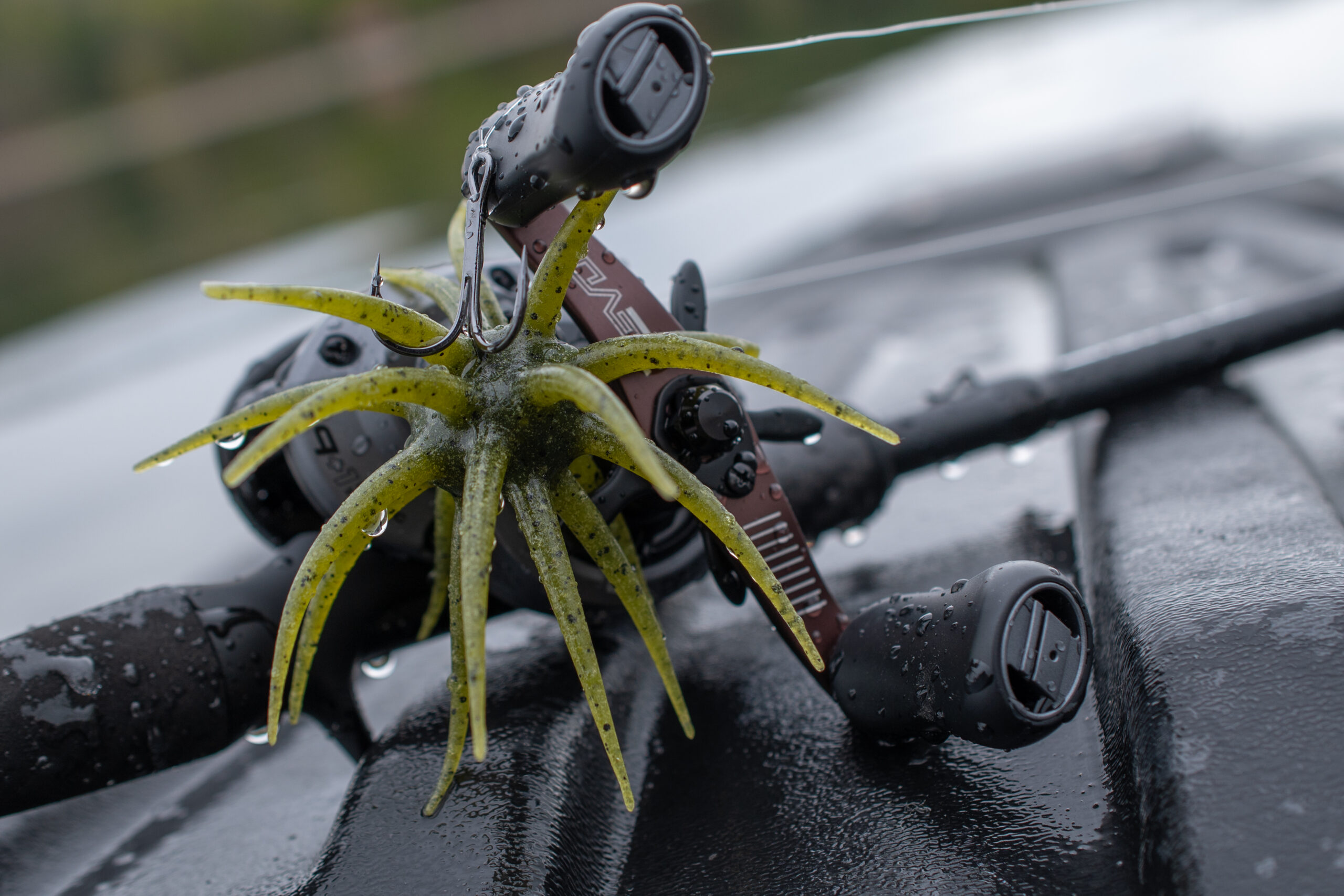
It’s not every day that a lure comes along and revolutionizes bass fishing, but urchin baits have done just that. While relatively new to the U.S., Hideup released the first urchin bait more than 20 years ago. The company called it the Coike. Two decades later, Coike baits gained massive popularity in the U.S. after professional anglers started winning major tournaments with them. That popularity set off a wave of major bait manufacturers producing their own versions of the Coike-style bait, now commonly known as an urchin bait.
Coike and urchin baits feature a soft plastic core with spines or tentacles jutting off in every direction. The bait doesn’t resemble any traditional freshwater prey. Instead, it looks more like a saltwater sea urchin—hence the name. The appendages create enticing action in the water and can trigger aggressive reaction strikes. Urchins have become so popular that companies are now producing specialized storage boxes and terminal tackle designed specifically for rigging these crazy-looking soft plastics.
I jumped on the urchin bandwagon, too, and started boating bass with them. I even tested a range of models to find the best urchin baits on the market. But before you can start catching fish, you need to know how to rig and fish them properly. Here’s a quick guide to help you do just that and start catching fish on the hottest bait in bass fishing.
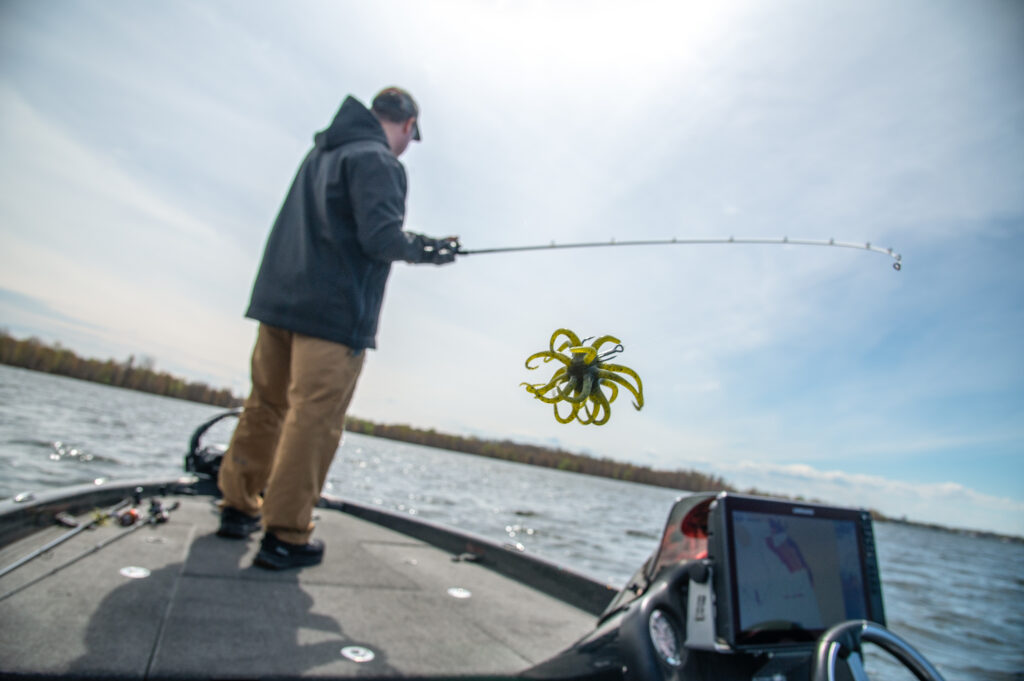
What is an Urchin Bait?
A true urchin bait has two key characteristics: a spherical body and tentacles jutting out in all directions. Most urchin baits also have a hole running through them, used to suspend the bait on a wire within the packaging and keep the tentacles in shape. Anglers also use this channel to rig urchins in all sorts of ways.
How to Rig an Urchin Bait
Anglers rig urchins with everything from dropshots on light line to double frog hooks on 25-pound test. But pairing an urchin with a treble hook and Neko weight has become the gold standard for rigging one of these baits. Some have started using quad hooks instead of trebles, opting for four points and barbs instead of three. In my experience, this is a little overkill. Bass eat this bait really well, sucking it to the back of their throats in an instant—keep this in mind when using a quad hook or even a treble.
To rig a full-size urchin, take a large #1 treble hook and run it through the meat of the bait until the barb pops through. Use some sort of bait keeper to lock the bait on the hook—a simple clipping from a clamshell package will suffice. Then push a Neko weight into the hole that runs through the bait. Try to orient your hook and weight so that the two exposed hook points are aimed up, towards the roof of a fish’s mouth. Adjust the size of the hook based on the size of the bait and Neko weight for the desired rate of fall.
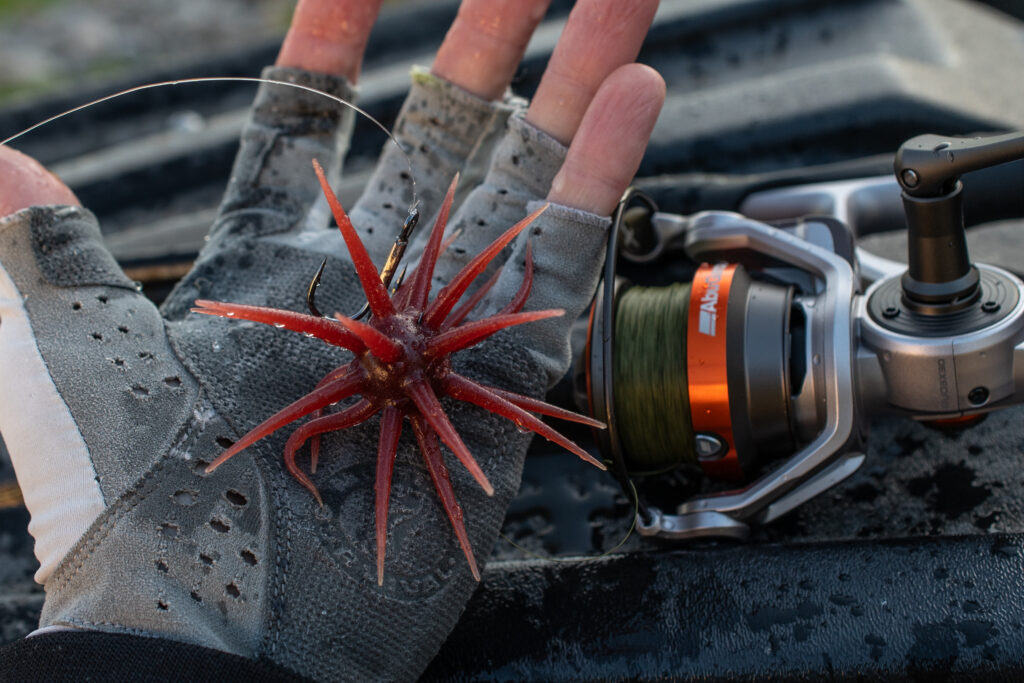
Gear for Fishing an Urchin
For this most common rigging method, a baitcaster will suffice. Start with a 7’ medium-heavy/fast rod and 7:1 gear ratio reel spooled with 15-pound test fluorocarbon. You should adjust your rod length and strength, as well as the size of your line, based on the size of the fish and the cover present.
How to Fish an Urchin
The most popular way to fish an urchin is by using a pop-pop-pause retrieve cadence (similar to how most people fish a jerkbait). This creates a fleeing action followed by an abrupt stall. Curious bass trailing behind the bait inch closer and closer, until they finally collide with it on the pause. Using forward-facing sonar (FFS), you can watch this interaction play out in real time. But don’t be fooled into thinking you need to have FFS technology to fish an urchin—these baits are super effective blind casting down a bank, too.
Urchins also skip surprisingly well, making them great for targeting bass around docks, pontoons, bushes, and other overhanging cover. A word of caution, though—these baits hang up easily when rigged with the exposed treble. So, avoid skipping the bait too far back under a dock, especially past any type of cross beam that’s holding the posts together.
If you’re using FFS, you can keep up with the depth of your bait and its relation to the depth of the fish. Try to retrieve the bait just over the top of the fish. If you pique one’s interest, resist the urge to stop working the bait. While the bass do like to eat this bait on the pause, they’ll often turn off the bait if it begins to fall. Instead, maintain your retrieve cadence, or even speed the bait up as the bass nears. This triggers the bite better.
When fishing an urchin blind (without FFS), don’t overcomplicate things. Toss the bait beside the boat or bank to gauge how fast it falls, then cast it out and let it sink a few feet below the surface. Work the bait back using the pop-pop-pause retrieve and get ready. The bass will typically strike on the pause, so you should automatically set the hook when you go to pop it again. Let the rod load up on the hookset, and then play the fish as you fight them, remembering that you are using a treble hook.
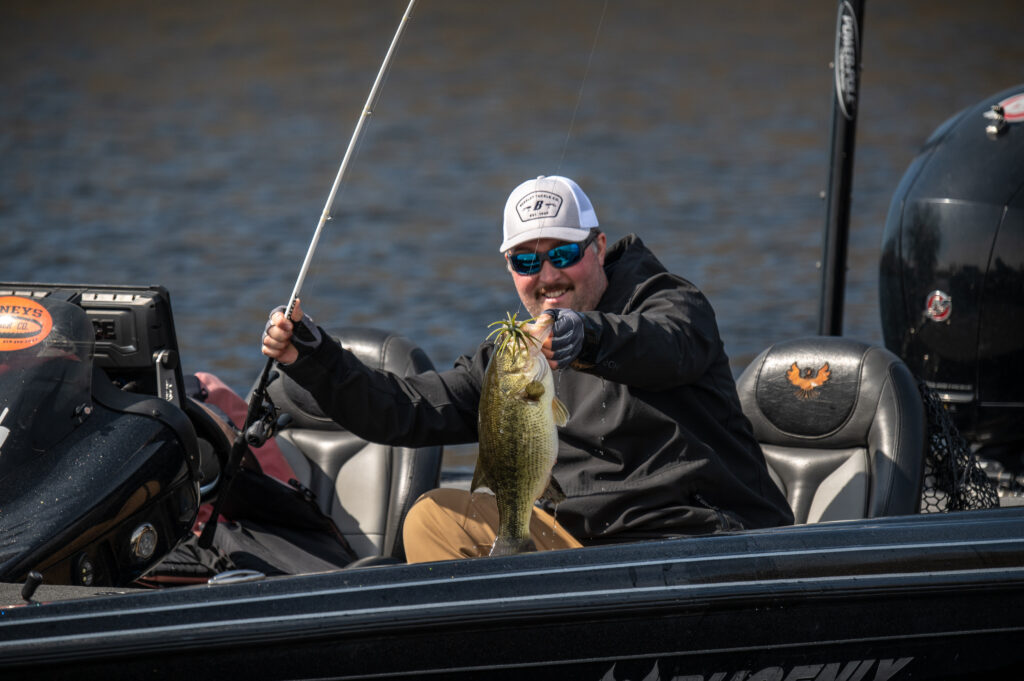
Jump on the Urchin Craze
The 2026 bass season has proven that urchin baits aren’t just another fad. These lures are here to stay, so you should probably learn how to use them if you don’t want to be outfished by all the young guns obsessed with this bait. There are several ways to rig and fish urchins, but start simple. Grab a treble hook, Neko weight, and urchin bait, then hit the water. Whether you’re watching bass on the graph, casting to them blind, or skipping back under cover, the pop-pop-pause retrieve cadence works well. Avoid getting the bait really close to cover, as it’s prone to snagging. Remember to lean into the hookset whenever you feel the rod load up. Those simple tips will help you get in on the fun with the most effective bait that we’ve seen in over a decade: the urchin.
content_bass-fishing

EXCITING NEWS
Membership Now Includes

Recommended Products
Read the full article here