
Crankbaits have been catching bass for decades. Just go and check your grandpa’s old Plano tacklebox and you won’t find any jig heads with a pack of Freeloaders or even a Ned rig head or a pack of Z-Man plastics. Instead, you’ll likely find a few jointed jerkbaits, some old Rapala Floating F-13’s, and plenty of crankbaits.
Back in the day, hard baits were the ticket. You could chuck and wind conventionally, or troll them when the bite slowed down. I’ve mentioned other “lost” baits and techniques in previous articles, and to my amazement, crankbaits are beginning to enter the realm of the old and forgotten.
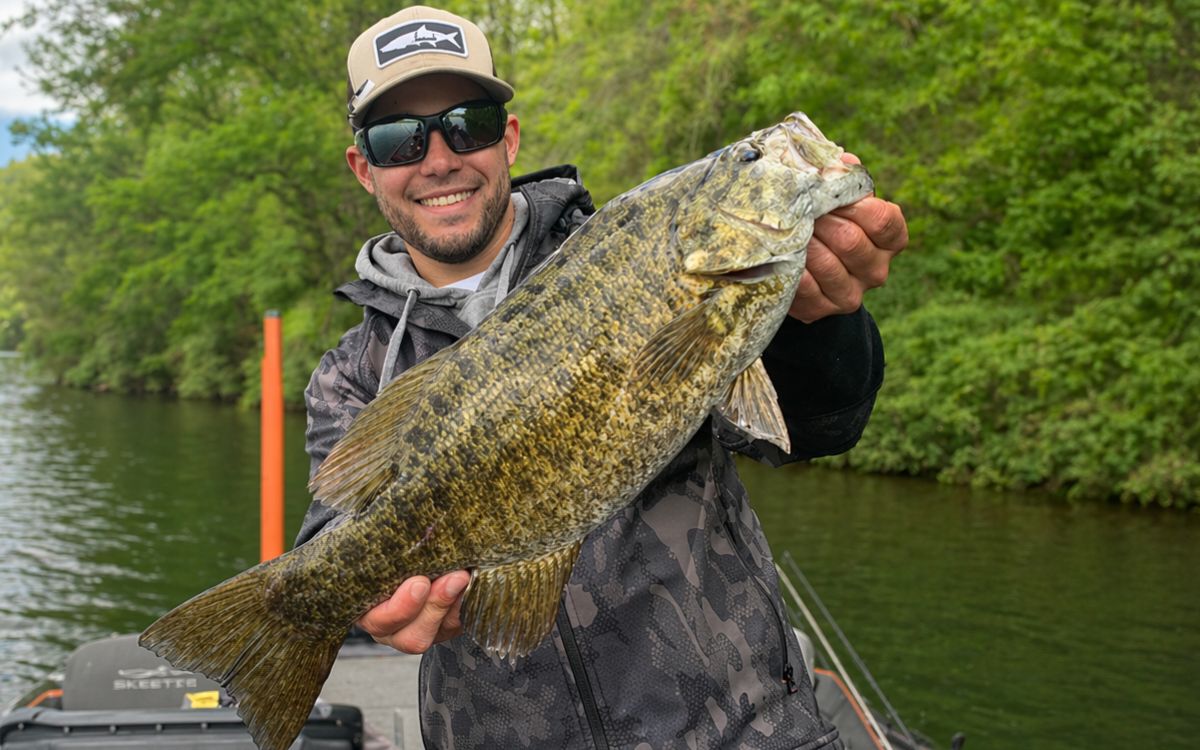
Here’s why that’s so surprising to me: they still catch plenty of bass. And in the spring, when the bass really flood to the banks, there isn’t a better option available to anglers who want to throw a moving bait and catch a pile of bass. Here’s everything you need to know about throwing a squarebill crankbait this spring.
The Squarebill Crankbait
The squarebill crankbait, in short, is a piece of hard plastic made to mimic the shape of a baitfish with two treble hooks attached to the body. On the nose of the bait is its namesake, a square bill, that helps the bait dive down in the water column and deflect off of rocks and cover.
That deflection is what makes the squarebill so effective. Sure, anglers can catch fish by simply just swimming a squarebill through the water column, but where it really shines is in triggering a reaction bite. As the squarebill rolls across the bottom bouncing from rock to rock or off of a stump or laydown, the physics cause it to hang up, even if just for a moment, which loads up the tip of your rod and thusly launches the squarebill off of the cover in an erratic manner.
For a bass, that action is almost irresistible. Rather than having a long time to assess a bait and decide whether or not to bite, this technique forces them to make a decision in milliseconds before their meal (the squarebill) careens past and out of view. This is why we call it a reaction strike. Similar to our own reflexes in motion when a buddy throws something at you unexpectedly, you react out of pure instinct rather than through a thought process. The bass are no different when a squarebill deflects past their head.
How to Select and Rig a Squarebill Crankbait
Similar to other hardbaits, rigging a squarebill isn’t rocket science. But there are options you can (and should) consider to up your odds of a successful day on the water. First and foremost, I always recommend swapping out the factory treble hooks for something a little higher quality. By no means is this a knock on any singular manufacturer, but in almost every case, to save money on the production line, they’ll be opting for cheaper treble hooks. My favorite replacement treble hook is the Owner Stinger treble. With a good pair of split ring pliers, you should be able to swap both hooks within a minute or two.
If you’re really looking to go down the rabbit hole, you can even upgrade your split ring on the nose of the bait for different actions based on the shape you choose. I’ll admit, I’ve done this, but don’t find it necessary very often.
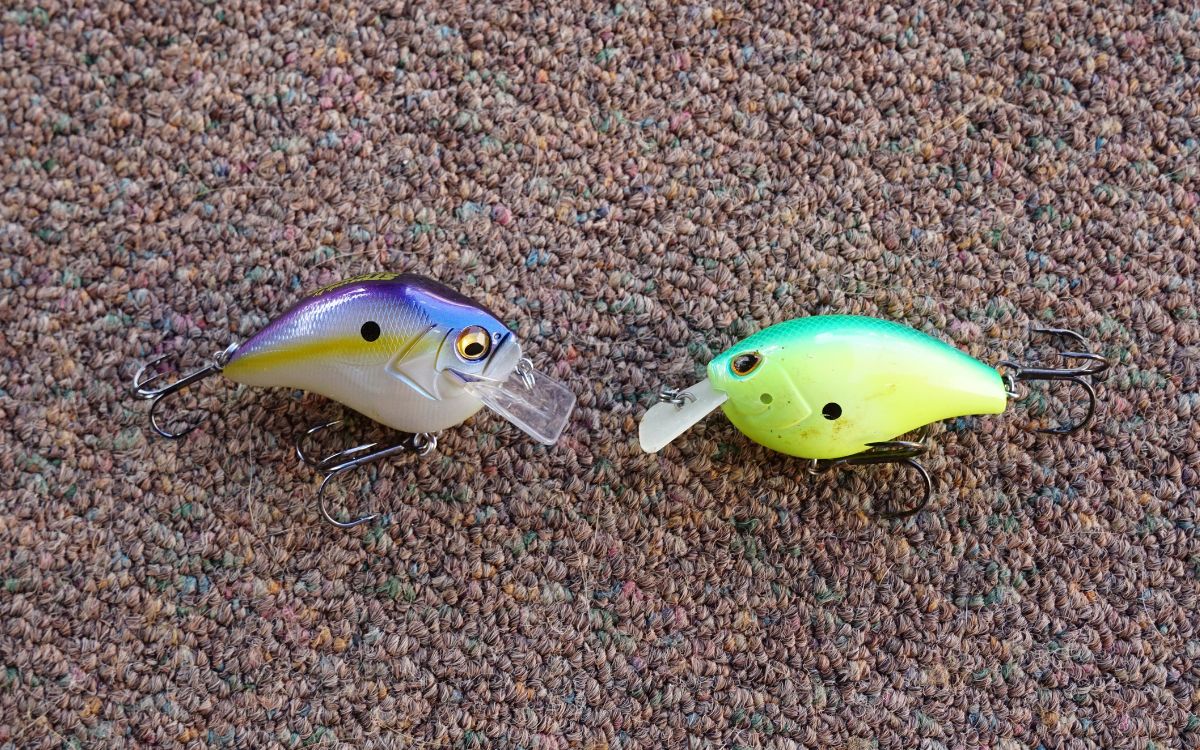
Aside from the terminal upgrades, the second most important choice is the squarebill itself. The color, size of the bait itself, and size of the bill can all make a difference. In most cases, I stick between a 2” and 3” crankbait body size, and a bill that runs anywhere from 2 to 6 feet. Thankfully, most packages will give you a good idea on the depth ranges with it printed front and center. As for your color selection, it’s really no different than any other bait. In clear water scenarios, try to match the baitfish in that particular body of water to the letter. In dirty water, lean more heavily on bright colors like a chartreuse. Since the fish won’t be staring the bait down, your goal is to simply give them a quick target to hit, so whatever stands out the most should be your first choice.
What Makes the Squarebill Crankbait So Effective?
The deflection of the squarebill is the key to its effectiveness. Beyond that, the squarebill catches so many bass is its ability to cover water. In the spring, as the water temperatures rise into the 50’s and 60’s, bass flood to the shallows to start their final preparations to spawn. While there are certain areas that they tend to flock to, the reality is that when this push happens, you can typically find them on almost any bank. This can make it difficult to hone in on a specific area or structure type if your goal is to catch numerous fish in an outing.
Developing a pattern is a big key for successful bass anglers, but sometimes the pattern can be as simple as covering water up shallow. On those days, a squarebill is tough to beat. Turn the trolling motor to 100 and don’t take your foot off the pedal, just keep casting and winding. In the time it takes a finesse angler to work down a 100-yard stretch of bank, you’ll have covered 4 or 5 times that amount of water. And if you can cover more water effectively, you’ll catch more bass.
The key is hitting the window where the bass are keyed up and eating almost anything they see. This typically happens during the initial push where the water is warm enough to stay shallow for the foreseeable future. This normally occurs when water temps finally crack into the low 60’s mid-day for the first time each spring. In that approximately week-long window, the bass are on the prowl and ready to eat. When your squarebill comes ripping by and deflects off of their newfound home, they can’t resist the opportunity at an easy meal.
How to Fish a Squarebill Crankbait
A squarebill should be fished just like you fish other moving baits like a chatterbait or spinnerbait. Rather than simply cast and reel, the best squarebill anglers know to add their own cadence to the retrieve. This is especially important on heavily pressured bodies of water where the bass might have already seen their fair share of crankbaits come flying past their head.
For me, I like to add a stop and go every few seconds, all the while feeling for a good piece of cover to cause a deflection. The stop-and-go method is effective in areas where cover is more sparse and the bass might be tracking the squarebill waiting for a reason to react. When it comes to a screeching halt in their face, that’s typically enough to warrant a bite.
But, in areas where cover is more readily available, or even visible to you, adding your own cadence becomes a little less necessary. Rather, if you can see a large stump or boulder, cast out beyond the target, slowly work your bait to it and purposefully hit the backside of the cover. This will load the rod and cause the bait to deflect. By simply resuming a slowed reeling pace during this deflection period, you’ll be able to detect the bite and set the hook. To me, there is no better feeling than knowing when you’re going to get bit, and typically, when you can see the cover you’re fishing with a squarebill, it’s like clockwork.
The Gear You Need to Fish a Squarebill Crankbait
Picking the Right Rod
Outside of the squarebill itself, the rod you use when throwing a squarebill crankbait, or any crankbait for that matter, is critical. Unlike many other techniques out there, you really can’t get away with throwing a squarebill on any old medium rod. Instead, most serious bass anglers lean toward glass cranking specific rod options. These are built with with a gradual taper, a sturdy backbone, and they are made to absorb and redistribute the shock of your crankbait deflecting off of rocks or cover. These rods also help you keep the bass hooked by maintaining pressure on the lure throughout the fight thanks to the gradual taper.
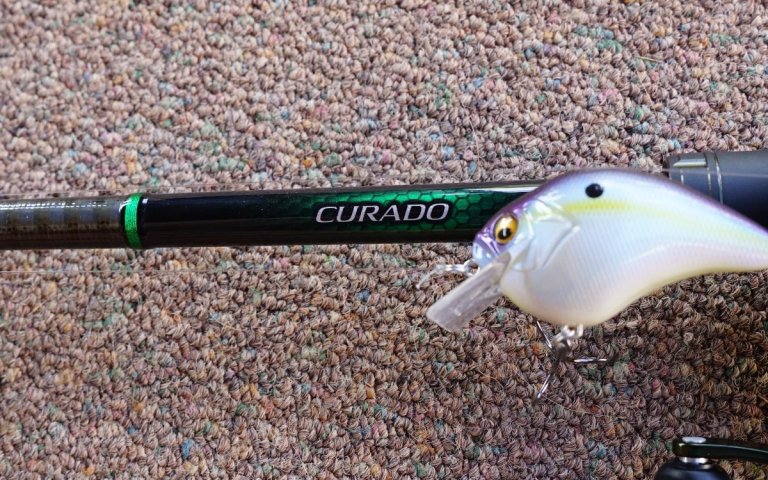
I’ve tried many different glass rods throughout the years, but my favorite currently is the Shimano Curado Glass Crankbait rod. For squarebills, I opt for the 7’4” medium heavy moderate rod. This option gives me the ability to launch a squarebill along the shoreline and plenty of backbone to swing a hookset home.
Shimano Curado Glass Crankbait Casting Rod
See It
Picking the Right Reel
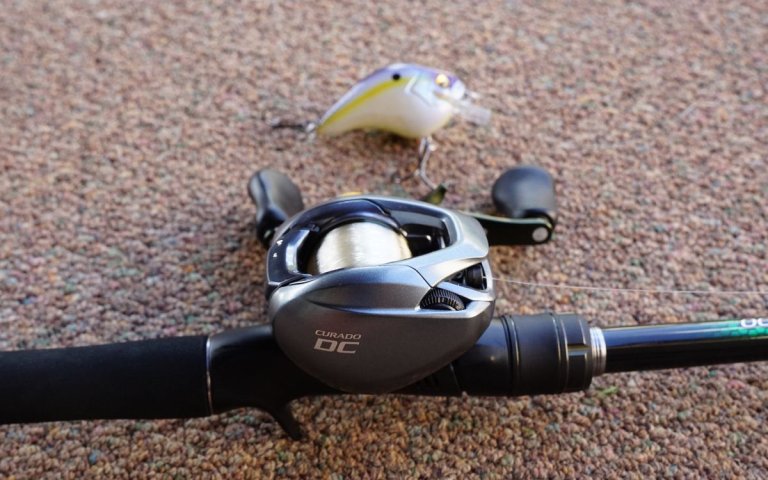
The reel you choose for your squarebill crankbait setup is important as well. When cranking, you’ll want a reel that allows you to control the speed of your retrieve, while also offering a quality drag system to help reduce the number of lost fish during the fight. For deep cranking applications, many anglers choose a low gear ratio, but for squarebills, I’ve found a higher gear ratio really allows me the option to burn the bait along the bank, or slow down my reeling cadence if I want to crawl it. Personally, I like having the best of both worlds at my fingertips. My go-to reel is the Shimano Curado 200 DC in a 7.4:1 gear ratio. The deep spool holds a ton of line for those long casts, and the drag is impressively smooth.
Shimano Curado 200 DC Casting Reel
See It
The Best Squarebill Crankbait
Deciding upon the best squarebill crankbait is like arguing with someone about the best flavor of Doritos, it all comes down to personal preference. With that said, the action and depth is important, so try to find one with a wide wobble and sturdy bill. For my fishing, I tend to lean heavily on the Strike King KVD Elite 1.5 and the Megabass S Crank 1.5. Both options excel in shallow water, and they have different actions which lets me try to really hone in on the bite when it gets hot.
Line
When spooling up your squarebill reel with line, I’ll always point you toward fluorocarbon. Some anglers may opt for high-end monofilament for certain applications, but you’re better off with the abrasion resistance of fluoro. As for pound test, I almost exclusively use 12 pound, unless I’m fishing around some terribly thick laydowns and a heavier line needs to come into play. The 12 pound allows the bait to get to depth quickly and can hold up to the abuse of rocks and stumps throughout a day of fishing. My favorite option nowadays is a newer option from Berkley called GinClear. This new fluoro formula offers a low memory which allows me to make farther casts and cover even more water. So far, I’ve been pleased with the results.
Final Thoughts on How to Fish a Squarebill Crankbait
The squarebill crankbait has always been one of those baits that just catches fish — for the pro level tournaments all the way down to the bank angler fishing during a camping trip. They’re proven, and yet, many modern anglers seem to ignore their existence. That’s fine by me. It just means the bass won’t be as accustomed to seeing them. If you’re looking for a banner day this spring, tie on a squarebill and hit the banks. You won’t be disappointed.
Read the full article here