
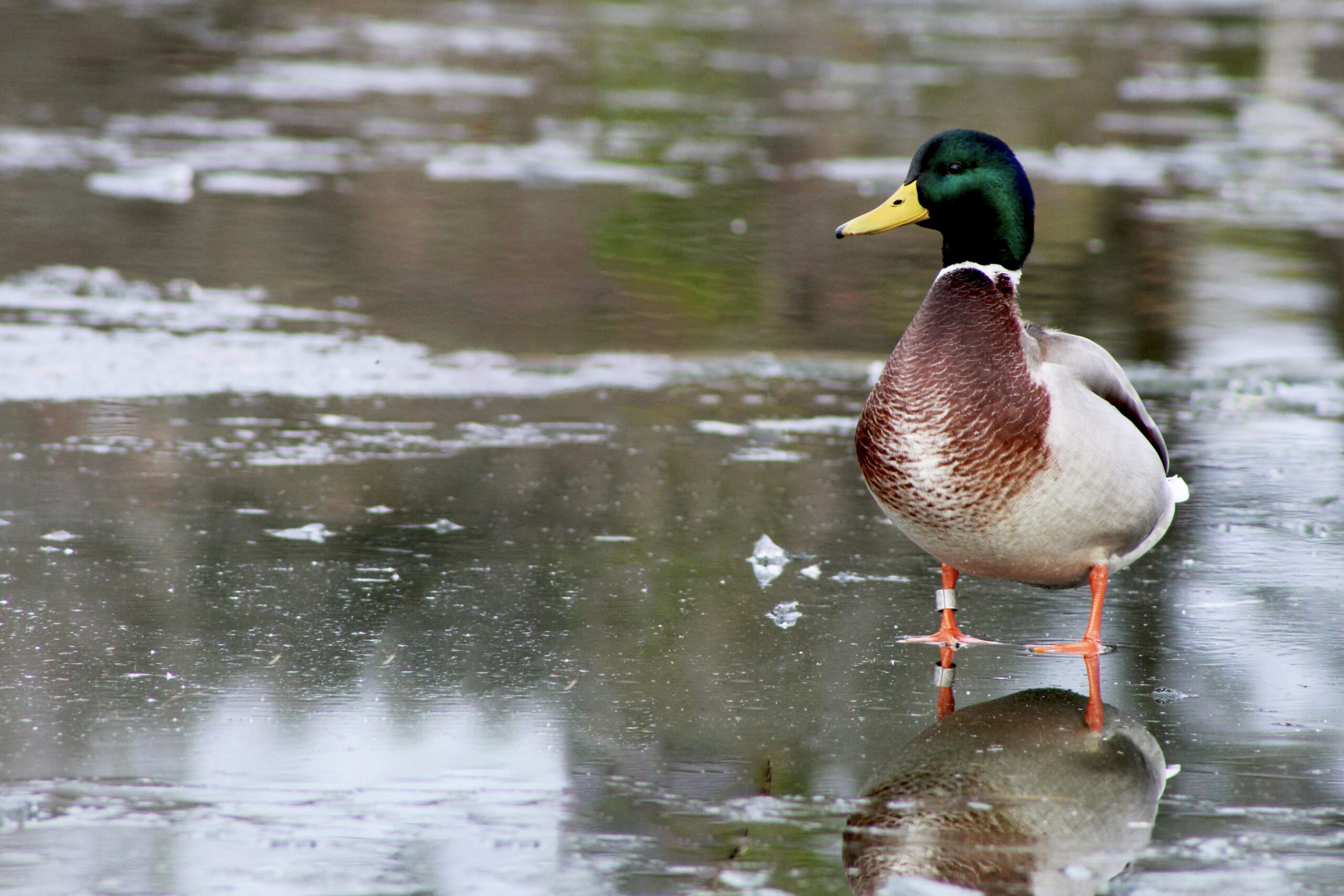
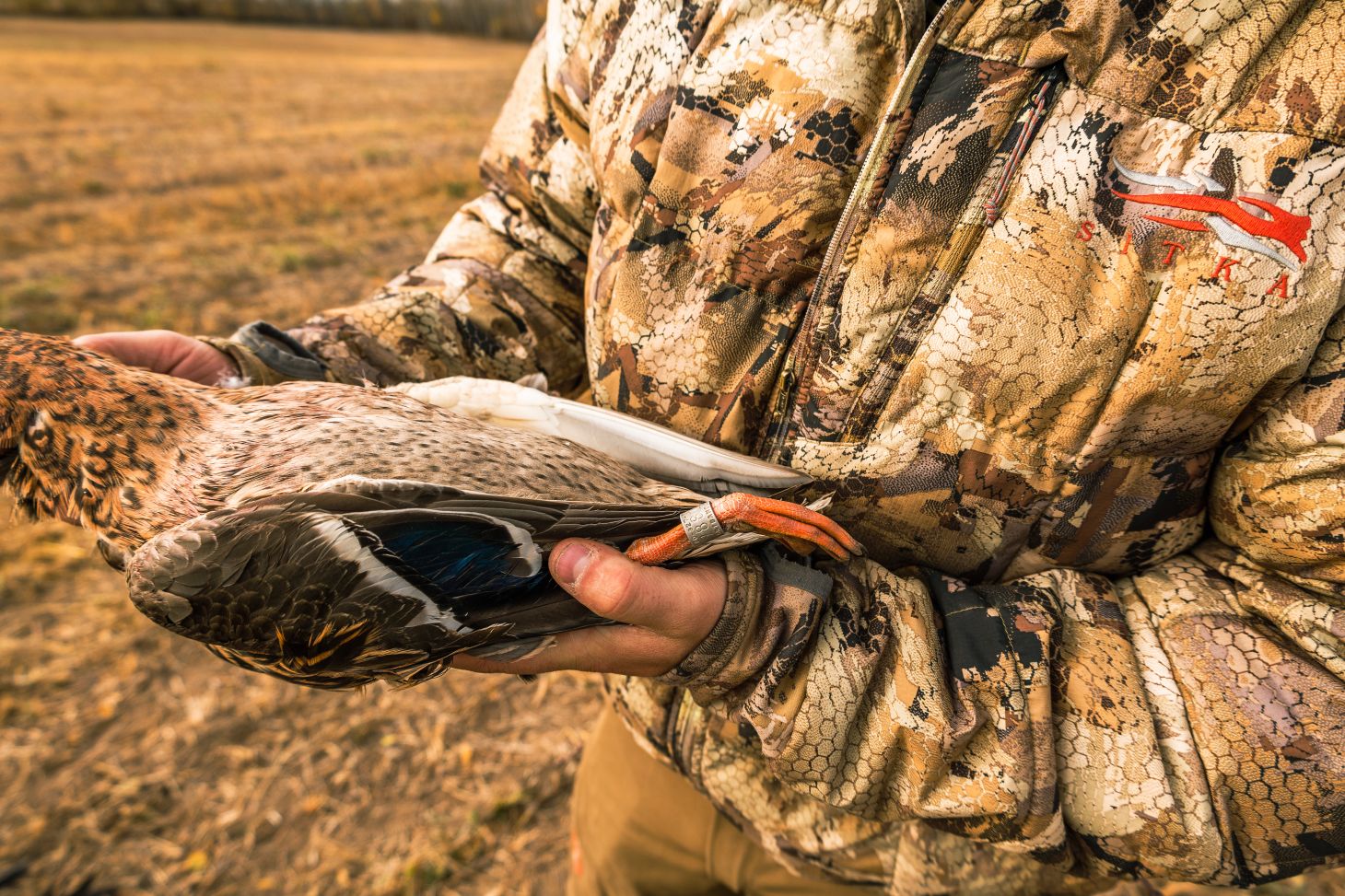
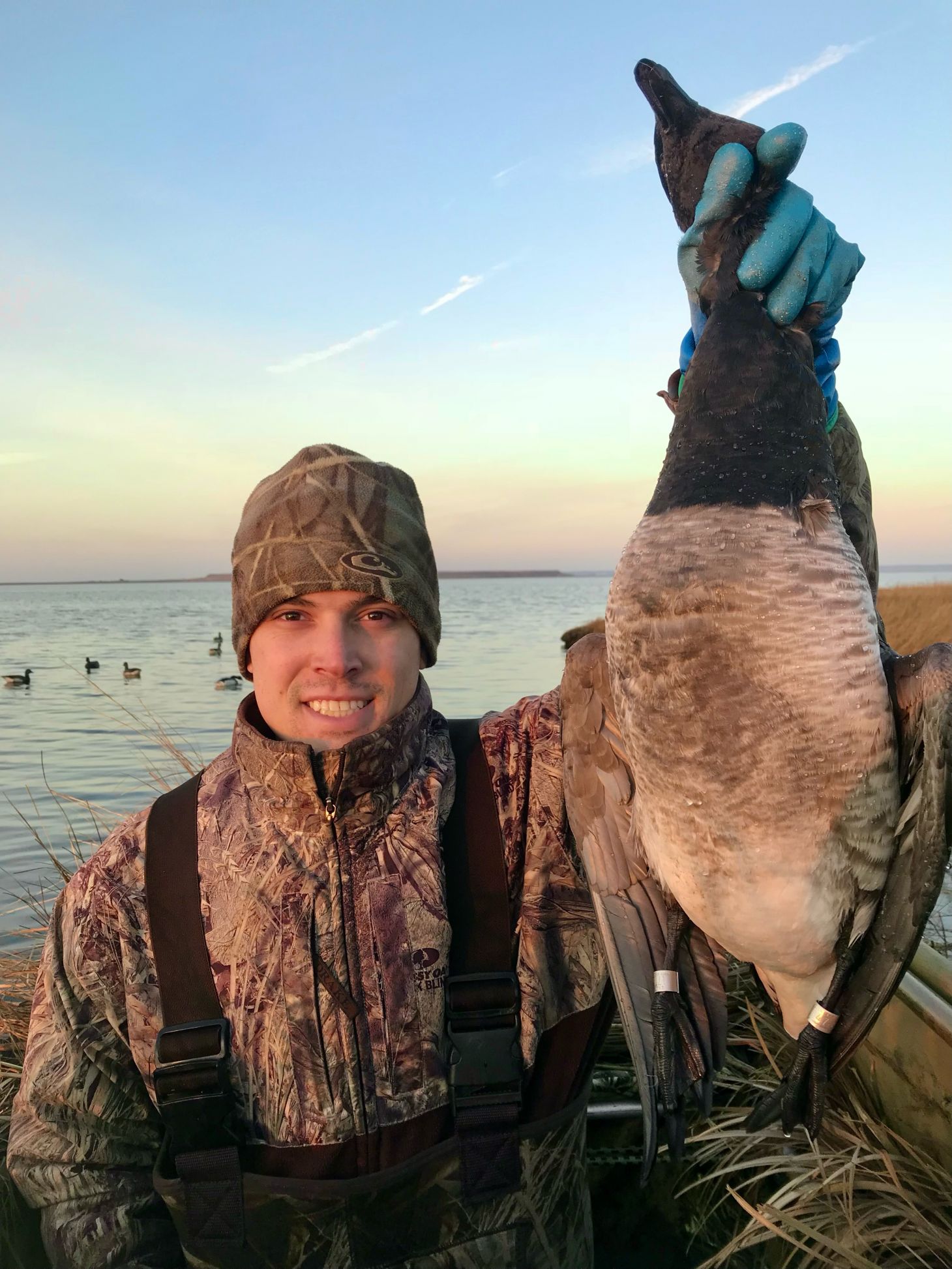
Duck and goose bands are critical conservation tools. They’re also prized souvenirs for waterfowlers. And if the hunter takes the time to report a band, it can be the beginning of an incredible story. Most waterfowl leg bands feature an eight- or nine-digit sequence that is tied to the bird’s age, sex, and banding location. Paired with the recovery data (when and where the bird was killed), biologists can determine crucial information about flight paths and migration patterns.
The odds of shooting a duck or goose wearing a piece of jewelry are low. This is why so many waterfowlers wear these aluminum and stainless-steel bands around their neck with pride. But when the band numbers reveal something crazy like an unimaginable distance traveled or a bird’s age that is older than yourself, then you have a hunting story to last a lifetime. The birds below are some of the oldest and most surprising waterfowl ever recovered in the leg-banding program.
Old Birds
Every hunter wants to know how old their banded duck or goose is. That’s maybe the coolest bit of information a hunter can learn after reporting a band. Below is a list of old-timers—the ducks and geese that were particularly good at avoiding hunters.
The oldest Canada goose band ever recovered was from a female taken in 2001, 33 years and 3 months after it was banded in 1969. The oldest wild duck was a 29 ½-year-old canvasback. Here are some of the other oldest waterfowl bands ever recovered by species:
- Mallard: 26 years, 4 months
- Black Duck: 26 years, 5 months
- Wood Duck: 22 years, 6 months
- Bluewing Teal: 23 years, 3 months
- Specklebelly: 23 years, 6 months
- Ross’s Goose: 22 years, 6 months
- Sandhill Crane: 33 years
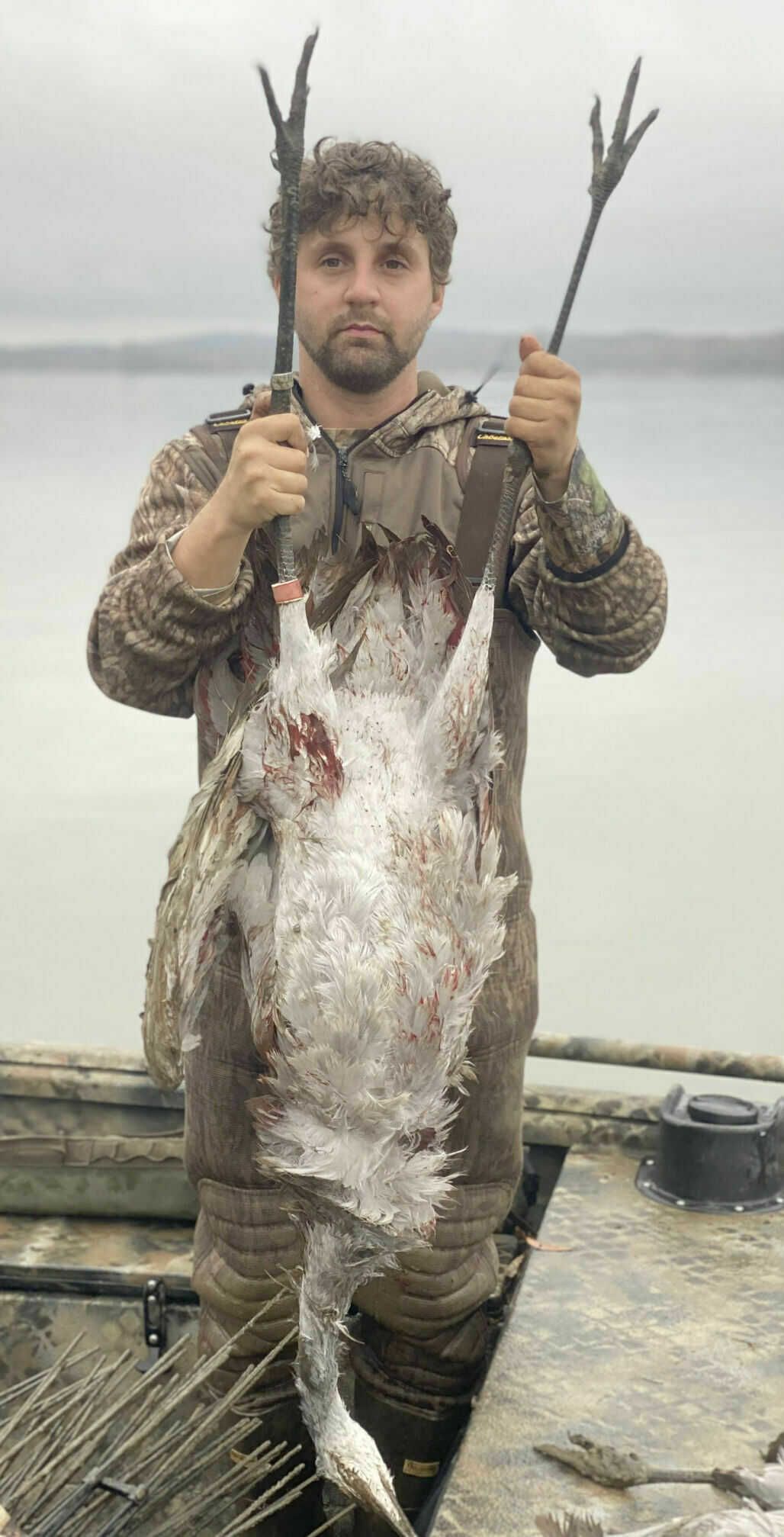
One of the most notable birds on this list is the 33-year-old sandhill crane shot in December 2022. Austin Davis was hunting near Chickamauga Lake in southeastern Tennessee when the crane, five years older than Davis (28) at the time, came over the decoys. The U.S. Fish & Wildlife Service issued Davis his certificate of appreciation and confirmed that his was the oldest sandhill crane ever recovered.
Going the Distance
After determining a bird’s age, hunters will often go into Google Maps to see how many miles a duck or goose traveled from the banding location. Those distances can be astonishing, with many birds migrating over the Canada/U.S. border during the fall. Sometimes, the distance between the banding location and the recovery site is so great that it doesn’t seem possible for a bird to survive the flight. These are three of those birds.
- A bluewing teal banded near Oak Lake, Manitoba, was shot near Lima, Peru, having flown 4,000 miles south.
- In 1954, a banded pintail was shot in Naucuspana, Mexico—nearly 3,000 miles away from where it was banded in Athabasca, Alberta.
- In 2015, California hunter Eric Heidman shot a banded pintail on opening day that traveled over 5,000 miles from its banding location—Saitama Duck Refuge in Obayashi, Japan.
Lunch Meat
Hunters aren’t always the first to encounter a band. In 1984, a northern pintail banded in the Northwest Territories was recovered 13 months later in the stomach of a Florida alligator on Orange Lake in Marion County. Researchers also recovered a banded coot in another alligator on the same lake two years earlier.
According to Ducks Unlimited, a California biologist conducting a food study recovered a banded merganser. After examination, the scientist found a Wyoming trout band (yes, trout are banded, too) in the stomach of the common merganser, which is commonly referred to as a “fish duck.”
International Travel
Since 1977, there have been 16 pintails banded in Japan that were shot in California—5,000 miles away. The last Japanese-banded pintail to be recovered in California was shot by previously mentioned hunter Eric Heidman in 2015. He shot the bird on opening morning around 10:30 a.m. at Delevan National Wildlife Refuge.
Back to Back
It isn’t uncommon for serious waterfowlers to go years between shooting bands. Adding just one piece of jewelry to your lanyard in a season is an accomplishment, but adding more than one requires a fair amount of luck. The following two stories take single-season bands to another—almost miraculous—level.
In 1962, Dr. Stan Chace shot a banded goose in October. Two months later, in December, Chace shot another banded goose that revealed a consecutive band number to the first goose—518-31661 and 518-31662. Both birds were banded in 1959 at Goose Lake.
In 2025, 63 years after Chace killed those consecutive bands in a single season, Glenn Gillis experienced a similar situation in one day. Needing two birds to fill his limit on the last day of the season, Gillis doubled on a pair of geese. Both birds were banded and sported consecutive numbers—1328-40339 and 1328-40340. You can read more about his hunt and the band info here.
Similarly, Howard Ewart shot a pair of banded drake mallards on consecutive shots while hunting on the Big Horn River near Thermopolis, Wyoming, in 1996. Just four years prior, on Christmas Eve 1992, Jack Needles shot a banded drake black duck and a banded hen mallard as a pair near Stone Harbor, New Jersey. The bands were only 60 digits apart—1287-82810 and 1287-82870.
content_waterfowl-hunting

EXCITING NEWS
Membership Now Includes

Recommended Products
Read the full article here