

Few anglers would argue with the idea that rainbow, brown, and brook trout are the best-known, most widespread, and most sought-after trout in North America. While cutthroat trout might not get all the glory, they are an important and popular trout species in their own right. Members of the Salmonidae family, cutthroat trout are native to Pacific Ocean tributaries, the Rocky Mountains, and the Great Basin. They have been stocked outside those regions, but don’t have a national footprint like brookies, rainbows, and browns. “Cutties” are popular gamefish across their primary range and are particularly beloved by fly anglers for their willingness to rise for dry flies. Here is everything you need to know about cutthroats, including popular subspecies, favored habitat, and fishing tactics.
Appearance and Biology
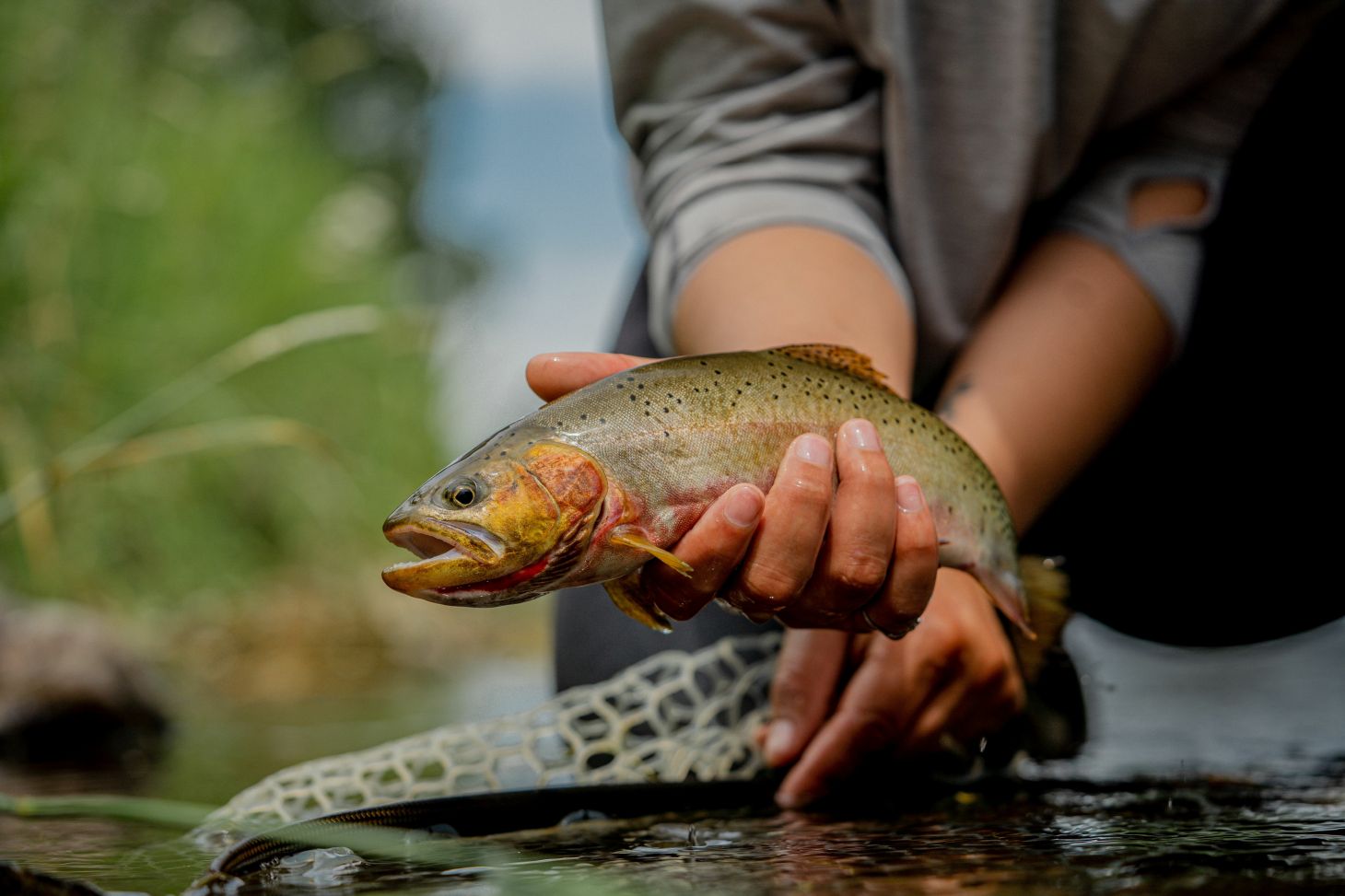
There are more than a dozen cutthroat subspecies, including full-time stream dwellers, species that spend time in both saltwater and coastal streams, and even the giant and majestic Lahontan cutthroat trout found in Pyramid Lake and other lakes in Nevada, California, and Oregon. Cutthroats are known for the distinctive orange/red slash found on the lower jaw of most—but not all—subspecies. General coloration and spot patterns vary significantly among the different subspecies. Like other salmonids, cutthroat trout require clean, cold, well-oxygenated waters.
Cutthroats are closely related to rainbow trout. Both spring spawners, the two can hybridize. The resulting “cuttbows” are fertile, but hybridization is considered to be a threat to native cutthroat trout in some streams. Idaho state fisheries officials, for example, note that hybridization with non-native rainbows is the biggest threat to native cutthroat in the South Fork of the Snake River.
It typically takes from three to five years for juvenile cutthroat trout to mature. Spawning usually occurs when water temperatures range between 43 and 46 degrees Fahrenheit, and female cutthroat deposit 200 to 4,000 eggs in spawning redds (nests) constructed in stream gravel.
History and Habitat
William Clark described cutthroat trout in his journals from his expedition with Merriwether Lewis in the early 1800s. As a result, the species’ scientific name is Oncorhynchus clarkii. Cutthroat subspecies vary substantially in size, appearance, behavior, and favored habitat. Coastal cutthroat, for example, are native to coastal tributaries from Northern California to Alaska. Many of those populations live in streams year-round, but some move between saltwater and freshwater.
Unlike some sea-run salmonids, such as Pacific salmon and steelhead trout, these coastal cutthroats are not anadromous, meaning they mature in the ocean and then return to streams to spawn. Instead, they are considered diadromous, meaning they move back and forth between freshwater and saltwater.
Cutthroat trout that live in lakes can sometimes naturally reproduce in those lakes if they feature good spawning habitat—gravelly shallows where wind churns up the water. However, the most robust lake populations are typically found in stillwaters with inflowing streams, where the fish swim up in the spring to spawn.
A good example is Yellowstone Lake and the upper Yellowstone River system. It could be argued that the popularity of fishing for spawning cutties in the Yellowstone River in spring was a major contributor to the growth of the popularity of Yellowstone National Park early in the 1900s.
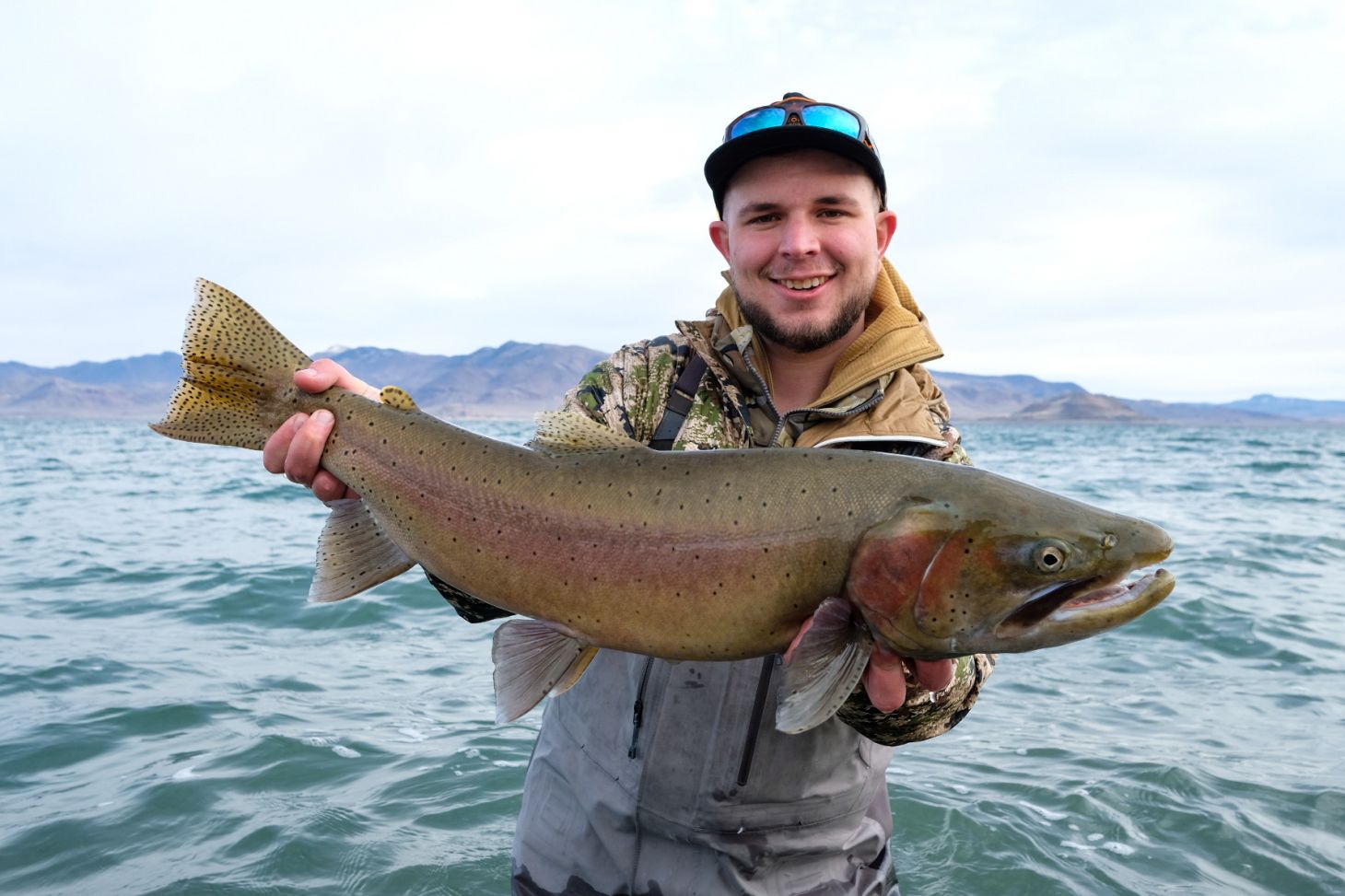
Sea-run cutthroats sometimes run up coastal rivers in the fall to feed, a behavior that helped lead to the nickname “harvest trout.” Lahontan cutthroat trout are a unique subspecies found in only a few waters in the Great Basin, such as Pyramid Lake. They can withstand water that is too alkaline for other trout species. Lahontans can grow to massive size, such as the 41-pound Pyramid Lake monster currently listed as the all-tackle world record. Existing in just a fraction of their historic range, Lahontan cutthroat trout have been the focus of extensive conservation efforts by state and federal fisheries agencies and nonprofit conservation groups such as Trout Unlimited.
Many state fisheries agencies in the West stock fingerling cutthroats in alpine lakes that aren’t able to support natural reproduction. In fertile lakes, such as those with freshwater shrimp, those stocked cutthroat can reach 20 inches and beyond in three years.
Cutthroat Trout Fishing: Tips and Tactics
Because cutthroat trout subspecies vary so much in size and habitat, fishing tactics and techniques also differ. The approach to catching small coastal cutthroats from a headwaters creek in Oregon’s Coastal Range couldn’t be much different than how anglers target Pyramid Lake’s beefy Lahontan cutthroat.
Rivers and Streams
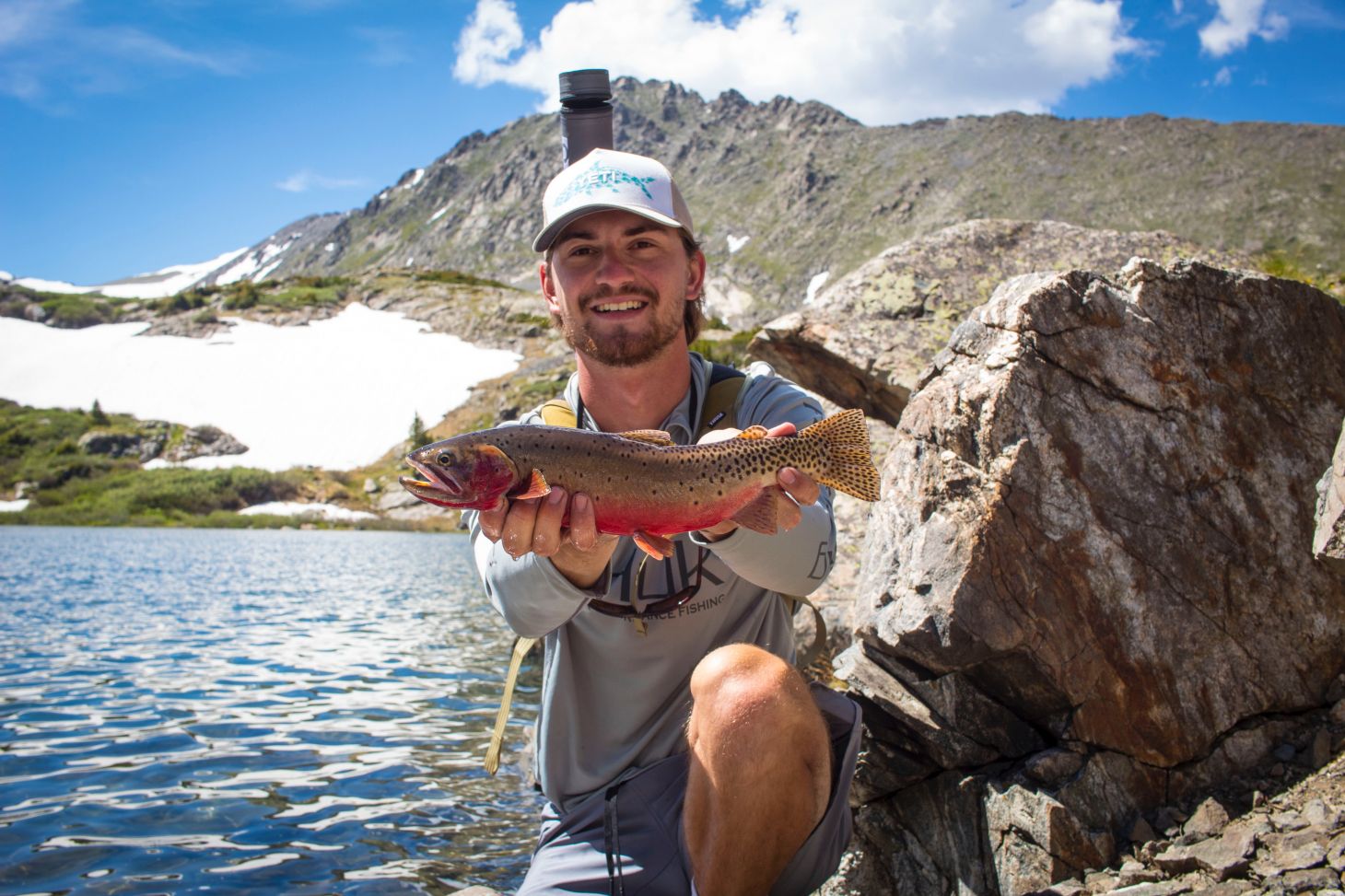
Not only do stream-dwelling cutties have a reputation for being beautiful, but they are also beloved for their willingness to rise for dry flies. This isn’t to say that cutthroat trout are dumb, but it’s fair to say they tend to be more gullible than other trout species. During an obvious hatch, it pays to match your fly to the naturals that are popping. The rest of the time, a fly angler can usually get by with any number of patterns. Pick flies that are durable, float well, and are easy to see, like a Parachute Adams or Stimulator. During the warmer summer months, it’s hard to beat a generic hopper pattern like a Chubby Chernobyl or Hippie Stomper.
On more heavily pressured waters, like some of the popular streams in Yellowstone National Park, cutthroat can quickly become educated. This can require sizing down dry fly patterns or adding a nymph dropper. The best tactic? Start walking. The farther you get away from parking areas, the better the fishing will be. Remember to pack bear spray in areas where grizzlies are common.
Spin fishing is also effective for stream cutthroat. A fly “under” a float bubble is a hybrid between fly fishing and spin fishing and can be very effective. Small spinners and jigs are also effective. Drifting half of a nightcrawler through deep runs is a great way to fool larger sea-run cutties in the fall. Fishing beads around spawning salmon is another great way to fool big coastal cutthroat.
Stillwater
Fishing with flies for cutthroat trout can be just as effective on some lakes as it can be on creeks and rivers. The best dry fly fishing for cutties is usually on remote alpine lakes that not only don’t get much pressure, but are small enough that a fly angler can reach cruising and feeding fish while casting from shore. A float tube or packraft will open up more water to anglers willing to carry in the extra weight.
Again, general dry fly patterns (Parachute Adams, stimulators, Royal Wulffs, and terrestrial imitations) will usually do the trick. If the trout aren’t looking up, fishing a nymph under an indicator can save the day. Spin anglers can fish dries on bubble rigs, cast small spinners, or bait rigs with attractor spinners. Nightcrawlers are great bait, but live grasshoppers are also a good choice if they are available.
Lahontan cutthroat in Pyramid Lake in Nevada helped spawn a unique, brilliant angling tactic. Years ago, some innovative anglers started hauling step ladders as far out as possible on shallow flats so they could reach fish cruising in deeper water. These days, some people customize their ladders by adding chairs on top.
Depending on the season, the approach can be to strip streamers that imitate baitfish, to slowly work nymphs or Wooly Buggers along the bottom, or to fish a nymph under an indicator. This is not necessarily an easy way to fish. Anglers usually blind-cast with relatively heavy rods (7-9 weights) in windy, cold conditions. But the reward for the hardy can be worth it, with fish up to and beyond 10 pounds fairly common.
content_trout-fishing,content_freshwater-fishing,content_fishing,content_stories

THE 1871 CLUB

Recommended Products
Read the full article here