

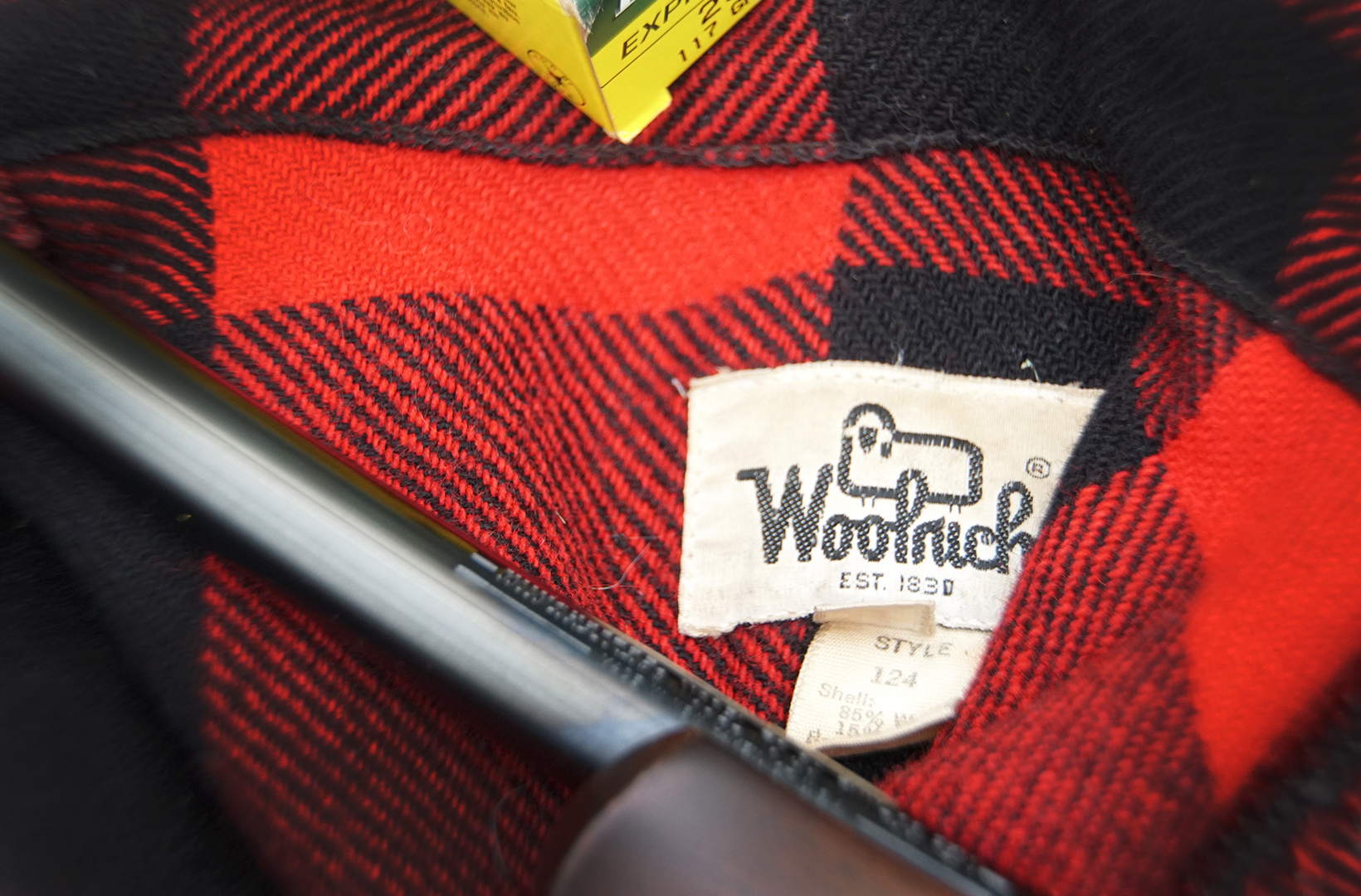
My Woolrich coat is open as I climb the ladder stand, and the loose flaps make me feel like I’ve grown heavy wings. Shooting light will arrive in half-an-hour, and my dad and I settle ourselves on this Pennsylvania ridge where we’ll wait for whitetails. He sits a hundred yards below me on the edge of a bowl, while I overlook a stoney notch from my perch in the cherry.
Although the truck’s temperature gauge had not tickled 20 degrees on our drive to the mountain, the hike in was long, and heat from my chest rises past my face. This late in the year, the line between sweltering and chilled is thin when sitting. I cross over before the first shot of the morning cracks. As I button my coat, the red-and-black buffalo plaid pattern starts to hum in the half light. Almost instantly, the thick wool fabric and leather lining traps my own heat against me. I am warm again. Like generations of Keystone hunters before me, the anticipation of a deer walking through my corner of the woods and Woolrich wool will carry me through Opening Day.
Woolrich, “The Original Outdoor Clothing Company,” was founded by English immigrant John Rich in Plum Run, Pennsylvania, in 1830. After peddling socks and blankets—blankets that were commissioned by the Union Army in the Civil War—the first garment sold by Woolrich was the wool check shirt in buffalo plaid. The story goes that the name of this pattern arose because the designer of the interchanging colors ran a small herd of bison. But it wasn’t until the pattern was applied to Woolrich’s full hunting suits with matching coat and overalls that a hunting icon was born.
Any hunter of the late 19th and into the 20th century was easily identifiable in this uniform, dubbed the “Pennsylvania tuxedo.” Advertisements boasted illustrations of hunters smiling and feeling “Warm as Toast” in their Woolrich woolens, which the company claimed would “Wear Like Iron.” Sure, buffalo plaid can be green-and-black, but that was for New England. The classic, deep red blazed in the gray woods of Pennsylvania as a signal to fellow hunters. Even in the muted colors of mid-century ads, Woolrich red popped off the page.
Growing up, the magazines I read and the shows I watched were populated mostly by hunters in camo polyester or goose down. My classmates wore Real Tree and Mossy Oak. But I wanted wool. I wanted the same pattern I saw on the men who told stories at the barbershop. I wanted the same design I saw in old photos of hunters at deer camp. I wanted the coat that would make me a Pennsylvania hunter. I wanted Woolrich.
I recall, almost two decades ago, the car turning away from the West Branch of the Susquehanna River and up to the village of Woolrich, with my grandma, mom, dad, and brother all along for the trip. It was summer, but I was thinking of November. My grandma bought me the red-and-black coat two sizes too big because she wanted it to last for decades. “You won’t always be this skinny,” she said. And she was right.
I’d spent my first two seasons hunting in my dad’s old ski coat—bright blue, and I still killed a deer—then an old canvas farm coat. Both were passable, but I shivered for several hours in each. On my first sit donning the Woolrich coat, the 6-plus pounds of wool and leather was a blanket I could’ve slept under.
But my coat wasn’t a true classic. While it sports the Woolrich logo, pattern, and design, the tag reads that it was made in China. Like so many American manufacturers, Woolrich turned to cheaper labor overseas. In 2018, Woolrich closed the oldest, continuously-operating woolen mill in the United States. The outlet store where I chose the coat shuttered in 2023, marking the end of the company’s nearly 200-year connection to Pennsylvania.
In late 2025, Turin, Italy-based BasicNet acquired Woolrich, and if you were to peruse the outerwear selection of the website, you’d find limited buffalo plaid and not many pieces to wear into Penns Woods.
None of this changes the way I trust my coat on the mountain. I’ve worn the coat every Pennsylvania rifle season for the last 17 years. It’s kept me warm and dry while chasing deer during the late flintlock season. Before I understood that waterfowl could see color, I wore the coat to sit for mallards as they tried to find open water on December mornings. For some reason, I never thought the motivation behind their flaring was a massive red blob in the snow.
When I moved to Montana, I wore the coat on my first upland-bird hunt. The mistake resulted in me lugging the heavy wool behind a setter for 7 miles as we searched for Huns. I couldn’t figure out if it was better to wear or carry the coat, so I played a game of Sisyphus between sore arms and a sweat-soaked back.
I wore the coat hunting elk and deer in the Rockies. Other hunters—with angst and sometimes unfriendly tones—classified me as a Pennsylvanian. A grin would crack my face, and to ease the tension, I’d mumble something self-deprecating about how my hardwoods upbringing meant I couldn’t shoot anything past 50 yards. Nevertheless, I liked what the coat signaled. It was my state’s hunting coat. My hunting coat.
This November, I will climb the same hardwood ridge I’ve hunted since I was 12 and sit for deer with my dad on opening day of Pennsylvania’s rifle season. I will wear my Woolrich coat. I will be warm as toast.
content_big-game-hunting,content_hunting,content_outdoor-gear
THE 1871 CLUB

Recommended Products
Read the full article here