
We may earn revenue from the products available on this page and participate in affiliate programs. Learn more
More than any other shotgun, an upland shotgun has to be almost a part of its owner. It has to fit, so you have complete confidence that it will shoot where you look, and it should point as easily at the bird as you might point a finger. It has to be light so you can carry it comfortably for miles, yet still be substantial enough to swing smoothly. The best ones have the right weight and balance so they accomplish the trick of “carrying light and shooting heavy.”
And while good looks aren’t a strict requirement for the job, upland hunters tend to appreciate tradition and the finer things, so many upland guns have walnut stocks and at least some engraving. An upland gun can be a pump, a semi-auto, an O/U, or a side-by-side. Each has its fans and advantages, and all four are represented in the list below. Any one of these best upland shotguns would be a faithful companion.

Remington 870
Pros
- Proven, reliable design
- Available in all gauges
Cons
- The 16-gauge is made on a 12-gauge frame and is overweight
Specs
- Gauges: 12, 16, 20, 28, .410
- Stock Material: Walnut, synthetic
- Chokes: Fixed before 1986, RemChokes in most 12, 16, and 20 gauges after
With well over 10,000,000 made, the 870 makes almost any “best ____ shotgun ever made” list by sheer weight of numbers. But the 870’s mass popularity shouldn’t blind us to the fact that it has all the traits of a good upland gun. The 870’s stock, with its thin comb and substantial drop, fits a lot of different shooters. The 12-gauge 870 is actually built on a 16-gauge Remington 11-48 frame, making it a trim and fairly light gun that handles very well. The action is fast and reliable, and it comes in all gauges. The 870 you want is the Wingmaster, either an old fixed-choke model or one of the newer guns with Light Contour barrels. They are much lighter and livelier than the Express and SP versions, which have barrels beefed up to accept choke tubes.
The new FieldMasters from RemArms mark a big improvement in quality over the old Remington’s output during the first years of this century. While the 12 weighs more than most might like to carry in the uplands, the new 20 gauges are just right.

Beretta 687 Silver Pigeon III
Pros
- Low profile design for sure pointing
- Bulletproof reliability
- Properly scaled small-bore frames
Cons
- Stiff safeties sometimes need smoothing by a gunsmith
Specs
- Gauges: 12, 20, 28, .410
- Stock Material: Walnut
- Chokes: Choke tubes
Beretta’s basic O/Us are among the most popular shotguns in the world, and for good reason. They are light, trim, and extremely durable. I have seen one owned by a sporting clays champion that had over 500,000 rounds through it and a stock literally held together by electrician’s tape, yet it was still on the job. The 680s come in 12, 20, 28, and .410 on scaled frames, in all levels of decoration. A 687 Silver Pigeon III is my day-in, day-out pheasant gun, and really, there is no reason for me to ever shoot any of my other guns. The safety buttons on Berettas can be sticky, but that’s the only problem I have with them, and an inexpensive trip to the gunsmith solves it.
The 686 and 687 are essentially the same gun in different wrappers. The 680s have recently been superseded by the 690 series, which feature improved wood and internal barrel dimensions but otherwise are largely the same, which is a good thing. The 680 wasn’t broken and did not need fixing.

Benelli Ultra Light
Pros
- Super light
- Proven Benelli quality
- Very reliable
Cons
- Lacks the Easy-locking bolt of newer Benellis that eliminates out-of-battery misfires
- Enhanced wood is easy-care but not as pretty as natural walnut
Specs
- Gauges: 12, 20, 28
- Stock: Walnut with enhanced grain
- Chokes: Crio Chokes
A modern classic upland semiauto, Benelli’s Ultralight weighs just 6 pounds in 12 gauge, thanks to a shorter magazine tube, a 24-inch barrel, and a lightweight carbon fiber rib. This is the gun you want when you have to walk miles between birds, but still need the punch of a 12-gauge when the time comes to shoot. The UltraLight has attained cult-like status among semi-auto-loving bird hunters, and for good reason.
Like all Benellis, it’s an inertia-operated gun, making it extremely reliable in any weather condition. You can buy a 12-gauge with a 26-inch barrel if you want a little more heft and discipline in your swing, or you can choose the even lighter 20-gauge model or the 5-pound 28-gauge.

AyA Sidelock
Pros
- Trim and light
- Custom made by hand
- Twin triggers for instant barrel selection
Cons
- Not all guns are steel-compatible
Specs
- Gauges: 12, 16, 20, 28, .410
- Wood: Walnut
- Chokes: Fixed
The British best game gun, a sidelock double made to measure, represents the peak of the upland gun maker’s art. It’s efficient, it’s deadly as it is beautiful, and it costs many times more than most of us would ever be able to spend on a gun. Fortunately, gun makers in Spain’s Basque region learned to copy British best guns at a fraction of the cost starting in the 1950s. Of the great Spanish gunmakers, only AyA is left making double guns today. Their Number 1 and Number 2 sidelock guns are gorgeous takes on the famous English Holland & Holland shotgun. They cost about a tenth the price of a Holland or a Purdey, which is still a lot, but at least moves them out of the “wildest dream” category and into the “plausible dream” category.
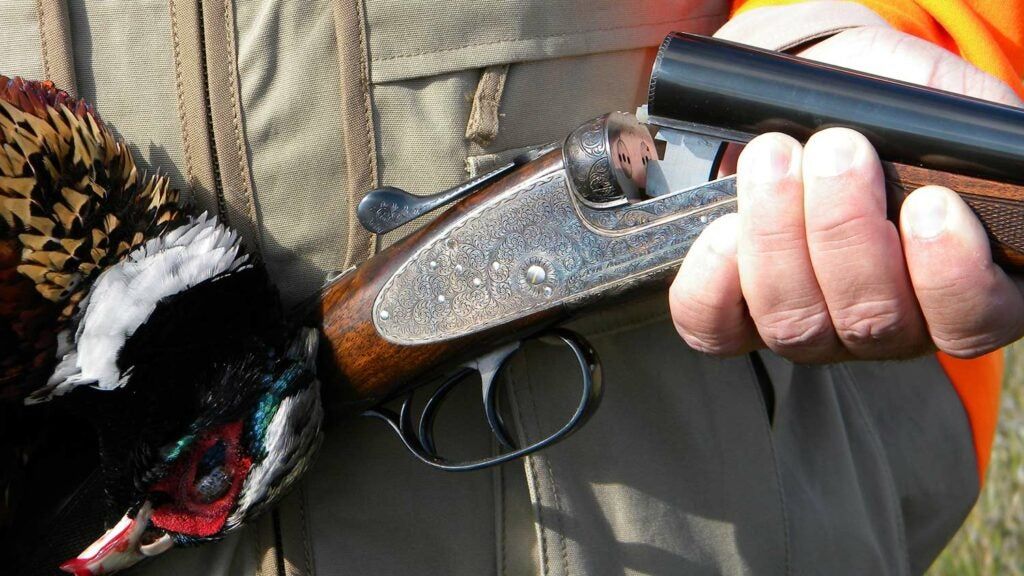
Honorable mention must go to the Browning BSS sidelock, another copy of the Holland, but this one made in the Japanese Miroku factory from 1983 to 1988. Today it costs over twice what it did in the 80s (a mere $1500 then), but it’s still a bargain if you can find one of the 1200 or so that were made.
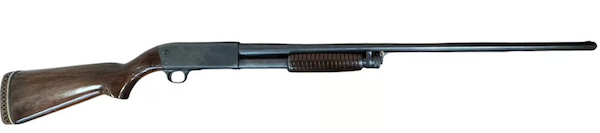
Ithaca Model 37
Pros
- Bottom ejection helps keep debris out of the action
- Proven design
- Made since 1937, based on John Browning’s Remington 1917
Cons
- Forearm requires a long hold with front hand
- New models are expensive
Specs
- Gauges: 12, 20, 28 (new production) 12, 16, 20 (older models)
- Stock Material: Walnut
- Chokes: Choke tubes (new guns), fixed chokes (older models)
Based on the Remington Model 17 pump designed by John Browning, the Ithaca Model 37 featured bottom-ejection that kept debris out of the action and also made it a preferred gun of left-handed shooters. Despite its all-steel receiver, the 37 made up into a lightweight gun, and it became a favorite among upland hunters who like a pump or couldn’t afford a fancy double for the grouse woods. It was also a standard-issue riot gun in many police departments for years, which speaks to its reliability. Ithaca went in and out of business many times, but over two million have been produced, and the guns are still made today in Sandusky, Ohio.
There are plenty of New York-made 37s on the used-gun market. The new guns are made in limited quantities and are very well fit and finished, and quite expensive by pump gun standards. Personally, I am not a fan of bottom-eject pumps since the need to leave the bottom port clear usually requires a forearm that needs a long grip with the forward hand. That’s me, and millions of Model 37 fans would like a word
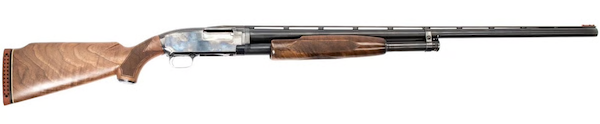
Winchester Model 12
Pros
- Lightweight, trim
- Very smooth pump-stroke
- Easy to find, as many were made
Cons
- Complicated and harder to take down than modern pumps
- Most have tighter chokes
Specs
- Gauges: 12, 16, 20
- Stock Material: Walnut, often uncheckered
- Chokes: Fixed
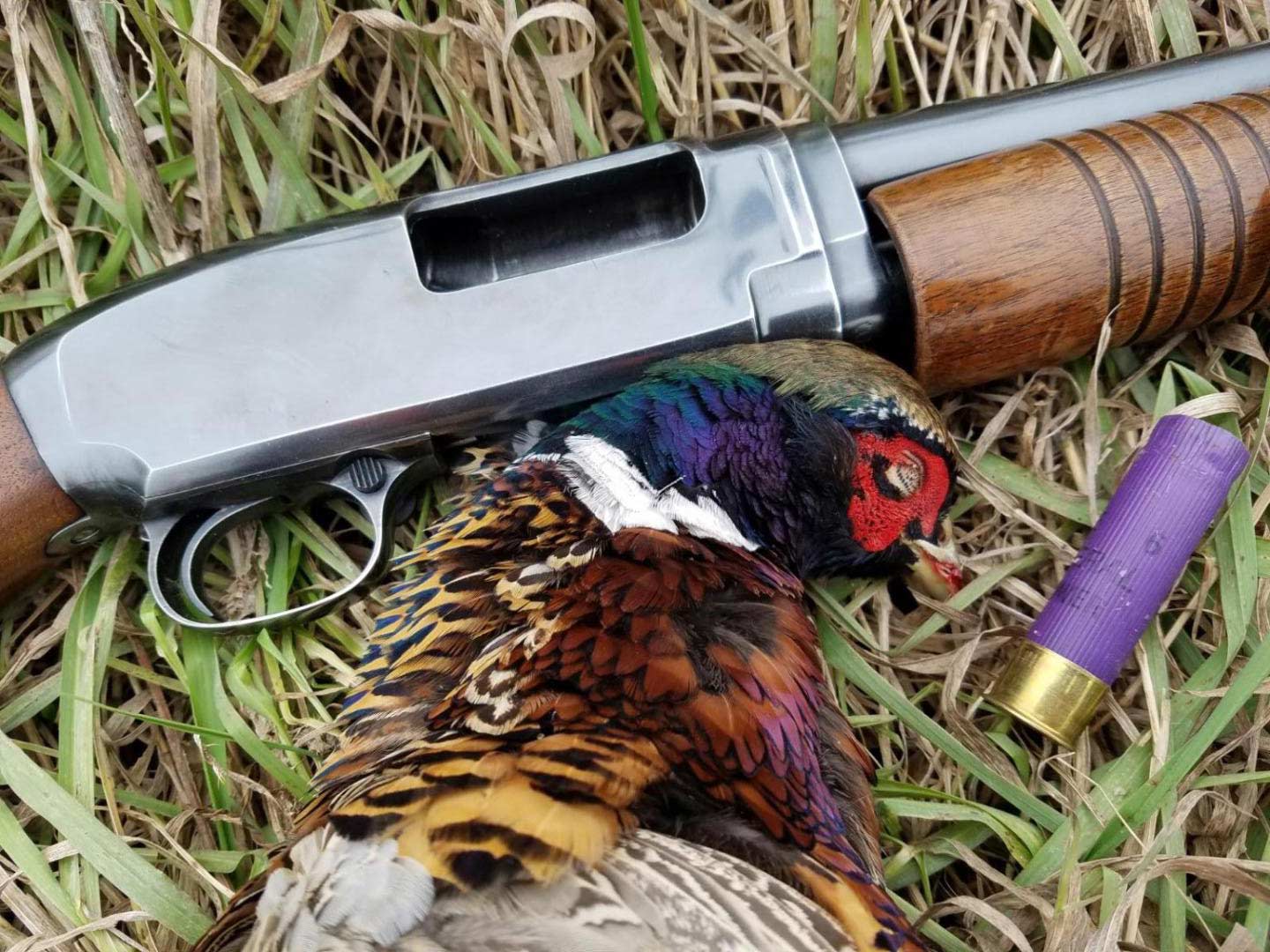
Introduced in 1912, the Winchester Model 12 was, in the opinion of many, the finest pump gun ever made. It combined a slick stroke with double-gun-like pointability that made it a great gun for waterfowling, trapshooting, trench warfare, and upland hunting alike. A 20-gauge Model 12 with a short, ribless, cylinder-bore barrel was a lightning fast gun, and in the hands of the quail hunters who loved them, absolutely deadly on a covey rise.
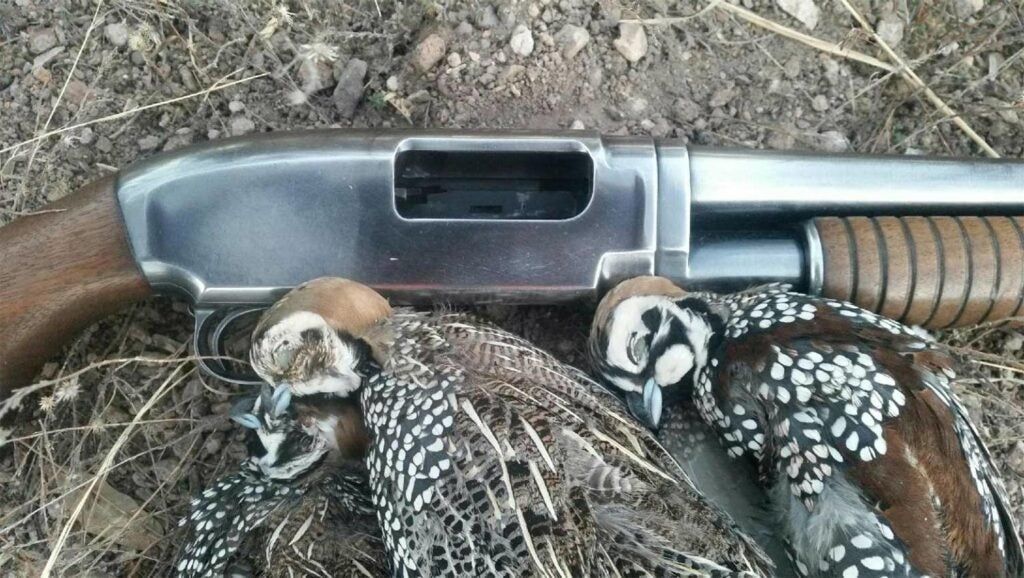
Over two million Model 12s were made between 1912 and 1964. Many of those are 12s with long barrels, but if you come upon a 20 or a 16, grab it, even though you’ll pay a little more. There is no modern substitute for a Model 12, and if you are a pump-gun lover, you should have one of these. Browning made a limited run of 20 and 28-gauges several years ago, and those crop up from time to time.

Browning A5 Sweet 16
John Browning’s great Auto 5 shotgun became a special favorite among bird hunters when the “Sweet 16,” a scaled-down, lightened, 16-gauge version of the gun, was introduced in 1937. Holding five 16-gauge shells, it offered plenty of firepower in a gun as light as many 20 gauges.
The Auto 5s long-recoil action always worked, although you had to get used to the unusual bouncing feel of the barrel moving back and forth as the gun cycled. Sweet 16s were made until 1975, and a few limited runs of Miroku-made Japanese guns were made, and those had choke tubes, unlike the original Belgian guns, which had fixed chokes.
As great as the Sweet 16 was, Browning’s new Sweet 16 A5, introduced in 2016, wears its namesake’s name and familiar humpback profile extremely well. Much lighter than the Auto 5 Sweet 16, this gun comes in under 6 pounds. It’s also an inertia gun, so it lacks the bouncing, shuffling feeling of the Auto 5 when you shoot it. It has quickly become the choice of upland hunters who want a light semiauto and appreciate the ballistics of the 16.
How We Picked the Best Upland Shotguns
My choice of the 10 best upland shotguns was, in large part, subjective. After all, an upland gun represents a highly personal choice. The gun that delights one hunter may leave another cold. Nevertheless, some objective criteria also applied, and I based mine on 40 years of upland hunting experience. All of these guns have stood the test of time and proved to be reliable because no one needs to walk for miles with a gun that doesn’t work when it has to.
They are, unless otherwise noted, lightweight, although some are lighter than others. An upland gun will be carried far more than its shot. Having a lightweight gun is an advantage, but only if the gun is well-balanced and easy to shoot. Finally, all the guns here are “classics,” some old favorites and a few newer models, and that’s important, too, as upland hunting, for many of us, is about doing things a certain way.
What to Look for When Choosing an Upland Shotgun
When you shop for an upland gun, you have to think about how that gun fits in with the type(s) of upland hunting you do. A 12-, 16- or 3-inch 20-gauge makes a good choice if you take longer shots, especially at bigger birds. And, despite the traditional appeal of old guns, there is something to be said for the versatility of a gun that has choke tubes and can shoot steel shot if need be.
Consider weight and balance, too. A gun with shorter, lighter barrels may be easier to carry and faster to the target on going-away birds in the brush, and it might be difficult to shoot if you take long, sometimes crossing shots in open country. In that situation, a longer-barreled gun with some weight-forward might prove easier to shoot.
Most importantly, does the gun fit you? There is little time to adjust yourself to a gun when a bird flushes. You need to have complete confidence that the gun will shoot where you look so you never have to take your focus away from the target.
Final Thoughts
Choose your upland gun wisely. It’s a gun you will carry for miles until it’s almost a part of you in the fall. It has to be light enough to log those miles, and smooth and steady enough to connect with in the split-second when all that walking pays off. And, while most people prefer utilitarian waterfowl and turkey guns, some decoration enhances an upland gun’s graceful lines. I’m biased, but I think upland guns are just more fun to look at, shop for, hold, handle, carry, shoot, and own, than any other kinds of shotguns.
Part of the fun of picking an upland gun is that there are so many classics, old and new, to choose from. The guns listed here are all great choices, but they are far from the only choices, and finding the right upland shotgun for you is one of the many enjoyable parts of the upland hunter’s journey.
Why Trust Us
For more than 125 years, Field & Stream has been providing readers with honest and authentic coverage of outdoor gear. Our writers and editors eat, sleep, and breathe the outdoors, and that passion comes through in our product reviews. You can count on F&S to keep you up to date on the best new gear. And when we write about a product—whether it’s a bass lure or a backpack—we cover the good and the bad, so you know exactly what to expect before you decide to make a purchase.
content_shotguns
Recommended Products
Read the full article here