
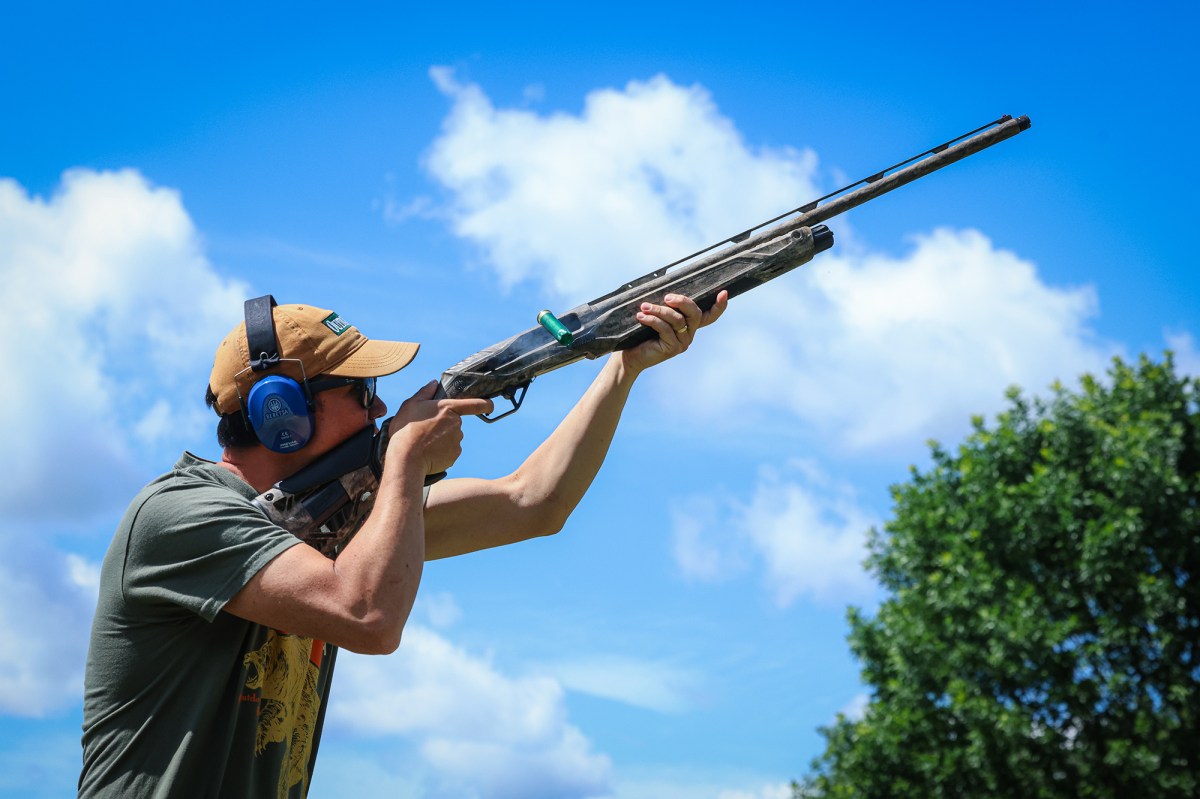
The roster of shotguns for 2026 includes upgrades to some old favorites plus a pair of remarkable waterfowl guns from the oldest gunmaker in the world. Earlier this summer, I collected 10 of the most interesting new hunting and clays shotguns and tested them with the OL team members Natalie Krebs, Roy Holdford, and shotgun mechanic Todd Beck.
We shot more than 1,500 clays over three days and we also checked each gun for point of impact vs point of aim. We evaluated each shotgun’s fit and finish, and scored their overall value (see our full testing protocol here). When the clay dust settled and all the scores were tallied we picked the following guns as our award winners.
Best New Shotguns
More New Shotguns Worth Considering
The Best Shotguns from Previous Tests
Best New Shotguns of 2026
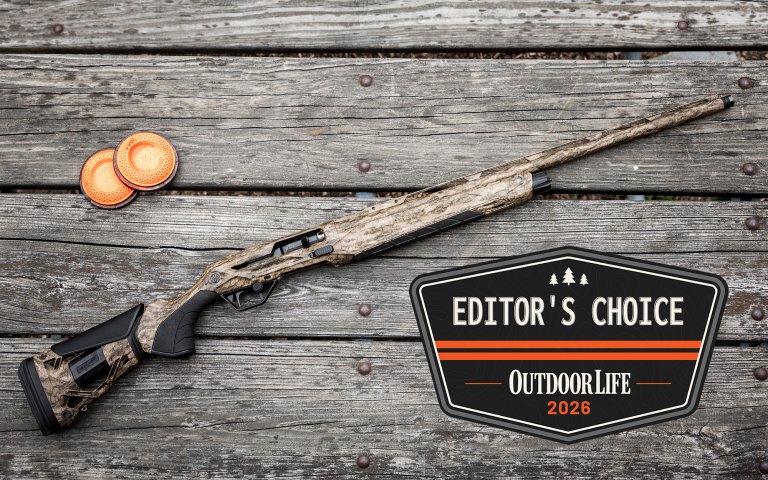
Beretta AX800 Suprema (Editor’s Choice)
See It
Pros
- Light recoiling
- Produced excellent patterns
- Tons of high-end features
Cons
- Expensive
- Aesthetics won’t appeal to everyone
- Did not cycle light 1-ounce target loads
Specs
-
Gauge: 12 -
Chamber: 3.5 inches -
Action: semi-auto (gas) -
Weight: 7.8 pounds -
Trigger weight: 3.4 pounds -
Barrel: 28 inches -
Overall Length: 50 inches -
LOP: 14.25 inches (adjustable) -
Stock: Synthetic (black or camo) -
Price: $2,448
Key Features
-
Choke System: OCHP – Extended (CYL, IC, M, IM, F) -
Polymer receiver -
Kick-Off Pro stock -
Steelium Pro barrel -
Receiver is compatible with red dot plate -
Made in Italy
I was one of the first gun writers to hunt with the AX800 Suprema before it was introduced as Beretta’s flagship waterfowl gun late last year. While I was a bit skeptical about its tactical-style appearance, I fell in love with the AX800 the very moment I started shooting ducks with it. It is the lightest recoiling duck gun I’ve ever shot. It also points and swings as nicely as any waterfowl gun out there. It became my go-to shotgun for the late waterfowl season and ran like a champ through those rugged conditions.
So during our shotgun test this summer, I was happy to see all the other shooters loved the AX800, too. Everyone crushed clays with it and by the end of the test we were all fighting over the gun.
There are too many features built into the AX800 to detail here (watch my video review below for that) but there are a couple upgrades that need to be called out. The first is the stock, which utilizes the Kick-Off Pro recoil reduction system. This series of springs along with the soft, faux leather cheek piece really takes the bite out of magnum duck loads. Beretta also made the gas system more efficient, meaning it needs less gas to run, and added an internal PVD coating to delay buildup. They paired this with their topline Steelium Pro barrel, which produced excellent patterns for us. It turned in 80% patterns at 40 yards with a modified choke shooting No. 2 steel loads. You can’t ask for better than that.

Beretta AX800 Suprema Review: Is This the New Top Duck Gun?
Lastly, the AX800 has a polymer receiver. This is deeply troubling to some online commenters, but these are likely the same folks who are leery of Glocks, which are among the most popular and dependable handguns in the world. In reality, the polymer Beretta is using is designed for the abuse of waterfowl hunting and corrosion resistant. It’s clear that the AX800 is a well-built shotgun. In fact our only quibble with its durability or functionality is that it did not reliably cycle light 1-ounce target loads (but it ran heavier 1 ⅛ ounce target loads just fine). So I expect this gun to hold up admirably to years of hard hunting, and I’m excited to put that to the test.
| Fit, Finish, Aesthetics | Ergonomics Handling | Versatility | Value | |
| Beretta Ax800 Suprema | 4.3 | 5 | 4.6 | 3.6 |
Beretta A400 Solo (Best Value)
See It
Pros
- Excellent value
- Flagship level features
Specs
-
Gauge: 12 -
Chamber: 3 inches -
Action: semi-auto (gas) -
Weight: 7.7 pounds -
Trigger weight: 3.5 -
Barrel: 28 inches -
Overall Length: 50 inches -
LOP: 14.37 inches (adjustable) -
Stock: Synthetic (black or camo) -
Price: $1649 (MSRP)
Key Features
-
Kick-Off Plus recoil reduction -
Improved gas system -
Steelium barrel -
Receiver is optic ready -
Made in Italy
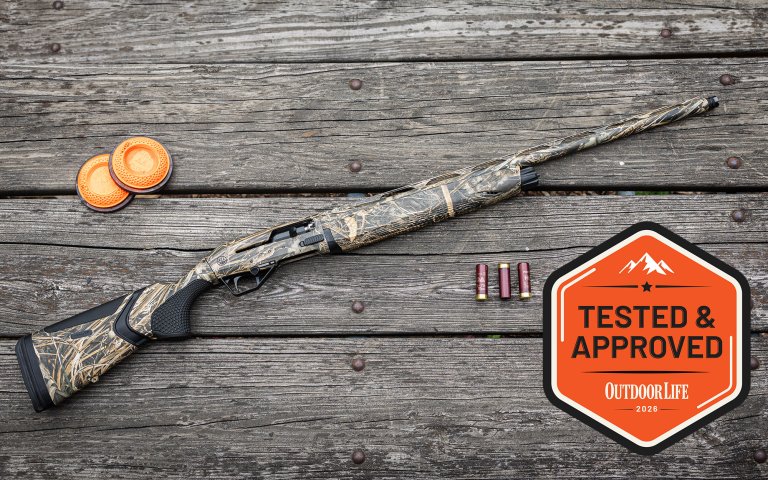
If you are intrigued by the AX800 but don’t want to drop more than two grand on a shotgun, then allow me to introduce you to the brand-new A400 Solo. To celebrate its 500th birthday, Beretta has rolled out this mid-priced shotgun that will sit between the affordable A300 and the high-end A400 Xtreme Plus.
If I’m being honest, the Solo brings all the features and performance that a hard-hunting waterfowler would ever need. It has the same improved gas system as the AX800 described above. It also has the same enlarged controls, giant loading port, and the flat trigger like the AX800. (Unlike the Suprema, the Solo has a steel receiver). So it wasn’t surprising to us that the Solo’s recoil mitigation and handling are very similar to the AX800.
What is surprising is that Beretta is offering this gun at such a competitive price. No, $1,600 isn’t chump change, but that’s the going rate for a mid-priced duck gun these days. Based on our experience, the Solo is now the top dog in the mid-priced semi-auto market.
| Fit, Finish, Aesthetics | Ergonomics Handling | Versatility | Value | |
| Beretta A400 Solo | 3 | 4 | 4.3 | 4.6 |
Ruger Red Label III (Best Over/Under)
See It
Pros
- Made in America
- Points naturally
- Light and slender
Cons
- Reports of varying quality
Specs
-
Gauge: 20 -
Chamber: 3 inches -
Action: over/under (inertia trigger) -
Weight: 6.6 pounds -
Trigger weight: 3.8 pounds -
Barrel: 30 inches -
Overall Length: 47.5 inches -
LOP: 14.5 inches -
Stock: Walnut -
Price: $2,563
Key Features
-
Tru-Choke style chokes included (SK, IC, M, IM and F) -
Prince of Wales style grip -
Made for Ruger by Connecticut Shotgun Manufacturing Company -
Triggerplate action -
Made in USA
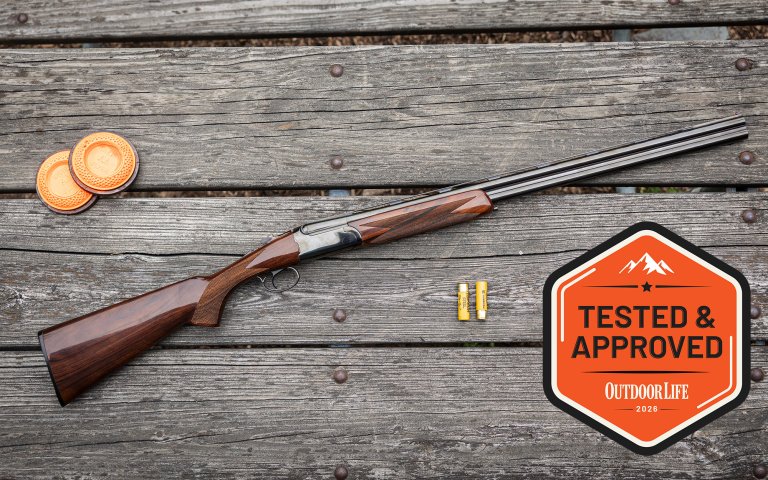
During this time of patriotism around America’s 250th birthday, it’s a real joy to write about an American-made over/under. Ruger introduced the third iteration of its Red Label late last fall and since then I’ve been lucky to shoot plenty of wild birds and clays with the gun. The headline is that it’s the best Red Label yet. (Read my full review of the Red Label III here).
Now, that’s not to say the Red Label III is a fancy gun. When the original Red Label was introduced in 1977 it was meant to be an attainable over/under for the working man. I think the new version still fits this description today. It’s a 20 gauge, with 30-inch barrels, and it’s made in America. But besides that, it doesn’t have a whole lot to do with the original Red Label.
The new gun is being made for Ruger by Connecticut Shotgun Manufacturing Company. It is much lighter, sleeker, and livelier than prior iterations. When OL’s former shooting editor Jim Carmichel initially wrote about the Red Label in 1978, his two 20-gauge models weighed 7 pounds and 7 pounds, 6 ounces (this is about what a modern 12-gauge O/U bird gun weighs).
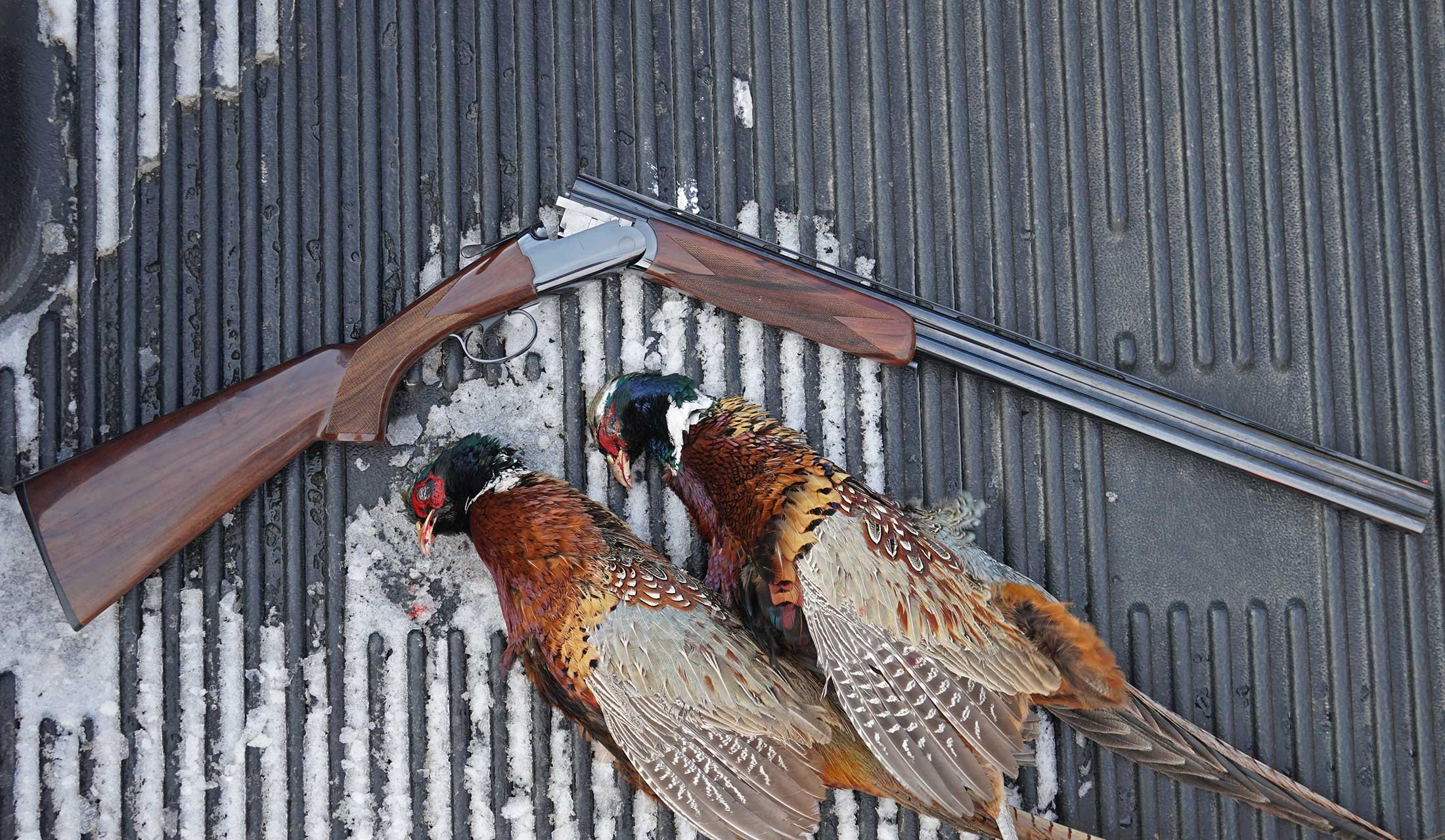
The O.G. Red Label had a box-lock action. The Red Label III has a triggerplate action, which means the hammer, hammer spring, and sears are mounted to the triggerplate. This design allows for a slender frame, which the Red Label III certainly has. For reference, CSMC uses a similar mechanism in its Inverness line, they say. But it will cost you about 10 grand, or more, to touch one of these guns.
The walnut on our gun is nice, with dark tones and relatively straight grain. I should note that I’ve seen other Red Label IIIs with wood that is not nearly as nice as the stock on our test model. I’ve also heard reports from other gun writers that their Red Label IIIs failed to fire the second barrel.
However, our test gun has run without issue and we’ve put nearly a case of ammo through it. It’s a wonderful gun to carry in the pheasant fields, where it’s most at home. Initially, Ruger was listing this gun for over 3 grand, which had critics howling. But today you can find the gun for about $2,500, which I think is a fair price for this solid bird gun that’s made proudly in the USA.
| Fit, Finish, Aesthetics | Ergonomics Handling | Versatility | Value | |
| Ruger Red Label III | 4 | 4.3 | 3 | 3 |
Fabarm Autumn Elite (Best Side-By-Side)
See It
Pros
- Excellent workmanship and attention to detail
- Lively handling
Cons
- Price puts it beyond reach for most hunters
Specs
-
Gauge: 20 -
Chamber: 3 inches -
Action: side-by-side (inertia triggers) -
Weight: 6.6 pounds -
Trigger weight: 3.6 pounds -
Barrel: 28 inches -
Overall Length: 45.25 inches -
LOP: 14.62 inches (adjustable) -
Stock: Deluxe Turkish walnut -
Price: $6,735
Key Features
-
Choke System: INNER HP (SK, IC, M, IM, F) -
Handfit walnut butt plate -
Silver nitride receiver with gold inlays -
Automatic ejectors -
Tribore barrel -
Tribore barrel
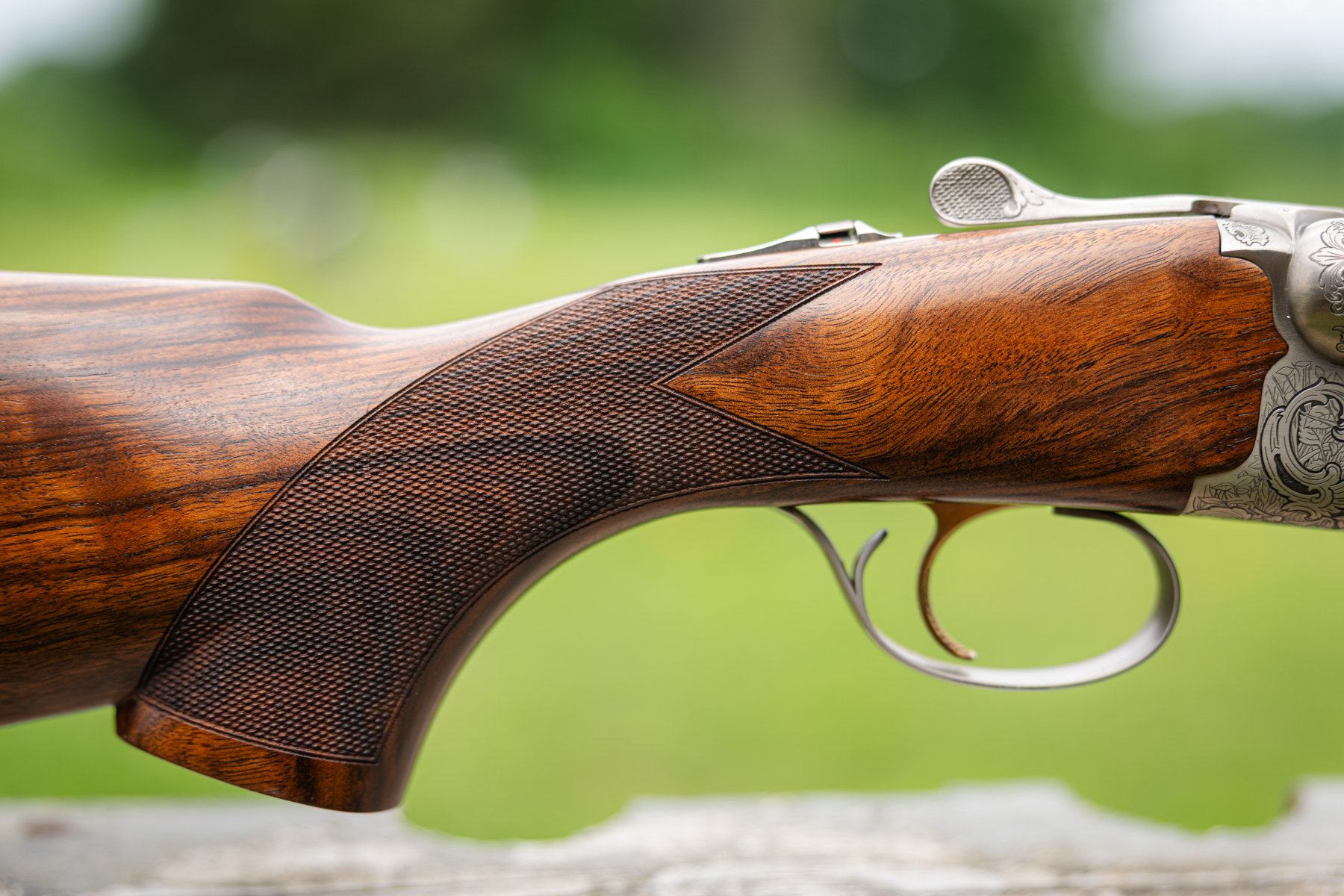
After busting a few clays with the Autumn Elite, Beck gave this side-by-side the finest and most accurate praise of the week. “It reminds me of some of my old double guns,” he said, “except I can actually hit stuff with it.”
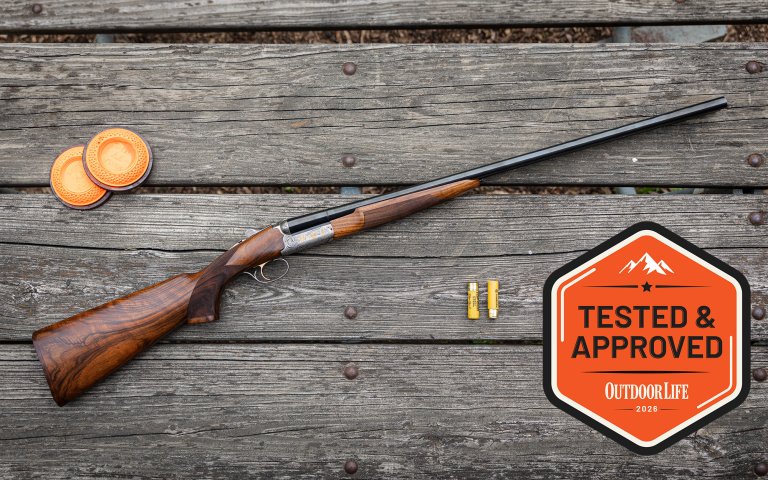
And this is exactly what the Autumn Elite is: a fine double gun made for modern times. Our test model came with a pistol grip and single, inertia trigger, though an English-style stock version is available. Also, you can get yours with double triggers for a few extra shekels.
The test team was smitten with this shotgun before we ever fired it. The gold-inlay pheasants, grouse, and quail on the receiver look clean, and anatomically correct. The remarkably detailed engravings on the receiver are equally matched by the checkering on the stock, including its wood butt plate.
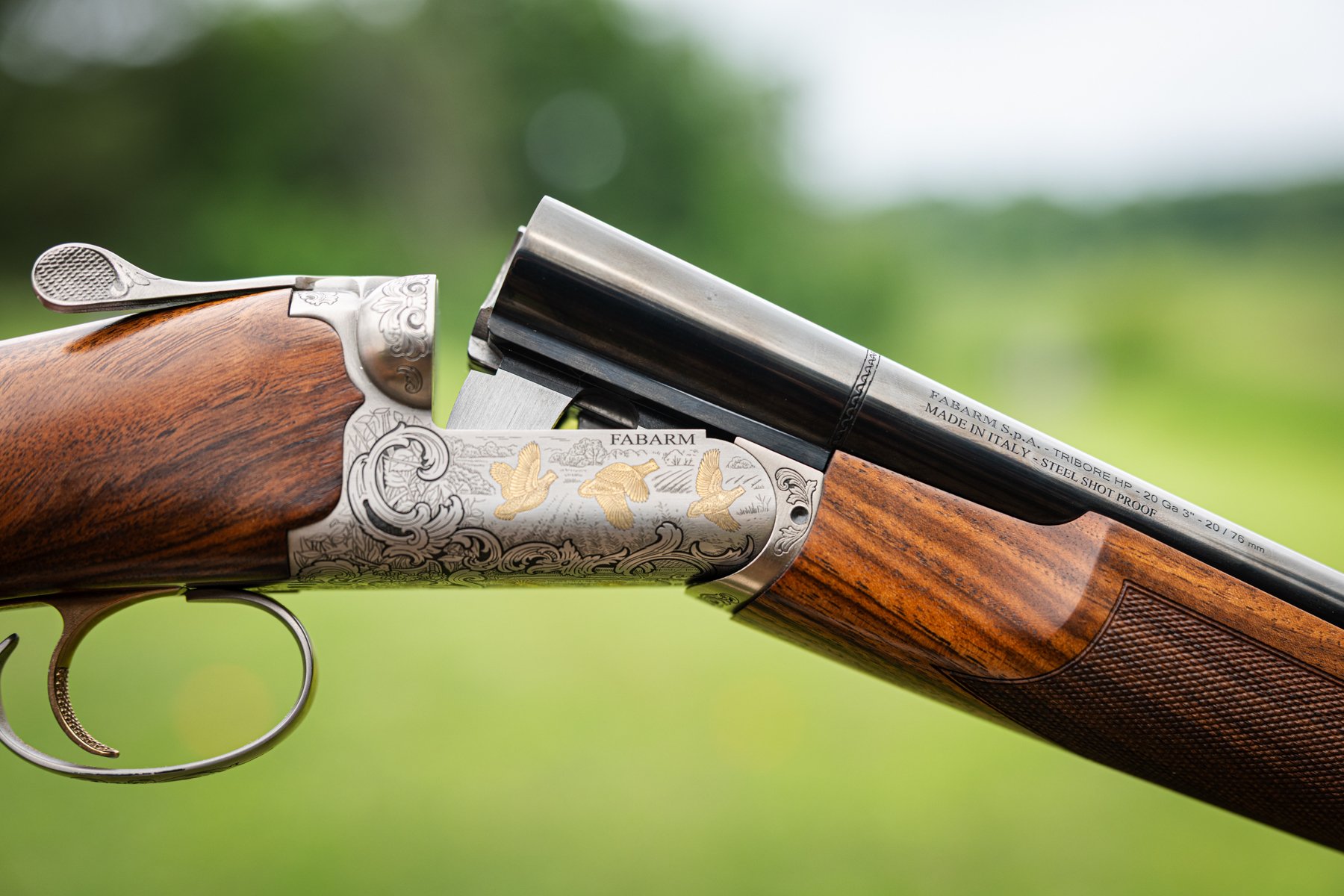
And the gun shot nearly as well as it looks. It is a light and lively 20 gauge that would be ideal for the grouse woods, the quail plantation, or pointed roosters. It comes to the shoulder quickly and points well too. Both Beck and I liked the sight picture offered by the swamped-style rib. Longer crossing shots were a bit challenging at first but eventually we cracked those just like all the other shot presentations.
During point-of-impact testing this gun delivered 50/50 patterns from both barrels with very little variation left-to-right. Beck estimates that the barrels cross at about 25 yards, which is perfect for the kind of bird hunting this gun is meant for.
| Fit, Finish, Aesthetics | Ergonomics Handling | Versatility | Value | |
| Fabarm Autumn Elite | 5 | 4.3 | 3.3 | 2.6 |
Browning Maxus II Golden Clays (Best Clays Gun)
See It
Pros
- Includes all the features you need to compete in clays
- Soft shooting
- Great price
Cons
- LOP is not easily adjustable
Specs
-
Gauge: 12 -
Chamber: 3 inches -
Action: semi-auto (gas) -
Weight: 7.6 pounds -
Trigger weight: 4.25 pounds -
Barrel: 28 inches -
Overall Length: 49.37 inches -
LOP: 14.37 inches -
Stock: Walnut, Grade III -
Price: $2,200
Key Features
-
Choke System: Invector DS extended (SK, C, M, IM, F) -
Adjustable comb -
Inflex recoil pad -
Hi-Viz TriComp fiber optic sight with mid-bead -
Made in Portugal
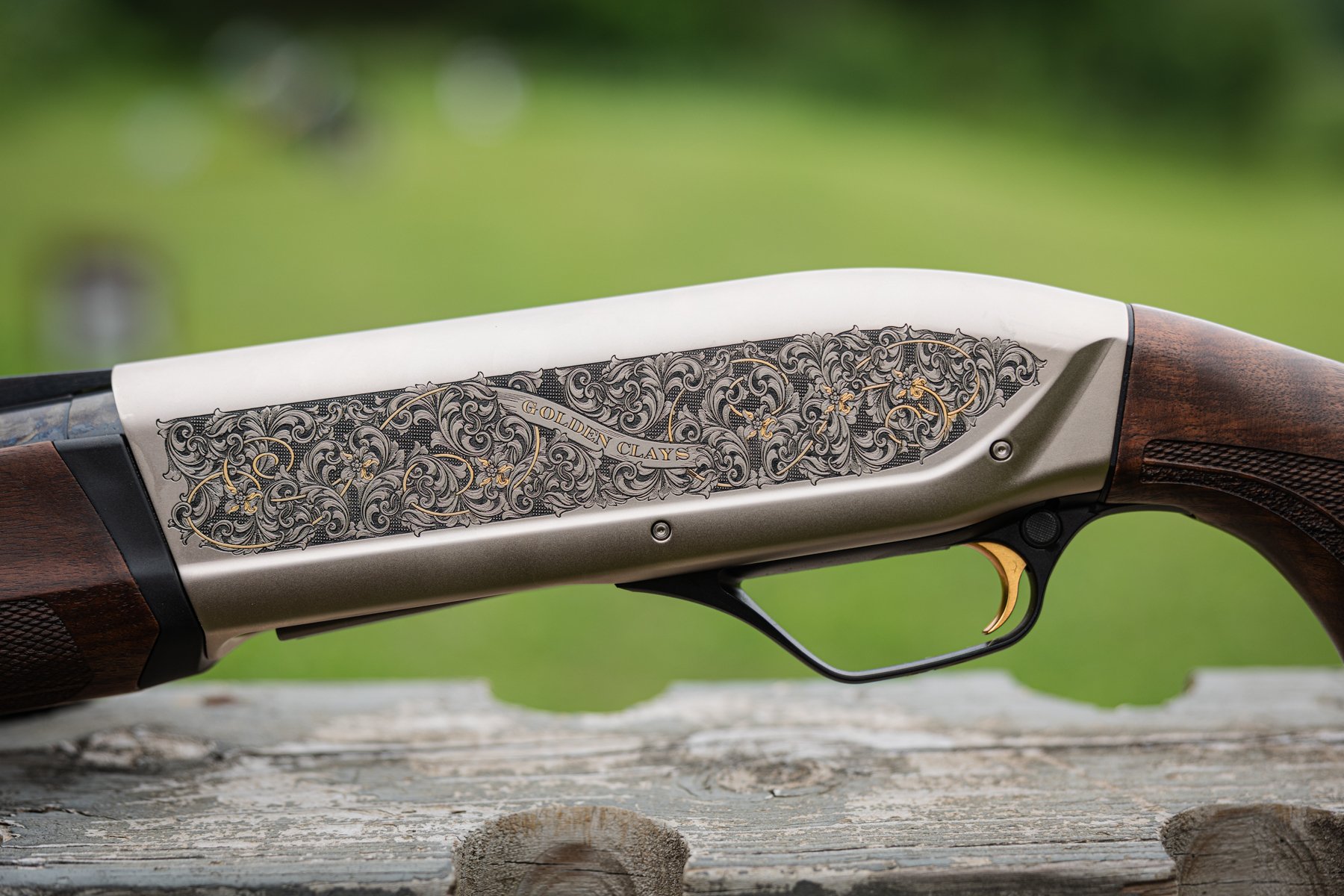
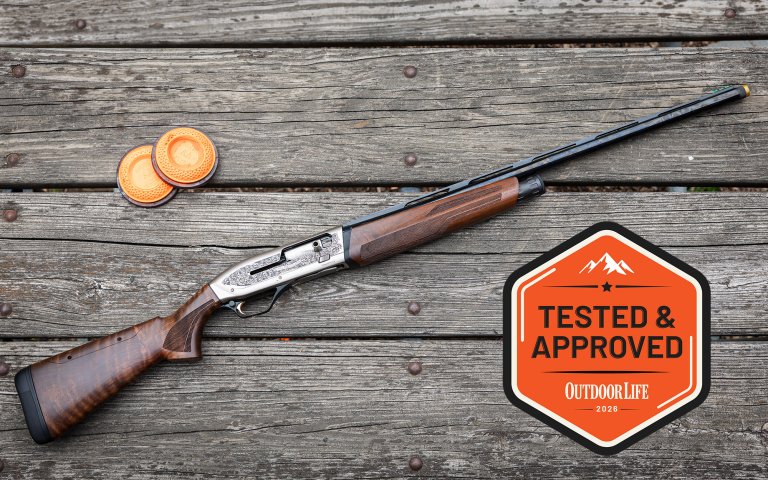
Browning has managed to pack everything a clays competitor would need into this very shootable and affordable platform. At its core, the Maxus II is a soft-shooting gas-operated semi-auto. The Golden Clays version includes an adjustable comb, a weighted magazine cap for balancing the gun, extra Hi-Viz colors for the fiber-optic front bead, and five extended choke tubes.
Beck is the most diehard clays competitor on our team and he was more excited about this gun than any of us.
“It has a great trigger and good looks,” he says. “You could compete and win with this shotgun.”
We all found the gun to swing nicely on long crossing targets and to be a clay smashing machine. It has a close radius grip with a nice palmswell. Out of the box it weighed 7.6 pounds though I’d consider adding a little more weight to the magazine cap. Our test gun came with a 28-inch barrel, but I’d opt for the 30-inch version.
Within the market of mid-priced semi-auto clays guns, the Maxus II is a top contender.
| Fit, Finish, Aesthetics | Ergonomics Handling | Versatility | Value | |
| Browning Maxus II Golden Clays | 3.6 | 4.3 | 3 | 4.3 |
More New Shotguns to Consider
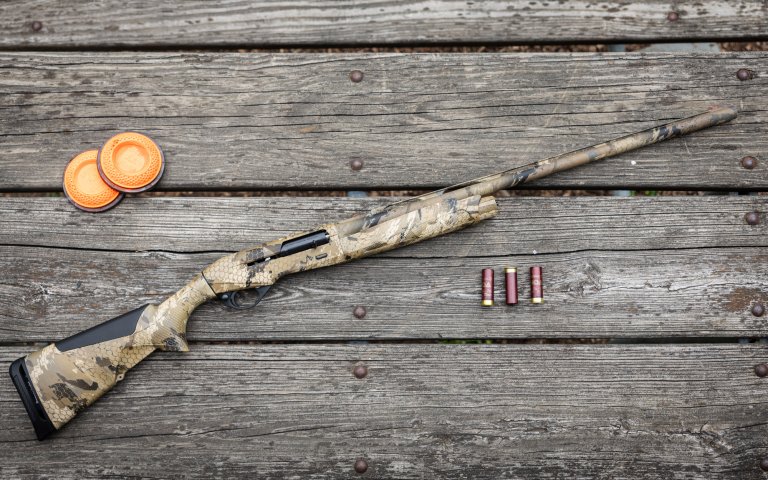
Benelli M2 Field
See It
Pros
- Sleek and slender profile
- Light and lively
Cons
- Finish on our model was sub-par
Specs
-
Gauge: 12 -
Chamber: 3 inches -
Action: semi-auto (inertia) -
Weight: 7.1 pounds -
Trigger weight: 4.2 pounds -
Barrel: 28 inches -
Overall Length: 49 inches -
LOP: 14.37 inches -
Stock: Synthetic (black or camo) -
Price: $1,829
Key Features
-
Choke System: Crio (IC, M, F) -
“Easy locking” bolt design -
Progressive comfort stock -
Crio barrel -
Made in Italy
The big upgrades for the M2 this year are stock and forend designs. The new stock utilizes Benelli’s Progressive Comfort recoil pad and Combtech cheek pad, which work together to tame recoil. We ran some duck loads through this gun and were surprised by how well this light, inertia-driven gun dealt with the recoil (it was not punishing at all).
The forend has a unique, ribbed design that seems a little odd at first, but you don’t notice it when you’re shooting. Overall, this is a solid do-it-all shotgun that has all the handling and ergonomic advantages of the top-end Benellis.
| Fit, Finish, Aesthetics | Ergonomics Handling | Versatility | Value | |
| Benelli M2 Field | 3 | 3.6 | 4.6 | 3.6 |
See It
Pros
- Very light and easy to carry
Cons
- Some cycling issues with target loads
Key Features
-
Gauge: 20 -
Chamber: 3 inches -
Action: Semi-auto (inertia) -
Weight: 5.7 pounds -
Trigger weight: 5.4 pounds -
Barrel: 28 inches -
Overall Length: 49.25 inches -
LOP: 14.25 inches (adjustable) -
Stock: Walnut, Grade I -
Price: $2,020
Key Features
-
Choke System: Invector DS flush (IC, M, F) -
Matte nickel finish on receiver -
Inflex recoil pad -
Humpback profile -
Speed load plus -
Hi Viz pro comp sight with mid bead -
Made in Portugal
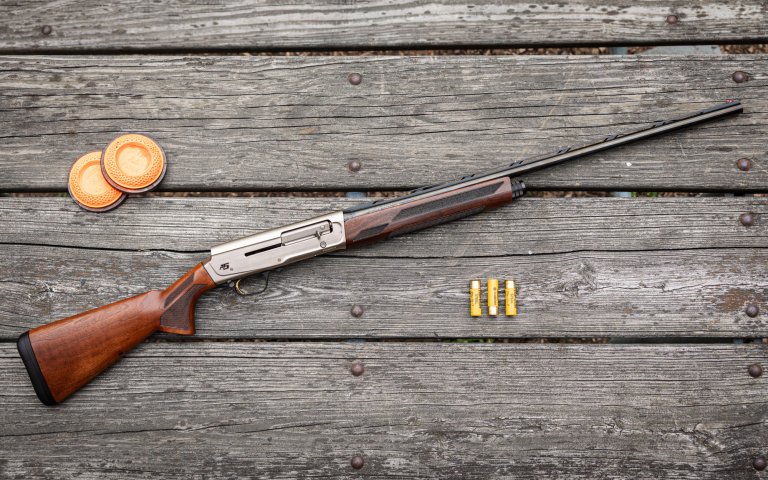
I’ve been a fan of the A5 platform for years, so I was excited to shoot this 20-gauge upland version in the test this year. At only 5.7 pounds this is an ideal gun to carry around the pheasant fields and the 28-inch barrel helped prevent it from feeling whippy. The fit and finish on this shotgun are OK, but I’d love to see nicer wood at this pricepoint (the stock on our Maxus II, for example, was a bit richer with more character). For folks who love that old Humpback profile but want a modern, lightweight bird gun, this version of the A5 is your huckleberry.
| Fit, Finish, Aesthetics | Ergonomics Handling | Versatility | Value | |
| Browning A5 Upland | 3.6 | 3.3 | 2.3 | 3 |
See It
Pros
- Excellent fit & finish
- Built to last
Specs
-
Gauge: 12 -
Chamber: 3 inches -
Action: over/under (mechanical triggers) -
Weight: 8.2 pounds -
Trigger weight: 2.9 pounds -
Barrel: 30 inches -
Overall Length: 48 inches -
LOP: 14.75 inches (adjustable) -
Stock: Walnut, Grade V/VI -
Price: $6,800
Key Features
-
Choke System: Invector DS extended (SK, IC, M, IM, F) -
Silver nitride receiver with gold engraving -
Inflex recoil pad -
Adjustable comb -
Adjustable trigger -
Hi Viz pro comp sight with mid bead -
Made in Japan
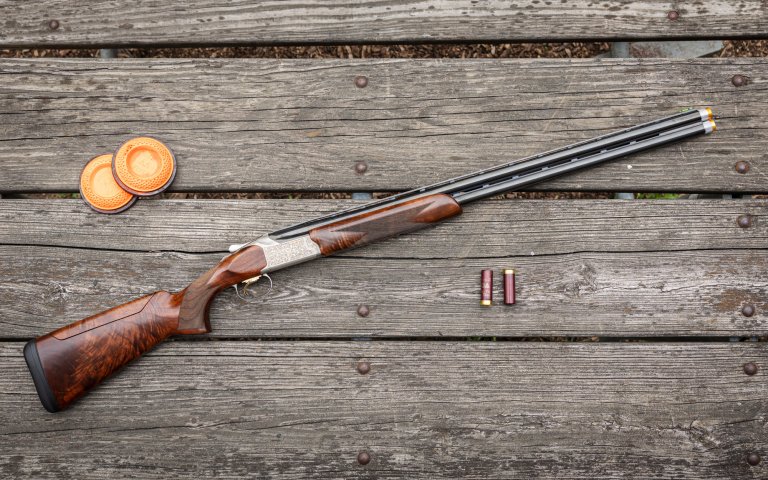
Last year the test team was thrilled with the introduction of the Citori 825 Field, in fact, it ran away with our Editor’s Choice award. The Golden Clays version of the gun is no slouch either. It sports beautiful wood, detailed engraving on the receiver, an adjustable stock, and a superb trigger (that is also adjustable). The 825’s locking lug is heavy duty and Browning says it’s designed to self-adjust over time, so lockup should stay tight even after years of shooting. The gun also has a transverse mounted, full-width hinge pin, for strength and durability over time. Beck, our shotgun mechanic, agreed that the gun should last generations. Our only quibble with the gun was that it patterned quite high (90/10) out of the box, even with the comb lowered.
| Fit, Finish, Aesthetics | Ergonomics Handling | Versatility | Value | |
| Browning Citori 825 Golden Clays | 4.3 | 3.6 | 2.3 | 2.6 |
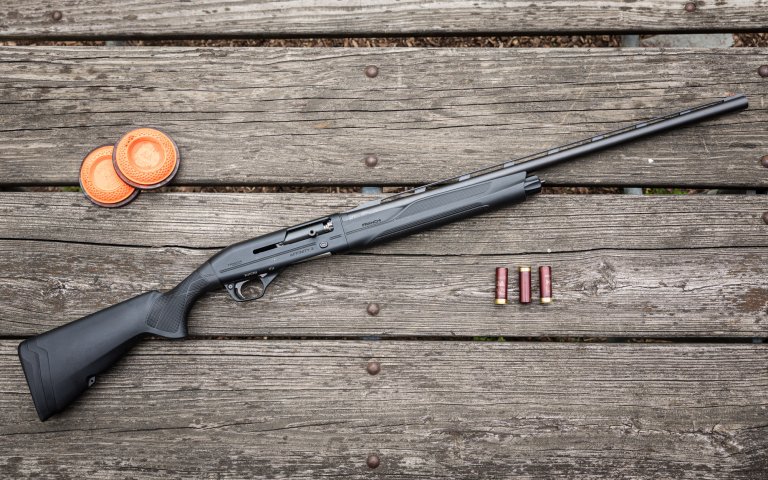
Franchi Affinity 3
See It
Cons
- Snappy recoil
- Sub-par ergonomics
Specs
-
Gauge: 12 -
Chamber: 3 inches -
Action: semi-auto (inertia) -
Weight: 6.7 pounds -
Trigger weight: 4 pounds -
Barrel: 28 inches -
Overall Length: 49 inches -
LOP: 14.4 inches (adjustable) -
Stock: Synthetic -
Price: $870
Key Features
-
Choke System: Beretta/Benelli Mobil (IC, M, F) -
TSA recoil pad -
7-year warranty -
Made in Italy
The Affinity 3 was a bit of an odd case. Everyone shot this gun pretty well, but no one really enjoyed shooting it. Felt recoil was harsh with heavier loads and the ergonomics lagged behind the other semi-autos in our test. Perhaps the best thing about the Franchi Affinity 3 is its price, which is fully within the bargain range for inertia shotguns. In this market it’s better than its Turkish competitors — except for maybe Retay’s Ace.
| Fit, Finish, Aesthetics | Ergonomics Handling | Versatility | Value | |
| Franchi Affinity 3 | 2.3 | 2.3 | 3.3 | 4 |
Retay Ace Ultralight Upland
See It
Pros
- Great for carrying in the field
- Affordable
Cons
- Handling is a bit whippy
- Heavy trigger
Specs
-
Gauge: 20 -
Chamber: 3 inches -
Action: semi auto (inertia) -
Weight: 5.5 pounds -
Trigger weight: 6.1 pounds -
Barrel: 24 inches -
Overall Length: 45.5 inches -
LOP: 14.5 inches -
Stock: Turkish Walnut -
Price: $1,150
Key Features
-
Chokes Mara Pro (C, IC, M, IM, F) -
Deep-bore drilled barrel -
Airy recoil pad -
Made in Turkey
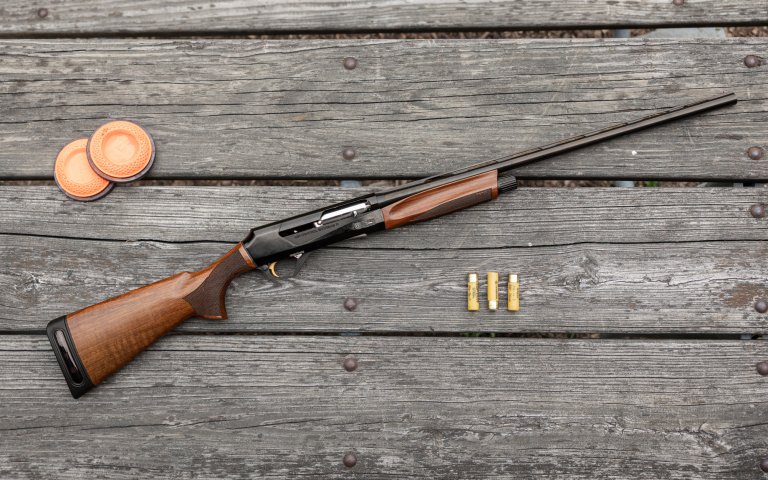
This little gun is ideal for carrying through grouse woods or quail plantations. True to its name, it is ultralight and it’s also very compact for a semi-auto. That did make the gun feel a bit whippy on longer crossing shots. This shotgun is better suited for snap shooting targets going away. I think the 12 gauge version with a longer barrel would be much better for long shots on roosters or sharptails. One small disappointment was that the wood on our test model did not have nearly the character that is advertised in online photos. Ours had a plain-looking stock with straight grain. But the checkering is solid and to be fair, at this price point you could do much worse. Overall, this version of the Ace nicely represents a working man’s grouse gun.
| Fit, Finish, Aesthetics | Ergonomics Handling | Versatility | Value | |
| Retay Ace Ultralight Upland | 2.3 | 3 | 2.3 | 3.6 |
How We Test Shotguns
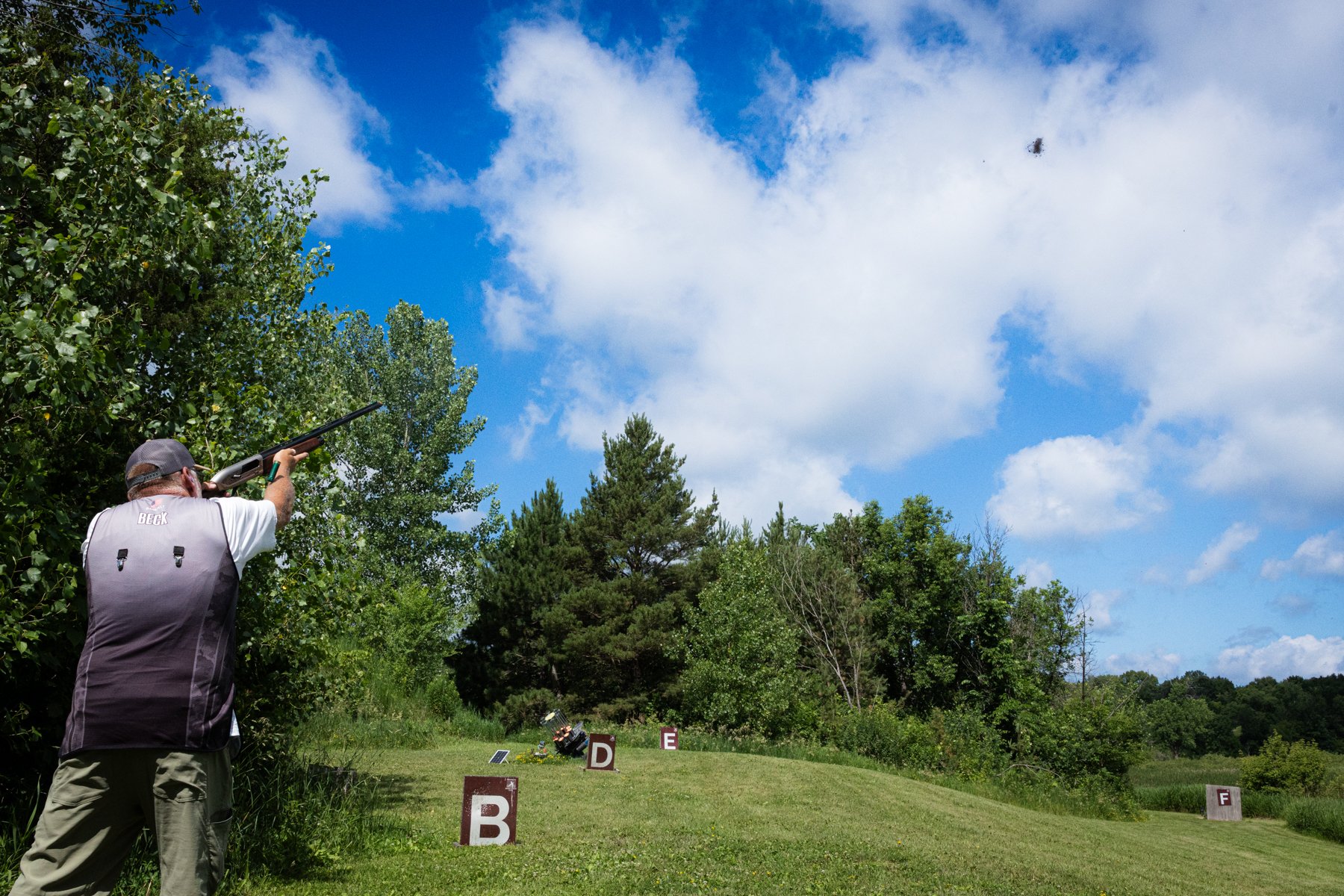
We tested the guns from the low-ready position so we could evaluate how easily they come to the shoulder. We shot both target and hunting loads to judge how they dealt with felt recoil. Importantly, we had three shooters with different body types evaluate each shotgun. Those that were comfortable and natural for all of us earned top marks.
We scored each gun on the following (on a 1 to 5 scale):
- Fit, finish, aesthetics: Wood-to-metal fit, checkering, and overall looks.
- Ergonomics and handling: How the gun loads, functions, mounts, swings to targets, plus how comfortable it is in hand.
- Versatility: How useful the gun is in a variety of applications.
- Value: Overall bang for the buck.
Target Presentations
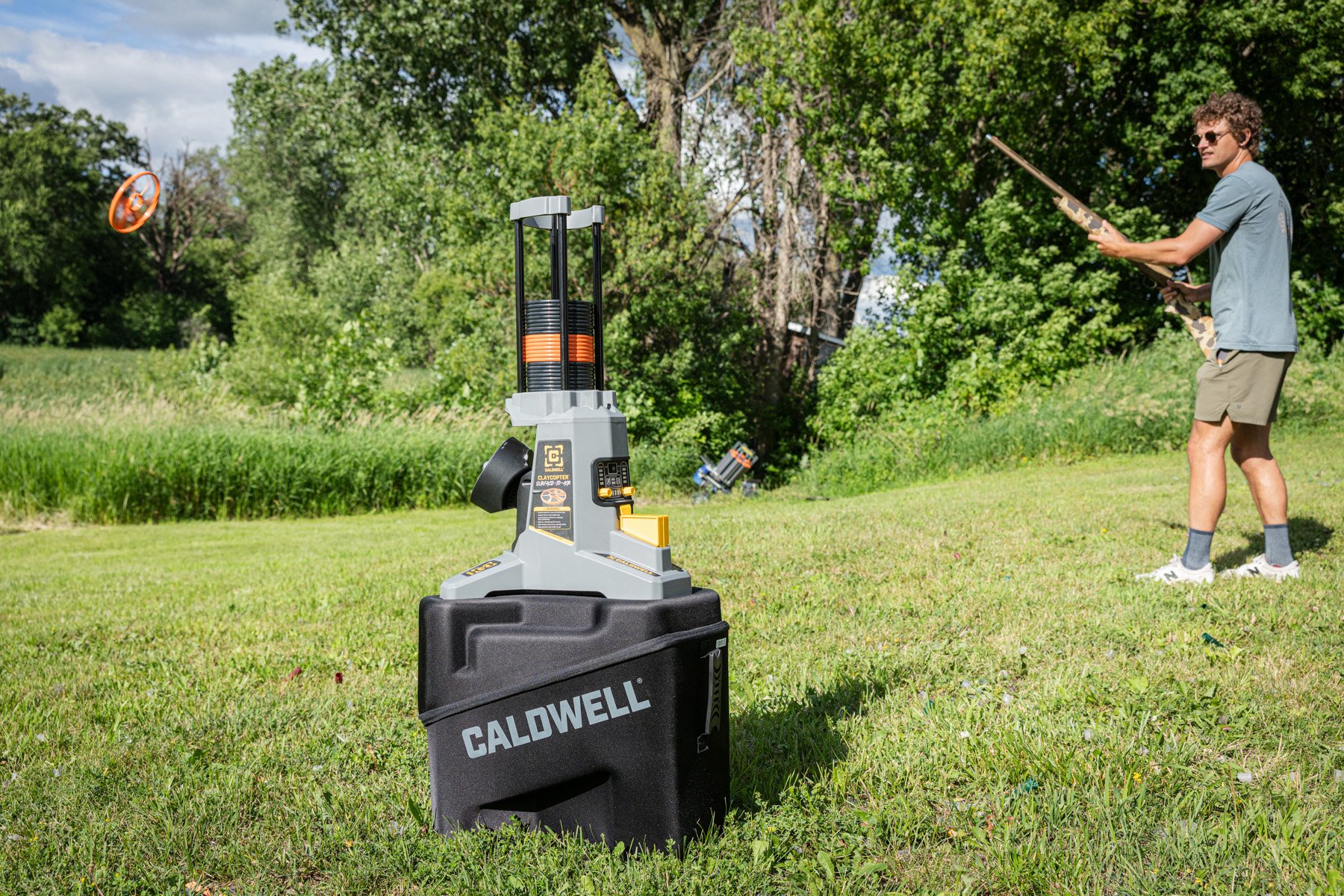
We do our best to test shotguns for their intended purpose. For this review we focused on hunting and sporting guns so we stuck with realistic shot presentations on the range. We also had the chance to shoot Caldwell’s remarkable Surface-to-Air clay thrower. And this was probably the most fun part of the test. This advanced thrower pairs to your phone and allows you to select target presentations real-time.
You simply take a photo of your range area, then choose the speed and flight path of each target. It can throw some incredibly challenging targets including pairs and randomized wobbling or oscillating targets. Through the app you can throw easy targets for beginners or incredibly challenging targets to mess with your buddies. It also has built-in UV lights that charge “UFO” targets which glow in the dark. The whole kit is compact and weighs under 10 pounds so it’s easy to transport.
Ammo
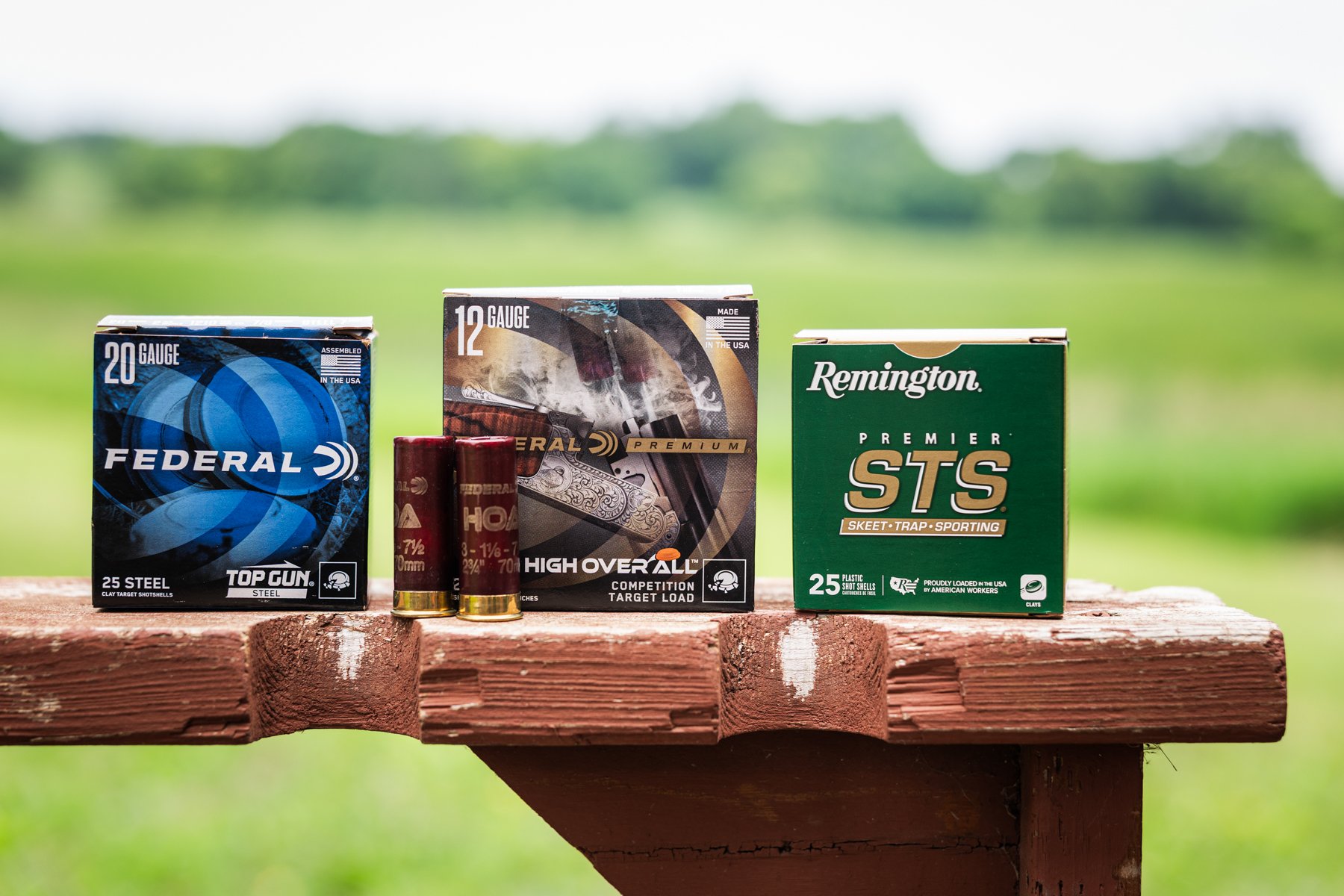
We were lucky to shoot quality ammo during our test, primarily Federal’s High Over All and Remington’s STS target loads. With slightly heavier payloads (1 ⅛ ounces) we were able to find slight differences in felt recoil between the guns. More importantly, both of these loads absolutely crushed targets for us.
More Best Shotguns from Previous Tests
Browning Citori 825 Field (Best Upland Gun)
See It
Pros
- Sweet shooter
- Fine workmanship
- Attractive lines
Key Features
-
Intended use:
Upland bird hunting -
Included chokes:
IC, M, F (Invector DS, flush) -
Barrel finish:
Polish blued -
Stock:
Black walnut, Grade II/III -
New Fire Lite 2 mechanical trigger -
Inflex II recoil pad -
Vector Pro lengthened forcing cones -
Made in Japan
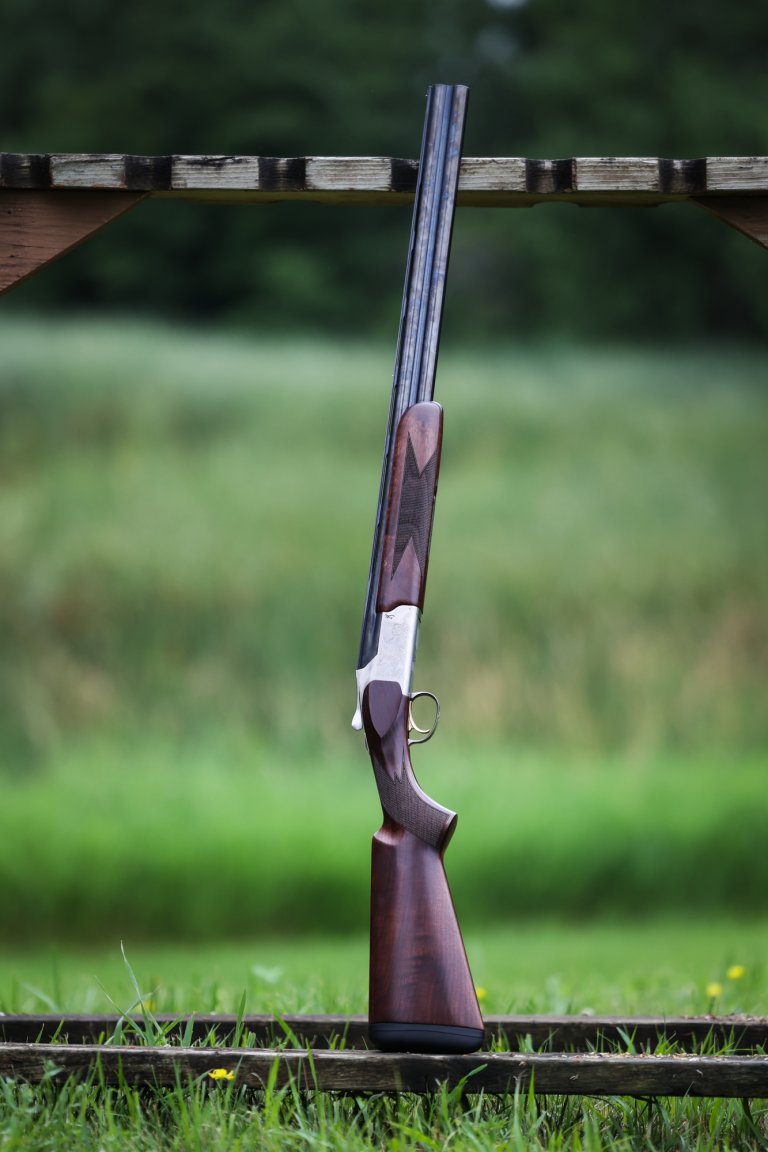
If there’s an over/under with more iterations than the Browning Citori, I can’t think of it. This prolific line expanded once again in 2025 with the introduction of the Model 825, which does honor to the Citori legacy.
The Citori 825 is offered in trap, sporting clays, and field configurations. The 825 Field we tested is geared toward upland bird hunters, a role for which it is admirably suited.
It has nice mechanical triggers, balances well with its 28-inch barrels, and doesn’t bite much thanks to its Inflex 2 recoil pad. At just 7.3 pounds it is light enough for all-day carry — a critical requirement for hunting far-ranging uplands that stretch out to the horizon.
Compared to the Citori 725, another gun we like, it has a modernized look and more elegant and refined components, specifically the top lever and safety/barrel select. The 825’s stock has a softer, more rounded profile, where the 725 lines are more angular and defined. Which looks better is purely a matter of personal taste.
We also liked the 825’s simple adornment, with a grouse on one side and pheasant on the other.
Fans of Browning Citoris are going to love this new model, and hunters who aren’t familiar with them could easily fall under the Browning’s sway if they get a chance to try one out. We were both smitten and impressed by the Citori 825 Field, which is why it earned an Editor’s Choice award as the best shotgun of 2025. —— John B. Snow, Shooting Editor
| Citori 825 Field Specs | |
| Gauge | 12 |
| Chamber | 3 inches |
| Action | over/under (mechanical triggers) |
| Weight | 7.3 pounds |
| Trigger | 3 pounds, 5 ounces |
| Barrel | 28 inches |
| Overall Length | 43.75 inches |
| LOP | 14.25 inches |
| Price | $3,320 |
Retay ACE (Great Buy)

See It
Pros
- Excellent value
- Reliable operation
- Versatile
Cons
- Harsh recoil with game loads
Key Features
-
Intended use
Waterfowl and general bird hunting -
Included chokes
Cyl, IC, MOD, IM, F, and extended IM -
Shim kit included -
Barrel Finish
Matte black -
Stock:
Black composite -
Airy recoil pad -
Made in Turkey
Retay has a smart formula that works. The company makes Benelli clones built in Turkey at attractive prices. The quality of these shotguns — from a purely functional standpoint — has been quite good in our experience. Benelli still makes a better overall gun in terms of fit and finish, aesthetics, and workmanship — but Retay checks all the boxes when it comes to the basics.
The ACE, new for this year, is a solid 3-inch, 12-gauge, inertia gun. Even under the Sauron-like gaze of our test team we couldn’t find fault. The controls are easy to operate and intuitive. The action ran smoothly for us with no glitches. And most importantly, it points and shoots great.
We found it to be incredibly intuitive to use. Granted, all of us are experienced Benelli shooters, but even so we think this gun deserves high marks for its simplicity.
As a do-it-all bird gun few others match it for value. You can take this gun pretty much anywhere birds are hunted and not be handicapped. With that level of versatility and reliability it was an easy pick as our Great Buy winner in 2025. —— John B. Snow, Shooting Editor
| Retay ACE Specs | |
| Gauge | 12 |
| Chamber | 3.5 inches |
| Action | semi auto, inertia operated |
| Weight | 7.22 pounds |
| Trigger | 4 pounds, 4 ounces |
| Barrel | 28 inches |
| Overall Length | 49.75 inches |
| LOP | 14.5 inches |
| Price | $1,049 |
Blaser F16 Pro (Top-End Clays)
See It
Pros
- Fabulous shooter
- Excellent craftsmanship
Cons
- While a good value, it is still spendy
Key Features
-
Intended use:
Sporting clays competition -
RHINO’s patented 13-port “pigeon porting” system and RHINO G1 series chokes -
Barrel Finish:
Matte black -
Stock:
Walnut Grade 4 -
Blaser EBS ejector system for easy-closing action -
Weight kit to adjust balance -
Adjustable stock -
Kick-EEZ butt pad -
Hard case included -
Made in Germany
When it comes to shooting competitions there’s an old saying: You can’t gear your way into the winner’s circle. And it’s true. Top-of-the-line equipment is no substitute for practice, determination, and skill. But there’s a corollary to this as well: You can’t win an F1 race behind the wheel of a Subaru.
Shooting a Blaser F16 Pro in a sporting clays competition won’t guarantee anything beyond a participation trophy, but you sure as hell will shoot better and tip the odds in your favor of a podium finish if you shoulder one.
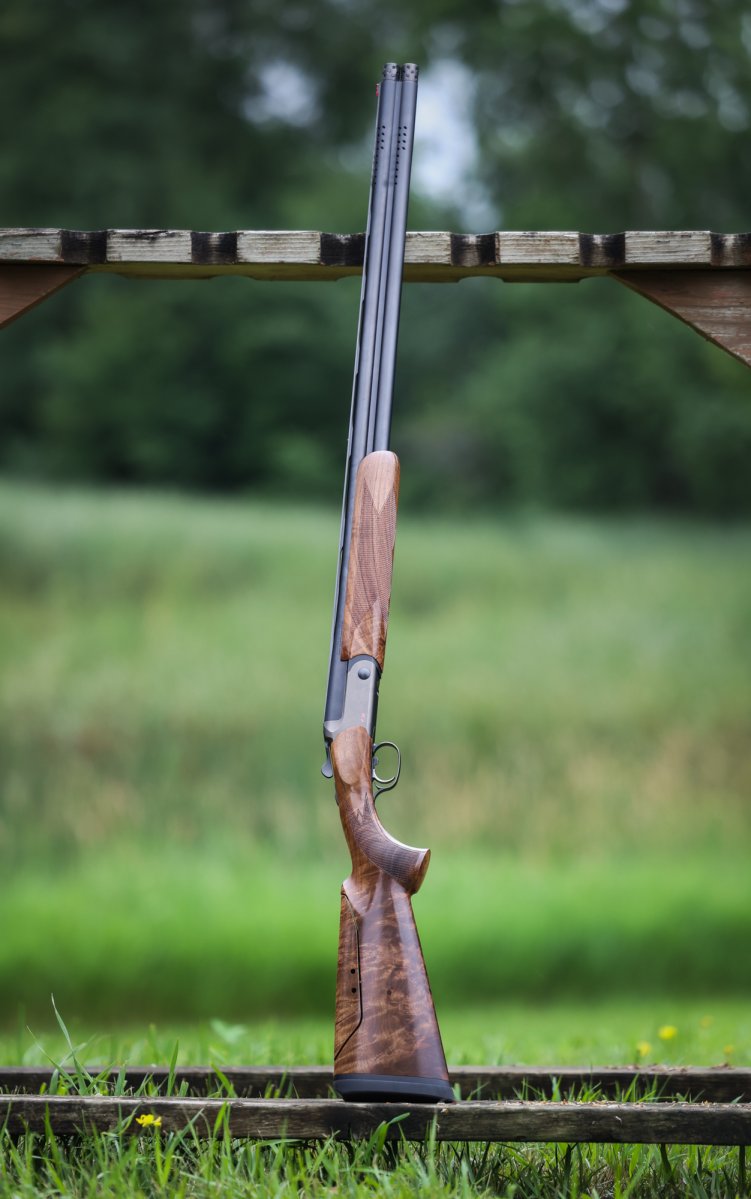
This is a purpose-built over and under with one goal in mind — pulverizing clay targets no matter how far away or fast they are traveling. The 32-inch ported barrels and 8.5-pound weight make this the softest shooting double we’ve ever tested, as well as one of the sweetest swinging 12-gauges we’ve shot.
The F16 Pro has a substantial price tag (though in the world of serious competition shotguns it is practically entry-level) but despite that it is a very good value.
The workmanship, lovely wood, easy closing action, slightly muzzle-heavy balance, and crisp triggers translate into a wonderful shooting experience.
All the controls are crisp and precise and are easy to manipulate. The contours of the stock, with its swept competition-style grip, are very well designed, and augment the shotgun’s in-hand balance and surprisingly lively feel.
If you’re an avid clays shooter, but haven’t taken the plunge into the deep (and expensive) end of the sporting shotgun pool, then this over-and-under might be the ticket. Be forewarned, however. Plan on allocating for a substantial ammo budget, because once you start breaking clays with this Blaser you’re not going to want to stop. —— John B. Snow, Shooting Editor
| Blaser F16 Pro Specs | |
| Gauge | 12 |
| Chamber | 3 inches |
| Action | Over/under (mechanical triggers) |
| Weight | 8.52 pounds |
| Trigger | 3 pounds, 4 ounces |
| Barrel | 32 inches |
| Overall Length | 49 inches |
| LOP | 14.5 inches |
| Price | $6,675 |
Tristar Phoenix (Great Buy, Hunting SXS)
See It
Pros
- Inexpensive
- Classic lines
Cons
- Mushy controls
- Patterned to the left
Key Features
-
Intended use:
Upland hunting -
Includes:
SK, IC, M, IM, F flush chokes -
Sight:
Silver bead -
Barrel Finish:
Blued, gloss -
Stock:
Turkish walnut -
Made in Turkey
The Tristar Phoenix was one of the bigger surprises when we first tested it. It is a budget-oriented gun, costing only $795, which means it lacks some of the refinements associated with high-dollar doubles (it can be found online for as low as $705). But Tristar made the most with what its gunmakers had to work with, and the Phoenix offers an aspiring aristocrat a compelling package.
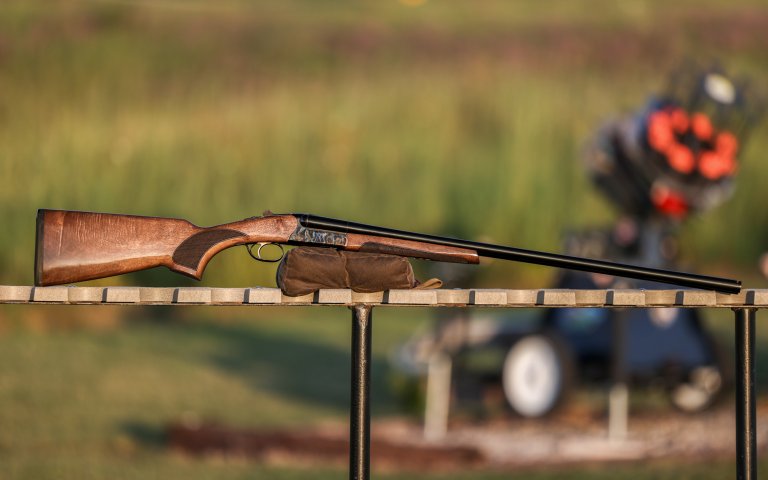
The Turkish-made shotgun has a case-hardened finish on the receiver, high-gloss barrels with flush mounted screw-in chokes, a traditional scalloped sighting rib tipped with a plain brass bead front sight, a tang safety with barrel selectors, gold trigger, and trim forend.
The walnut stock isn’t fancy, but is fairly attractive, though the wood on our sample had a slightly gray hue. The checkering is basic too, with an oval pattern on the forend that wraps up each side, and two panels on either side of the pistol grip.
In terms of performance, a couple of the shooters on the test shot it as though they were, in Shakespeare’s words, to the manor born. I, on the other hand, have always struggled with side-by-sides, and couldn’t hit the broad side of a pterodactyl with it.
The only shortcomings of the Phoenix were that the left barrel shot to the left at the patterning board (the center of the pattern was about 5 inches left of point of aim) and the safety, which doubles as the barrel selector, was mushy and imprecise. For the price, however, these are acceptable sins. —— John B. Snow, Shooting Editor
| Tristar Phoenix Specs | |
| Gauge | 20 |
| Chamber | 3 inches |
| Action | Break action, side-by-side |
| Weight | 6.84 pounds (measured) |
| Trigger | 3.43 pounds (measured) |
| Barrel | 28 inches |
| Overall Length | 45.5 inches |
| LOP | 14.25 inches |
| Price | $795 |
Final Thoughts on the Best Shotguns of 2026
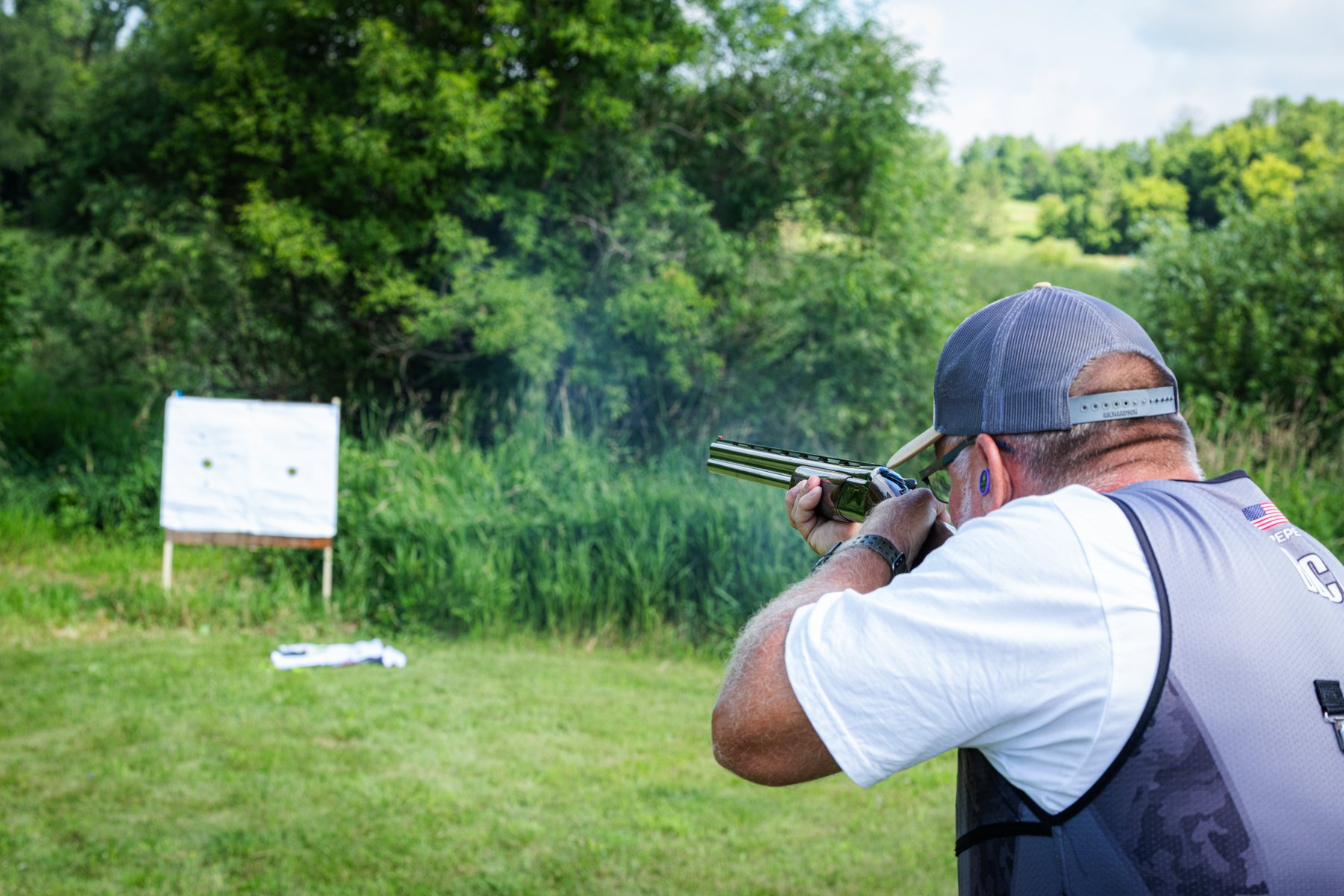
The field of shotguns for this year has a little something for everyone. It’s clear the semi-auto market is where the action is at, but it would be a mistake to overlook the great American-made over/under or the gorgeous Italian side-by-side. Being a waterfowl hunter, I couldn’t be more excited about the two new Beretta shotguns. I expect both will be doing work in duck blinds for many years to come.
Read the full article here