
We may earn revenue from the products available on this page and participate in affiliate programs. Learn more
Winter jackets provide plenty of insulation, but sometimes, you need something more—like a heated jacket. That’s even more true when you’re outdoors for an extended period or in extreme cold. Heated socks and gloves have their place for your extremities, but to help your body maintain its temperature, it’s all in the core. And that’s where heated jackets and vests concentrate their heat.
Some are sold with batteries, others without, so make sure you supplement accordingly. Consider picking up a compatible backup battery or power bank, so you’re not left out in the cold. We’ll walk you through the main uses and considerations to help you find the best heated jackets for your lifestyle and needs.
best overall
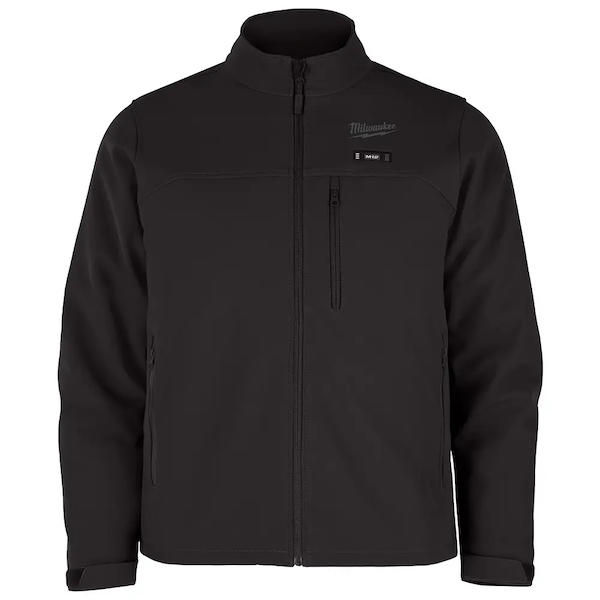
Milwaukee M12 Heated ToughShell Jacket
Pros
- Washer- and dryer-safe
- Extremely warm
- Fitted hood can be worn under helmets and hats
- 3 heat settings
Specs
- Volts: 12V
- Power Source: Rechargeable batteries
- Water-Resistance: None
The hoodie just got a whole lot hotter. Carbon-fiber heating panels are in the chest and back of this washer-and-dryer safe hoodie. Two layers—a cotton-poly exterior blend and a waffle-weave thermal interior—add to the warmth, while the hood and pockets offer warmth for the head, neck, and hands. A zip-front readily allows for ventilation and ease of wear, and without much bulk, the hoodie is ready to wear under another hunting jacket or coat in more extreme weather. It heats to three temperatures (and lasts 6 hours on the lower setting on one battery charge, fewer hours on higher temps) and has a built-in pocket for the battery.
Bonus for Milwaukee tool users: The Milwaukee heated jackets use the same M12 rechargeable lithium-ion batteries as their tools. If you’re in that camp and don’t need the battery and charger, you can also buy just the heated jacket. Otherwise, snag a couple extra M12 battery packs.
best for work

DeWalt Heated Heavy-Duty Work Coat
Pros
- Heats chest, back, and arms
- Water- and wind-resistant
- Can be powered by any Dewalt battery
Cons
- Not as durable as a Carhartt
Specs
- Volts: 20V
- Power Source: Rechargeable battery
- Water-Resistance: Some
This DeWalt heated jacket is ideal for the job site. A heavy-duty duck fabric exterior and fleece lining make it wind-resistant, water-resistant, and warm. Five heating panels (right and left chest, each arm, and mid-back) keep you warm no matter the conditions. A ribbed collar and cuffs add an extra barrier against the elements. Gusseted underarms allow for unrestricted movement.
This jacket lets you hook up a USB charger to the battery, and has enough pockets for your essential needs, as well as an extra battery or two—and takes the same 12v and 20v lithium-ion batteries as DeWalt tools.
best for women
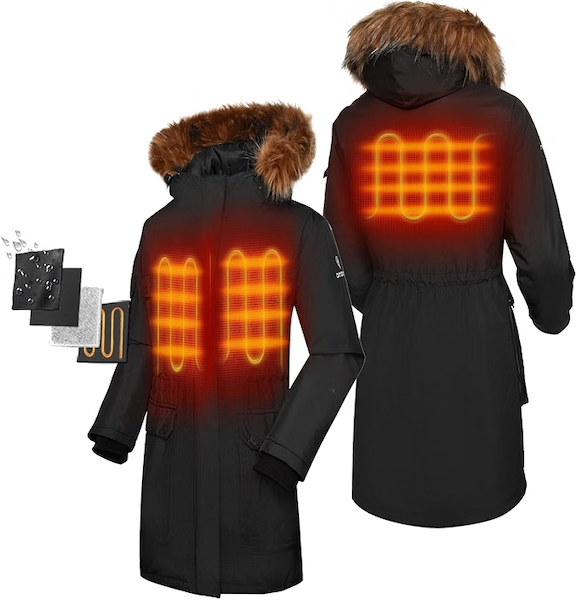
Ororo Women’s Heated Parka Jacket
Pros
- Machine-washable
- Waterproof coating
- Adjustable heat settings
- 3-10 hours of heat depending on the setting
Cons
- Battery doesn’t last long when on high
- Not true to size
Specs
- Volts: 7.2V
- Power Source: Rechargeable battery
- Water-Resistance: Yes (DWR)
Three heat zones (two on the chest, one on the back, all carbon-fiber) can stay warm for up to 10 hours in this Ororo heated jacket, and are machine-washable for more than 50 cycles. This best women’s heated jacket is water resistant and insulated with Thermolite, and is designed with ribbed cuffs and a thigh-length body. Up-top upgrades like a fleece-lined collar and detachable faux-fur hood keep the heat inside and keep you comfortable in winter weather.
best lightweight
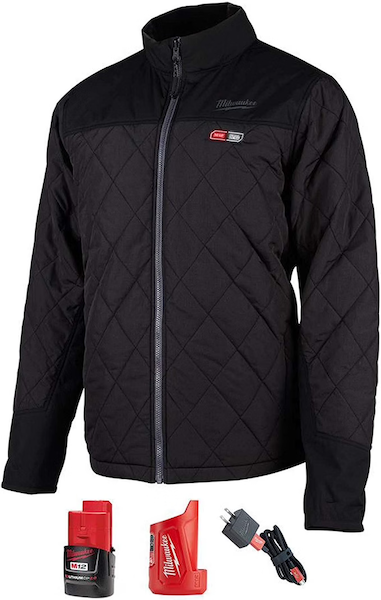
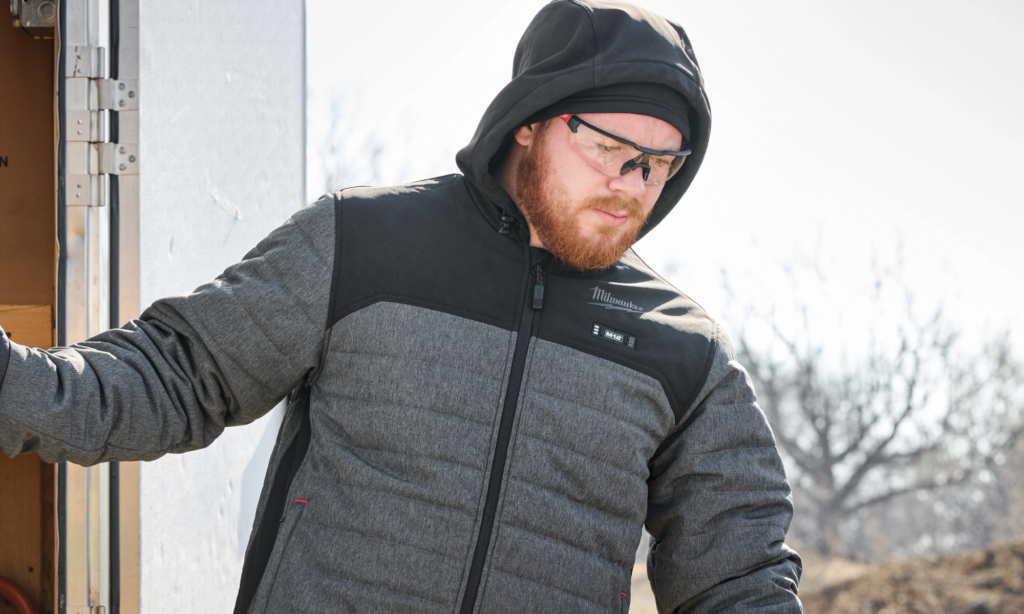
Milwaukee M12 Heated Axis Jacket
Pros
- Up to 8 hours of run time
- Reinforced and durable materials
- Machine-washable
- Quick to heat up
Cons
- Battery positioning can be uncomfortable
Specs
- Volts: 12V
- Power Source: Rechargeable battery
- Water-Resistance: Yes (DWR)
This Milwaukee heated jacket for men wears well for outdoor work and looks good enough to wear when you’re out at a more formal event. The quilting and fabric colors up the style side of things, while heating areas (including in the shoulders!) keep this coat as functional. It heats up quickly and runs at three power levels off of Milwaukee M12 lithium-ion batteries. It’s also lightweight (and tailored) enough to wear nicely under other coats, making it a versatile heated jacket option.
best down jacket
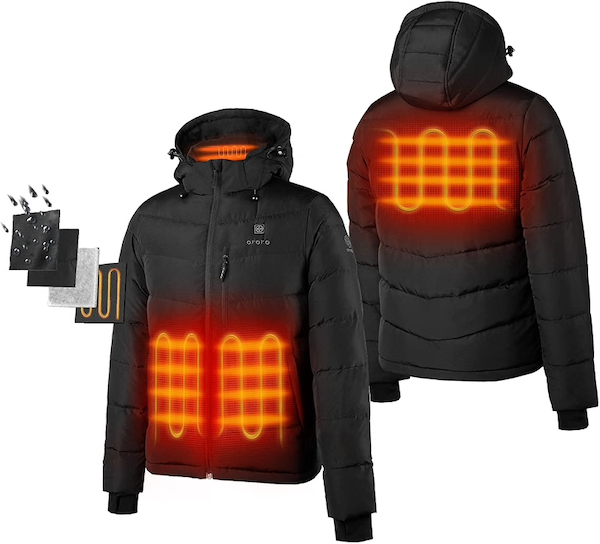
Ororo Heated Down Jacket
Pros
- Heat placement on front is great for warming hands
- Water-resistant fabric
- Responsible Down Standard Certified
- 4 heat elements including the neck
Specs
- Volts: 7.4V
- Power Source: Rechargeable battery
- Water-Resistance: Yes
The heating layout varies here from many others, with the front panels being at the abdomen rather than the chest. There’s still a mid-back panel to handle your torso’s upper half, while the lower front panels allow the carbon-fiber heating elements to warm hands in the front pockets—and are balanced out up top with heating in the collar, too. A detachable down-filled hood (that tightens separately from the collar), cuffs with thumb holes to stay in place, and 750-fill power down (one of the highest on the general market) round out the reasons we call it the best heated down jacket.
What to Look for When Choosing a Heated Jacket
Use
If you’re hunting or ice fishing, you’ll need a jacket that doesn’t restrict your movement or weigh you down, and will keep you warm without overheating you when you get really active—from turning an ice auger to dragging out a deer. A light heated jacket also means you can layer rain gear over it, so you’ll stay both dry and warm. These jackets are also among the best hiking jackets because they do not restrict your movement and tend to be lightweight.
If you’ll be on a construction site, part of a road crew, or doing any type of outdoor work in cold weather, you need a heated jacket that can stand up to abuse. You don’t have time to think about protecting the jacket from damage because you have a job to do. Make sure the heated work jacket you get is designed to ward off sharp objects and resist abrasion. While many heated jackets have some water resistance, they may also need to be paired with a rain jacket if you are outdoors for long periods.
Heated motorcycle jackets need to do everything a regular heated jacket does, but at higher speeds and in bracing winds, and without much fumbling around with controls. And the most essential difference? They should be set up to plug into your motorcycle battery, so there’s a) no limit on heat hours and b) no batteries to mess with.
Material and Insulation
With down jackets, you’re looking for a high down fill power (the rating number that frequents the 550-750 range) as your quality metric. Down jackets are often one of the best winter jackets for insulation purposes, so adding a heat element only helps you stay warmer longer.
Budget
Most heated jackets hover around the same price range, and, in general, there’s much less variability than in other categories of cold-weather gear. To truly reduce price, you’re going to be reducing elements. One handy option is reducing the need for battery packs (but you may lose duration or intensity of warmth). Other options include solo heating elements you can wear, but they’re not integrated into insulating fibers, making them much less efficient. You can opt for a heated vest instead, which—worn as a layering piece—will still keep your body’s core warm. If you’re hunting or riding a motorcycle, however, you may want to think twice before ditching arm heating panels.
FAQs
The best heated clothing brand depends, to some extent, on you. If you already use Milwaukee or Dewalt tools, we recommend going with that same brand, as each makes their jacket batteries compatible with their tool batteries. If style (without losing sight of performance) is a priority, we like Ororo heated jackets, particularly their down option.
How long heated jackets last varies by maker and by use. In general, if you’re rough with the jacket, and if it’s exposed to a lot of harsh weather or washing machines, it will wear out more quickly, as will most gear. Pay close attention to the manufacturer’s instructions on care to help here. Otherwise, the battery is the main piece to consider with longevity, and the piece you may need to first replace, as they do lose power over time.
If you spend a good deal of time outdoors engaged in activities that don’t keep you consistently active and therefore generating your own heat (so, hunting, hanging out, or riding a motorcycle vs. skiing or snowboarding), yes, heated jackets are worth it. They help keep your body’s core warm, which translates to being—and staying—warmer overall.
While it may be possible, it is very unlikely that a heated jacket would catch fire. Most heated jackets utilize carbon fiber heat zones, and carbon fiber has a flashpoint of at least 1800°F, making it very difficult to start on fire. Many heated jackets will also have an automatic turn-off if they get over a certain temperature or prevent short-circuiting.
Final Thoughts
When looking for a heated jacket, or any heated clothing, remember that the battery is half of what you’re buying, particularly in terms of power and longevity (while you’re wearing it and in the long run). You want quality materials, a good fit, well-placed heating elements, and a good battery. (Or two or three batteries: We highly encourage back-ups if you will be wearing the item for more than a few hours and won’t be in a place where you can step out of the cold to charge back up.)
Why Trust Us
For more than 125 years, Field & Stream has been providing readers with honest and authentic coverage of outdoor gear. Our writers and editors eat, sleep, and breathe the outdoors, and that passion comes through in our product reviews. You can count on F&S to keep you up to date on the best new gear. And when we write about a product—whether it’s a bass lure or a backpack—we cover the good and the bad, so you know exactly what to expect before you decide to make a purchase.
content_hiking-backpacking
EXCITING NEWS
Membership Now Includes

Recommended Products
Read the full article here