
As kids growing up in rural Oregon, my brother and I always had an important stop before we headed out for a day of fishing. We had to collect bait. For roughly 10 months of the year, that meant digging up nightcrawlers from the compost pit. But in late summer, it was different. We’d head up to Farmer Lee’s cow fields to catch grasshoppers.
Truth be told, we probably had as much fun chasing hoppers as we did fishing. And we quickly learned that everything ate hoppers, whether we were chasing cutthroat trout in little creeks or hiking to the river to catch smallmouth bass. Those fish couldn’t resist the big, juicy bugs.
I still love the two or three months when hoppers and other terrestrial insects are important fish food. The difference now is that I don’t bother with the real thing. Instead, I use flies that imitate grasshoppers, crickets, beetles, ants, and other insects that live on land but sometimes end up in the water. Here are a few of my favorite tips and tactics for terrestrial season.
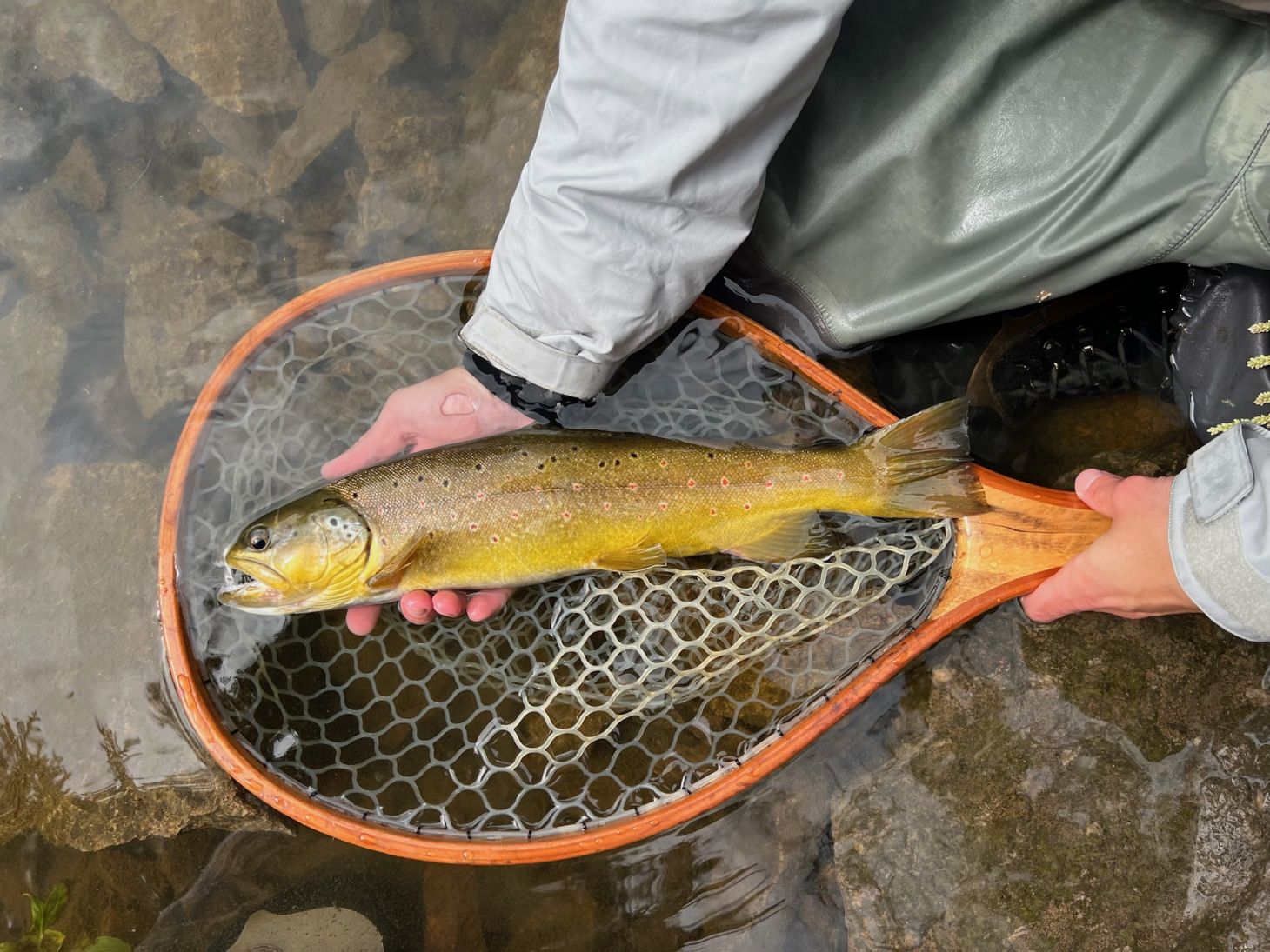
1. Look and Listen
When does terrestrial season get rolling? It depends on things like region and weather. But the simple way to figure it out when it’s go-time in your neck of the woods is to trust your eyes and ears. Are beetles and moths fluttering around your porch light? Can you hear cicadas buzzing? Are neighborhood kids chasing fireflies?
When you start noticing bugs, the local trout are noticing the same bugs when they end up on the water. And the great news is that terrestrials start appearing in big numbers just as the fun hatches of spring and early summer are tapering off.
2. Use a General Terrestrial Pattern
Terrestrials rarely hatch in clouds like aquatic insects. Once in a while, you’ll stumble into a swarm of flying ants, and we occasionally get a monumental appearance of periodical cicadas, like many in the East and Midwest saw last year when two distinct broods emerged simultaneously.
Generally, though, terrestrials are just around. Which means they are more a meal-of-opportunity for trout. That’s good for anglers because trout aren’t looking for lots of the same thing in the drift. They’re just looking for something meaty like that last hopper or beetle they ate an hour ago.
There are some amazing hopper patterns out there. My wife recently screamed when she spotted a KK’s Henneberry Hopper on my desk. Those realistic patterns absolutely work, but the drawback is they take a while to tie, so you’ll probably cringe every time you break one off in a streamside tree. The good news? Unless you’re dealing with fish that have been hammered, simpler impressionistic patterns like the Chubby Chernobyl hopper work just as well.
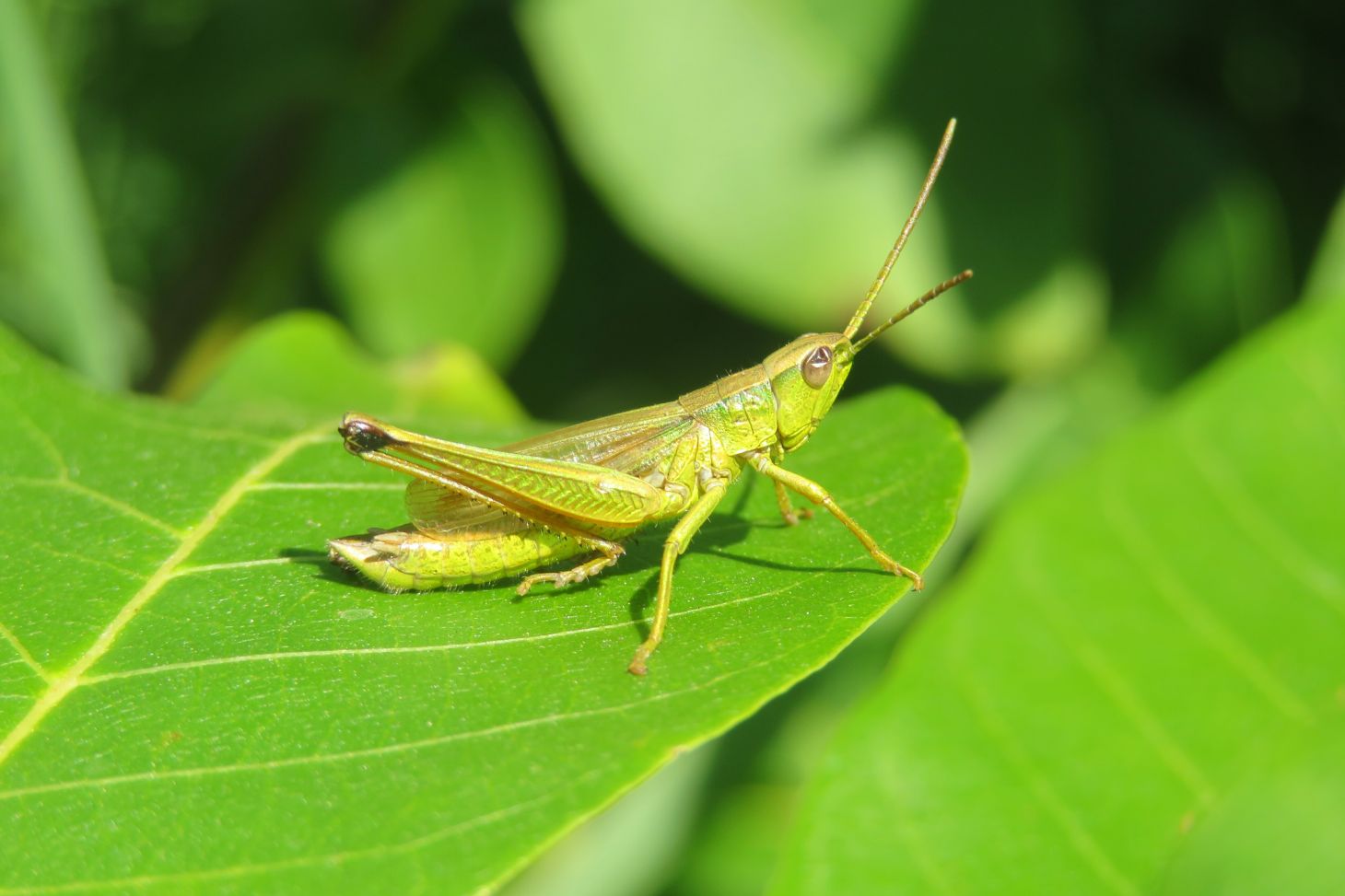
3. Fish Fast
Trout keying on terrestrials are typically pretty aggressive. If they’re going to eat, they’re usually going to eat the first time they see the fly. Whether you’re fishing big water or a small stream, there’s really no need to make more than a couple of casts to a likely spot. An exception is if you see a nice fish examine and refuse the fly. Then it can pay to change to a smaller fly and give it another shot.
4. Add a Dropper
Anyone who has done even a little fly fishing has probably heard the term “hopper-dropper.” That’s a version of the dry-dropper rig—adding a second fly to a leader tied to the bend of the hook of a grasshopper fly. The hopper serves as a strike indicator, while the dropper essentially doubles the rig’s effectiveness.
The default dropper fly is typically a nymph. Because we’re not fishing a hatch, per se, good patterns are generic nymphs like a Gold-ribbed Hare’s Ear, a Pheasant Tail, a scud, or small Pat’s Rubber Legs. Another dropper option is a smaller terrestrial, like an ant or a beetle. I often don’t use floatant on dropper terrestrials because they can work really well if they sink slightly.
5. Bulk Up Your Gear
Terrestrials can be big, so even if you’re targeting smaller fish or smaller water, you’ll probably want a rod with some power. I recently found myself in a prime terrestrial situation while armed only with a Sage LL Trout 3-wt, which is really designed for little dry flies like the trico mayflies spinner fall that went off early that morning. The rod’s moderate action saved me when it came time to cast bigger hoppers, but I would have been better off with a 9-foot 5-weight.
Using a heavier tippet like 3X, 2X, or even heavier can help turn over those big flies. It can also help some of those flies when they get stuck in streamside vegetation. It’s amazing how a good yank can salvage flies that would be donated to trees on lighter tippet.
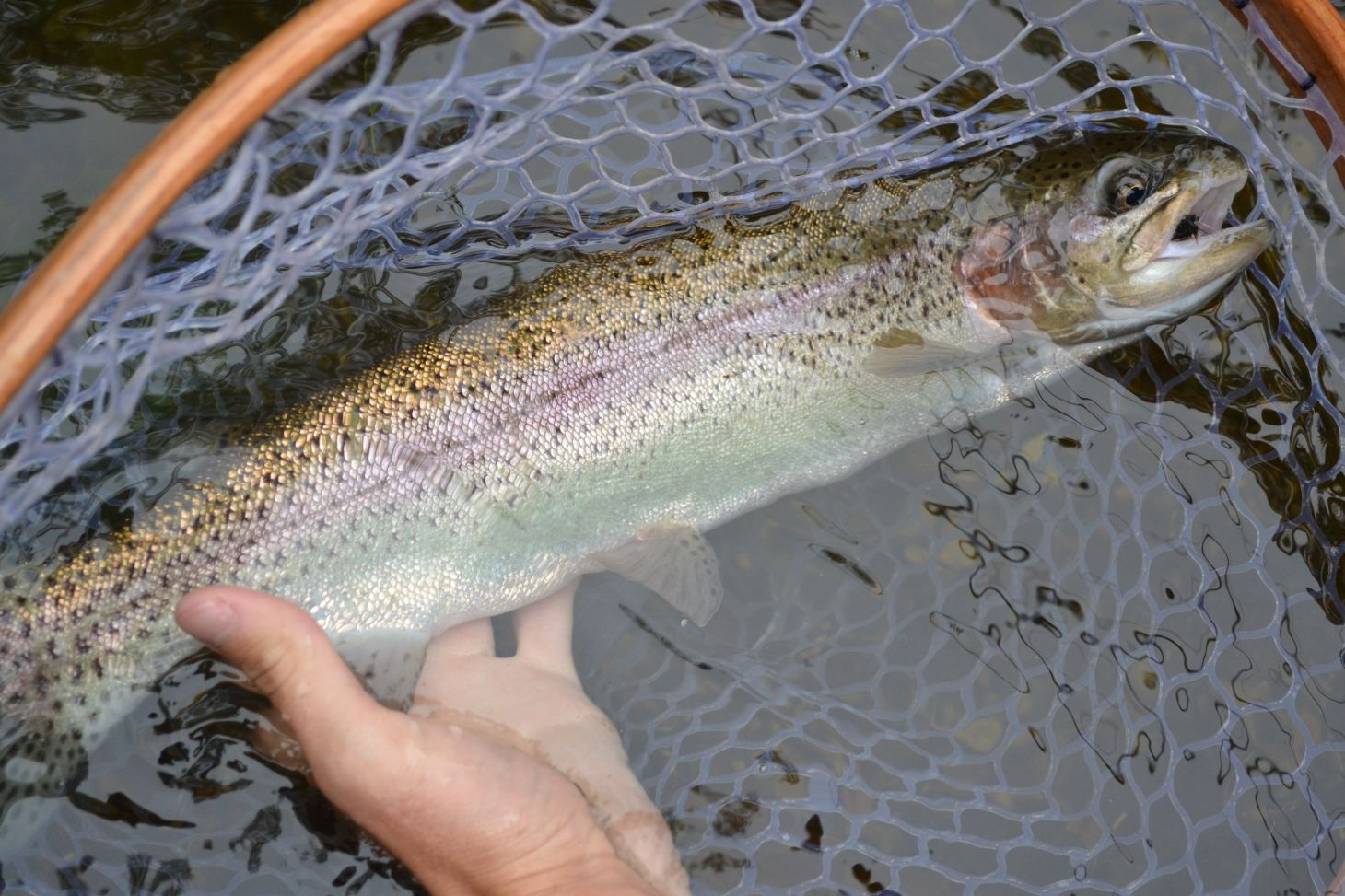
6. Don’t Wait for Summer
Yes, there is a prime season for targeting trout with terrestrials. But that doesn’t mean they can’t work at other times of the year. Sometimes, when trout are being ultra-picky during a hatch, a big terrestrial can trigger a reaction strike. And except for during the coldest months, if you’re fishing a nymph below an indicator, make that indicator a high-floating terrestrial pattern instead of a bobber. The nymph will likely still catch most of the fish, but you might be surprised by the number of trout that will blast a hopper even if they haven’t seen a real one for months.
content_fly-fishing,content_fishing,content_stories

THE 1871 CLUB

Recommended Products
Read the full article here