

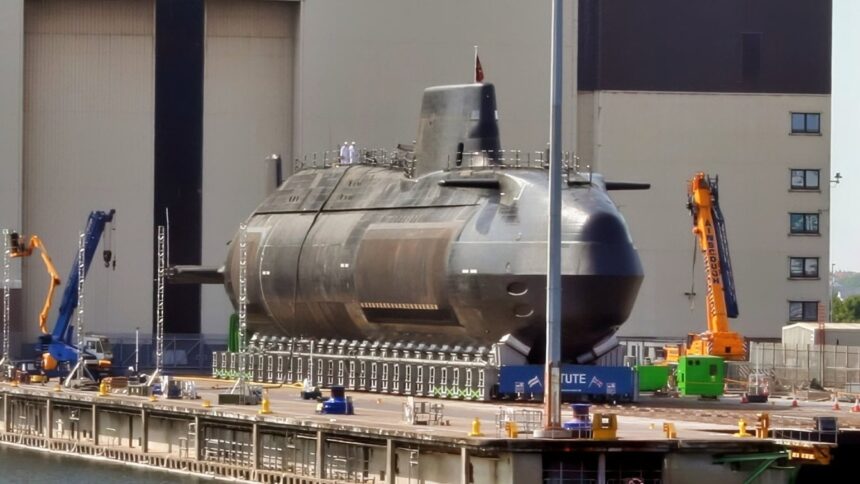
How a 2010 Submarine Accident Shows How Serious the Royal Navy’s Training and Leadership Has Declined: Britain’s Royal Navy once ruled the waves. Now, the legendary maritime service struggles to maintain its attack submarines. Take the October 2010 incident involving the HMS Astute (S119), one of the Royal Navy’s most advanced nuclear-powered attack submarines. That incident involved the powerful submarine running aground off the Isle of Skye, Scotland.
The HMS Astute
The incident cost the British taxpayer the equivalent of $1.5 billion, and the submarine became stranded on a shallow bank.
Back in 2010, the world was (if you can believe it) much safer than it is today. The Astute wasn’t running from a superior force of Russian submarines or evading Iranian drones when she ran aground. The Astute was undergoing routine sea trials in an era of relative peace, serving a country not at war with anyone at the time (other than the Taliban in Afghanistan).
To make the humiliation greater, the incident occurred less than two months after the Astute’s official commissioning. After the embarrassing event, British Royal Navy authorities conducted a deep-ranging investigation and found multiple navigational mistakes, major failures to follow proper protocols, and poor leadership.
In effect, extraordinary seamanship failures took down the Astute. That’s a stunning revelation when you consider that, just a century earlier, the Royal Navy was the world’s mightiest navy, controlling one-fourth of the world.
BAE Systems built HMS Astute at Barrow-in-Furness, England, and construction began on January 31, 2001. The submarine launched six years later on June 8, 2007. She was commissioned three years thereafter, on August 27, 2010.
At 318 feet long, the Astute displaced 7,400 tonnes submerged. The Royal Navy saw this submarine as a game-changer. She was a substantial improvement over her predecessors.
Astute-Class Submarine BAE Systems Photo
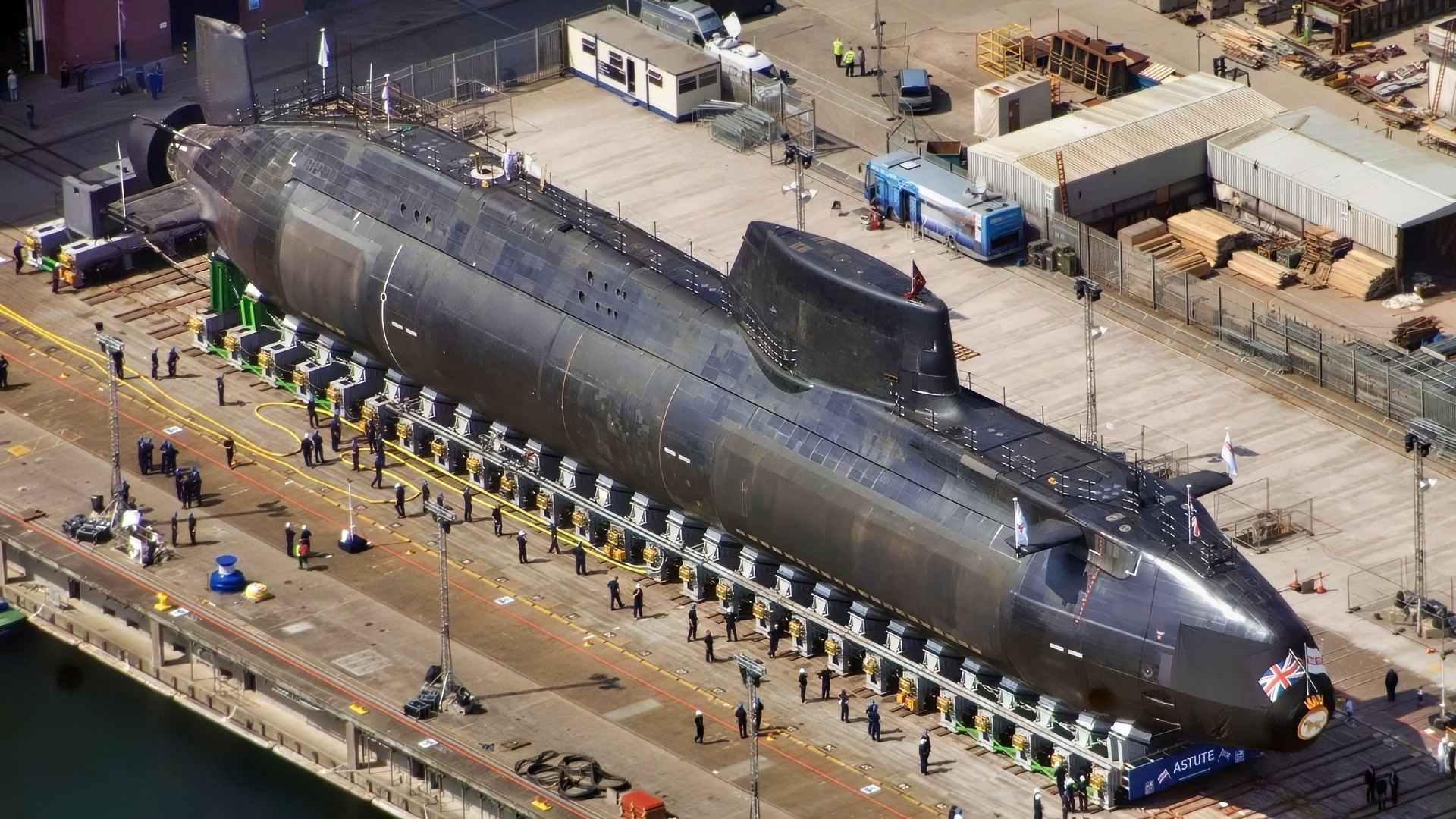
Astute-Class Submarine Royal Navy
Powered by a Rolls-Royce PWR2 nuclear reactor, the submarine was designed for extended deployments without refueling. Its operational endurance was only limited by food supplies and other crew requirements (and by the poor leadership and training of some of her crews).
The submarine had six 533-millimeter torpedo tubes that could fire Spearfish heavyweight torpedoes and Tomahawk Land-Attack Cruise Missiles. She had advanced sonar systems that could detect enemy submarines and surface vessels at greater distances.
The Totally Avoidable Accident
Early on the morning of October 22, 2010, the HMS Astute was navigating waters near the Isle of Skye, preparing to rendezvous with another vessel. The submarine was running on schedule.
Because they had fallen behind schedule, the crew tried to make up for lost time by shortening the route to reach the rendezvous on time. But shortening the route brought the submarine dangerously close to shallow water.
The submarine’s primary radar was not used because it produced unwanted noise, although the equipment remained operational. What’s more, the submarine’s bridge did not have an appropriate navigational chart immediately available.
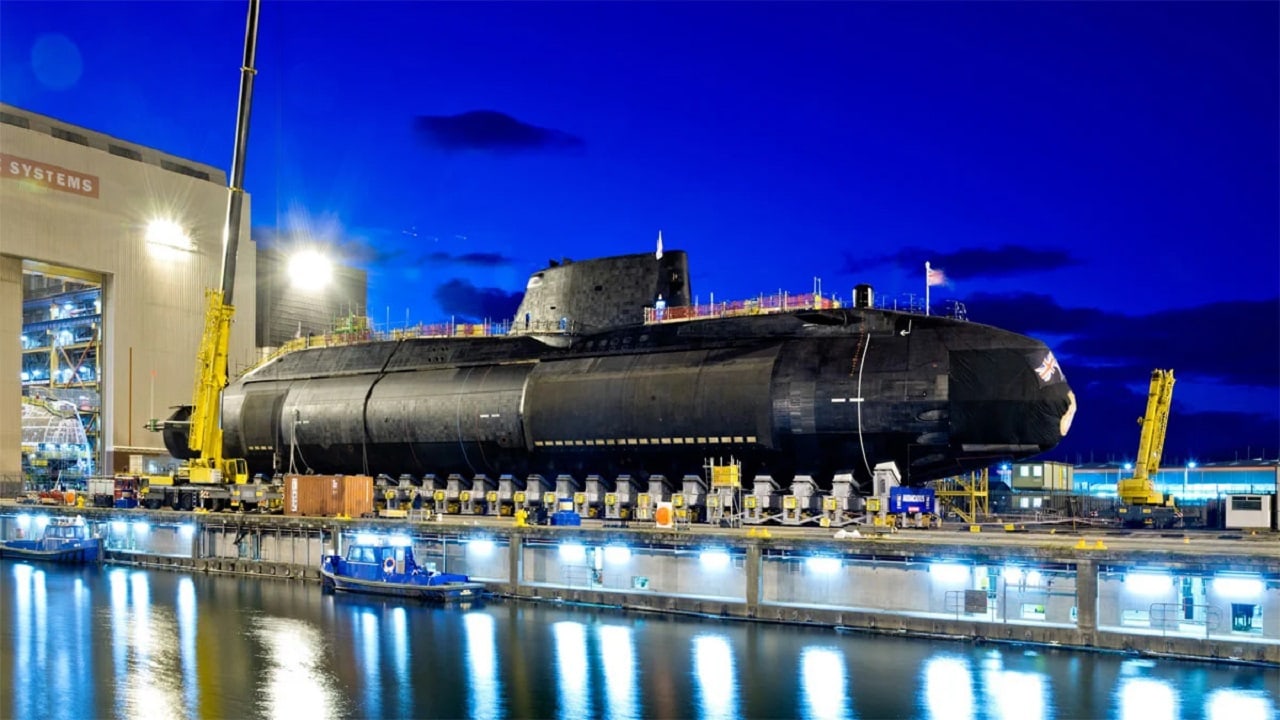
Astute-class Submarine. Image Credit: BAE Systems.
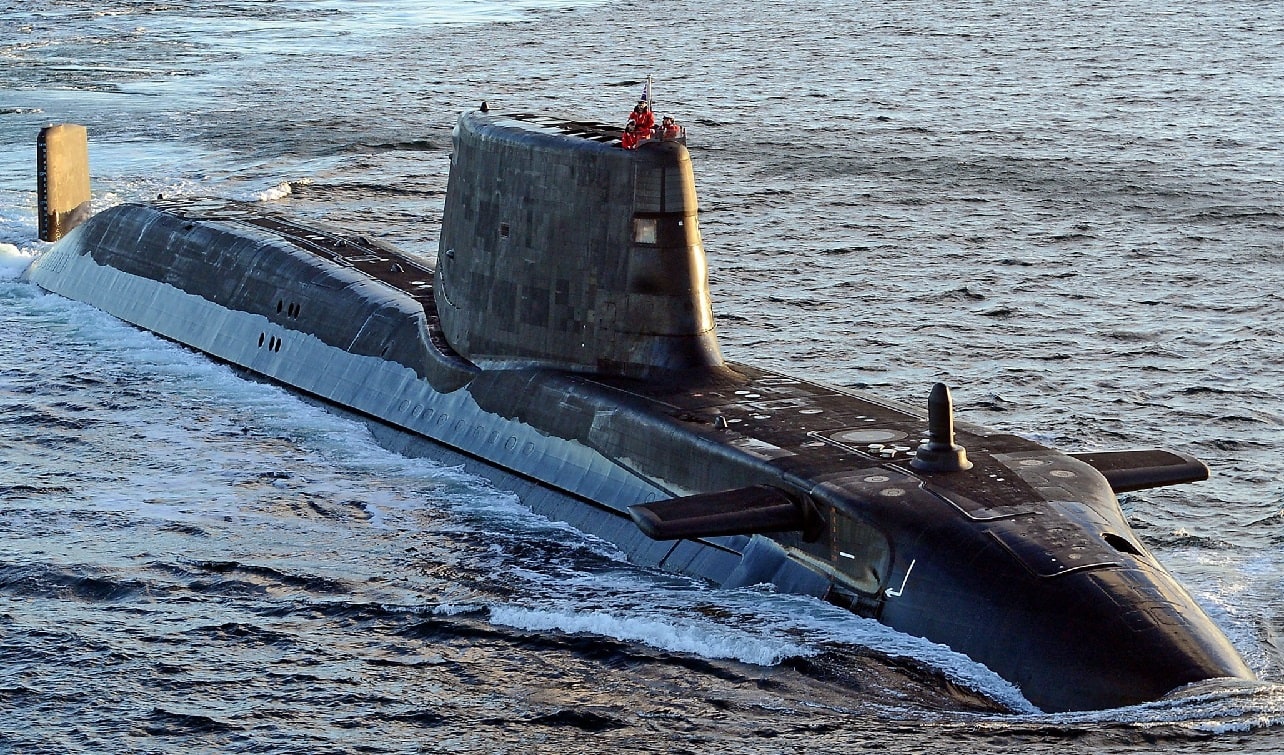
Astute class submarine HMS Ambush is pictured during sea trials near Scotland. Ambush, second of the nuclear powered attack submarines, was named in Barrow on 16 December 2010 and launched on 5 January 2011.
To compound their problem,s the officer of the watch apparently lacked proper binoculars. In the dark early morning hours, apparently, the officer could not see the route clearly (especially without those binoculars and the necessary map). Oh, and apparently the ship’s skipper, Commander Andy Coles, was taking a shower during the critical passage through troubled waters.
So, the submarine grounded near Skye.
The submarine remained stranded for around ten hours as the Royal Navy assessed the situation and arranged assistance. No injuries were reported (other than to the Royal Navy’s dwindling pride). No significant damage was reported to the submarine’s nuclear reactor either. Commander Coles opted against using excessive power to escape, fearing it might damage the hull and the important sound-absorbing anechoic tiles.
More Complications
They waited for more favorable sea conditions to dislodge the submarine. They called in a towing vessel, the Anglian Prince, to help dislodge the submarine once conditions improved. That’s where things got nastier. As the Anglian Prince helped the stuck submarine, she collided with the HMS Astute, causing additional, albeit minor, damage to the new nuclear-powered submarine.
Ultimately, the submarine returned to Faslane, Scotland, under its own power.
The official Royal Navy investigation took two years to issue its report. They found that serious failures in navigation, supervision, and adherence to established operating procedures caused the accident. The crew also did not understand the submarine’s position relative to nearby natural hazards. The absence of effective radar also contributed to the avoidable accident.
A Failure of Leadership and Training
What’s more, the April 2012 report stated that the grounding’s relative gentleness led the crew to misjudge the severity of their error. The report said senior personnel failed to appreciate how serious the situation became. Investigators provided ten recommendations to improve navigational procedures, command oversight, and overall operational safety.
Three officers faced disciplinary or administrative action for their failure on that day. Commander Cole was relieved of command five days after the accident occurred.
The Astute accident near Scotland demonstrated the Royal Navy’s serious decline in training and oversight since the end of the Cold War.
About the Author: Brandon J. Weichert
Brandon J. Weichert is the Senior National Security Editor at 19FortyFive.com. He also manages The Weichert Brief on Substack. Weichert also hosts “National Security Talk” on Rumble. He has authored four bestselling national security books, most recently A Disaster of Our Own Making: How the West Lost Ukraine (Encounter Books). Follow him via Twitter/X @WeTheBrandon.