

Pundits and politicians are celebrating word that Saudi oil is again flowing through the Strait of Hormuz and the Red Sea. Oil flows through the Strait of Hormuz are now at 13.1 million barrels per day, approximately 77 percent of pre-war levels. Many analysts are celebrating the figures as evidence that President Donald Trump’s strategy is working. Richard Goldberg, a senior advisor at the Foundation for Defense of Democracies, declared, “The blockade is working.” KT McFarland, a former deputy national security advisor, tweeted, “Iran overplayed its hand by closing Strait. Countries developed workarounds w/ pipelines, US exports, and then reopened the Strait. For 50 yrs Iran blackmailed world. No longer. That card is dead.” Victoria Coates, another former deputy national security advisor, likewise called the blockade, “By far Trump’s most devastating tool was the imposition of the U.S. blockade on Iranian exports through the Strait of Hormuz….”
Don’t Oversell the Iran Blockade
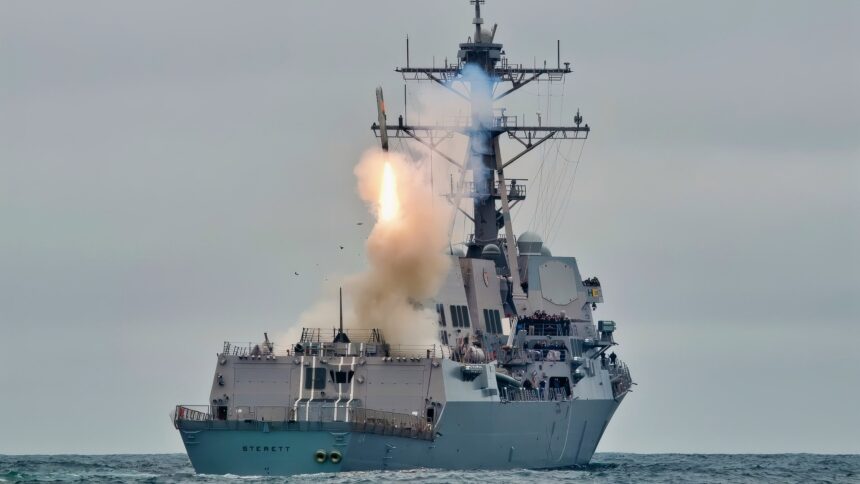
Arleigh Burke-class guided-missile destroyer USS Spruance (DDG 111) fires a Tomahawk Land Attack Missile (TLAM) in support of Operation Epic Fury, Feb. 28, 2026. (U.S. Navy photo)
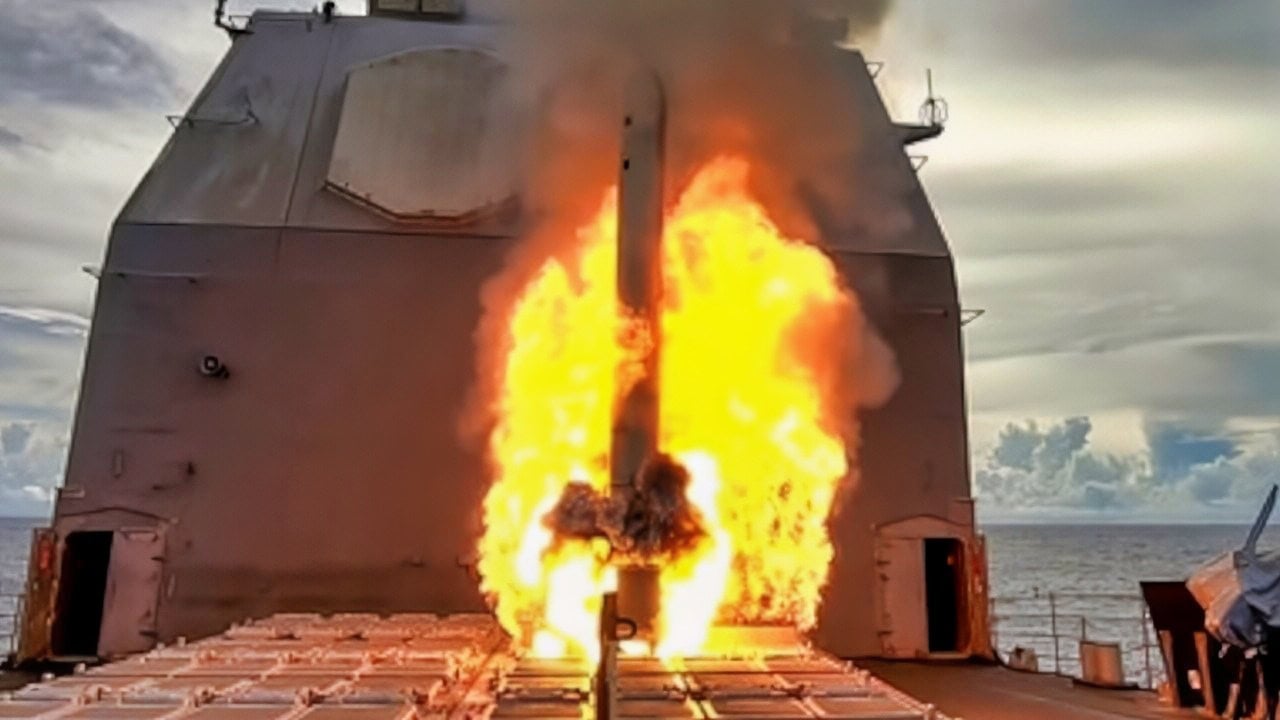
Tomahawk Missile Firing U.S. Navy Photo
Make no mistake: Trump’s decision to blockade Iran was correct, but the blockade has not been as effective as pundits promoted by the White House believe.
There are holes: The Caspian Sea, for example, and Iran’s land borders with Azerbaijan, Turkey, and Turkmenistan, all of which appear to be in overdrive.
When Iranian attacks on shipping in the Strait of Hormuz began, Saudi Arabia diverted 7 million barrels of oil per day through the East-West Petroline, of which 5 million barrels per day are exported through the Port of Yanbu.
What undercuts Trump’s triumphalism is that while oil exports resume through the Strait of Hormuz, they decline almost as sharply through the Bab el-Mandeb, the southern gateway to the Red Sea.
That makes sense on its surface; after all, with the Houthi capture of Mokha and Perim Island, they and their Islamic Revolutionary Guard Corps minders control the second most important natural chokepoint in the Middle East. Kpler data show that oil flows through the Bab el-Mandab have declined by more than half to 2.53 million barrels per day.
The Real Problem
Here is the problem that should keep energy analysts on alert and cause pro-Trump pundits to put their celebratory champagne on ice: Saudi Arabia’s loadings at Yanbu are now increasing again after a brief pause after Iraqi militia drones struck the Petroline.
Saudi Arabia has already announced most of its tankers would head south through the Houthi-imperiled Bab el-Mandab and the Indian Ocean to fulfill Chinese orders rather than north through the Suez Canal to supply Europe.
This suggests that the variable explaining the change lies not in heightened blockade enforcement or a decline in the capabilities of the Islamic Revolutionary Guard Corps and the Houthis, but rather in Saudi behavior.
Saudi Arabia has a long history of appeasing its adversaries to keep its economy afloat. This began during President Barack Obama’s administration when Obama’s anti-Saudi tilt and criticism of Saudi Arabia’s campaign against the Houthis led Riyadh to question whether Saudi Arabia could anymore trust Washington.
The Kingdom was understandably frustrated, given how they were the victims of more than 1,000 Houthi drone and missile strikes.
While the United Arab Emirates was successful in defeating Al Qaeda in the Arabian Peninsula, rolling back the Houthis from Aden, and building up a competent proxy, Saudi ground success against the Houthis was significantly less. That the Houthis continue to control Sanaa, just 125 miles from the Saudi border, is a testament to Saudi ineffectiveness.
Bogged down in Yemen by decisions made by his predecessors and prior to his promotion, Crown Prince Muhammad Bin Salman grew frustrated that the Houthi challenge had become a drain on Saudi resources, and so he reached a deal with the Houthis: Saudi would scale back its operations against the group, so long as the Houthis would not strike at critical Saudi interests.
The Saudi bargain was not much different from Trump’s deal with the Houthis, in which he agreed to stop bombing the Houthis if they agreed to stop targeting U.S. shipping. The Houthis insisted, however, that their aggression against Israel and ships destined for the Jewish state would continue.
The danger now is that Saudi oil might flow so that Bin Salman can meet payroll and salvage his ambitious domestic projects, but if he is paying off Iranian and Houthi interests, there will be a reckoning as both ideological adversaries will use that money to strengthen themselves, resupply, and stage a broader array of terror attacks elsewhere. Essentially, Saudi Arabia appears to be caving to extortion, without considering that succumbing to blackmail just raises the future price on Riyadh and the rest of the world. For too long, Saudi Arabia has been the weak link on counter-Houthi, counter-Iran operations.
Misinterpreting a short-term increase in oil flows as the result of a successful blockade can also backfire, as it diverts attention from continued leakage or enables political populists to relieve pressure on Iran ahead of the midterms. Trump must ramp up pressure while, at the same time, any government, company, or official directly or indirectly paying off the Houthis should face diplomatic and economic sanctions.
About the Author: Dr. Michael Rubin
Michael Rubin is director of policy analysis at the Middle East Forum and a distinguished fellow at India’s Usanas Foundation. A former Pentagon official, Dr. Rubin was a senior fellow at the American Enterprise Institute for more than two decades. He has lived in post-revolution Iran, Yemen, and both pre- and postwar Iraq. Opinions expressed here are the author’s own.