
We may earn revenue from the products available on this page and participate in affiliate programs. Learn more
When it comes to calling geese, Canada geese in particular, I’m awful short of fancy. I’ve heard fancy, know what it sounds like, and hunt with people who can sound like a flock of geese. That said, I can hold my own when it comes to blowing a goose call. I do the simple stuff well, and as it turns out, that’s really all you need to kill honkers.
Today’s goose calls, and the short reeds in particular, have progressed to the point that damn near anyone with a desire to learn, improve, and ultimately sound real afield can find a call geared for them. Just like expert callers can find specialty calls to dial in exactly how they want to sound in the blind. So I rounded up a handful of the best goose calls on the market for any skill level. Here are some of the best goose calls you can buy.
- Best Overall: Kwakman Calls The Boss 2.0
- Best Speck Call: RNT Calls Barbelly
- Most Custom: Bill Saunders Traffic
- Best Budget: Big Lake Outdoor Products Acrylic Goose Call
The Rest of the Best Goose Calls
- Legendary Gear Alpha
- Bill Saunders Triple B
- Tim Grounds G-Force
- Kwakman Calls Wild West Speck Hunter
Best Overall: Kwakman Calls The Boss 2.0
best overall
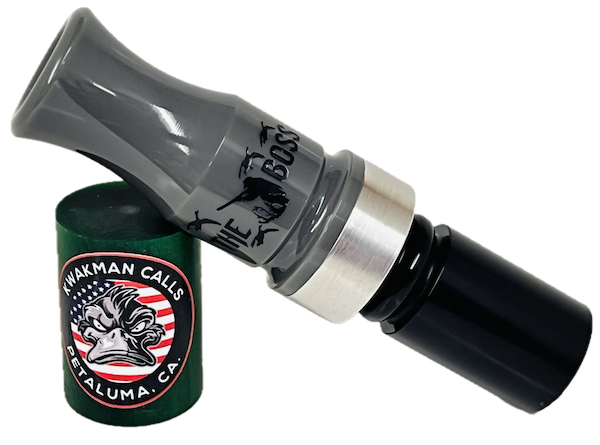
Kwakman Calls The Boss 2.0
Pros
- User-friendly
- Versatile range from high to low
- Great for Lessers up to big honkers
- Minimal back pressure required
- Double O-ring design
Cons
- Expensive
- A little touchy
Rich Peterson, owner of Kwakman Calls, began his career as a tool and die maker, working alongside his father, George, who founded the business in 1946. The Boss 2.0 is Peterson’s acrylic short reed, which is not only one of the best-sounding calls on the market but also extremely user-friendly. The Boss features built-in back pressure, making it easier to drive from the start. It has a solid double O-ring design with a stainless steel band. Hunters have six colors to choose from, but I like the orange/pearl pattern the best. The only downside to this call is that it’s expensive, but it has an excellent range and can be used across the board from Lesser to giant Canada geese.
Best Speck Call: RNT Calls Barbelly
best speck call
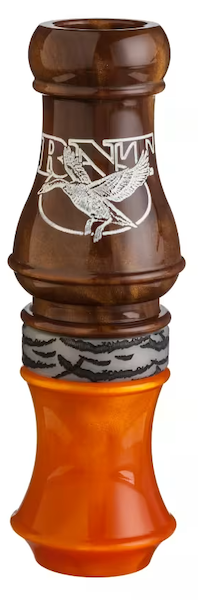
RNT Calls Barbelly
Pros
- Built-in back pressure
- User-friendly
- Ergonomic design
- Good looks
Cons
- Expensive
Rich-N-Tone is a powerhouse when it comes to duck and goose, and the Barbelly specklebelly call is another example of why RNT is so popular among hunters. This call is a favorite for serious speck hunters. The Barbelly does it all, from the subtlest ground noise and on-the-water murmurs to long-range yodels and yelps. It features built-in back pressure that makes the caller’s job easier and individually crafted Delrin guts that help the call sound so good. The ergonomics of this call are excellent, too. It is comfortable in the hand and looks great, which is important because if you’re going to spend $165 on a specklebelly call, it better be sexy.
Best Custom: Bill Saunders Traffic
best custom
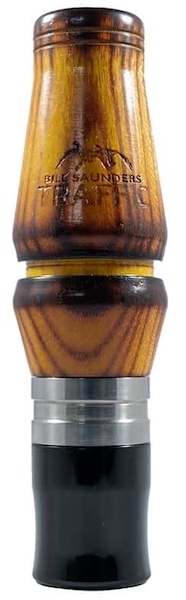
Bill Saunders Traffic
Pros
- Aesthetically pleasing
- Five color choices
- Incredibly versatile for all subspecies of Canada geese
Cons
- Expensive
- Takes time to learn
The Saunders name has been a mainstay among goose hunters for more than two decades. Originally from Wisconsin, Saunders moved to Washington in the 1990s, began building duck and goose calls, and continued calling on stage. He’s retired from competition now, but still makes some of the best calls out there, like the Traffic call.
It is a do-it-all short reed that can run the subspecies gamut, from big honkers to lessers to cacklers. Saunders claims that the Traffic can “make a pretty nasty snow goose call.” The original Traffic comes in five colors. This call sounds amazing, looks amazing, and will last for years. The Traffic will run you at least $150, landing it in the premium category for calls. But all things considered, that’s not bad for a custom call from an all-time legend.
Best Budget: Big Lake Outdoor Products Acrylic Goose Call
best budget

Big Lake Outdoor Products Acrylic Goose Call
Pros
- Affordable
- Excellent service after the sale
- Clean look
- Multiple colors
Cons
- tk
I’ve worked with Hugh McLaurin, the gentleman behind Big Lake Outdoor Products, in the past, and I’ll say he makes a fine product at an affordable price. Case in point, his latest creation, the acrylic Perfect Honker short reed. For $40, you get a camo-dipped, no-frills call. I took mine out of the box, stepped onto the back porch, and quickly convinced myself that ”˜yes, I can kill a goose with that.’ It comes in the vintage Bottomland pattern here, but different higher-end versions can be had, complete with a shiny silver band, for $99.
The Rest of the Best Goose Calls
Legendary Gear Alpha
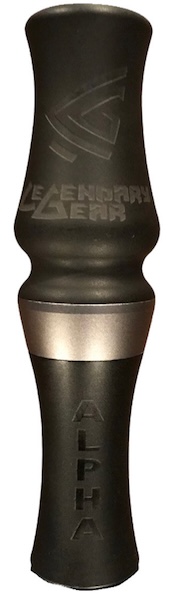
Legendary Gear Alpha
Pros
- User-friendly short reed
- Hand-tuned by the craftsman
- Wide range and volume
- Affordable
Cons
- Takes time to dial in
I’ve known George Lynch for close to 30 years now, and he’s always been extremely proud of the fact that he brings the very best of his talents and abilities to the stage in the form of his Legendary Gear call lineup. Lynch’s short reed Alpha has everything I’m looking for in a goose call. It blows easily, sounds true, and looks damn nice. Plus, it has a great range and volume when you need it. And with a price tag ranging from $89 to $159, the Alpha doesn’t put a dent in most wallets. Each call is hand-tuned by Lynch himself—light, medium, or heavy—depending on the customer’s preference and skill level.
Bill Saunders Triple B
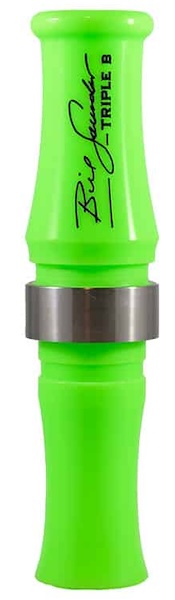
Bill Saunders Triple B
Pros
- Incredibly user-friendly short reed
- Wide range of goose vocabulary
- Easy learning curve
- Excellent service and instruction
- Hand tuned
Cons
- Expensive
Saunders sent me one of the first Triple B short reeds he built a couple of years back. Right out of the box, I felt like I had truly upped my game. In fact, the first Western Canada I spoke to turned 90 degrees and locked up without hesitation. Scientific? No, but I was sold.
I would rate the Triple B a 10 out of 10 on the user-friendliness Scale. It’s not flute call easy, but it is easy to blow out of the box. Still, the Triple B is a call that experienced waterfowlers can grow into throughout their field careers. I’m partial to Saunders’ ”˜Game Used Guts,’ meaning the insert workings have some time on them, making them (again) more user-friendly. However, Saunders does field the option of slipping Standard (new/unused) guts in the call if that’s what one prefers.
Tim Grounds G-Force
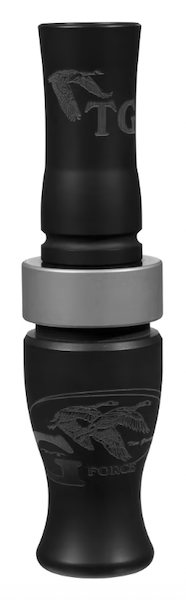
Tim Grounds G-Force
Pros
- Built by a legend in the industry
- User-friendly
- Built-in buzz
- Extremely versatile and wide-ranging
Cons
- Expensive
The G-Force is a tremendous short reed call that Hunter Grounds refers to as the “big brother” of another recognized winner in the Grounds line, the G Overhauler. With its fine lines and Triple Crown ”˜Worn-In’ guts, the G-Force, says Grounds, “is a call built to fit all levels of experience.” It ranges from loud, full honks to low, bottom-end buzzy chuckles. It is a call for every style of goose hunter.
Kwakman Calls Wild West Speck Hunter
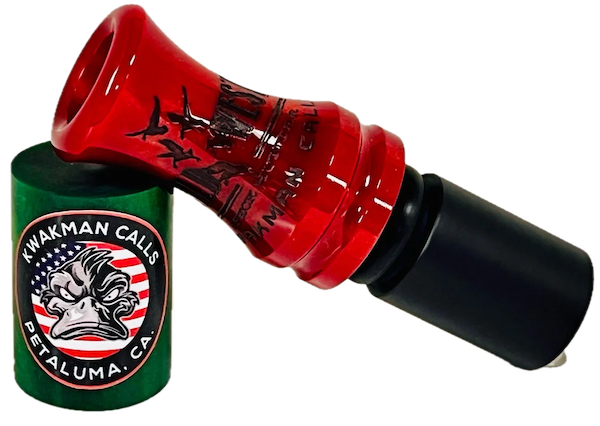
Kwakman Calls Wild West Speck Hunter
Pros
- Made in the USA
- Requires little back pressure
- Shallow learning curve
- Can be run one-handed (allowing for a flag or coffee cup in the other!)
- Affordable
Cons
- White-front vocabulary is unique, so there’s some learning involved
Specklebelly populations are on the rise throughout the western Pacific Flyway. And in response to this increase, more and more hunters are searching for a call that’s easy to use, affordable, and sounds…well, just like a specklebelly. Thanks to owner Rich Peterson and his California-based Kwakman Calls, the search might very well be over.
Designed as a collaborative effort by Peterson and outfitter Brett Overshiner, the Wild West Speck Hunter features a shortened barrel and an open (flared) exhaust. This translates into a need for less air to be introduced into the call, along with minimal back pressure required. “I wanted something I could comfortably blow all day long while guiding without wearing me out or breaking reeds,”said Overshiner. “You can get super quiet [on the Speck Hunter] or super loud. I’d say it’s the easiest speck call on the market, and you can reproduce every word in the specklebelly’s vocabulary.”
What to Look for When Choosing Goose Calls
The very first consideration when buying a goose call is your calling skill level. If you’re new to goose calling, a call on the upper end of the user-friendliness scale, such as a flute-style, might be best. As you progress in your education, a call with more versatility, like a short reed style, would be a natural choice. Some other factors you should consider include the following:
Short Reed vs. Flute Style vs. Hybrids
Flute-style goose calls require little, if any, back pressure in order to make realistic goose sounds. In the most elemental sense, you blow in one end, and honks, clucks, and moans come out the other. Short reeds demand the coordination of air delivery and back pressure to sound right and they aren’t as forgiving as flutes. A mix of both styles, hybrid calls offer ease of use with acoustic versatility.
Price
You can spend $25 on a production flute, or you can drop $200 plus on a custom short reed. I’ve used poor-sounding, expensive calls, as well as realistic-sounding budget instruments. Buy what you’re comfortable with and what your wallet will allow.
Material
Materials options will include some species of wood (such as hedge, walnut, or cocobolo), polycarbonate (a.k.a. poly), plastic, and acrylic. Wood offers a deep, rich tone but is more fragile than plastics. Poly calls are a great middle-of-the-road option—they’re affordable, durable, and sound good. Acrylic calls are a bit more expensive, as they’re hand-turned versus molded, but they offer more in terms of volume and sharp-edged sound quality compared to poly.
Custom vs. Production
A production goose call is a mass-produced call. The price is going to be right, and the call might sound great. Custom calls cost more, but you’re getting a work of art that will be hand-tuned to sound as realistic as possible.
Availability of Instruction
Does the goose call maker offer any instructions on how to use their product correctly? Are videos available? Can you call and speak with the man who made the call and ask, “What the hell am I doing wrong?”
Service After the Sale
If I have a problem with a call, I’d like to be able to contact the manufacturer, describe the problem, and ask if there’s a fix. Does your potential call-maker provide that service? Can you send the call back annually for re-tuning?
FAQs
A flute-style goose call is the easiest to use: you just blow in it, and goose sounds—and often, pretty good goose sounds—come out. There’s still a learning curve, but it’s nothing compared to a hybrid or short reed call. And, if you’re wondering, flute calls sound really good, especially if you’re working the bigger deeper-pitched Canada subspecies like Westerns or Midwest Giants.
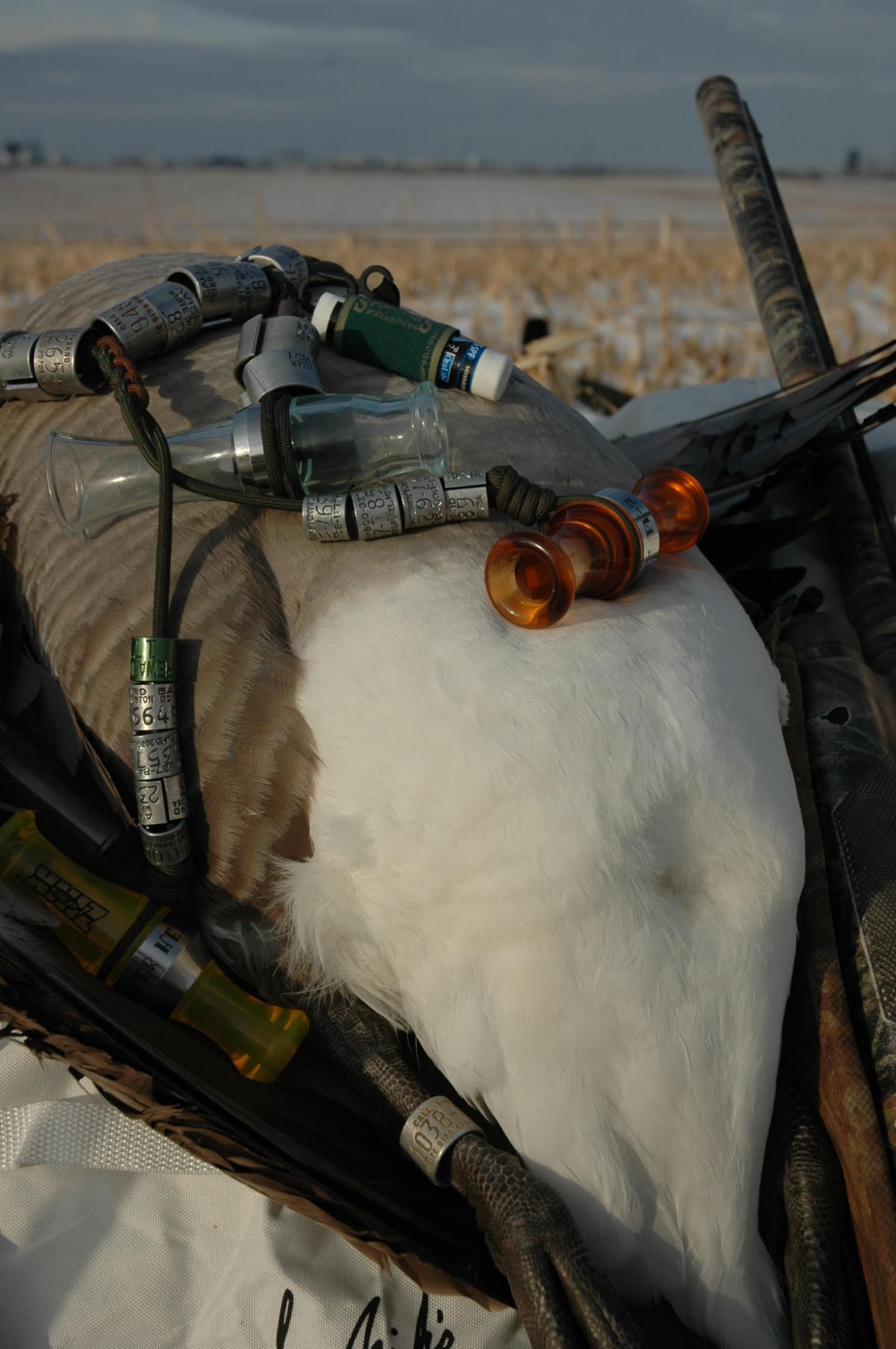
Currently, I have three goose calls, along with a trio of duck calls and a widgeon/pintail whistle, on my working lanyard. Two of the goose calls are Canada goose calls, and the third is my Grounds snow/speck calls. Does a waterfowler need three goose calls? Absolutely not, as one that you can blow well is plenty. Ability and confidence is what you need. A single call you can use well is better than a dozen you can’t.
A single goose can make for a great harvest opportunity. Geese, like ducks, are gregarious by nature, wanting for the most part, the company of others. So, when a goose is alone, a combination of a well-set decoy spread and good calling can often convince that lone bird to come in.
Why Trust Us
For more than 125 years, Field & Stream has been providing readers with honest and authentic coverage of outdoor gear. Our writers and editors eat, sleep, and breathe the outdoors, and that passion comes through in our product reviews. You can count on F&S to keep you up to date on the best new gear. And when we write about a product—whether it’s a bass lure or a backpack—we cover the good and the bad, so you know exactly what to expect before you decide to make a purchase.
The post The 8 Best Goose Calls for Every Skill Level appeared first on Field & Stream.
Read the full article here