

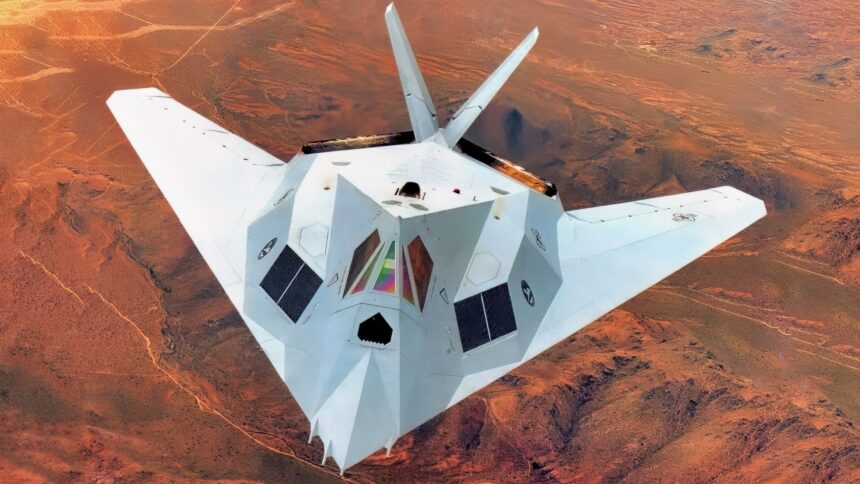
Summary and Key Points: In Operation Desert Storm, the F-117 Nighthawk flew 2 percent of the combat sorties and struck 40 percent of the targets — more than 1,500 of them across 43 nights, without losing a single aircraft. Eight years later, on the night of 27 March 1999, three days into NATO’s air campaign over Yugoslavia, an F-117A with the call sign Vega 31 lifted off from Aviano and did not come back. It was brought down by the 3rd Battalion of the Yugoslav Army’s 250th Air Defence Missile Brigade, using an Isayev S-125 — a Soviet system that entered service in 1961 and which NATO planners had largely written off as obsolete. Two missiles were fired. One detonated close enough to tear the aircraft apart over a cornfield near Budjanovci. Lieutenant Colonel Dale Zelko ejected and was recovered about eight hours later.
How the F-117 Nighthawk Was Shot Down
On the night of March 27, 1999, three days into NATO’s Operation Allied Force, an F-117A Nighthawk with the call sign Vega 31 lifted off from Aviano Air Base in Italy to strike targets near Belgrade.
On paper, the F-117 was the least interceptable aircraft in the sky, built to be invisible to radar.
A few hours later, it was falling in pieces over a cornfield near Budjanovci, and its pilot, Lt. Col. Dale Zelko, was hanging from a parachute in hostile territory. It remains the only F-117 ever lost to enemy fire, and it is still treated as proof that “stealth” is relative, not absolute.
The Lockheed F-117 Nighthawk was the world’s first operational stealth aircraft. It was developed to meet the need for an aircraft capable of attacking high-value targets without being detected by radar. It utilized a faceted design and radar-absorbent materials to minimize its radar cross-section.
However, the US F-117 wasn’t a fighter at all despite the “F” designation. She wasn’t built for speed but stealth.
The F-117’s unique, faceted shape and radar-absorbent materials were crucial for penetrating enemy airspace undetected, rather than achieving high speeds.
Very Successful Combat Record
During the Gulf War, F-117s destroyed more than 1,500 high-value targets in just 43 nights without suffering one loss. During Operation Desert Storm in 1991, the F-117 accounted for only 2 percent of combat sorties but covered 40 percent of the targets.
The Nighthawk was deployed to Panama, the desert during the Gulf War, and in Kosovo during the war against the Serbian military.
F-117 Stealth Fighter. Image: Creative Commons.
And that is where disaster struck for the Nighthawk.
The Serbian Unit That Shot It Down
My friend Alex Hollings wrote an outstanding article about the shootdown.
The Americans suffered from overconfidence and some bad luck.
The 3rd Battalion of the Yugoslav Army’s 250th Air Defense Missile Brigade brought the aircraft down with a Soviet-era Isayev S-125 “Neva-M” system, known in the West as the SA-3 “Goa.”
Its commander, Colonel Zoltán Dani, used technology that entered Soviet service in 1961 and that NATO planners had largely dismissed as obsolete. Two missiles were fired; one detonated close enough to Vega 31 to tear it apart.
Zelko ejected safely and was pulled out by a combat search-and-rescue team about eight hours later, in what’s remembered as one of the war’s most harrowing personnel-recovery missions.
Dani’s success was not luck.
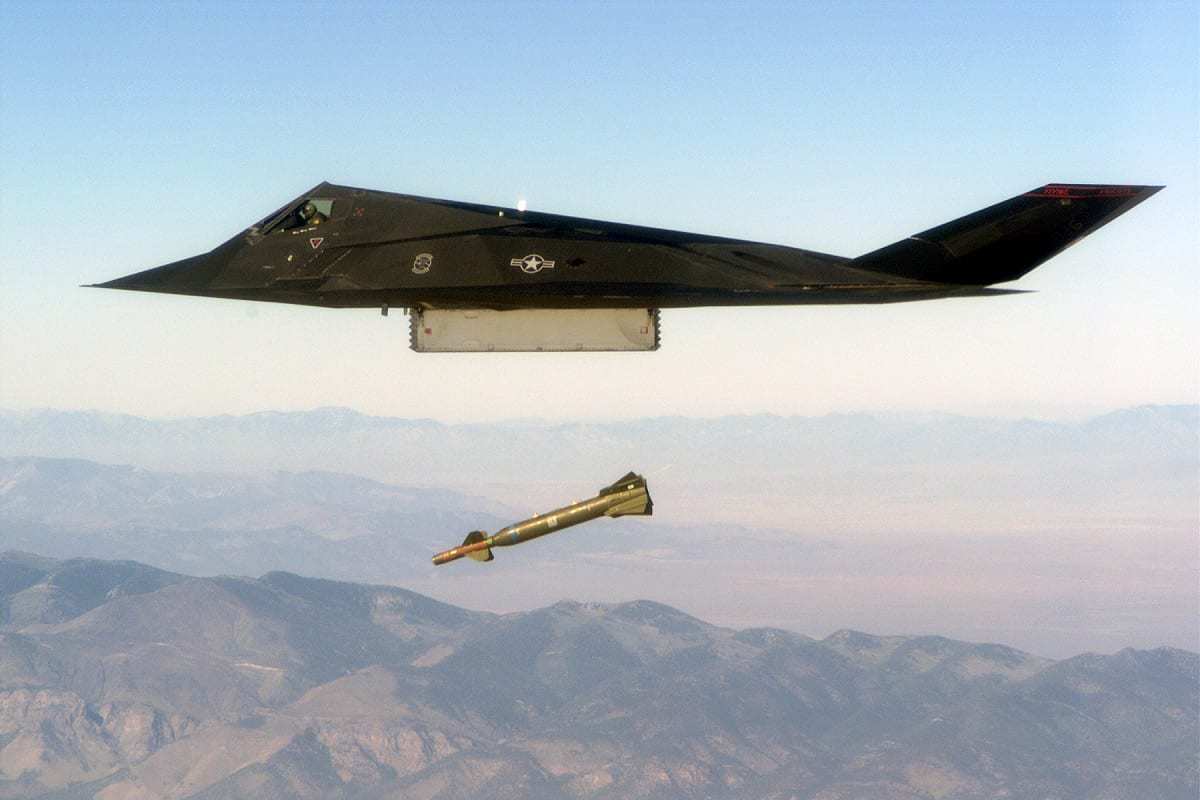
An F-117 Nighthawk engages it’s target and drops a GBU-28 guided bomb unit during the ‘live-fire’ weapons testing mission COMBAT HAMMER, at Hill Air Force Base, Utah.
He had studied unclassified writing on how stealth aircraft work and grasped a distinction most people miss: stealth doesn’t make a jet invisible to radar; it just makes it very hard to get and keep a precise fix on one.
Long-wavelength, older-generation radars like his S-125’s could occasionally return a faint hit off an F-117, especially once its radar-reflective bomb bay doors swung open to release ordnance.
Dani kept his radar emissions brief and unpredictable, constantly relocated his battery during the 78-day campaign, used couriers and landlines instead of radios to avoid electronic detection, and stationed spotters along likely NATO approach corridors.
With his radar lit up for only seconds at a time, NATO’s radar-homing AGM-88 HARM missiles and jammers rarely had a chance to react before he shut it down again.
Why The Shootdown Happened
None of that would have mattered against a well-flown, well-supported strike package.
What turned a 1960s SAM system into a giant-killer was a stack of avoidable NATO mistakes layered on top of Dani’s genuine tactical skill.
The most damaging was predictability. F-117 missions out of Aviano had been flying strikingly similar routes and timing toward Belgrade, and NATO planners had “complacently scheduled the stealth bombers on predictable, routine flight patterns”.
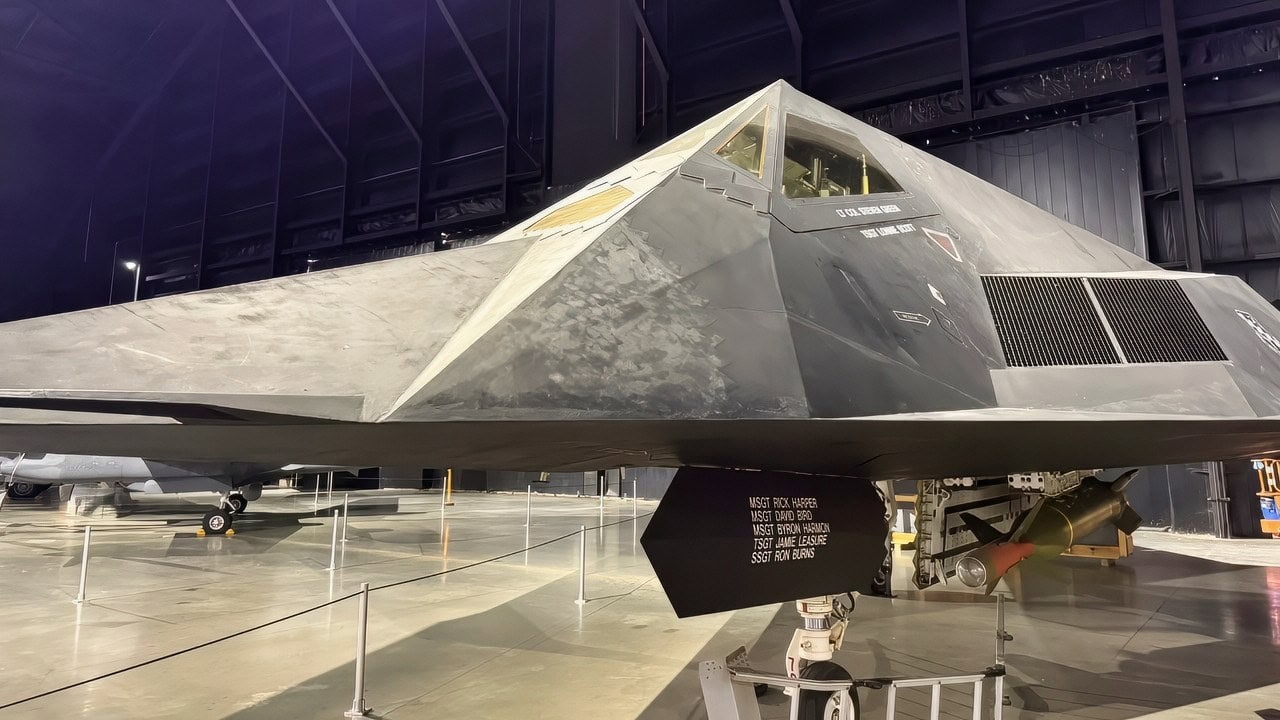
F-117A Nighthawk at USAF Museum. Image taken by 19FortyFive Owner, Harry J. Kazianis.
Dani’s crews studied the pattern from earlier bombing runs and positioned their launchers along the anticipated egress corridor, essentially ambushing a road NATO kept driving down.
Compounding that, the F-117s flew that night without their usual electronic-warfare escort.
EA-6B Prowler jamming aircraft, whose job was to blind exactly this kind of radar, were grounded by bad weather, so Vega 31 and the other Nighthawks pressed on unescorted and unjammed.
Dani later said he’d been tipped off, reportedly through informants near Italian air bases, that the Prowlers would be unavailable that night, which emboldened him to keep his own radar on slightly longer than usual.
The fleet also had a structural blind spot.
Because the F-117 never lost an aircraft in the Gulf War eight years earlier, a degree of institutional overconfidence crept in, an assumption that its shaping alone would carry it through any air defense environment, even one it hadn’t been tested against with this much repetition and this little variation in tactics.
The jet’s own design added a narrow but real vulnerability, too.
And the Serbs got a big break when they scanned for the F-117s a second time; it just so happened to coincide with the pilot opening his bomb bay doors, increasing its radar cross-section at the worst possible moment.
As Hollings wrote, “Inside the Nighthawk’s cockpit, Zelko approached his target, unaware of Dani’s efforts below.
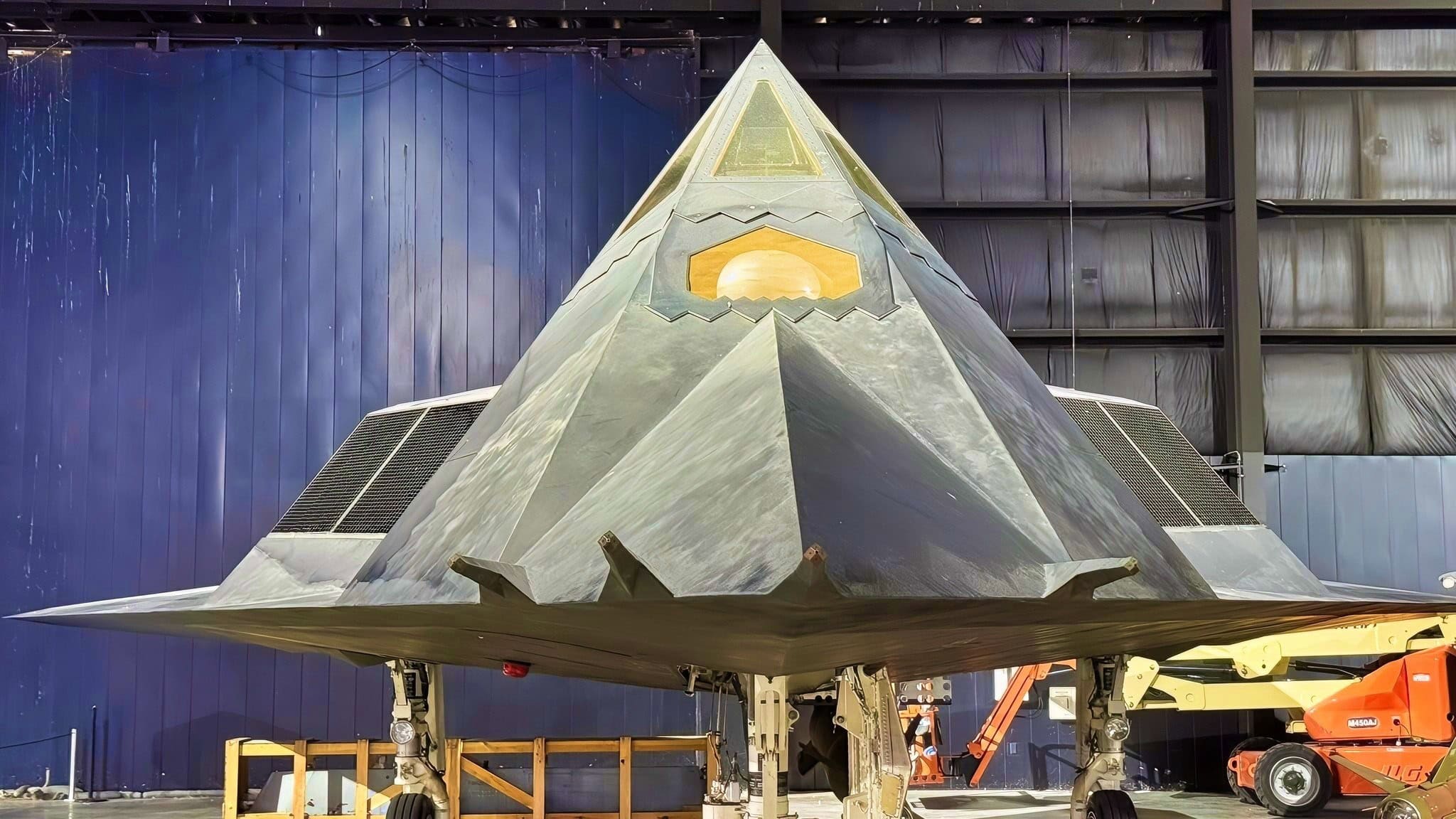
F-117 Nighthawk Stealth Fighter Harry Kazianis Photo from the U.S. Air Force Museum back in July of 2025.
As his F-117 screamed over Serbia, he opened the bomb bay doors and dropped two laser-guided bombs at his target… at precisely the same time Dani’s troops powered their SA-3 up for a regulation-defying third burn.
“Had the weapon doors not been open, the SA-3 would have seen nothing but empty sky, but the doors’ hard angles compromised the Nighthawk’s sleek exterior for just a moment, giving Dani a split-second opportunity.”
Why The Loss Was Preventable
Every factor that enabled Dani’s success was something NATO could have controlled.
Varying flight routes and strike timing are basic tradecraft for survivable air operations, and they weren’t being done consistently in those first days of the campaign.
Jamming support isn’t optional cover for a stealth jet flying over an active, if dated, air defense system; it’s the backstop for exactly this scenario, and sending Vega 31 out without it on a night the Prowlers were down was a call that could have been deferred.
Communications security around Aviano mattered too: if Serbian intelligence was indeed picking up indicators of Prowler’s availability, that’s a security failure independent of anything that happened in the cockpit.
None of this diminishes Dani’s genuine skill and improvisation; by any measure, one of the most effective small-unit air-defense actions of the modern jet era, he also forced numerous other NATO sorties to abort without losing a launcher to NATO’s suppression effort.
But Vega 31’s loss is a textbook case precisely because it wasn’t really a story of technology defeating stealth.
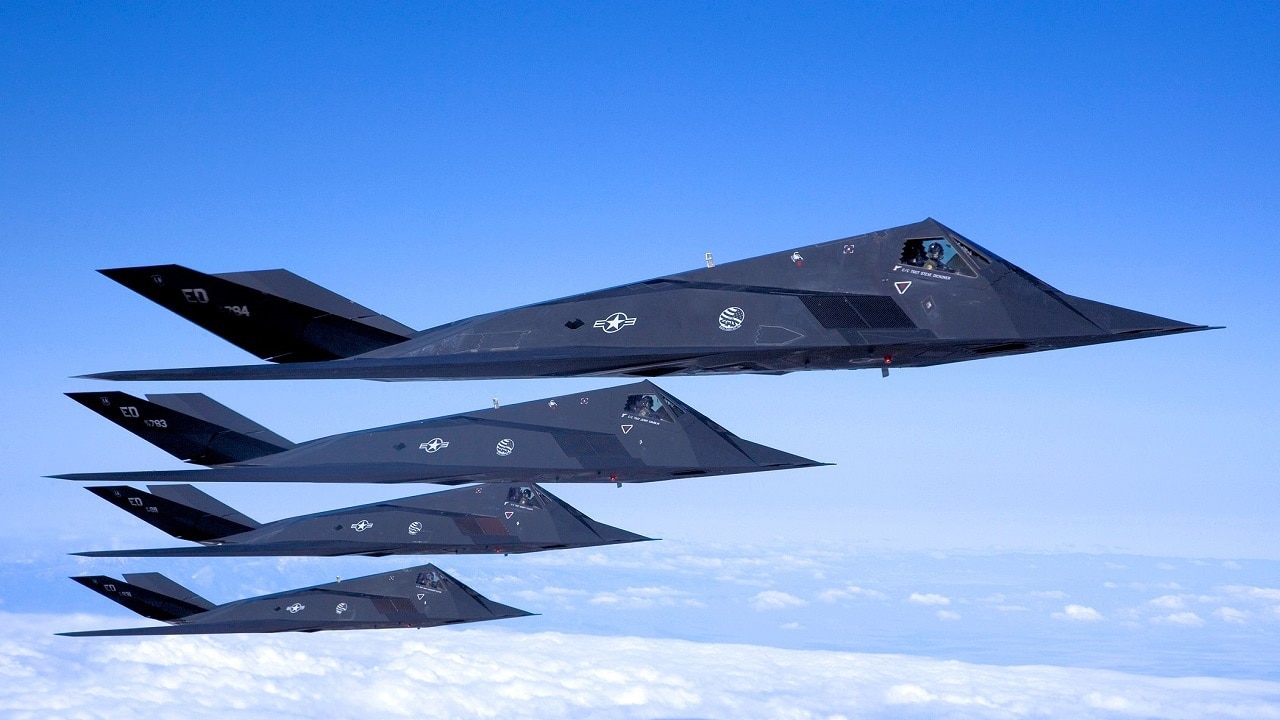
Four F-117 Nighthawks fly in formation during a sortie over the Antelope Valley recently. After 25 years of history, the aircraft is set to retire soon. As the Air Force’s first stealth fighter, the F-117 is capable of performing reconnaissance missions and bombing critical targets, all without the enemy’s knowledge. (Photo by Bobbi Zapka)
It was a story of doctrine and complacency: a superb aircraft, flown predictably, without its supporting cast, over a defender who’d done his homework.
The wreckage of 82-0806 still sits in Belgrade’s Museum of Aviation today, less a trophy of old hardware beating new than a reminder that even the most advanced platform is only as survivable as the tactics used to fly it.
The F-117 Paved The Way For The Stealth Aircraft Of Today
The F-117’s development and operational use paved the way for other stealth aircraft, such as the B-2, F-22, and F-35.
The Air Force still uses the F-117, and an official said, “On occasion, we fly certain [F-117A] aircraft to support limited research and training activities.”
F-117s have recently supported several exercises, operating more frequently and openly alongside Aggressor aircraft at Nellis and MCAS Miramar.
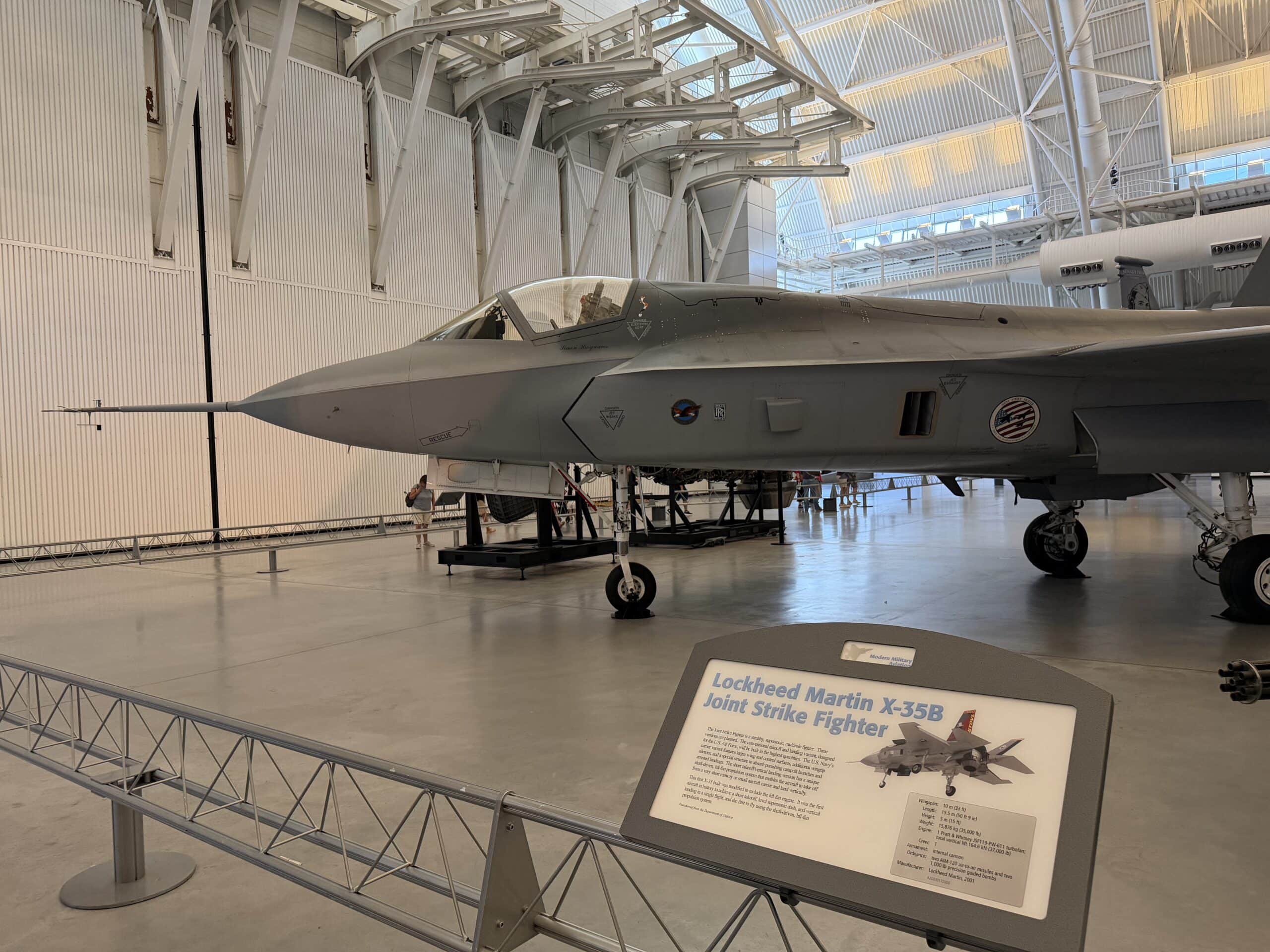
F-35 at the Smithsonian 19FortyFive Photo
In 2023, a USAF spokesperson said, “We have approximately 45 F-117s currently. As we demilitarize the aircraft, they will be made available to museums, if requested, or be disposed of.”
The number has decreased by 6 compared to the total reported in 2019. Lockheed originally built five YF-117As and 59 production aircraft.
Thirteen of these have been retired for museum or display use, and six have been lost.
This leaves 45 aircraft, at least five of which seem to be active.
Eventually, all of the 45 remaining aircraft will be retired.
Then they’ll be scrapped or donated to museums. Currently, 10 of the F-117 Nighthawks are slated for museum duty. It is an iconic aircraft, one that set the stage for today’s stealth aircraft…even if it wasn’t a fighter.
About the Author: Steve Balestrieri
Steve Balestrieri is a National Security Columnist. He served as a US Army Special Forces NCO and Warrant Officer. In addition to writing on defense, he covers the NFL for PatsFans.com and is a member of the Pro Football Writers of America (PFWA). His work was regularly featured in many military publications.