
We may earn revenue from the products available on this page and participate in affiliate programs. Learn More ›
If you’ve shopped for denser-than-steel duck hunting ammo recently, you noticed that bismuth and tungsten-based loads are both more expensive and harder to find on store shelves. That’s because these materials are largely imported from China (if you want to read an economic deep-dive on this, check out our story from February).
But amid these dark times in the waterfowl ammo world, there’s been a silver lining: Boss has introduced a copper-based load that the company promises to be even more effective than bismuth. And while the Boss copper loads, which it calls CuProX, are by no means cheap, they are substantially more affordable than the tungsten or bismuth loads currently on the market.
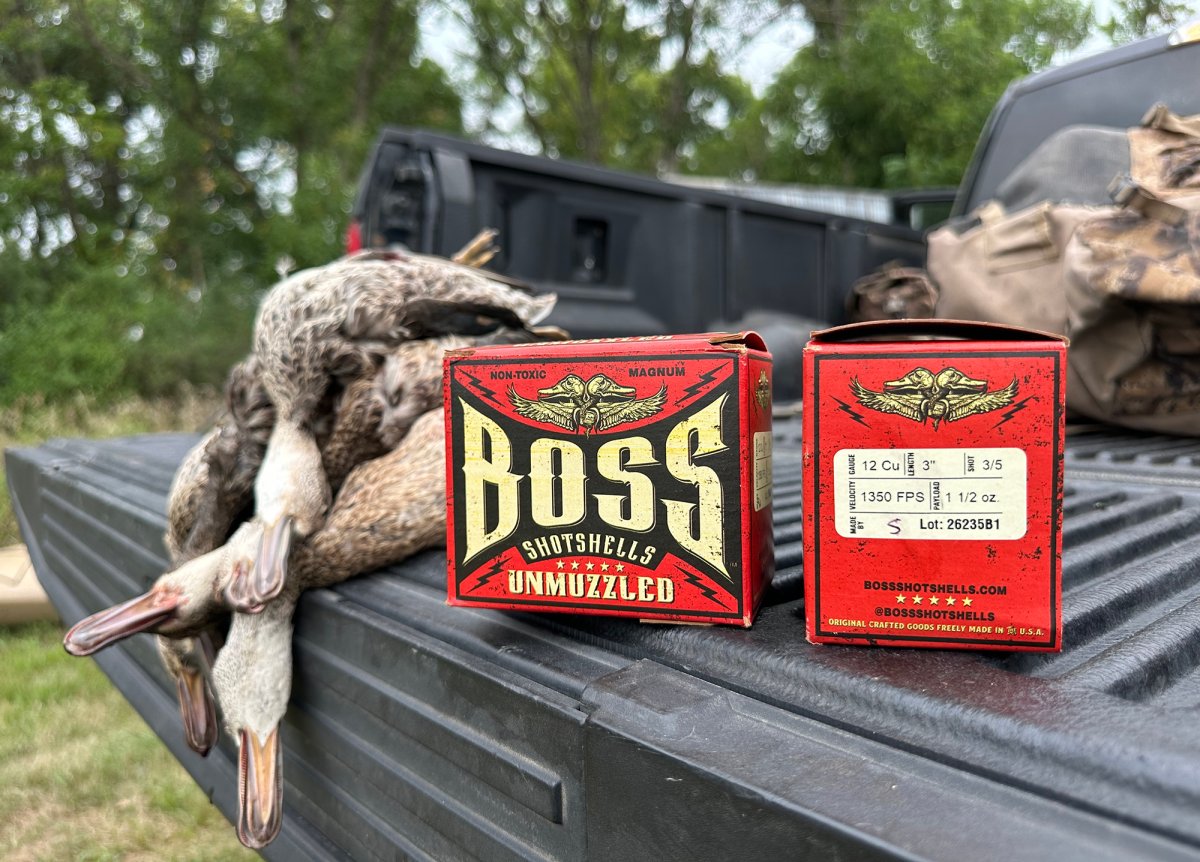
I recently bought two iterations of Boss Legacy CuProX and tested them for pattern density, penetration, and field performance during the early teal season. Here are my first impressions of this promising new load.
Understanding Boss CuProX
CuProX is a non-toxic copper pellet that Boss says is sourced and manufactured in Michigan, where the company is based. When it was first launched, there were lingering questions about whether the copper pellets qualified as non-toxic shot according to the U.S. Fish and Wildlife Service specifications. But in June this year, Boss announced that its copper ammo was officially approved by USFWS for waterfowl hunting.
Non-toxic copper has a density of about 8.9 g/cc. Bismuth pellets have a density of about 9.6 g/cc. Steel has a density of 7.8 g/cc.
Based on the density numbers alone, these copper pellets should not perform better than bismuth at the same velocities. But these CuProX loads have a couple interesting advantages. First, copper won’t fracture the same way that some bismuth pellets do (bismuth is a soft material and can crack under pressure). Second, Boss offers CuProX in heavy payloads. For 12 gauge, the company has options in 1 ¼ ounce, 1 ⅜ ounce, and 1 ½ ounce payloads. That creates the potential for more pellets on target.
Lastly, Boss designed these pellets to minimize drag. Its copper pellets have tiny flat spots, or dimples, on them similar to those on a golf ball. These dimples reduce drag, which leads to more retained velocity and penetration downrange — or at least in theory.
How It Performed on the Range
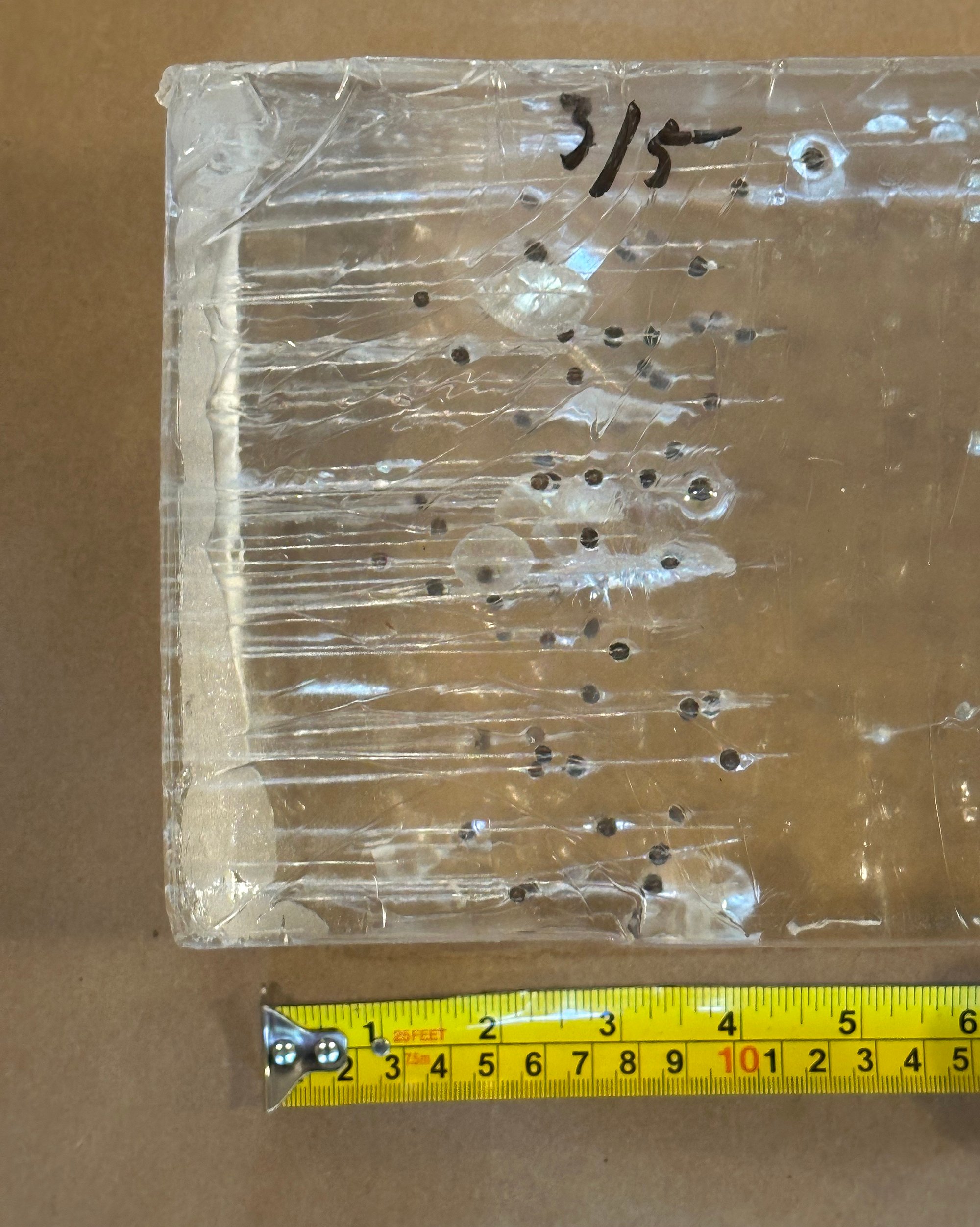
I set out to conduct a standard range test with two 12 gauge Boss Legacy copper loads: No. 3 & 5, 1 1/2-ounce payload and No. 2, 1 ⅜-ounce payload. I shot both loads through a Beretta AX800 with a modified choke. All testing was done at 40 yards. I shot three patterns with each load and counted the number of pellet strikes inside a 30-inch circle. I then shot each load into Clear Ballistics FBI block ballistic gel to evaluate downrange penetration. I then compared the results with testing I’ve done previously using the same shotgun and choke.
| Shotshell / Pellet Size | Payload | Advertised Velocity | Av. 40yd Pattern | Gel Block Penetration | Price per Box |
| Boss Copper #3/5 | 1 1/2 oz | 1350 | 156 | 3.25″ | $43 (20 rounds) |
| Boss Copper #2 | 1 3/8 oz | 1350 | 100 | 4.25″ | $43 (20 rounds) |
| Rem Nitro Steel #4 | 1 3/8 oz | 1300 | 210 | 2.5″ | $35 |
| Rem Duck Club #2 | 1 1/4 oz | 1400 | 114 | 3.25″ | $28 |
| Fed Hevi Bismuth #3 | 1 3/8 oz | 1450 | 103 | 3.5″ | $63 |
How It Compares to Steel Shot
I was impressed with how well the Boss copper loads penetrated. It does seem like the dimpled CuProX design has some beneficial effect. This is clear when you compare penetration results with standard No. 2 steel loads. The No. 2 copper pellets far outperform the steel in terms of penetration. But it’s really notable that the blended No. 3 & 5 load was also right up there with No. 2 steel, basically delivering the same average penetration depth while throwing much denser patterns. The No. 4 steel shot the densest patterns, but the least penetration at 40 yards.
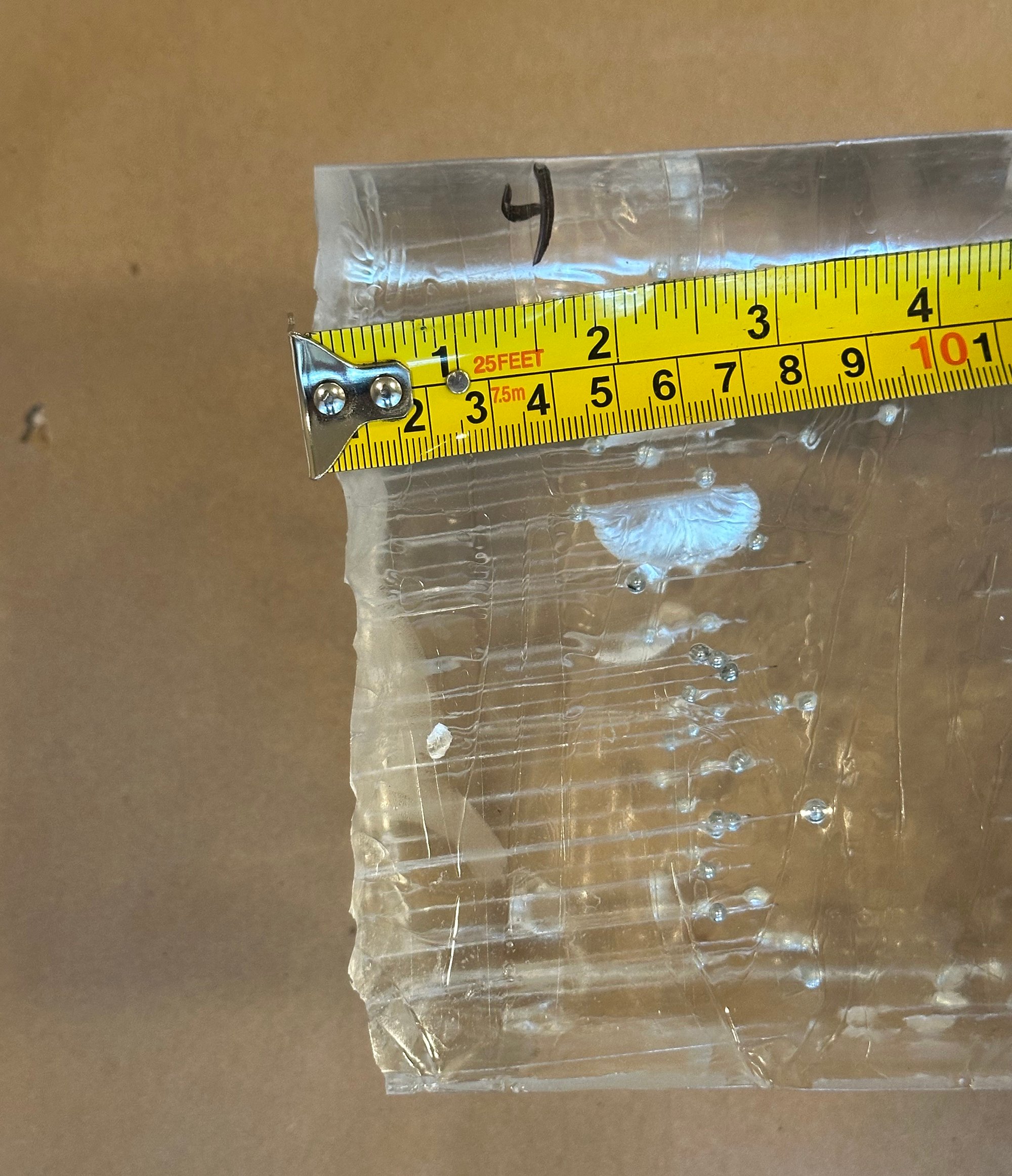
One interesting note is that the blended No. 3 & 5 copper load had a wide variation of penetration depth, which you can see in the photo below. I would expect the No. 5 pellets to penetrate less and the No. 3 pellets to penetrate deeper into the block, but that wasn’t totally the case. There were some No. 5s that drove in more than 3.5 inches deep, while others only made it about 2.5 inches. The same was true for the No. 3 pellets. But overall, the average penetration depth of this load, combined with the pattern density, was stellar. One other remarkable thing about this load was how consistently it patterned. The three shots I recorded were 154, 157, and 158 pellets in a 30-inch circle. That’s the best consistency I’ve ever seen out of a shotshell.

How it Compares to Bismuth Shot
There’s not great availability for bismuth shot these days, but you can find it if you search around online. Prices will vary from about $60 a box to $100 per box. The new CuProX loads slightly beat out the bismuth loads I’ve tested previously in both penetration and pattern density.
To be honest, I’m not sure most average waterfowlers would notice a difference between quality bismuth loads and the new CuProX copper loads in terms of real-world performance. But they will certainly notice a difference in price, and that is no small consideration.
Final Thoughts on Boss Copper

I think the Boss copper pellets really shine in smaller shot sizes and heavy payloads. I really liked the results that the blended No. 3 & 5 load delivered and I’d be confident shooting that load on big, late-season mallards out to 45 yards (and maybe a little beyond). They were killer during early-season teal hunts, which was no big surprise.
Read Next: Is More Expensive Duck Ammo Actually Worth It? I Put Some of the Top Loads to the Test
I think waterfowlers often get hung up on pellet size and pellet density. But what actually kills ducks is pattern density (the number of pellets we’re putting on target) and pellet penetration. Based on my range testing, Boss copper loads deliver both of these metrics emphatically. I’m excited to shoot more of their ammo this season, and I’d encourage any waterfowler who intends to shoot ducks at 40 yards or beyond to give it a test run as well.
Read the full article here